REVIEW · NEW DELHI
Old & New Delhi Private Tour with Slum Visit
Book on GetYourGuide →Operated by India Tour · Bookable on GetYourGuide
Old Delhi can feel like chaos at first. This tour helps you turn it into order, with a plan that mixes UNESCO monuments and real neighborhood life in one stretch. I especially like how the route covers both the grand, planned side of Delhi and the street-level side you usually miss—plus you get a private English-speaking guide to connect the dots as you go. One thing to consider: you’ll do a fair amount of walking in busy areas, so wear comfortable shoes and expect crowds around Chandni Chowk and temple zones.
The star move here is pacing. You get major stops—Qutub Minar, Humayun’s Tomb, Lotus Temple, India Gate, and more—without feeling stuck in one place all day. Then the day pivots to Old Delhi highlights like Jama Masjid and the markets, including a rickshaw ride. The possible drawback is timing: with only 4–8 hours, you’re seeing key moments more than doing a slow, deep visit of every single site.
I also like that the experience includes a structured look at daily life through an escorted visit to Sanjay Colony, positioned as responsible tourism. Guides such as Sunil and Ali (names you may hear on this kind of tour) are known for making navigation easier and pointing you to smart photo spots—useful when Delhi is loud and your brain is working overtime.
In This Review
- Key highlights at a glance
- Meeting at Jama Masjid Gate Number 2
- Jama Masjid and the first big view of Old Delhi
- Chandni Chowk: rickshaw ride and market walking
- Gurudwara Sis Ganj Sahib and the sense of service
- Jain temple stop: Shri Digambar Jain Lal Mandir
- Paranthe Wali Gali: one old street, many flavor choices
- Khari Baoli: Asia’s big wholesale spice market
- Red Fort and Raj Ghat: big landmarks, quick but meaningful stops
- Qutub Minar: UNESCO carvings and a 73-meter presence
- Lotus Temple: a calm break in the middle of the day
- India Gate gardens: memorial context and room to breathe
- Rashtrapati Bhavan pass-by: the Mughal garden mood
- Humayun’s Tomb: Mughal architecture that foreshadows the Taj
- Sanjay Colony slum visit: responsible tourism, not just a look
- Logistical details that make or break a day
- Price and value: how $12 changes the math
- Should you book this Old & New Delhi tour?
- FAQ
- FAQ
- Where does the tour start?
- How long is the tour?
- Is the tour private?
- What language is the tour guide?
- Do I get a rickshaw ride?
- Are UNESCO sites included?
- Is food included?
- What should I bring for entry?
- Are there clothing restrictions?
- Is this tour suitable for pregnant women?
Key highlights at a glance
- Private AC car + guide keeps the day moving while you learn what you’re seeing
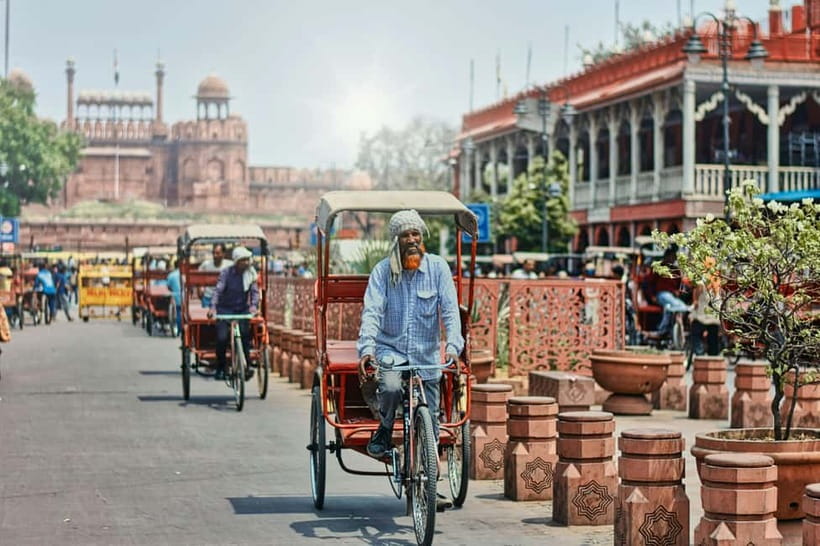
- Jama Masjid minaret view and a rickshaw ride give you Old Delhi perspective fast
- UNESCO powerhouses: Qutub Minar and Humayun’s Tomb in one itinerary
- Iconic New Delhi landmarks: Lotus Temple, India Gate, and planned Mughal gardens
- Sanjay Colony slum visit with an escorted walking tour focused on community life
- Skip-the-line entry helps you spend more time outdoors than waiting
Meeting at Jama Masjid Gate Number 2
You start at Jama Masjid Gate Number 2, which is a smart choice because this mosque is the gateway to Old Delhi’s main story. Instead of “meeting somewhere random,” you begin in the exact place where the day’s street energy makes sense. From here, your guide can help you orient quickly—what to look for, where sightlines open up, and how the neighborhood connects to the bigger monuments you’ll see later.
This also matters for time. In Delhi, delays happen. A clear meeting point and a guided flow helps you keep the day from collapsing into guesswork.
Bring your passport or ID card (a copy is accepted). And dress with respect—this tour notes that short skirts aren’t allowed at certain sites, so plan for modest coverage.
You can also read our reviews of more private tours in New Delhi



Jama Masjid and the first big view of Old Delhi

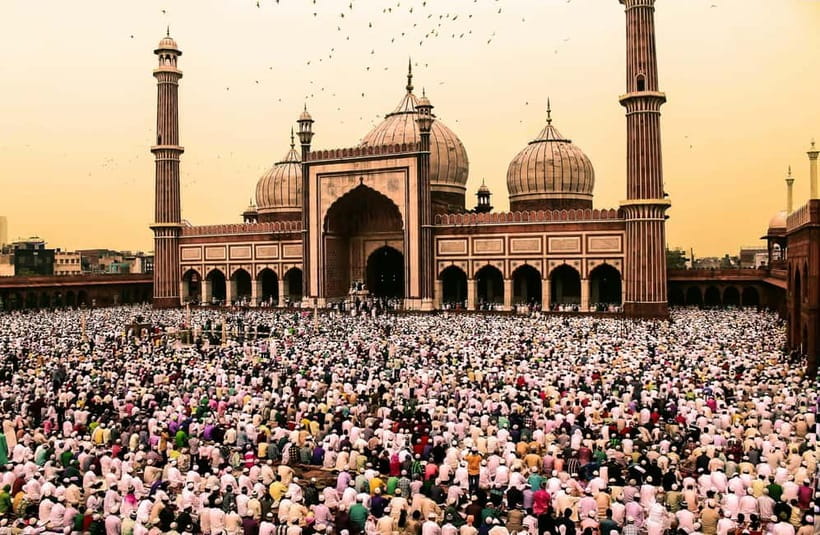
Jama Masjid isn’t just a photo stop. It’s an active spiritual landmark and a major piece of Delhi’s identity. Your tour includes both a guided visit and a photo stop, plus going up to the minaret for a sweeping look over Old Delhi.
That minaret moment is where the day clicks. From above, you see the logic of the streets you’ll later walk through—how buildings cluster, how the market funnels traffic, and how the mosque sits as a focal point for the whole district. It turns what can feel like a maze into a map.
Practical tip: you’ll likely feel the shift from the quiet of the mosque into the bustle of the lanes soon after. Keep your water accessible, and don’t plan on slow sightseeing—this portion is about setting context fast.
Chandni Chowk: rickshaw ride and market walking
Next comes Chandni Chowk, one of Delhi’s most famous market areas. Your plan includes a photo stop plus a guided visit, with time to ride a rickshaw or walk the lanes, depending on what fits your pace.
Here’s why this is valuable: markets like Chandni Chowk aren’t just shopping streets. They’re living history. You’re walking through a place built for daily commerce—where sounds, smells, and quick trades teach you how the neighborhood functions in real time.
A guided approach helps with the “so much to see” problem. You’re not trying to guess which alley is worth your attention. Your guide can steer you toward key sights, and you can spend your energy on what you actually want to understand—street food culture, shopfront rhythms, and how people move through the space.
Wear shoes that you can tolerate for a few hours. You’ll be standing, moving, and stopping often.
Gurudwara Sis Ganj Sahib and the sense of service
From the market energy, the tour shifts to Gurudwara Sis Ganj Sahib in Chandni Chowk. You’ll have a guided visit and a look that includes the community kitchen (langar).
This stop matters because it changes the emotional tone of the day. Instead of only looking at architecture and commerce, you see how community service works in a very practical way. Langar isn’t a side story—it’s a core part of the Sikh tradition of equality and service, and you can feel that through the atmosphere around the kitchen area.
Even if you’re not religious, this is one of those moments that helps you understand why people come back to certain places again and again.
Jain temple stop: Shri Digambar Jain Lal Mandir
The itinerary includes Shri Digambar Jain Lal Mandir (also referred to as Shri Digambar Jain Atishay Kshetra Lal Mandir). You’ll get a photo stop and guided visit.
Jain temples add an extra layer to Delhi that many first-time visitors don’t plan for. It’s not just one more monument—it’s another doorway into how different communities shaped the city’s religious landscape. If you pay attention to the guidance from your tour leader, you’ll walk away with a better sense of what makes this temple important for Jain worship.
If you’re sensitive to crowds, this is the kind of place where a guide helps you move through respectfully without getting stuck.



Paranthe Wali Gali: one old street, many flavor choices

Your route includes Paranthe Wali Gali, known for stuffed parathas. Your tour plan notes this as an old street with lots of options and distinct flavors.
Two honest notes here. First, this is a great place to snack if you’re interested in street food culture. Second, food isn’t included on the tour, so bring your own plan—budget for a bite if you want one, and keep an eye on your timing so you don’t lose the rest of the day in a line.
If you want the taste, treat it like a short stop with one decision. If you’re not into street food, you can still enjoy the scene and the energy of the street.
Khari Baoli: Asia’s big wholesale spice market
Then you head to Khari Baoli, described as Asia’s largest wholesale spice market. You’ll have a photo stop and guided visit here.
This is one of the most sensory parts of the whole tour. You’re not just looking at sights—you’re seeing the colors and handling the idea of how spices move in bulk, traded and repackaged in a system built for everyday business. Even if you don’t buy anything, the market helps you understand Delhi as a trading city, not just a museum city.
Practical consideration: spices can cling to clothing and bags. If you’re planning to carry souvenirs, it helps to have a separate bag for them. Also expect strong smells and heavy foot traffic.
Red Fort and Raj Ghat: big landmarks, quick but meaningful stops
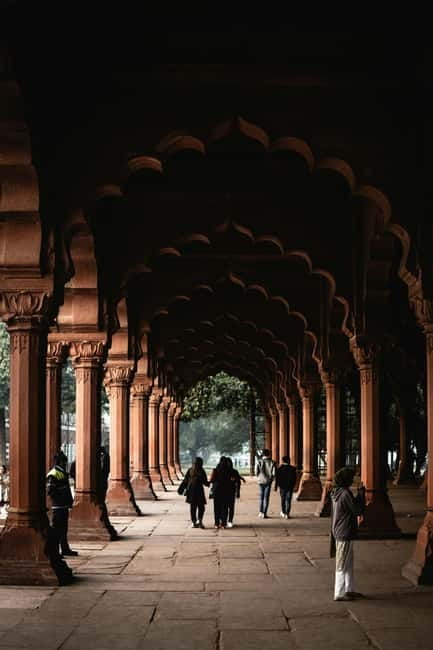
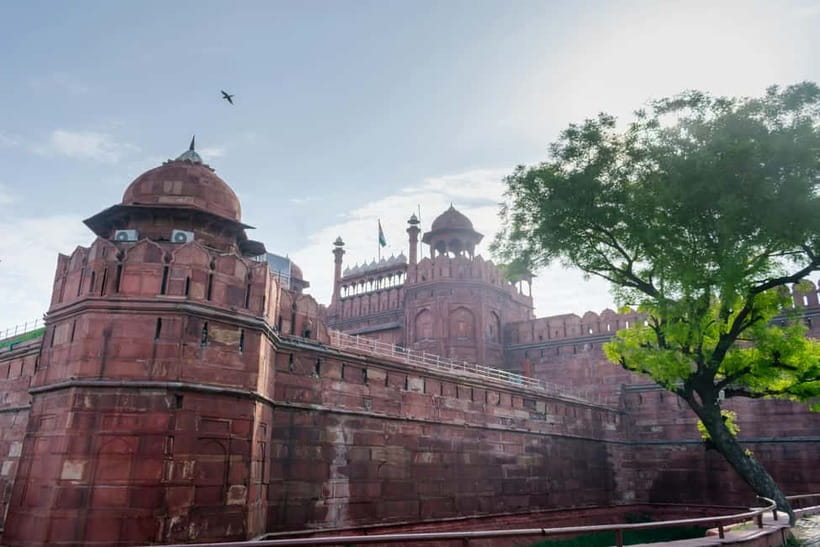
The itinerary includes Red Fort with a photo stop and a pass-by. Your plan also points out that a full Red Fort visit takes longer, so here you’re mainly appreciating the Mughal architecture and historical significance from the outside.
That can be a good trade-off. When time is limited, getting the big architectural impression helps you later connect the dots if you return for a deeper tour. You’ll also avoid the frustration of spending half your day inside a site when your schedule is built around covering more of Delhi’s key beats.
After that, you’ll have a photo stop and guided visit at Raj Ghat. Even with a shorter stop, this kind of site often leaves a quiet impression because it’s about remembrance and national significance. It’s a useful pause between more crowded, active areas.
Qutub Minar: UNESCO carvings and a 73-meter presence
Qutub Minar is one of the most famous monuments in the country, and it shows why right away. Your tour includes a photo stop and guided visit at Qutub Minar, a UNESCO World Heritage Site and a striking 73-meter-tall minaret built in the early 13th century.
This is a stop you’ll appreciate more with context. A guided visit can help you notice the ornate details that you might otherwise miss from far away. It’s also one of those monuments that feels taller than expected, partly because the structure draws your eye upward, making you slow down even when the streets around you are moving fast.
If you’re planning photos, this is a solid choice. Even with short time, you can capture the minaret’s scale and the surrounding stonework.
Lotus Temple: a calm break in the middle of the day
Next is the Lotus Temple, known for its flower-shaped architecture. Your plan includes a photo stop and guided visit.
This is your reset button. After Old Delhi and market intensity, the Lotus Temple’s symmetry and quieter grounds offer a mental breather. You’ll have time to appreciate it as a Bahá’í House of Worship, and it’s described as a peaceful haven for meditation and contemplation.
Whether you’re interested in religion or architecture, it’s one of Delhi’s best moments to lower your pace without dropping the sightseeing momentum.
India Gate gardens: memorial context and room to breathe
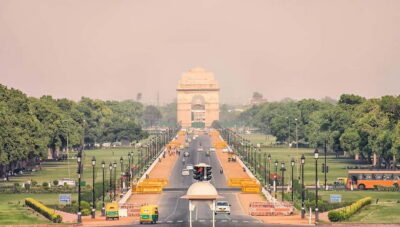
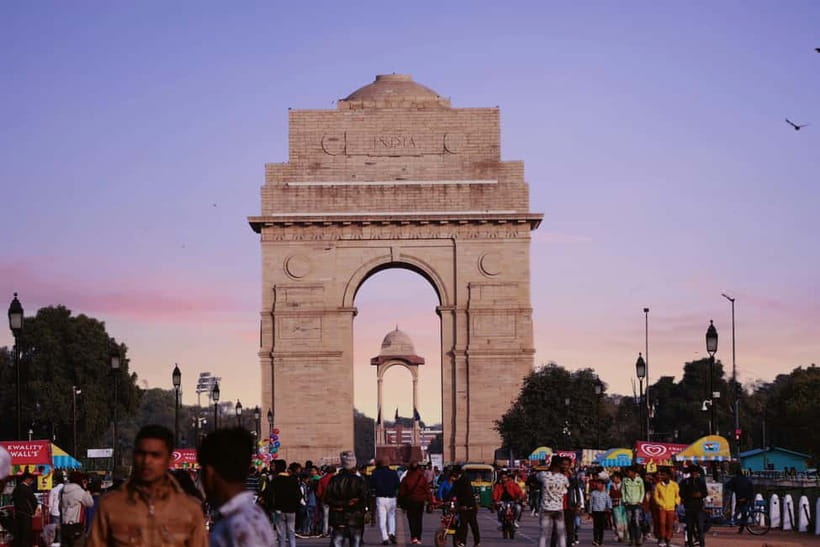
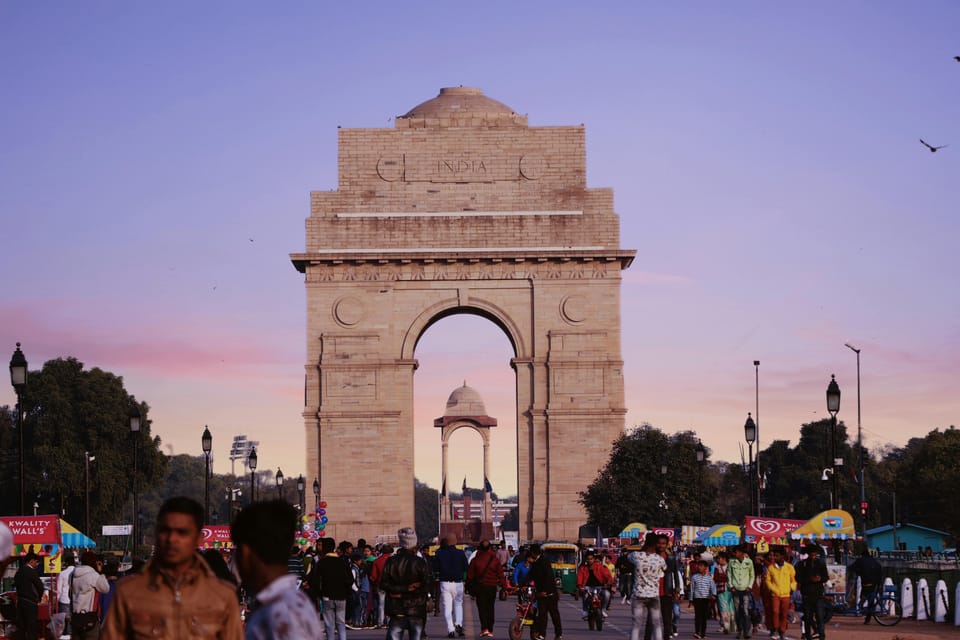
Then comes India Gate, a memorial to Indian men who lost their lives during World War I. Your tour includes photo stop, visit, and guided tour around the monument and lovely gardens.
This is another “big picture” stop. You’re not just seeing a famous monument—you’re learning the reason it exists. And the gardens matter because they offer space to regroup before the day heads toward more intense sightseeing again.
Take a slow walk here. It makes the rest of the tour easier.
Rashtrapati Bhavan pass-by: the Mughal garden mood
You’ll pass by Rashtrapati Bhavan, the residence of the President of India, with a note to admire the majesty of the building and its Mughal Gardens.
Because it’s a pass-by, you don’t get a full visit. But it still helps you understand Delhi’s planned, formal side—how architecture and landscape work together at a national scale. It’s a useful contrast point next to the dense, street-level world of Old Delhi.
Humayun’s Tomb: Mughal architecture that foreshadows the Taj
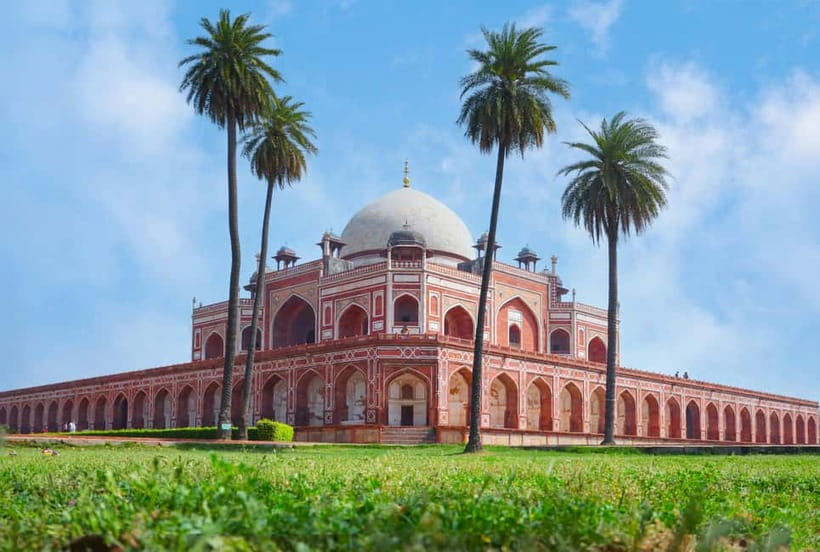
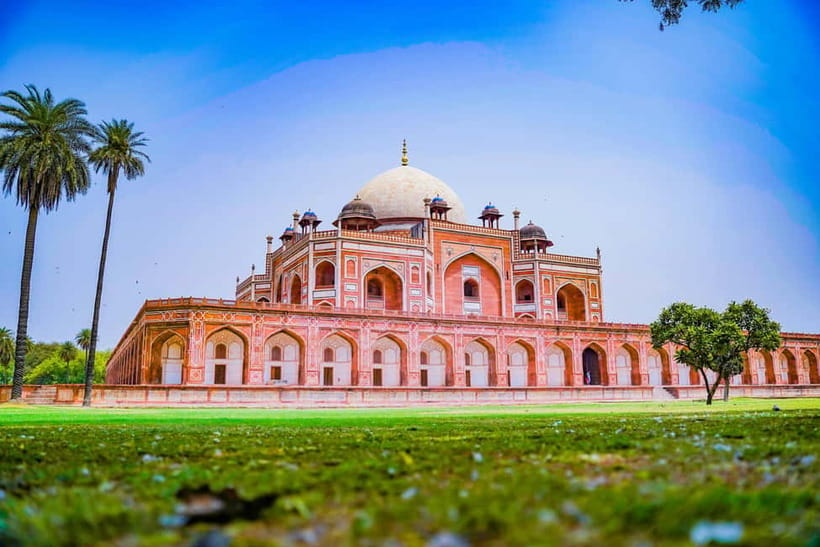
Your itinerary includes Humayun’s Tomb, another UNESCO World Heritage Site, with photo stop and guided visit. The tour notes it as a magnificent 16th-century garden tomb and specifically a forerunner of the Taj Mahal.
What I like about this stop is that it’s both grand and readable. The “garden tomb” concept gives you a clear layout, and the guide can help you see how the Mughal architecture language developed and traveled forward in time.
This is also a strong place to slow down. The architecture is impressive, but it’s the overall composition that stays with you: how the space feels designed rather than random.
Sanjay Colony slum visit: responsible tourism, not just a look
The most meaningful part of the day for many people is the escorted walking tour through Sanjay Colony, described as a small but vibrant slum society. You’ll learn about daily life, local enterprise, and community schemes, with an emphasis on promoting responsible tourism.
This isn’t a “poverty spectacle.” It’s meant to be an education about how people live, work, and build solutions in their own neighborhood context.
A couple of considerations for you before you go: this is a sensitive setting, so keep your attitude respectful and calm. If you’re the type who likes to ask questions, do it gently and patiently. If you’re uncomfortable with crowds or emotional topics, plan your own mental boundaries ahead of time—this stop is real, not scenery.
If you do it with the right mindset, it’s the part of the day that adds heart, not just sights.
Logistical details that make or break a day
This tour is built for comfort and efficiency. You’ll have air-conditioned transportation with a driver, plus an English-speaking tour guide. There’s hotel pickup and drop-off offered (pickup is optional, depending on your option), and the group is private, so you’re not squeezed with strangers into a tight plan.
You’ll also get all parking fees and taxes covered, plus a water bottle. Food and drink aren’t included, so if you want a full meal, you’ll need to plan around your own schedule during the day.
A quick note on entry: the tour mentions skip-the-line through a separate entrance. In Delhi, that can save you time and frustration, especially at major sites.
Bring your ID, wear modest clothing for religious stops, and plan for walking. This is not a “sit in the car all day” tour.
Price and value: how $12 changes the math
$12 per person is the kind of price that makes you double-check the details. Here, the math actually works because you’re getting a bundle: a private AC car, a tour guide, hotel pickup and drop-off, a rickshaw ride, guided visits across major sites, and multiple entrances that usually take time to manage.
The value comes from coverage and guidance. If you tried to assemble this on your own—transport, entry planning, and interpretation—you’d spend more just on logistics. The guide role is especially important in Delhi, where history is everywhere but understanding it quickly takes help.
The main trade-off is that the schedule is tight. You’ll leave with a strong overview and key highlights, not an unlimited time-with-everything experience.
Should you book this Old & New Delhi tour?
I’d book this if you want a one-day plan that doesn’t treat Delhi like a checklist. You’ll get UNESCO sites (Qutub Minar and Humayun’s Tomb), iconic New Delhi landmarks like Lotus Temple and India Gate, and essential Old Delhi experiences at Jama Masjid and Chandni Chowk, including the rickshaw ride. The Sanjay Colony visit also makes the tour more than sightseeing—it adds human context and a chance to see how community life works day to day.
Skip it if you hate walking or crowded lanes, or if you’re looking for long, slow museum-style time at a single monument. This tour is designed for momentum, not lingering.
FAQ
FAQ
Where does the tour start?
The meeting point is Jama Masjid Gate Number 2.
How long is the tour?
The duration is 4 to 8 hours, depending on the selected option and availability.
Is the tour private?
Yes, it’s a private group experience.
What language is the tour guide?
The live tour guide is English.
Do I get a rickshaw ride?
Yes. The tour includes a rickshaw ride in Old Delhi.
Are UNESCO sites included?
Yes. The tour includes Qutub Minar and Humayun’s Tomb, both listed as UNESCO World Heritage Sites in the tour description.
Is food included?
No. Food and drink aren’t included.
What should I bring for entry?
Bring a passport or ID card. A copy is accepted.
Are there clothing restrictions?
Yes. Short skirts aren’t allowed.
Is this tour suitable for pregnant women?
No. It’s listed as not suitable for pregnant women.
If you tell me your travel month and your exact hotel area (Old Delhi vs New Delhi), I can help you estimate when the walking will feel most intense and how to time breaks.