REVIEW · NEW DELHI
The Best 2 Day Delhi Tour
Book on Viator →Operated by Joyful Holidays · Bookable on Viator
Delhi moves fast in two days.
This tour pairs Old Delhi classics with New Delhi landmarks in one tight plan, using an air-conditioned vehicle and a real guide to help you connect the dots between street-level life and grand monuments. You get hotel/airport pickup-drop-off, bottled water, and a schedule designed for getting the highlights without feeling lost.
My favorite part is the Old Delhi start: Jama Masjid sets the tone, then a rickshaw ride in Chandni Chowk drops you right into the market’s pulse. I also like the second day’s temple-and-landmark mix—Gurudwara Bangla Sahib, Lotus Temple, and major photo stops in central New Delhi—because it shows how Delhi’s faiths and power centers sit side by side.
One thing to keep in mind: several monuments have entrance fees not included (listed as $30 per person), and a few famous sights are only exterior/photo stops (like the Red Fort from outside), so you’re trading some depth for speed.
In This Review
- Key highlights you’ll feel on the ground
- How this two-day Delhi plan fits your time (and your energy)
- Day 1: Old Delhi to World Heritage sights, without the scramble
- Jama Masjid: arriving at one of Shah Jahan’s great statements
- Chandni Chowk by rickshaw: the market route that makes sense quickly
- The Red Fort outside: a practical tradeoff
- Raj Ghat: a sober stop that changes the tone
- Humayun’s Tomb: where you can actually see the garden-tomb idea
- Qutub Minar: the tall minaret that anchors the day
- Day 2: Temples and New Delhi landmarks in a calmer rhythm
- Gurudwara Bangla Sahib: sacred space in the heart of Delhi
- India Gate and Rashtrapati Bhavan: big central photo stops
- Swaminarayan Akshardham: a major modern cultural statement
- Lotus Temple: one of the simplest faith stops to enjoy
- The value question: is $159 a fair deal for two packed days?
- What makes the guide and driver element matter here
- Who this tour is best for (and who should choose differently)
- Should you book the 2 Day Delhi Tour with Joyful Holidays?
- FAQ
- FAQ
- What’s the duration of the Delhi tour?
- What time does pickup usually happen on day one?
- Where does pickup work from?
- Is hotel pickup and drop-off included?
- What’s included for meals?
- Is there an air-conditioned vehicle?
- Are monument entrance fees included in the price?
- Which sites are included on day one?
- Which sites are included on day two?
- Is this a private tour?
- Is free cancellation available?
Key highlights you’ll feel on the ground
- A private group setup with only your party, plus a driver and guide handling the route
- Old Delhi + New Delhi in two days, mixing Mughal-era sites, Gandhi’s memorial, and modern temples
- Air-conditioned transport and bottled water to make the long days more comfortable
- Rickshaw time in Chandni Chowk, a quick way to experience the city’s market energy
- World Heritage sites on both days, including Humayun’s Tomb and Qutub Minar
- Flexibility from a guide on the day, with room to adjust to weather and your personal priorities
How this two-day Delhi plan fits your time (and your energy)
Delhi can overwhelm you fast. This tour helps because it runs like a guided route with built-in breaks: pickup on day one, a day of Old Delhi moving into major heritage sites, then a second day focused on sacred places and the big central landmarks. The biggest practical win is that you don’t have to coordinate transit, ticket lines, or navigation across areas that feel like different cities.
You’ll also travel with the comfort details that matter in Delhi: an air-conditioned vehicle and packaged drinking water. Those small things add up when you’re stacking multiple stops across different neighborhoods.
If you’re the kind of traveler who wants key sights covered but still wants a human to make sense of what you’re seeing, this works well. In particular, I like that the tour is set up around a guide’s interpretation rather than a checklist with no context.
You can also read our reviews of more tours and experiences in New Delhi



Day 1: Old Delhi to World Heritage sights, without the scramble
Day one starts with hotel or airport pickup in Delhi, Gurugram, or Noida, timed for 9:00 AM (or your given pickup time). Then you roll straight into the heavy-hitter zone: Old Delhi first, then memorial and heritage sites, finishing with Qutub Minar.
That flow is smart. Old Delhi has the loudest sensory impact, so hitting it early means you’re more alert and less heat-worn for the walking and street scenes. After that, the rest of the day moves into more structured landmarks where you can slow down and take in architecture.
Jama Masjid: arriving at one of Shah Jahan’s great statements
You’ll visit Jama Masjid, the Friday Mosque and a major congregational site in Old Delhi. It was commissioned by the fifth Mughal ruler, Shah Jahan, known for Islamic architecture. Even if you’re not an architecture fanatic, this is the kind of stop where your brain starts organizing the city: you see how Delhi’s rulers shaped public space, devotion, and movement through town.
Admission isn’t included here, so expect to pay the site fee on the day. The payoff is that you’re seeing a landmark people come to for daily life and worship, not just a photo backdrop.
Chandni Chowk by rickshaw: the market route that makes sense quickly
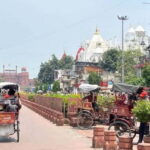
After Jama Masjid, you’ll head to Chandni Chowk and take a rickshaw ride. This is one of those experiences where a short ride gives you a feel for direction, crowd patterns, and the way the market streets operate. Chandni Chowk is described as one of Delhi’s oldest markets and its main thoroughfare, lined with hawkers and porters.
Admission is free for this stop, but the main cost is patience and attention. Go in ready to slow down. If you like watching small details—how people move, how goods are displayed, how merchants work—you’ll get a lot more than you would by just walking past.
The Red Fort outside: a practical tradeoff
Next comes a drive-around photo stop of the Red Fort. Here’s the reason: around 70% of the building is used by the Indian Army, so you mostly view it from outside. That means you don’t get the full interior experience, but you do get the classic red-stone exterior angle and photos without trying to fight a logistics puzzle.
If you’re set on deep exploration inside the fort, you’ll need extra time beyond two days. For a fast introduction, though, this works.




Raj Ghat: a sober stop that changes the tone
Then you’ll visit Raj Ghat, the black marble square on the banks of the Yamuna River marking the spot where Mahatma Gandhi was cremated. It’s a quiet, reflective break after dense street scenes and grand architecture.
Admission is listed as free here. Time is about 30 minutes, so treat it as a reset. Even if you’ve read about Gandhi before, seeing the location in person gives the day a different emotional weight.
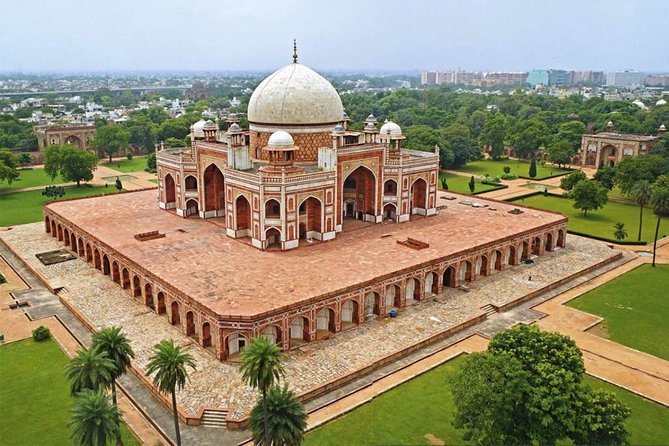
Humayun’s Tomb: where you can actually see the garden-tomb idea
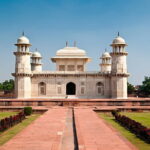
Next is Humayun’s Tomb, a World Heritage site and the resting place of the second Mughal Emperor, Humayun. It’s described as the first garden-tomb in the Indian subcontinent—meaning the design isn’t just about a structure; it’s about layout, symmetry, and how gardens frame the monument.
Admission isn’t included for this stop, and the time is about an hour. This is one of the places where slowing down helps. Try to look beyond the main view and notice how pathways and planting guide your movement.
Qutub Minar: the tall minaret that anchors the day
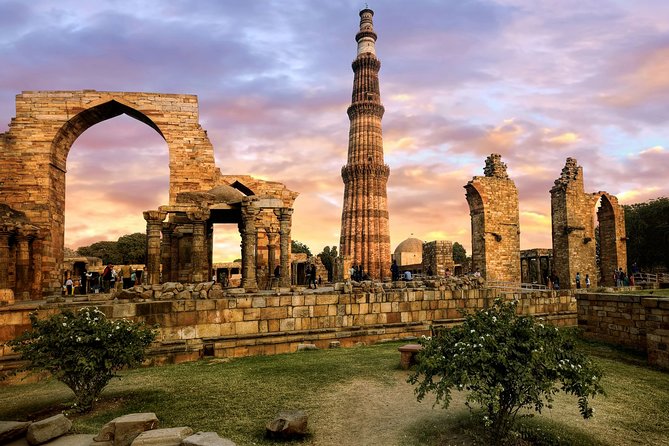
You’ll finish day one with Qutub Minar, also a World Heritage site. The minaret was constructed in 1192 by Qutab-ud-din Aibak and later completed by his successor Iltutmish, described as a soaring conical tower with exquisite architecture.
Admission isn’t included here either. Plan on the full hour to take it in properly. Qutub Minar works especially well after Humayun’s Tomb because you’re comparing two eras of power expressed through design.
Day 2: Temples and New Delhi landmarks in a calmer rhythm
Day two begins with breakfast (included) and then you check out from your hotel as the sightseeing starts. The second day is more spread out across the city’s religious and political core, with fewer “walk and jostle” moments than Old Delhi.
The day is also a nice contrast: you move from Mughal-era monuments to active places of worship and then to the monumental city center where governance sits in stone.
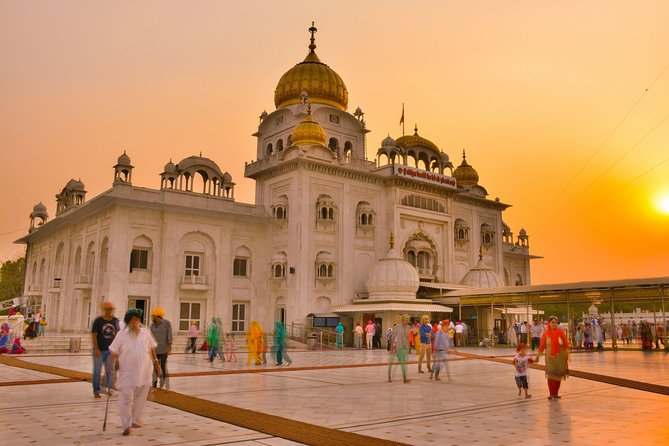
Gurudwara Bangla Sahib: sacred space in the heart of Delhi
First up is Gurudwara Bangla Sahib, a Sikh temple located in the capital’s heart. It’s noted as one of the most important and sacred Sikh shrines, visited by thousands of followers and tourists.
Admission is free and the time is about an hour. If you want a meaningful pause in your trip, this is one. You’ll feel the difference between tourist viewing and a living religious environment, even if you’re just taking in the setting.
India Gate and Rashtrapati Bhavan: big central photo stops
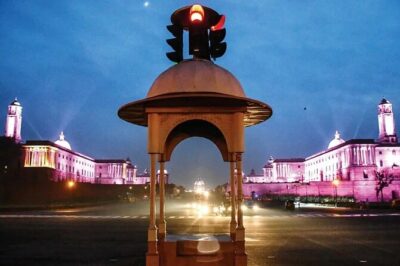
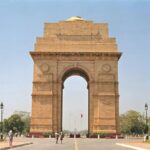
Then you’ll stop for photos at India Gate, an Arc-de-Triomphe-like gateway about 140 feet high, built as a war memorial in memory of soldiers of the British Indian Army who lost their lives. You’ll also stop for photos at the Presidential Palace, known as Rashtrapati Bhavan, which was once the Viceroy’s House.
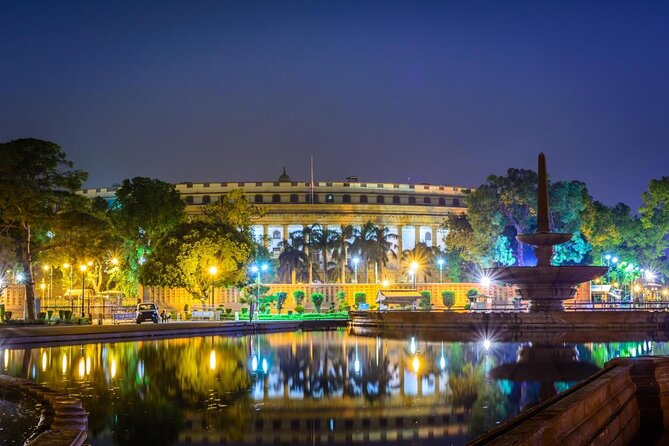
After that, you’ll drive around the Parliament House designed by Edwin Lutyens and Herbert Baker. You’ll get to see it from the road, with the day keeping a steady pace.
A quick note: these are photo and drive-around moments, not long stays. That’s part of the value equation for a two-day tour. If you want to do deeper visits inside these complexes, you’ll need additional time in New Delhi.
Swaminarayan Akshardham: a major modern cultural statement
Next is Swaminarayan Akshardham, described as showcasing 10,000 years of Indian culture with architecture, tradition, wisdom, and bliss. It takes about an hour, and admission isn’t included.
This stop tends to be a strong “today in Delhi” contrast after the historical monuments. Even if you’re not there for religious meaning specifically, the scale of the site makes it easy to understand why people plan entire days around it.
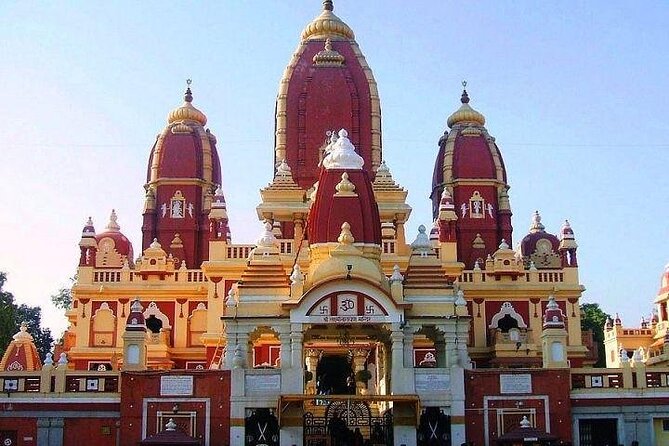
Lotus Temple: one of the simplest faith stops to enjoy
Finally, you’ll visit the Lotus Temple. It’s a Baháʼí House of Worship dedicated to the oneness of humanity and religion, and it welcomes people from all religious backgrounds.
Admission is listed as free here, with about an hour on site. It’s also one of the easiest places in Delhi to enjoy without feeling rushed. If you want one last iconic stop that feels calm and visually clear, this is it.
The value question: is $159 a fair deal for two packed days?
At $159 per person, you’re paying for more than “transport + tickets.” You get an air-conditioned vehicle, hotel pickup/drop-off, a government-approved professional tour guide, bottled water, and breakfast. If you choose the hotel option, accommodation in a 3/4/5 star property is included as well (depending on what you select).
Then there’s the extra cost: monument fees are listed as $30 per person and are not included in the base price. Many of the bigger paid-entry stops are among the World Heritage sights.
So is it worth it? For most people, yes—especially if you’d otherwise have to piece together a driver, hire a guide, and coordinate entrance fees across Old and New Delhi. The tour also saves you time. Two days in Delhi means you’re choosing between “less planning” and “more indecision.” This tour leans hard toward less planning.
What makes the guide and driver element matter here
The tour’s pricing works best because the human side is handled well. In practice, the guide is the difference between walking into monuments blind and understanding why each place exists.
You’ll also likely feel the difference with a skilled driver, particularly during Old Delhi and central New Delhi traffic. And there’s another detail I really appreciate: the tour can adjust to real-world conditions like weather and your personal wishes. That kind of flexibility is the difference between a strict checklist and a trip that actually fits you.
One traveler highlighted a guide named Alveena by name, calling out that the day felt smooth and attentive. Another person mentioned using the tour to support a specific goal like getting clothing made and tailored, plus a mix of sites that gave a solid introduction to Delhi’s story.
Who this tour is best for (and who should choose differently)
This is ideal if you want:
- A two-day introduction to Delhi’s key heritage and religious sites
- A structured route that reduces planning stress
- Private-group service with pickup and an A/C car
- A mix of Old Delhi and central New Delhi without needing separate day trips
You might want to choose a different format if:
- You only care about interiors and long stays at a few major monuments
- You dislike “photo stops” and drive-arounds (because several central landmarks are handled that way here)
- You have a very tight budget once entrance fees are added
Should you book the 2 Day Delhi Tour with Joyful Holidays?
If you’re visiting Delhi for the first time and you want a guided, low-stress “best of” that connects Mughal monuments, Gandhi’s memorial, and modern faith sites, I’d book this. The private guide + driver setup is doing real work here, and the schedule is built for two days rather than pretending you can do everything.
Just budget for monument fees and mentally accept that a couple of the biggest names are seen from outside or from the road. If that tradeoff sounds fine, you’ll likely come away feeling like you understand Delhi faster than you would going it alone.
FAQ
FAQ
What’s the duration of the Delhi tour?
The tour runs for 2 days (approximately).
What time does pickup usually happen on day one?
Pickup is at 9:00 AM or at your given pickup time.
Where does pickup work from?
Pickup is offered from Delhi, Gurugram, or Noida.
Is hotel pickup and drop-off included?
Yes, hotel/airport pickup and drop-off are included.
What’s included for meals?
Breakfast is included.
Is there an air-conditioned vehicle?
Yes, an air-conditioned vehicle is included.
Are monument entrance fees included in the price?
No. Monument fees are listed as $30 per person and are not included.
Which sites are included on day one?
Jama Masjid, Chandni Chowk (with a rickshaw ride), a Red Fort outside photo stop, Raj Ghat, Humayun’s Tomb, and Qutub Minar.
Which sites are included on day two?
Gurudwara Bangla Sahib, photo stops at India Gate and Presidential Palace (Rashtrapati Bhavan), a drive around Parliament House, Swaminarayan Akshardham, and Lotus Temple.
Is this a private tour?
Yes. Only your group participates.
Is free cancellation available?
Yes. You can cancel up to 24 hours in advance for a full refund.