REVIEW · NEW DELHI
Private 4-Day Golden Triangle Tour – Delhi Agra and Jaipur
Book on Viator →Operated by Private Driver In India · Bookable on Viator
Delhi to Agra to Jaipur is a lot for first-timers. This private Golden Triangle plan keeps you moving with hotel pickup and local guides, so you spend less time figuring transit and more time seeing the real highlights. You also get a driver who can adjust your day when roads or crowds get annoying.
I especially like how the itinerary hits both the headline sites and the Mughal-era gems (think Taj Mahal, Humayun’s Tomb, and Qutub Minar) without forcing you to jump between trains and stations. Another big win is the comfort factor: a private, air-conditioned vehicle with an English-speaking driver means you can actually recharge between stops.
One thing to consider: entrance fees and tickets can be confusing because the trip notes flag many monuments as not included even while the package lists monument entrance fees as included—so you’ll want to confirm what’s covered for your exact booking, especially for the Taj Mahal.
In This Review
- Key things to know before you go
- Private car, real guides: the Golden Triangle without the stress
- Day 1 in Delhi: Old Delhi icons plus Lutyens landmarks and UNESCO tombs
- Day 2 in Agra: Sunrise Taj Mahal, Agra Fort, and the Baby Taj
- Day 3 in Jaipur: City Palace, Jantar Mantar, Hawa Mahal, and Albert Hall
- Day 4 in Jaipur: Royal Gaitor, Jal Mahal, Panna Meena stepwell, and Amer
- Transport and timing: why the driver is a real part of the value
- Price and value: what you’re paying for at $270 per person
- Practical notes that can save your day
- Should you book this Golden Triangle private tour?
- FAQ
- What cities does the 4-day tour cover?
- Is pickup and drop-off included?
- Is this tour private or group-based?
- Do you get guided tours in each city?
- What kind of transportation is used?
- How much does the tour cost?
- Are monument entrance fees included?
- Is the Taj Mahal open every day?
- What’s the cancellation policy?
Key things to know before you go
- Private door-to-door pickup in Delhi, plus the same for drop-off, reduces hassle fast
- Local guides each city mean you’re not just looking at buildings—you’re getting stories and context
- Flexible private driving helps you avoid the worst timing when traffic gets rude
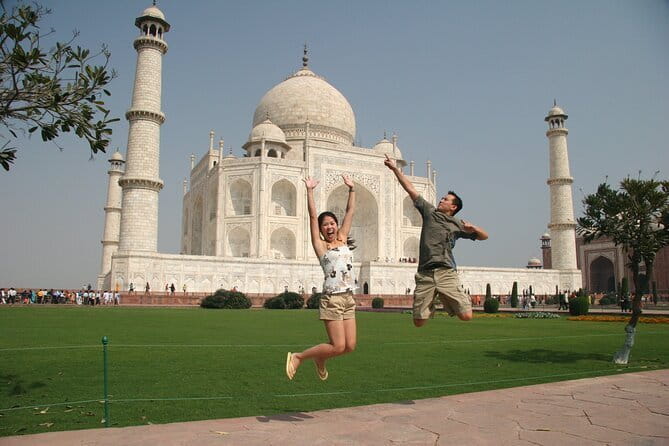
- Sunrise Taj Mahal timing (with guided time inside) is the kind of upgrade that pays off
- More than the postcards: stepwell time, cenotaphs, and Fatehpur Sikri round out the circuit
- Driver-quality matters: feedback repeatedly highlights polite, professional, safety-first driving and useful timing advice
Private car, real guides: the Golden Triangle without the stress
The Golden Triangle is famous for a reason, but travel math in India can be tough when you’re tired: schedules, station logistics, and long walks in heat or crowds. This tour strips out the biggest headaches by giving you private hotel or airport pickup and a private air-conditioned car with an English-speaking driver. That lets you keep a calm rhythm from morning to evening.
I also like that the plan relies on private local guides in each city. You don’t have to rely on your own reading app while everyone else is rushing around you. Guides also make it easier to understand what you’re seeing—especially at sites where the details matter, like Mughal architecture and Jaipur’s science-and-geometry instruments.
You can also read our reviews of more private tours in New Delhi



Day 1 in Delhi: Old Delhi icons plus Lutyens landmarks and UNESCO tombs
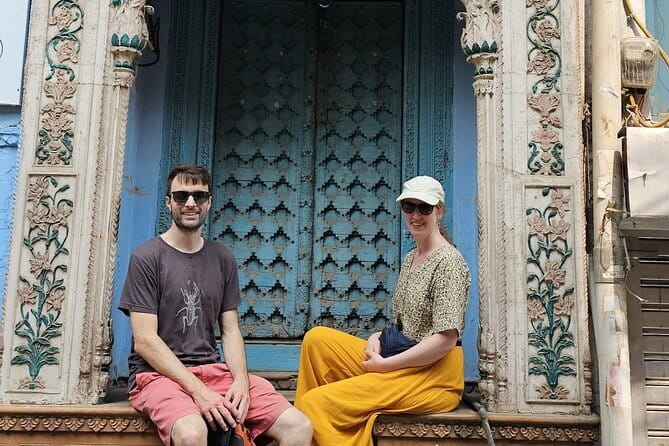
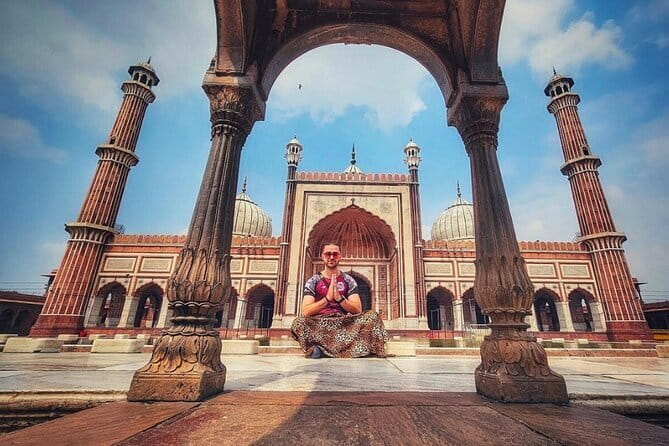
Delhi can feel like two cities at once. This day starts in Old Delhi with Jama Masjid, one of India’s largest mosques, built in the 1600s under Mughal Emperor Shah Jahan. It’s one of those places where the scale hits you first, then your guide helps you notice the design choices second.
Next is Raj Ghat, the memorial site for Mahatma Gandhi, where you’ll see the simple black marble platform and eternal flame that mark his legacy. It’s a quieter pause in the middle of the day, and it also gives you a real sense of how layered Delhi is—spiritual, political, and historical all in one trip.
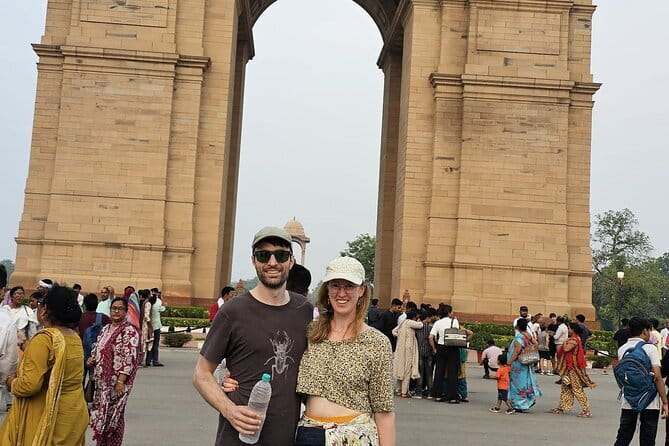
Then you shift toward the New Delhi landmarks. India Gate is a short stop but worth it for the big wall of names and the feeling of war memorial gravity. From there, you’ll also see Rashtrapati Bhavan and the Parliament House—major British-era architecture projects designed by Sir Edwin Lutyens and completed in the late 1920s (Parliament House was completed in 1927). Even when you’re mostly viewing from the outside, this is where Delhi’s planning and symmetry become obvious.
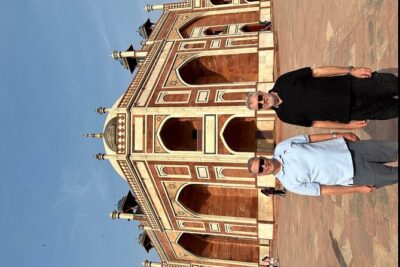
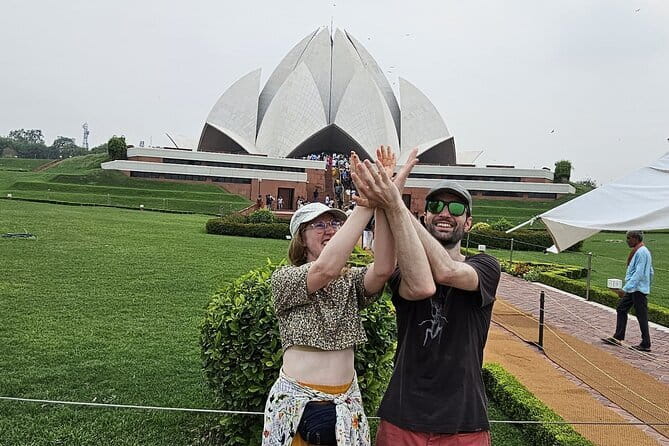
In the afternoon, the itinerary leans back into UNESCO Mughal-era power. Humayun’s Tomb is a top stop if you want to see the gardens and dome style that influenced later Mughal design. Then you visit the peaceful Lotus Temple, a Bahá’í House of Worship known for its lotus-inspired shape and universal welcoming message.
To cap the day, Qutub Minar brings you back to the early Indo-Islamic era: a tall brick minaret that’s a UNESCO World Heritage site. It’s the kind of stop where a guide’s explanation can change how you read it—history becomes architecture, not just dates.
At the end of a long Delhi day, you drive to Agra via the Yamuna Expressway (about three hours). A private car makes this transition feel like part of the tour instead of a punishment. Once you arrive, you can actually check in and rest without fighting transit schedules.
Day 2 in Agra: Sunrise Taj Mahal, Agra Fort, and the Baby Taj
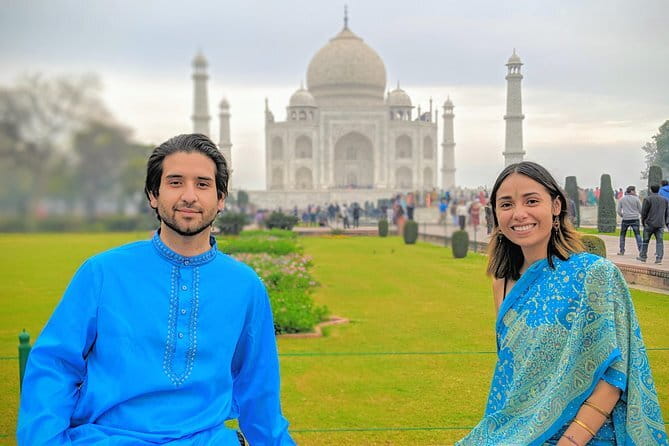
Agra lives and dies by the Taj Mahal. This plan is built around a sunrise Taj Mahal visit, then a guided tour inside for about two hours. Sunrise matters because you’re more likely to experience the monument before the heaviest crowds and heat. Your guide also has the time to point out the symbolism and design logic that most people miss when they just sprint for photos.
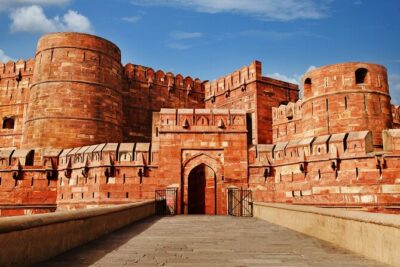
After the Taj, you visit Agra Fort, a UNESCO site that once served as the main residence of Mughal emperors. The fort’s palaces, balconies, and garden areas help you understand the Taj wasn’t a standalone dream—it was part of a whole imperial landscape. The guided approach is useful here because Agra Fort is easy to treat like just “more walls” unless someone shows you what to look for.
Next comes Itmad-ud-Daula, often called the Baby Taj. It’s a Mughal mausoleum that feels smaller than the Taj but still carries the same kind of detail and refinement. If you like seeing how styles evolve, this stop is a strong bridge between “the famous one” and the earlier influences.
Then the itinerary adds Fatehpur Sikri near Agra. It was the Mughal capital for a brief period and is another UNESCO site, known for its architecture from Emperor Akbar’s era. Expect a longer, more spread-out feel than the Taj-and-fort rhythm, so pace yourself. A good guide keeps the walking purposeful and helps you connect what you see to why that city was built where it was.
By late day, you continue on to Jaipur. The route time is listed as about three hours, and the plan includes hotel check-in and downtime. I like that this tour doesn’t pretend you’ll be fresh every single hour—Agra days are intense.
Day 3 in Jaipur: City Palace, Jantar Mantar, Hawa Mahal, and Albert Hall
Jaipur is where the Golden Triangle shifts from Mughal power to Rajput identity and city design. You start with City Palace, built in the early 1700s and once the administrative and ceremonial center of the Maharajas. It’s not just a building. It’s a key that unlocks the logic of how power and culture were organized in Jaipur.
Next is Jantar Mantar, a UNESCO site with nineteen astronomical instruments built in the 1700s under Rajput king Sawai Jai Singh II. This is a favorite stop for people who like learning by looking. The instruments are practical—meant to measure time and celestial events—so it helps to have a guide explain what each device does.
Then comes Hawa Mahal, the Palace of Breeze. The five-story, honeycomb-like façade made of red and pink sandstone is the obvious photo stop. What makes it more satisfying is understanding why those windows exist and how the building was designed for the life happening inside the palace during those eras.
You’ll also visit Albert Hall Museum, Rajasthan’s oldest museum, built in 1876. Since the museum contains art, textiles, and historical artifacts, it helps balance the day. After hours of stone monuments, you get something that feels more interpretive—objects and materials, not just structures.
This day is well-paced for a private tour. Shorter timed stops like Jantar Mantar and Hawa Mahal keep the momentum without dragging you through everything. If you want fewer museum hours, you can also ask your guide about which parts are most important for your interests, since the tour is private.
Day 4 in Jaipur: Royal Gaitor, Jal Mahal, Panna Meena stepwell, and Amer
Day 4 is about variety. Jaipur’s big names are great, but this day gives you more texture.
You start with Royal Gaitor Tumbas, royal cenotaphs of Jaipur’s Maharajas at the base of the Aravalli Hills. These marble and sandstone tombs mix Rajput and Mughal styles, and the vibe is more reflective than “tour-bus quick stop.” It’s the sort of place where photos come out better when you slow down.
Then there’s Jal Mahal, the palace that appears to float on Man Sagar Lake. It’s a brief stop, but it’s useful because it gives you that classic visual break from forts and palaces. Even if you only see it for a moment, it’s a strong reminder of how Jaipur’s water systems and city planning connect to architecture.
Next is Panna Meena ka Kund, an ancient stepwell with geometric design and multiple levels of stairs leading down to the water. Stepwells are one of those travel discoveries that you don’t fully appreciate until you stand near one. The design details and the idea of water storage shaped into architecture make it a memorable stop—especially if you already like craft and design.
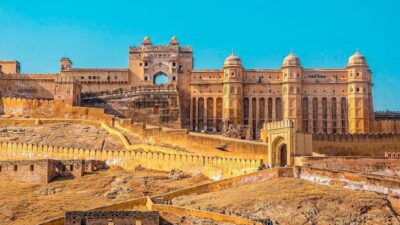
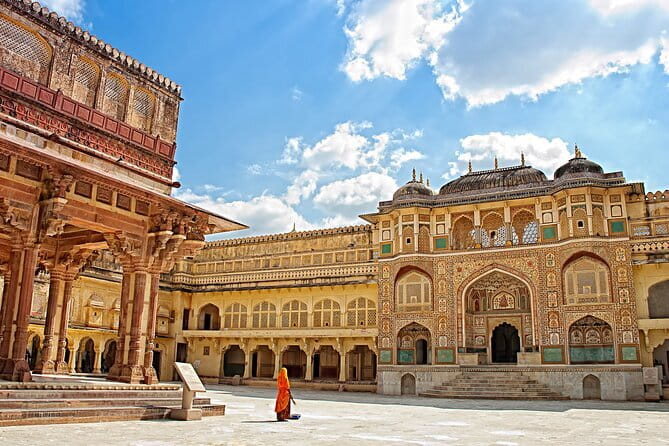
The day finishes at Amer, a historic town near Jaipur known for heritage buildings, temples, and traditional havelis, set in the Aravalli Hills. Amer is a good closing choice because it brings the “more than one thing” feeling—heritage, views, and a sense of how life was organized in this region. With a private guide, you can also spend time focusing on the details you care about most.
You can also read our reviews of more tours and experiences in New Delhi






Transport and timing: why the driver is a real part of the value
In India, the driver isn’t just a taxi. A good driver can save you time and stress, especially when you’re bouncing between major sights. Feedback you can lean on repeatedly highlights drivers who are polite, professional, punctual, and safe, including named drivers like Ajit and Vinodh, and also references to Manoj and Amit Kasana. More than that, the advice often centers on timing—like suggestions for choosing when to visit to avoid peak traffic.
Car size also matters. The tour lists different vehicle types depending on group size: for 1–3 passengers you’re in a four-seater sedan (Toyota Etios or Dzire), for 3–4 you’re in a six-seater wagon (Toyota Innova/Crysta/Ergta), and for larger groups you’ll use a ten-seater minivan. That’s practical because it affects comfort and space for bags and water.
The tour’s rhythm also helps. Your biggest travel chunk is the Delhi-to-Agra drive, but it’s planned as a direct highway route (Yamuna Expressway). That reduces random delays, which is exactly what you want on day one.
Price and value: what you’re paying for at $270 per person
At $270 per person for a four-day, private, hotel-pickup Golden Triangle, you’re paying for three things: time, comfort, and guided interpretation.
Time: You avoid train and bus friction. Instead, you use the travel hours to move between cities, then spend the day efficiently at monuments.
Comfort: the air-conditioned private vehicle matters on both long road stretches and hot midday touring. Private doesn’t just mean quiet—it also means you can stop when you need to, and you’re not trapped inside someone else’s schedule.
Guides: Each city includes private local guides. A guide is what turns the Taj Mahal from a famous photo into an actual story, and it’s what helps you connect Qutub Minar, Humayun’s Tomb, and other sites into a bigger picture of design and empire.
Now for the honest caveat: the tour data includes monument entrance fees as included, but individual stop notes also mark many admissions as not included. That doesn’t mean the tour is bad—it means you should confirm what’s covered for you. Ask specifically about Taj Mahal and any other sites with that status in your booking details.
Practical notes that can save your day
Taj Mahal timing can be tricky. The plan notes that the Taj Mahal is closed on Fridays for general viewing. If your dates land on a Friday, your itinerary may need adjustment.
Also, bring realistic expectations about walking and heat. Even when stops are timed, this is still a sight-heavy circuit. The private driver helps you manage the pacing, but you’ll still want comfortable shoes and a water plan.
Finally, if you care about food and shopping, use your guide and driver. Some of the best feedback centers on guides suggesting good local restaurants and even craft-focused stops. That’s the stuff that makes the trip feel lived-in, not just checklist-complete.
Should you book this Golden Triangle private tour?
Book it if:
- You want first-time-friendly structure for Delhi, Agra, and Jaipur with minimal transit stress
- You value private guidance at major sites instead of self-guiding everything
- You’re traveling with people who would hate squeezing into public transport
- You want a sunrise Taj Mahal experience built into the plan
Skip or double-check if:
- You’re trying to travel on a strict budget and every entrance fee matters, since the included-vs-not-included status needs confirmation
- Your dates include a Friday, since Taj Mahal closure may require changes
If you want the Golden Triangle without the day-to-day headaches, this is a solid way to do it.
FAQ
What cities does the 4-day tour cover?
It covers New Delhi, Agra, and Jaipur as part of the Golden Triangle.
Is pickup and drop-off included?
Yes. The tour includes hotel or airport pick-up and drop-off.
Is this tour private or group-based?
This is private. Only your group participates.
Do you get guided tours in each city?
Yes. All sightseeing tours include private local guides.
What kind of transportation is used?
You travel by a private, air-conditioned vehicle with an English-speaking driver.
How much does the tour cost?
The price listed is $270 per person.
Are monument entrance fees included?
The package says monuments entrance fee is included, but the stop notes also mark many admissions as not included. You should confirm what’s covered for your specific booking, especially for the Taj Mahal.
Is the Taj Mahal open every day?
No. The Taj Mahal is closed on Fridays for general viewing.
What’s the cancellation policy?
Free cancellation is offered up to 24 hours in advance for a full refund.