REVIEW · NEW DELHI
Private City Tour to Old and New Delhi
Book on Viator →Operated by Ashok Tour · Bookable on Viator
Delhi can feel like a test of patience.
This private city tour makes it easier by grouping the biggest Old and New Delhi landmarks into one smooth, guide-led outing from Connaught Place, with an air-conditioned vehicle and pickup available.
What I like most is the way it balances landmark drama with quick, break-friendly stops: Qutub Minar and Humayun’s Tomb for the big architectural shifts, then Lotus Temple and India Gate where you can slow down. The other win is the on-the-ground service—people highlight polite, English-speaking drivers who keep things comfortable, plus a mobile ticket for less fuss.
One consideration: entrance fees aren’t included, with the noted cost listed as $50 for two persons, and Akshardham has strict rules about bags and electronics inside the complex.
In This Review
- Key Highlights at a Glance
- Private Delhi Route From Connaught Place With AC Comfort
- Price and Tickets: What You’re Really Getting for $65
- Qutub Minar: Sultanate Architecture You Can Feel Up Close
- Humayun’s Tomb: The Mughal Masterpiece That Points Toward the Taj
- Lotus Temple: Quiet Meditation in a Busy City
- India Gate: World War I Memorial With the Amar Jawan Flame
- Red Fort: Mughal Power, Public Halls, and White Inlay Detail
- Jama Masjid: One Mosque, Many Layers of Mughal Detail
- Akshardham Temple Rules: Go in Prepared (and Light)
- Lodhi Garden: A Peaceful Reset Between Big Monuments
- Pacing Tips for a 4 to 8 Hour Day in Delhi Traffic
- Who This Private Delhi City Tour Fits Best
- Should You Book This Tour?
- FAQ
- What’s the price for this private city tour?
- How long does the tour take?
- Are entrance fees included?
- Is pickup included, and where does the tour start?
- What’s included in the tour?
- Are there any listed operating hours?
Key Highlights at a Glance
- Private group up to 5 means you’re not crammed into other people’s plans
- AC transport + bottled water help when the day runs long
- Mobile ticket keeps check-in simple
- Major UNESCO-level monuments: Qutub Minar and Humayun’s Tomb on the same day
- Religion and remembrance mix at Lotus Temple, Jama Masjid, and India Gate
- Akshardham security rules mean you should travel light
Private Delhi Route From Connaught Place With AC Comfort
Starting at Connaught Place is smart. It’s central, easy to orient yourself around, and it puts you close to the kind of Delhi rhythm that makes the rest of the city easier to handle. The tour ends back at the meeting point too, which is a real stress-saver when you’re dealing with Delhi traffic and timing.
This is a private experience for your group (up to 5), so you can keep your pace. You’re not negotiating with a crowd, and you’re less likely to feel stuck watching someone else’s shopping stops or bathroom breaks. It’s also built for comfort: an air-conditioned vehicle plus bottled water are included, and pickup is offered.
Do expect a day that feels full. You’ll cover monuments that are spread across both Old and New Delhi, and the duration is flexible (listed as about 4 to 8 hours). If you want a classic “see the big stuff” day without doing it in five separate taxis, this format fits.
You can also read our reviews of more city tours in New Delhi


Price and Tickets: What You’re Really Getting for $65
The price is listed as $65 per group (up to 5). That’s one of the better deals in Delhi-style pricing because it’s not “per person” in a way that doubles your cost when you travel with friends or family. In practice, it makes this tour feel closer to a private car + local expertise package than a simple sightseeing hop.
Here’s the main thing to budget: entrance fees aren’t included. The cost given is $50 for two persons, and several stops have tickets not included. At the same time, some key places on the route are free—Lotus Temple, India Gate, and Lodhi Garden. So the money you add on top should feel more targeted than paying for every single site.
Also, plan for mental budget, not just money. Delhi monuments can involve steps, long walks, and time in open areas. Having AC transport between stops lets you focus on the sights instead of surviving the commute.
Qutub Minar: Sultanate Architecture You Can Feel Up Close
Qutub Minar is one of those places where you instantly understand why Delhi’s skyline has so many layers. This UNESCO site began in the early 13th century under Qutub-ud-din Aibak, completed by his successor Iltutmish, and later enhanced by rulers including Firoz Shah Tughlaq and Sikandar Lodi.
The tower itself is massive—about 73 meters tall—with red sandstone and marble, and it narrows dramatically from base to top. That makes it a great stop even if you’re short on time. You can’t miss it, and the scale does the storytelling for you.
Two practical notes. First, this is a “look, then look again” site. At first glance it’s just height and color; on a second pass you notice the craftsmanship and how the structure reflects an Indo-Islamic Afghan architectural influence. Second, if you’re sensitive to sun, plan your photos wisely. Open sky means heat can build fast.
Humayun’s Tomb: The Mughal Masterpiece That Points Toward the Taj
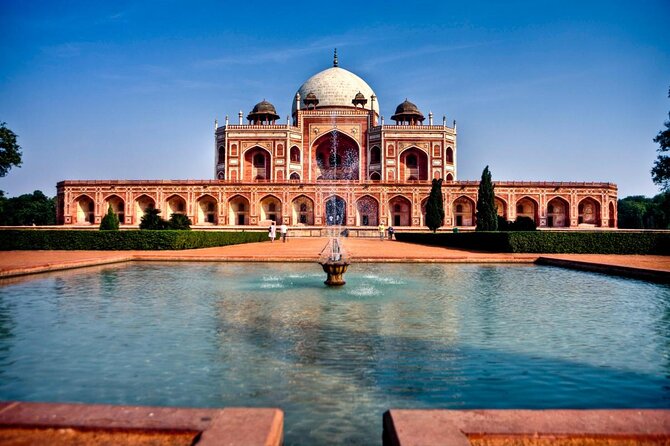
Humayun’s Tomb is where the Mughal style becomes visible in a more mature, intentional way. Built in the mid-16th century as the tomb of Mughal emperor Humayun, it was commissioned by his widow Empress Bega Begum and completed in 1572.
What I like about this stop is how it feels like a designed space, not just a monument. It’s often regarded as a precursor to the Taj Mahal, but you don’t need to think of it as “almost-Taj.” The important part is the architectural logic: a Persian-influenced plan combined with Indian elements, guided by the Persian architect Mirak Mirza Ghiyas.
Give yourself time to pause here. The tomb complex works well when you’re not rushing. If you like symmetry, gardens, and the sense of ceremony in Mughal design, this is one of the stops that will stay with you long after the car pulls away.
Lotus Temple: Quiet Meditation in a Busy City
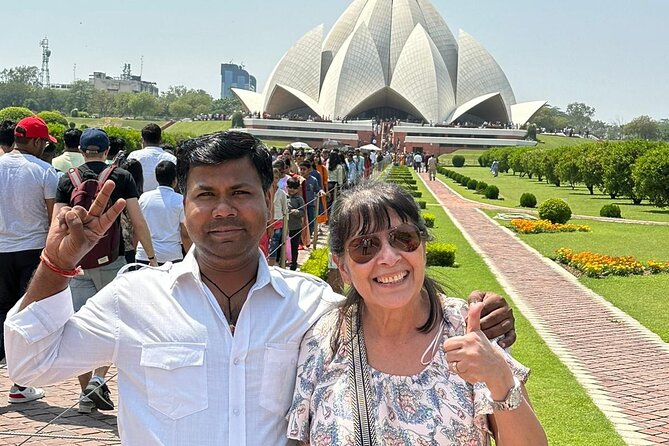
Then you hit the kind of contrast Delhi is good at: a modern place of worship that pulls you out of the city noise. The Lotus Temple is a Bahá’í House of Worship and is described as the Mother Temple of the Indian subcontinent. It’s open to people of all faiths, and the purpose is meditation and prayer.
The design is instantly recognizable—the lotus flower shape—made from white marble and surrounded by well-kept gardens. It was designed by Iranian architect Fariborz Sahba and completed in 1986. That means you’re not only seeing Delhi’s “old eras,” you’re seeing how later generations built sacred spaces for a modern world.
Admission is free, and the recommended time is about 30 minutes. That’s perfect for a reset. Think of it as your calm break before you step back into big, more imposing Mughal-era structures.
You can also read our reviews of more private tours in New Delhi






India Gate: World War I Memorial With the Amar Jawan Flame
India Gate is not just a photo spot. It’s a memorial with a specific story. Built to commemorate soldiers of the Indian Army who lost their lives in World War I, it was originally called the All India War Memorial. The foundation stone was laid in 1921, and it was completed in 1931.
The design takes inspiration from the Arc de Triomphe in Paris, which is a fun detail if you like architecture crossovers. The monument itself is about 42 meters tall, made of red and yellow sandstone, and the main archway is inscribed with the names of more than 13,516 soldiers killed in the Afghan war of 1919.
At the base is the Amar Jawan Jyoti, an eternal flame that continues burning. This part of Delhi is where you can slow down without losing meaning. Admission is free and the suggested time is about 30 minutes—enough to read, look closely, and let the weight of the place sink in.
Red Fort: Mughal Power, Public Halls, and White Inlay Detail
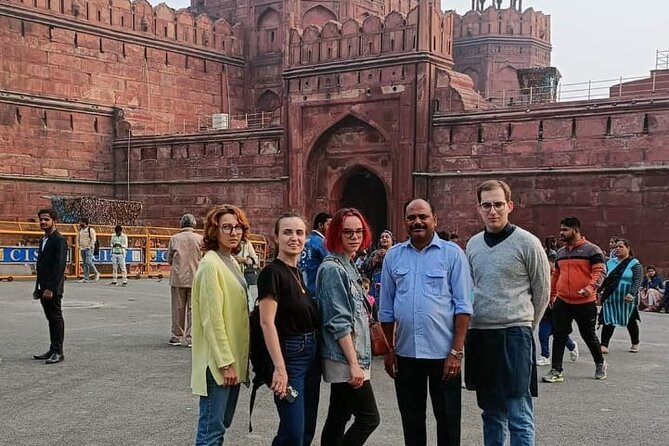
Red Fort is the kind of monument that looks like it belongs in a history book—until you’re standing in front of it and the scale hits you. Built by Mughal emperor Shah Jahan, construction began in 1638 and finished in 1648. It served as the main residence for Mughal emperors for nearly 200 years.
The fort is a classic Mughal architecture mix: red sandstone walls with intricate white marble inlays. If you pay attention while you walk, you’ll see how the design creates a rhythm—architecture meant for both authority and display.
Inside, two major halls are often highlighted: Diwan-i-Aam (Hall of Public Audience) and Diwan-i-Khas (Hall of Private Audience). That division matters. It explains how Mughal power was staged—public-facing ceremony on one side, more controlled access on the other.
This stop is listed at about an hour, and entrance tickets are not included. Plan for time to explore and to photograph what you can. If you’re pressed for time, focus on the halls and the external inlay patterns first.
Jama Masjid: One Mosque, Many Layers of Mughal Detail
Jama Masjid is where Old Delhi religious architecture feels both grand and functional. Commissioned by Shah Jahan, construction began in 1650 and was completed in 1656. It’s built in Mughal style using red sandstone and white marble.
The architect is listed as Ustad Khalil, and the design reflects Persian, Timurid, and Indian influences. That mix shows up in the proportions and the emphasis on symmetry and statement entryways.
One part you’ll likely notice immediately is the Buland Darwaza, the grand eastern gateway. It’s described as a masterpiece of Mughal architecture, which is a strong clue that you should spend a few extra minutes there rather than rushing through.
Admission isn’t included, and the recommended stop time is about 30 minutes. Even then, you’ll get enough to understand why this mosque is still a centerpiece in Delhi today.
Akshardham Temple Rules: Go in Prepared (and Light)
Akshardham is a different flavor of Delhi—more modern religious complex, designed to impress, but with strict visitor rules. It was inaugurated on November 6, 2005 and built by the Bochasanwasi Akshar Purushottam Swaminarayan Sanstha (BAPS), inspired by spiritual leader Pramukh Swami Maharaj.
The main monument is the Akshardham Mandir, dedicated to Bhagwan Swaminarayan, with Akshar Purushottam Maharaj as the main deity. The scale is hard to ignore: it includes 234 intricately carved pillars, 9 domes, and over 20,000 statues.
Here’s the practical part. Due to security concerns, visitors are not allowed to carry bags, cameras, or electronic devices inside the temple complex. There’s a secure facility to leave belongings. If you show up with a daypack and a camera bag, you’ll lose time and feel annoyed—so travel light if you can.
The listed time here is about 1 hour 30 minutes, and admission isn’t included.
Lodhi Garden: A Peaceful Reset Between Big Monuments
After the structured, high-security energy of Akshardham, Lodhi Garden feels like permission to exhale. It’s named after the Lodhi Dynasty that ruled parts of northern India in the 15th and 16th centuries, and the garden contains monuments from that period.
This stop is especially good for people who want “Delhi, but quieter.” The garden covers about 90 acres and is positioned between Khan Market and Safdarjung’s Tomb. It’s a popular place for walking and jogging, which makes it a great breather when you’ve been standing around for hours.
Time is short—about 30 minutes—and admission is free. But that’s enough to walk a loop, take photos without rushing, and recharge before the drive back.
Pacing Tips for a 4 to 8 Hour Day in Delhi Traffic
Delhi traffic is real, and your comfort is tied to pacing. This tour helps because it builds in travel time between major clusters, and you’re in an AC vehicle rather than stuck outside. Still, a full-day monument route can turn into “stand, walk, repeat” if you don’t manage your energy.
My advice:
- Start your day planning to take photos early and often. Later in the day you’ll be tired and less patient.
- Use the free stops (Lotus Temple, India Gate, Lodhi Garden) as resets. That’s where you can sit, read, and breathe.
- At Akshardham, treat the security process like part of the sightseeing. Traveling light will make a noticeable difference.
If you tend to get overwhelmed, you’ll probably love this format because it’s structured. If you love wandering slowly on your own, you may want to keep one extra half-hour in reserve for the place that hooks you the most.
Who This Private Delhi City Tour Fits Best
This tour makes the most sense if you want a lot of major sights without turning your day into logistics. It’s a strong choice for:
- Families and small groups (up to 5) who want one booking, one driver, one plan
- First-time Delhi visitors who need a solid mix of Old Delhi power, New Delhi layout, and religious architecture
- Travelers who prefer comfort between stops rather than jumping between local transport and navigation
It’s also a good fit if you care about variety. You get the Sultanate story (Qutub Minar), the Mughal leap (Humayun’s Tomb), the sacred calm (Lotus Temple), public remembrance (India Gate), and then the heavy-hitting Old Delhi sites (Red Fort and Jama Masjid), before finishing with Akshardham and a break at Lodhi Garden.
Should You Book This Tour?
If your goal is to see the big Delhi landmarks in one day, with an AC car, bottled water, and a private group setup, I’d book it. The value is strongest when you’re traveling as a group of friends or family because the $65 per group pricing can stretch farther than individual tours.
I’d think twice only if you hate crowds or you know you’ll struggle with a tightly packed schedule. Also, if you don’t want to deal with security rules and bag checks, especially at Akshardham, you should adjust expectations and bring the essentials only.
FAQ
What’s the price for this private city tour?
The tour is priced at $65.00 per group (up to 5 people).
How long does the tour take?
The duration is listed as about 4 to 8 hours.
Are entrance fees included?
No. Entrance fees are not included. The listed entrance fees are $50 for two persons, and some stops are noted as free.
Is pickup included, and where does the tour start?
Pickup is offered. The tour starts at Connaught Place, New Delhi, and ends back at the same meeting point.
What’s included in the tour?
An air-conditioned vehicle and bottled water are included.
Are there any listed operating hours?
The schedule provided includes Monday from 10:00 AM to 4:00 PM.