REVIEW · NEW DELHI
Private Day Tour Tajmahal Agra From Delhi
Book on Viator →Operated by Mystic India Vacations · Bookable on Viator
Agra feels far less daunting at 6 a.m. I love the hotel pickup/drop-off and I love having a professional government-approved guide to keep everything organized from start to finish. In one long-but-straightforward day, you’ll hit the big Mughal sights (Taj Mahal and Agra Fort) plus a stop that explains why Agra is known for marble inlay work.
The biggest consideration is reliability: one recent report describes an operator no-show report and a refund that took days to sort out. If you book, you’ll want to confirm pickup details the day before and keep your communication records.
In This Review
- Key highlights if you’re deciding
- Why Agra from Delhi works in a 10–12 hour day
- The 6:00 a.m. pickup and the Yamuna Express Highway ride
- Taj Mahal planning: timing, views, and what your guide will point out
- Agra Fort: Mughal power, palace spaces, and the Musamman Burj
- Lunch time at a local AC restaurant: how to make it work
- Marble handicrafts factory stop: how Pietra dura becomes a lesson
- Timing that keeps the day from slipping: when you’ll feel the pressure
- Price and logistics: is $92 a good deal?
- Small-group privacy and what to pack for a Mughal marathon
- A note on the one scary reliability report
- Should you book this Taj Mahal and Agra Fort day trip?
Key highlights if you’re deciding
- A full day schedule (about 10–12 hours) with a 6:00 a.m. departure and return to Delhi around 7:00 p.m.
- Two UNESCO-level stops: Taj Mahal (about 2 hours) and Agra Fort (about 1 hour), both with guide-led pacing.
- Comfort basics included: bottled water, pickup/drop-off, and a small-group setup.
- Lunch is optional and planned at a local AC restaurant so you’re not guessing where to eat.
- Agra’s inlay craft lesson: a marble handicrafts factory stop focused on Pietra dura-style work.
- Tickets and fees need a quick check because the plan lists admission in parts, but entrance fees are also listed as not included.
Why Agra from Delhi works in a 10–12 hour day

Agra in a day sounds like a lot. It is. But the advantage of a private day tour is that you’re not stitching your day together with taxis, ticket lines, and uncertain meeting points. You get a clear start time, a clear route, and a guide who knows what to prioritize.
This type of schedule is also built for “first-timers.” You see the two biggest names—Taj Mahal and Agra Fort—without turning the trip into a travel marathon of your own planning. And because the return is planned for about 7:00 p.m., you’re not stuck in Agra overnight with decision fatigue.
You should still treat it like a long day. Expect early wake-up, a car ride, sightseeing time, and then the drive back. If you hate tight timing or prefer to linger, you might feel a little rushed.
You can also read our reviews of more private tours in New Delhi



The 6:00 a.m. pickup and the Yamuna Express Highway ride

The tour starts with a hotel pickup around 6:00 a.m. That early departure matters in two ways: it helps you get to Agra while the day is still fresh, and it keeps the return on track so you’re back in Delhi by evening.
You’ll drive from Delhi to Agra via the Yamuna Express Highway. That’s the practical part of the experience: less hunting for routes, fewer “Are we still going?” moments, and more time devoted to actual sights.
One small detail that makes a difference: the guide is positioned to help with quick reset breaks. The plan notes that if you want to freshen up, your guide will help you take the right kind of hygienic stop. It’s not a luxury spa offer—it’s just the difference between walking into the Taj Mahal day properly and starting it already cranky.
Taj Mahal planning: timing, views, and what your guide will point out

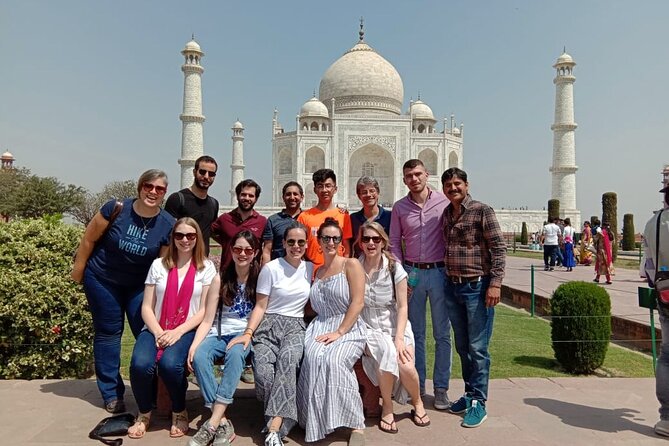
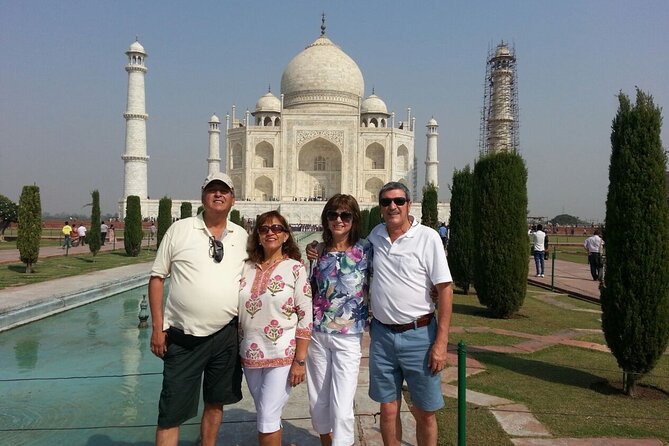
Your Taj Mahal visit is scheduled for about 9:00 a.m. arrival in Agra, with around 2 hours at the site. That time window is realistic. It’s enough to see the main views, move through the key areas, and pause without feeling like you’re constantly sprinting.
Taj Mahal is the big emotional hook of this entire day. It’s an immense mausoleum of white marble, built in Agra between 1631 and 1648 by order of Shah Jahan in memory of Mumtaj Mahal. You’ll hear it described as a symbol of eternal love, and that framing isn’t just poetic—it’s also how the site was designed to create a specific effect of stillness and symmetry.
Here’s where a guide helps in a real way. Without someone to interpret what you’re looking at, it can turn into: wow, pretty building, next. With a guide, you’re more likely to notice the layout, the way the main structures relate to one another, and why the marble surfaces look so different as you move around the complex. The plan also mentions a “Royal Gate” view inside the complex, which is one of those moments that’s more satisfying when you know where to stand and what perspective matters.
Important note for your planning: Taj Mahal entrance fees are listed as not included in the fee breakdown (with 1300 INR per person cited). Yet the itinerary text also says admission ticket included for Taj Mahal. That conflict can be confusing. Before you go, confirm whether your booking will handle the fee or whether you’ll pay at the gate (or reimburse). Budgeting for it is the safest move.
Agra Fort: Mughal power, palace spaces, and the Musamman Burj
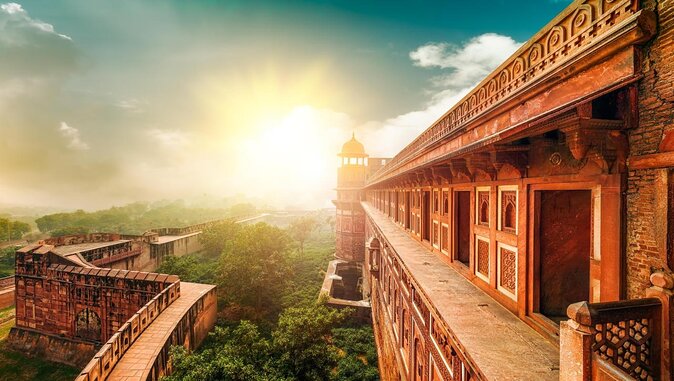
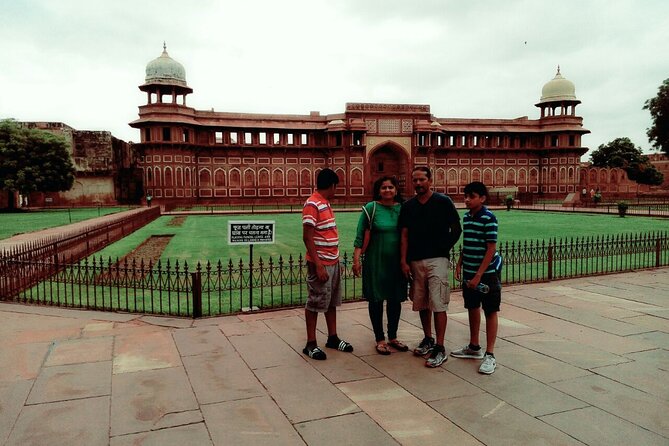
After Taj Mahal, the day shifts to Agra Fort around 11:30 a.m., with about 1 hour on site. The fort is another UNESCO site and it feels totally different from Taj Mahal. Taj Mahal is about monument-making and beauty; Agra Fort is about rule, defense, and how emperors lived inside a fortified system.
Agra Fort was commissioned by Akbar in 1565 (with later additions through the era of Shah Jahan). The tour description highlights several named highlights you can expect to hear about:
- Moti Masjid, a white-marble mosque
- Diwan-e-Am and Diwan-e-Khaas, the public and private audience halls
- Jehangir’s Palace and Khaas Mahal
- Shish Mahal, which is specifically called out in the plan
- The Musamman or Samman Burj, connected to the era when Shah Jahan was held captive in 1666
Even within a tight one-hour window, these names matter because they turn the fort into something more than “old walls.” You start connecting the dots: who used which spaces, how formal ceremonies worked, and why certain structures are where they are.
One practical thought: Agra Fort involves walking and climbing inside a fort environment, so wear shoes you’re comfortable with for a midday pace. If you’re sensitive to heat, plan to keep water handy; bottled water is included, but you’ll still want to drink regularly.
As with Taj Mahal, entrance fees are listed as not included (the Agra Fort fee is cited as 600 INR per person). Again, confirm how your booking treats entry so you’re not surprised at the gate.
Lunch time at a local AC restaurant: how to make it work
Lunch is scheduled around 1:00 p.m., with about an hour. The plan calls it a lunch break at one of the best local AC restaurants, with Mughlai cuisine as the expected style.
AC matters more than you’d think on a day like this. Between the early start and the walking inside two major sites, you’ll appreciate having a real reset. If you’re picky about spice, you can usually adjust, but you’ll want to tell the guide or the restaurant staff what you can handle.
Is lunch included? The tour summary lists “buffet lunch (optional)” under included items. That wording tells you to expect flexibility: the day is built around providing the option, but you may still need to decide on the spot. If you have dietary needs, ask before you confirm the lunch plan.



Marble handicrafts factory stop: how Pietra dura becomes a lesson

Around 2:00 p.m., you’ll visit a marble handicrafts factory for inlay work on marble architecture by local workers. The time here is short—about 30 minutes—but it’s a smart add-on if you want the day to connect to what you saw earlier.
This is Agra’s signature craft. The inlay technique is described as Pietra dura, where semi-precious stones are inlaid into white marble to create decorative objects. The idea is simple: Taj Mahal dazzles you as a monument, but Pietra dura is the craft story behind how that visual effect is made.
The plan also points out what else is commonly produced in Agra: leather goods, brassware, carpets, jewellery, and embroidery work. If you’re the type who likes seeing how a famous local craft actually works—rather than just buying a souvenir—this stop can feel like a useful “why Agra is Agra” moment.
A quick reality check: factory or workshop visits can sometimes feel like a sales stop. The tour plan here doesn’t promise free gifts or shopping requirements, but you should still expect that you’ll be shown items and offered chances to buy. If you’re not in the mood, you can treat it as a short educational break and move on.
Timing that keeps the day from slipping: when you’ll feel the pressure
The day runs like this: departure at 6:00 a.m., Taj Mahal around 9:00 a.m. for about two hours, Agra Fort around 11:30 a.m. for about one hour, then lunch around 1:00 p.m., a marble workshop around 2:00 p.m., and then a drive back to Delhi starting around 4:00 p.m., arriving about 7:00 p.m.
That sequencing is efficient, and efficiency is the whole point. But it also means you should show up ready to move. If you’re prone to slow starts, you’ll want to plan for that on the Delhi side: pack water, keep your phone charged, and be at pickup on time.
One more timing note: the tour is described as requiring good weather. That’s a heads-up that outdoors walking time could be impacted if conditions are poor. If weather turns, the plan is set to offer an alternate date or a full refund.
Price and logistics: is $92 a good deal?
The headline price is $92.00 per person, and you also get hotel pickup and drop-off, bottled water, a small-group setup, and a round-trip private transfer by a private vehicle. You also get a professional guide.
That’s decent value if you compare it to the hassle-cost of organizing transport and guide time yourself. The main thing you’ll want to budget for separately is entrance fees. The tour’s not-included section lists:
- Taj Mahal: 1300 INR per person
- Agra Fort: 600 INR per person
So your total day cost is likely: base tour price plus entrance fees, plus optional items like lunch and any gratuities you choose to give. If you’re traveling as a couple or small group, look for group discounts if they’re available when you book.
Because there’s a mismatch in the text about whether admissions are included, treat this as a confirmation task. Ask the operator what you pay at booking versus what you pay on arrival. That one step can protect you from feeling annoyed mid-trip.
Small-group privacy and what to pack for a Mughal marathon
This is described as private in the sense that only your group participates, with a small-group tour model. Practically, you can expect less crowd stress than a large bus tour, while still keeping the schedule tight enough to hit everything in one day.
For your comfort, plan for:
- Good walking shoes (Taj and fort floors are not always forgiving)
- Sun protection (a day that starts early can still get hot)
- A light layer (mornings can feel cooler than midday)
- Patience for timing (you’re on a set timeline)
Also, carry a little cash for small needs. The tour includes bottled water and covers major items, but you may still want a buffer for personal expenses or tips.
A note on the one scary reliability report
You should know this before you commit: there is a written report describing an operator no-show with delayed refund communication. That kind of issue can happen with any travel platform, but it’s rare enough that you should take it seriously.
If you book, I recommend doing three simple things:
- Confirm your pickup location and time in writing the day before.
- Make sure the contact details for the operator, Mystic India Vacations, are saved on your phone.
- Keep screenshots of your booking info and any messages you exchange.
Most day trips run fine. Still, one red flag means you should show up prepared, not hopeful.
Should you book this Taj Mahal and Agra Fort day trip?
Book it if you want a one-day hit list: Taj Mahal, Agra Fort, a guide, hotel pickup, and an added craft stop—without planning logistics yourself. The schedule is efficient, and the guided approach can turn the day from sightseeing into understanding.
Skip it or pause if you dislike long days, or if you need total flexibility to linger. Also, do the confirmation work carefully because of the reliability concern mentioned in the limited feedback.
If you can live with a timed itinerary and you verify the entrance fee details up front, this tour can be a solid way to experience Agra without wasting your whole trip on transit and planning.