REVIEW · NEW DELHI
Private Delhi Full Day City Tour : Explore the Capital Your Way
Book on Viator →Operated by India Caravan Tours · Bookable on Viator
If you only have one day, this route keeps you moving. It mixes Old Delhi landmarks with New Delhi’s big-state monuments, all in one tight plan with a private driver and a live guide. I like how it’s built around real places you can’t easily stitch together on your own.
Two things stand out. First, the Old Delhi tuk-tuk ride (starting from the Red Fort area) gets you into the narrow lanes quickly, without making you fight traffic for hours. Second, the guide service feels personal—names like Vinay and Shamin show up in the praise, with people calling out the way guides explain meaning, not just facts.
One drawback to consider: it’s a full 8-hour day with several stops, so you’ll want comfortable shoes and a plan to move fast. The experience includes key admissions on some stops, but not everything is guaranteed unless you select the ticketed options, and meals are not included.
In This Review
- Key highlights I’d plan around
- How the 8-hour plan actually works for you
- Old Delhi from the Red Fort area: why the tuk-tuk ride is worth it
- Jama Masjid: the first big wow, plus what to look for
- The spice market stop: sensory learning without the hard sell
- Red Fort: seeing the Mughal seat of power
- Bangla Sahib Gurudwara: free entry and a calmer rhythm
- India Gate and the government district: quick photos, big context
- Akshardham vs Humayun’s Tomb: choosing what fits your day
- Raj Ghat (optional): a short, meaningful pause
- Lotus Temple and Qutub Minar: finishing with contrast
- Lotus Temple: calm, simple, and very photogenic
- Qutub Minar: the height and the heritage factor
- Price and value: what $20 gets you (and what it doesn’t)
- Who this tour is best for
- Should you book this Delhi full-day tour?
- FAQ
- What’s the duration of the Private Delhi Full Day City Tour?
- Where can you be picked up, and when does pickup happen?
- Does the tour include a tuk-tuk ride in Old Delhi?
- Which monuments have admission tickets included?
- Is this tour private or shared with others?
- Can I cancel and get a refund?
Key highlights I’d plan around
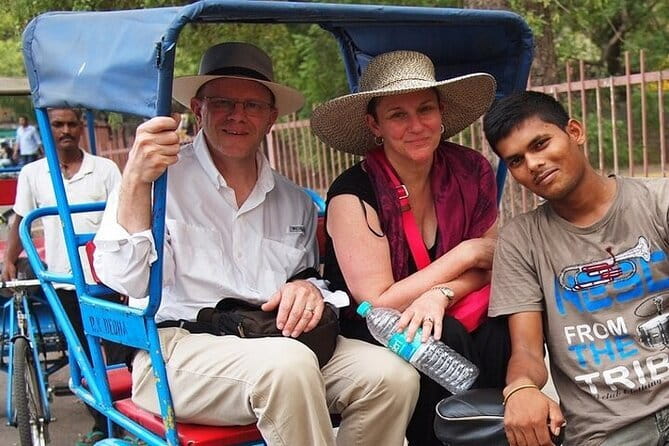
- Tuk-tuk time in Old Delhi that helps you see more than you could by foot
- Jama Masjid on the schedule, with an included admission ticket and major photo moments
- A guide who explains, not just drives (Vinay and Shamin are specifically mentioned)
- Free-entry landmarks like Bangla Sahib, India Gate-area sights, and the Lotus Temple-adjacent plan
- Optional choices like Raj Ghat and the Humayun’s Tomb vs Akshardham note
- A/C car + logistics handled, with water bottles and umbrellas included
How the 8-hour plan actually works for you

This is a private full-day tour that runs about 8 hours, starting with pickup between 8:00 AM and 10:00 AM. You can be picked up from a long list of places in Delhi/NCR—Delhi, Noida, Gurugram, Ghaziabad, and Faridabad—and you’ll also be dropped back to any location in Delhi NCR when you’re done.
That matters, because Delhi is a city where “getting there” can eat your whole day. Having a private A/C car with parking and fuel covered means your time stays focused on sights. Also, it’s not a mixed group shuffle; it’s just your group. That tends to make guides more flexible about pacing and questions.
The tradeoff is pace. You’ll be stacking major landmarks back-to-back: Old Delhi first, New Delhi after. If you’re the kind of traveler who needs long breaks, this may feel tight. If you like structure—and you want a one-day greatest-hits approach—this fits well.
You can also read our reviews of more city tours in New Delhi


Old Delhi from the Red Fort area: why the tuk-tuk ride is worth it

Your day begins with your guide meeting you outside the Red Fort area. From there, you take a tuk-tuk ride to explore Old Delhi’s tight streets while your guide points out what matters to locals.
This is smart planning. Old Delhi is where you want to be for atmosphere—sound, food smells, shopfronts, and layers of history. But it’s also where walking can slow you down fast. The tuk-tuk segment is the middle ground: you get movement and context without losing your whole morning to traffic and detours.
A practical tip: go in with a camera ready but also with patience. When streets narrow, everything feels closer—vendors, passersby, and cars/tuk-tuks all sharing the same tight space. You’ll appreciate having a guide who knows how to keep you oriented.
Jama Masjid: the first big wow, plus what to look for

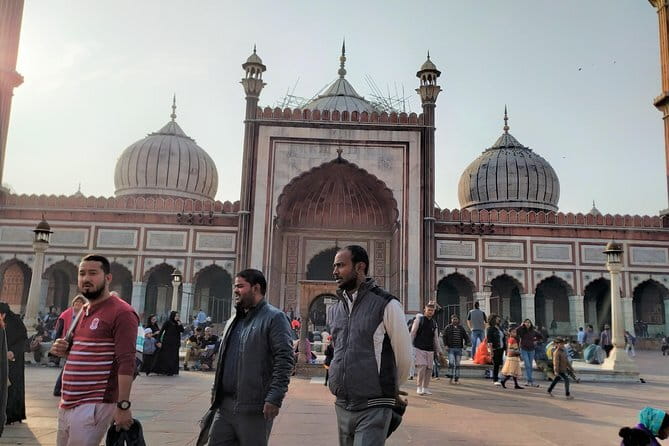
Next up is Jama Masjid, billed as India’s largest mosque. It was built by Mughal Emperor Shah Jahan between 1644 and 1656. Your stop is about 1 hour, and the admission ticket is included.
What makes Jama Masjid especially rewarding on a one-day tour is how photogenic it is, but also how it works as a functioning place of worship. Even if you don’t read Arabic inscriptions or memorize dates, you’ll feel the scale—courtyards, arches, and the way worship spaces pull people into order.
Give yourself a moment for the big view before you rush into details. This is the sort of monument where one good panorama can do more for your understanding than five smaller photos.
The spice market stop: sensory learning without the hard sell

After the main mosque visit, the plan moves into Old Delhi’s market area and includes a spices market stop. Your guide shares interesting facts about spices and how they’re used.
This is a great filler stop, in a good way. It breaks up monument time with something everyday. And because your guide is there, you’re more likely to learn what you actually see—rather than getting pulled into a sales pitch you don’t want.
If you plan to buy spices, keep it simple: buy what you’ll realistically use soon after you get home. Small quantities travel better than you’d think, especially if you’re also carrying gifts or other souvenirs.
Red Fort: seeing the Mughal seat of power

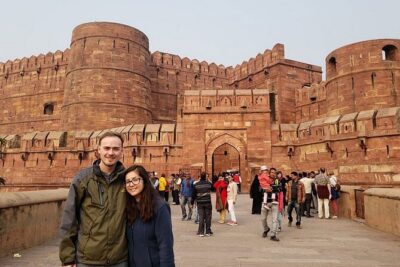
You’ll also see the Red Fort, described as a massive structure built by Shah Jahan between 1639 and 1648 and used as the Mughal emperors’ main residence.
In a time-limited tour like this, you’re typically not doing a long museum-style walkthrough. Instead, you’re getting the core impression and historical framing from your guide, plus photo opportunities in the surrounding area.
I’d treat Red Fort like the punctuation mark of Old Delhi. After you’ve been inside Jama Masjid and through the markets, the Red Fort lands differently. It stops being just a big building and becomes a statement: power, empire, and design in stone.
You can also read our reviews of more private tours in New Delhi






Bangla Sahib Gurudwara: free entry and a calmer rhythm

After Old Delhi, you switch gears and head to Gurudwara Bangla Sahib. This stop is about 30 minutes, with free admission.
The standout detail here is the scale of the langar kitchen, described as preparing food for up to 10,000 people every day. Whether you’re religious or not, this kind of place hits a different note than the Mughal monuments. It’s organized, active, and centered on service.
The rhythm is usually calmer than Old Delhi streets. So think of it as your reset button before the New Delhi drive.
India Gate and the government district: quick photos, big context

From Bangla Sahib, the tour drives toward central New Delhi with time for photos at India Gate (about 15 minutes). Admission is free.
India Gate is one of those monuments where the photo is easy, but the meaning takes an extra minute. Your guide shares historical background, and the plan includes time to look around and take pictures while your car stays positioned for a quick stop.
You’ll also pass major government buildings, including a drive-by discussion of the Parliament House and Rashtrapati Bhavan (the President’s House). Rashtrapati Bhavan is noted as taking 17 years to complete, which helps put its size into perspective.
Don’t expect long wandering time here. Expect a guided “you’re here, now look at this” loop that sets you up for the next temple-heavy section.
Akshardham vs Humayun’s Tomb: choosing what fits your day
This tour includes both Swaminarayan Akshardham and Humayun’s Tomb, but there’s an important note: you can either visit Humayun’s Tomb or Akshardham. The schedule shows Humayun’s Tomb later with included admission, while Akshardham is listed as free-entry with about 30 minutes.
So here’s how I’d think about your choice:
- If you want a strong architectural wow with modern scale and temple complex design, lean toward Akshardham.
- If you want a classic Mughal-era stop that connects to UNESCO-style garden tomb traditions, choose Humayun’s Tomb.
Humayun’s Tomb is described as the first garden tomb in India and a UNESCO World Heritage Site. It was built by Humayun’s wife and completed after Humayun’s death—about as “major history, readable structure” as you can get in one stop.
Either way, keep your watch tight. This tour tries to protect your total sightseeing time, but one long pause can ripple through later stops.
Raj Ghat (optional): a short, meaningful pause
Raj Ghat is listed as optional. It’s a memorial dedicated to Mahatma Gandhi, and the plan notes it was originally the name of a historic ghat in Old Delhi before the memorial area took on the name.
This is a good optional add-on if you want a moment that isn’t about architecture. It’s also typically manageable in the tight schedule because it’s a 30-minute block.
Skip it if you’re feeling rushed or you want to protect time for the next two big icons.
Lotus Temple and Qutub Minar: finishing with contrast
The tour finishes with two very different landmarks—Lotus Temple and Qutub Minar—and both are listed with admission tickets included where specified.
Lotus Temple: calm, simple, and very photogenic
Lotus Temple is described as a Bahá’í House of Worship, dedicated in December 1986, with a flower-like shape. Your stop is about 30 minutes, and the admission ticket is included.
Even if you only see it from a quick circuit, the design does something: it makes the area feel orderly and quiet compared to the earlier stops. That’s a good end-of-day choice because you can slow down without feeling like you’re wasting time.
Qutub Minar: the height and the heritage factor
Then comes Qutub Minar (about 45 minutes). The tower is noted as the highest brick tower in India, built in 1192 and part of a UNESCO World Heritage Site. The plan also mentions it as the first marker of Muslim rule in India.
This is where you’ll likely notice how Delhi’s eras overlap. You’ve moved from Mughal power (Jama Masjid/Red Fort/Humayun’s Tomb) to modern government monuments to religious modernity (Lotus Temple) and then to medieval-era monumental height. It’s a satisfying arc if you like seeing timeline layers.
Practical note: bring something to drink and plan for sun exposure. The tour does include complimentary water bottles and umbrellas, which helps if the weather shifts.
Price and value: what $20 gets you (and what it doesn’t)
The price is listed as $20.00 per person for this full-day private tour. For Delhi, that’s competitive—mainly because the tour includes:
- A private air-conditioned car with driver
- A live tour guide
- A tuk-tuk ride in Old Delhi
- Monuments tickets where chosen (the plan lists admission ticket included for several stops)
- Parking fees, tolls, fuel, and taxes
- Water bottles and umbrellas
What’s not included is straightforward: meals and tips.
So the real value question is not the headline price—it’s whether the included admissions and guide time match the sights you care about. If you want Jama Masjid and Qutub Minar (both ticketed on the plan), and you’re okay handling meals on your own, you’ll feel like you’re getting your money’s worth fast.
If you skip too many ticketed monuments, the value may feel lower. But if you treat it like a guided highlights sprint, it’s a pretty efficient way to see Delhi without turning your day into logistics.
Who this tour is best for
This is a strong choice if you:
- Have one day and want Old + New Delhi in a single package
- Prefer a private guide/driver setup over transit hopping
- Want the tuk-tuk option for Old Delhi’s lanes instead of getting stuck on foot
- Like having someone who can explain what you’re looking at
It’s also ideal if you’re traveling with family and want a smoother flow. The driver and guide handling route changes is a big deal when you’re moving from mosque to markets to government buildings to major temples.
If you’re the kind of traveler who wants slow museum time, this won’t be your best fit. It’s designed for movement and high signal.
Should you book this Delhi full-day tour?
Yes, I’d book it if your goal is to see the big icons with a guide doing the talking. The mix of tuk-tuk Old Delhi, Jama Masjid, and finishing with Lotus Temple and Qutub Minar makes it a practical one-day sampler without feeling random.
I’d be cautious if you know you’ll get impatient with a packed day. The route is efficient, but it’s still a lot of ground in one sitting.
If you want my simple decision rule: book it when you value time and guidance more than slow pacing. Pass on it when you want deep, unhurried exploration at just one area.
FAQ
What’s the duration of the Private Delhi Full Day City Tour?
It runs for about 8 hours (approx.).
Where can you be picked up, and when does pickup happen?
Pickup is offered from anywhere in Delhi/NCR, including Noida, Gurugram, Ghaziabad, and Faridabad. You can choose any pickup time between 8:00 AM and 10:00 AM.
Does the tour include a tuk-tuk ride in Old Delhi?
Yes. You’ll enjoy a tuk-tuk (tuk tuk) ride in Old Delhi as part of the tour, starting from the Red Fort area.
Which monuments have admission tickets included?
The plan lists admission ticket included for Jama Masjid, Humayun’s Tomb, Lotus Temple, and Qutub Minar. Raj Ghat and Gurudwara Bangla Sahib are listed as free.
Is this tour private or shared with others?
It’s private. Only your group will participate.
Can I cancel and get a refund?
Yes. Free cancellation is available up to 24 hours before the experience’s start time for a full refund.