REVIEW · NEW DELHI
Private Guided Tour of Old and New Delhi
Book on Viator →Operated by India Driver Tours · Bookable on Viator
Delhi hits you fast, this tour slows it down. It pairs Old Delhi icons with New Delhi landmarks in one 7–8 hour loop, with hotel pickup and an English-speaking guide for just your party. I also like that you get a private, air-conditioned vehicle (so the day stays manageable) and the Chandni Chowk portion includes a rickshaw run through the narrow lanes. The only real catch is timing and entrances: some stops have a short look or camera/entry fees not included, so you may want extra cash and a flexible mindset.
Best part: you’re not navigating Delhi solo. This full-day plan gives you a clear route, real explanations at the right places, and smooth transitions between chaotic lanes and wide government boulevards.
In This Review
- Key things to know before you go
- Why this Old-and-New Delhi route makes sense
- Price and value: what you’re really paying for
- Getting around in comfort: pickup, driver, and air-conditioning
- Stop 1: Jama Masjid for a powerful first hit
- Stop 2: Red Fort’s quick photo-and-orientation moment
- Old Delhi’s spine: Chandni Chowk by rickshaw
- Raj Ghat: Gandhi’s memorial, no fuss and no ticket
- Gandhi Smriti: a meaningful stop, but Monday is tricky
- Humayun’s Tomb: Mughal garden-tomb planning at scale
- Lotus Temple: a calm, modern reset
- Qutub Minar: the 73-meter tower moment
- India Gate: war memorial in the center of New Delhi
- Swaminarayan Akshardham: spiritual-cultural campus time
- Rashtrapati Bhavan: the grand power base look
- The day’s rhythm: how to pace 7 to 8 hours without burnout
- Who should book this tour?
- Should you book this private Old and New Delhi tour?
- FAQ
- What time does the tour start?
- How long is the tour?
- Is hotel pickup and drop-off included?
- Is this a private tour?
- What transportation is included?
- Is admission included for all monuments?
- Are meals included?
- Is there a mobile ticket?
- Is Gandhi Smriti open every day?
- What’s the cancellation policy?
Key things to know before you go
- Hotel pickup and drop-off make the day feel friction-free, especially if you’re jet-lagged
- Private air-conditioned vehicle with an English-speaking driver keeps travel time from eating your sightseeing
- Jama Masjid + rickshaw Chandni Chowk gives you the Old Delhi contrast right from the start
- Major New Delhi sights in one sweep: Lotus Temple, Humayun’s Tomb, Qutub Minar, India Gate, Akshardham, Rashtrapati Bhavan
- Some monuments require extra entry (camera fees too), so budget a little beyond the base price
- Gandhi Smriti closes on Monday, so the schedule may feel different depending on your day
Why this Old-and-New Delhi route makes sense

Delhi is huge. Even seasoned travelers can lose time when the plan is vague. This tour is built for the first day or two in town, when you’re still learning the city’s rhythm: fast, crowded, and full of surprises.
I like how it mixes two different Delhis on purpose. Old Delhi is about faith, food, markets, and the feeling that you stepped into another century. New Delhi is about grand layouts, monuments, and the Mughal-to-colonial-to-modern timeline you can actually follow in a single day.
The pacing is also practical. You start early (8:30 am), you move in a straight line across key areas, and you’re always traveling in a comfortable car instead of fighting traffic and route-finding all on your own.
You can also read our reviews of more guided tours in New Delhi



Price and value: what you’re really paying for

The price is listed as $60.52 per group (up to 3). That matters, because you’re not just buying transport. You’re buying a full private day structure: hotel pickup and drop-off, an air-conditioned vehicle, a guide, and the ability to hit Old and New Delhi without wasting half the trip figuring out how to get from one side to the other.
On a solo trip, that price can be a steal if you compare it to the cost of piecing together separate drivers, taxis, and timed entry tickets. On a small group, it gets even better: the per-person cost drops, and you still get the same private guide attention.
One thing to keep in mind: a few of the biggest names along the route have admission not included. So the true all-in cost depends on whether you plan to enter those sites (and whether camera fees apply).
Getting around in comfort: pickup, driver, and air-conditioning
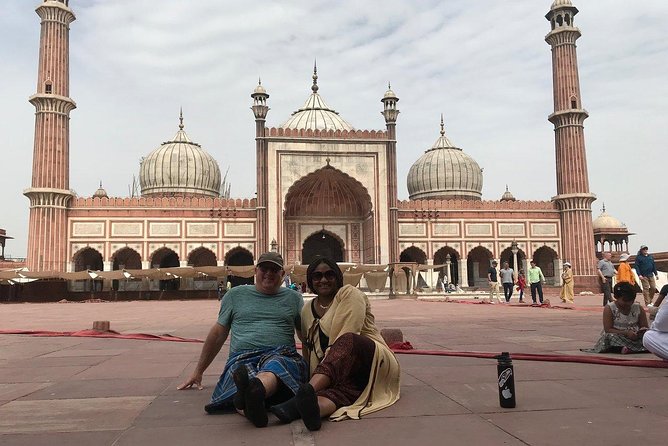
You’re picked up from your hotel in Delhi and dropped back after the day. That sounds basic, but in Delhi it’s huge. Waiting for transport on your own means more confusion, more street navigation, and more time lost before you even start seeing things.
You’ll also ride in a private, air-conditioned vehicle with an English-speaking driver. Delhi traffic can be unpredictable, and comfort helps when you’re spending hours moving between neighborhoods.
From past bookings, the names that show up for drivers and coordination include people like Vijay Kumar (driver), Ramesh (driver), Bunty (driver), Umesh (driver), and Yaseen (driver). There’s also an organizer called Amit mentioned as being especially organized and responsive, and a guide named Naveen appears in connection with tour guiding. You can’t guarantee any one person, but it does suggest the company leans into punctual, professional service.
Stop 1: Jama Masjid for a powerful first hit
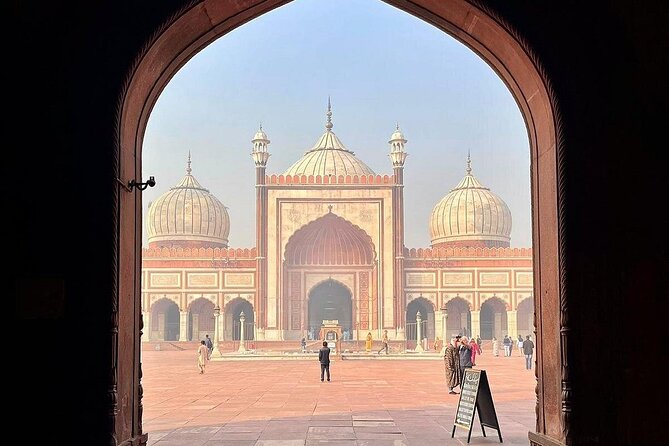
You begin at Jama Masjid, one of Delhi’s most famous mosques. The stop is about 30 minutes, and it lists admission free.
What I like about starting here: Jama Masjid gives you instant context. You see the scale of Mughal-era religious architecture, plus the sheer energy of the area. The tour description points out the mosque’s grand setup, including three massive gates and a large prayer hall.
Practical note: plan to dress respectfully. You’ll be in a religious space, and you’ll feel much more comfortable if your clothing covers appropriately.
Stop 2: Red Fort’s quick photo-and-orientation moment

Next is Red Fort, built in the mid-1600s (1639–1648) as the Mughal emperors’ residence. The scheduled stop is only about 2 minutes, and admission is not included.
With a slot that short, treat this as a fast exterior look—use it to learn what you’re seeing and capture a few photos, then decide if you want a deeper visit on another day. Red Fort’s impressive 2 km wall shape is the kind of feature you’ll notice even without entering.
If Red Fort is your top priority, you’ll likely want to pair it later with a separate entry-time visit. In a day tour, something has to give—and here it’s the depth.
You can also read our reviews of more private tours in New Delhi





Old Delhi’s spine: Chandni Chowk by rickshaw
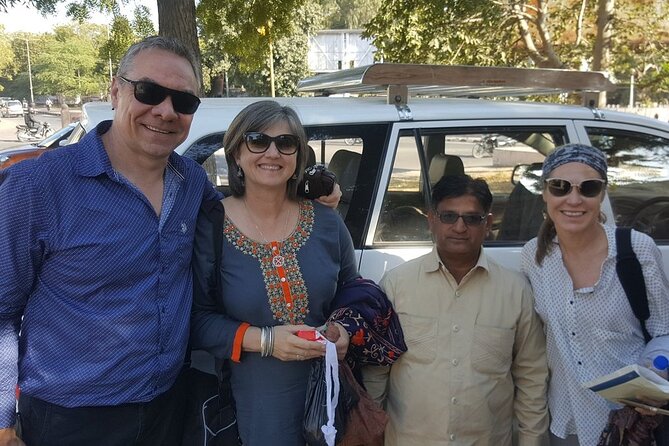
Then you head to Chandni Chowk, one of Old Delhi’s oldest and busiest market areas. This is your 30-minute market window, and it’s free admission.
Here’s the part I find most memorable: you travel by rickshaw through the narrow streets of Chandni Chowk Bazaar. It’s one of those experiences that doesn’t just show you a place—it changes your perspective. You move like a local would, at a slow enough pace to notice the street layout and daily life.
You’ll also visit the spice market. That’s practical, because spices tell a story about trade and taste in Delhi. You’ll likely see stalls with everything from powders to whole spices, and your guide can point out what’s commonly used in Indian cooking.
Two practical tips:
- Wear closed-toe shoes. Old Delhi sidewalks are not always even.
- If you plan to buy spices or snacks, go slow. Check quality and pricing, especially if you’re unsure what you’re seeing.
Raj Ghat: Gandhi’s memorial, no fuss and no ticket
Next comes Raj Ghat, a memorial dedicated to Mahatma Gandhi. It’s a 30-minute stop with admission free.
This section works well after the sensory overload of Old Delhi markets. Raj Ghat is a moment to reset: fewer sights, more reflection. You’ll likely understand more about Gandhi’s role from your guide than you would just by scanning plaques.
It’s also a good break in the day, since the tour keeps moving quickly and you’ll appreciate a quieter stop.
Gandhi Smriti: a meaningful stop, but Monday is tricky
After Raj Ghat, you visit Gandhi Smriti, the area marking where Gandhi spent much of his life and where he was assassinated. The stop is 30 minutes, and admission is not included.
Big heads-up: Gandhi Smriti is closed on Monday. If your schedule includes a Monday, you’ll want to confirm whether the tour shifts the stop or adjusts the order.
Even when open, plan for a respectful pace here. Since entry costs are not included, you’ll want to be ready to pay the site admission separately if you want full access inside.
Humayun’s Tomb: Mughal garden-tomb planning at scale
You then move into one of Delhi’s most visually rewarding Mughal sites: Humayun’s Tomb. The stop is about 45 minutes, and entry is not included.
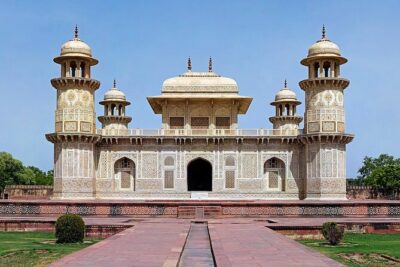
Humayun’s Tomb was built in 1570, and the tour description highlights that it was the first garden-tomb in India. It also notes a Persian architect was used for creating the tomb.
Why it’s valuable on a first visit: this is where you start seeing how Delhi’s historical power shifts are written in design. It’s not just a building. It’s a planned landscape—pathways, symmetry, and a calmer feel than the city streets you just left.
If you enjoy photography, this is where you’ll want to take your time—just remember camera fees aren’t included, so check what’s expected once you arrive.
Lotus Temple: a calm, modern reset
After the tomb, you head to the Lotus Temple. You get about 30 minutes, and it’s listed as admission free.
The Lotus Temple is a Bahá’í House of Worship, dedicated in December 1986, and known for its flowerlike shape. Even if you’re not religious yourself, it’s a great breather during a long sightseeing day. The geometry is satisfying, and the mood tends to feel quieter than the streets.
If you’re traveling with kids, this stop can be a relief too: it’s easier to explain than a dense market and easier to enjoy without constant negotiation for snacks and shopping.
Qutub Minar: the 73-meter tower moment
Next is Qutub Minar. You’ll have about 45 minutes, and admission is not included.
The tower is listed as 73 meters high, built in 1193 by Qutab-ud-din Aibak after the defeat of Delhi’s last Hindu kingdom. The description also notes it has five distinct stories.
This is the kind of site where a guide helps a lot. Without context, you can still admire the height, but you might miss the big idea: Delhi’s architectural layers can be read like a timeline.
If climbing is offered at the site (not stated in your tour data), you would need to follow on-site rules and pay any required fees. Since entry isn’t included, plan for additional payment if you want more than exterior viewing.
India Gate: war memorial in the center of New Delhi
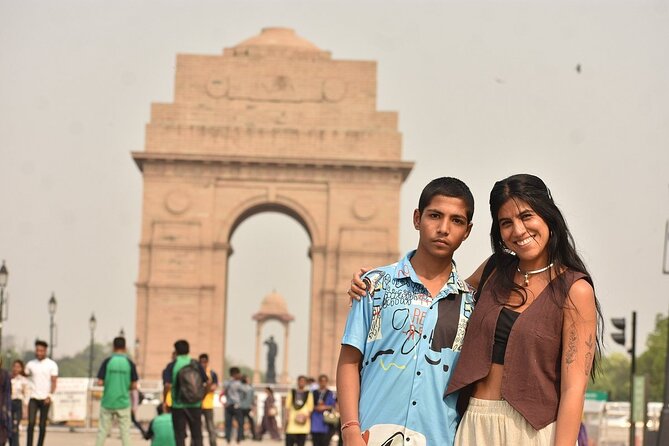
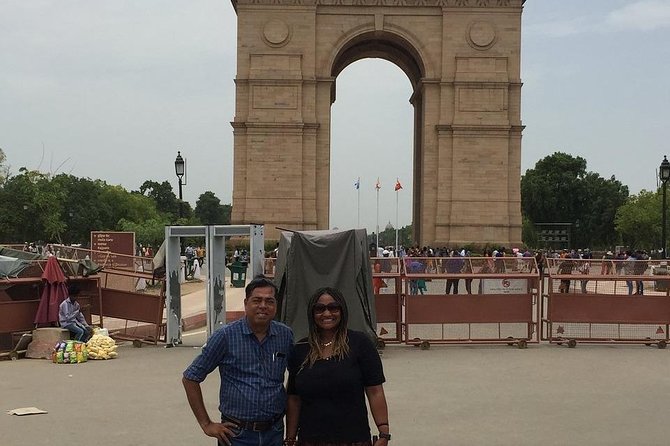
Your plan includes a stop at India Gate, a war memorial in central New Delhi. The gate is 42 meters tall, and it bears the names of 70,000 Indian soldiers who lost their lives fighting for the British army during World War.
Your time here isn’t clearly listed like other stops, but in day tours it’s typically a quick viewing and photo pause. That still works, because India Gate is visually simple: it anchors the city’s monumental axis.
I like this stop because it shifts the day from empire and religion to something more modern and national. It’s also a good moment to breathe after Qutub Minar.
Swaminarayan Akshardham: spiritual-cultural campus time
Next is Swaminarayan Akshardham. The stop is 30 minutes, and it’s listed as admission free.
The tour description describes Akshardham as a Hindu temple and spiritual-cultural campus. In other words, it’s not only about one building. It’s a big complex designed to be visited like a mini world of worship and learning.
With only 30 minutes, you’ll want to focus on the main areas you can access quickly and enjoy the feel rather than trying to see everything in depth.
Rashtrapati Bhavan: the grand power base look
Finally, you stop at Rashtrapati Bhavan, the presidential residence. The stop is about 30 minutes, and admission is not included.
The description gives key facts: it’s 330 acres and constructed in 1929, designed by Sir Edwin Lutyens and Herbert Baker, who are described as responsible for almost the whole of New Delhi.
This is the wide-open, architectural finale. You’ll notice why New Delhi feels planned compared with Old Delhi. Even from outside, the scale and geometry tell you a lot.
If you were hoping for an inside visit, your tour data suggests entry isn’t included, so you’d likely need a separate ticket or a different experience.
The day’s rhythm: how to pace 7 to 8 hours without burnout
A day like this can feel full, but it’s workable if you keep your expectations realistic.
Here’s how to make it easy on yourself:
- Start early. The 8:30 am start helps you avoid some of the worst midday crowding.
- Hydrate. Meals aren’t included, so bring water and plan for a quick snack.
- Expect extra payments. Red Fort, Gandhi Smriti, Humayun’s Tomb, Qutub Minar, and Rashtrapati Bhavan have admission not included.
- Be ready for short stops. A couple stops are quick by design. That’s normal on a multi-neighborhood itinerary.
Also, because some stops are free and some are not, your budget will feel more predictable if you’re carrying a little extra for entry and camera fees.
Who should book this tour?
This is a good fit if:
- You’re in Delhi for the first time and want a smart overview
- You prefer private guidance over guessing at street-level logistics
- You want Old Delhi and New Delhi together in one day
- You like structure: pick-up, route, and explanations already planned
It may be less ideal if:
- You want a slow, deep museum-style visit at every major site
- You plan to fully enter every monument and want a guaranteed long time at each one
- You’re visiting on Monday and specifically want Gandhi Smriti without changes
Should you book this private Old and New Delhi tour?
If you want a practical first-day win, I’d book it. The value is in the combination: a private guide, hotel pickup, an air-conditioned ride, and a route that hits the big-name places without wasting your day on navigation.
Just go in with two expectations set:
1) Some of the most famous sites have entry fees not included, so bring extra money and check what you want to access inside.
2) A few stops are short, like Red Fort, so treat the day as an overview you can build on later.
If that matches your travel style, this tour is an efficient way to understand Delhi fast—without turning your day into a stressful ride through traffic.
FAQ
What time does the tour start?
The tour start time is 8:30 am.
How long is the tour?
The duration is about 7 to 8 hours.
Is hotel pickup and drop-off included?
Yes. Pickup and drop-off from your hotel in Delhi are included.
Is this a private tour?
Yes. It’s a private tour/activity, and only your group will participate.
What transportation is included?
You get a private air-conditioned vehicle with an English-speaking driver.
Is admission included for all monuments?
No. Some stops list admission free, while others list admission not included (for example Red Fort, Gandhi Smriti, Humayun’s Tomb, Qutub Minar, and Rashtrapati Bhavan).
Are meals included?
No. Meals and food are not included.
Is there a mobile ticket?
Yes. A mobile ticket is included.
Is Gandhi Smriti open every day?
No. Gandhi Smriti is closed on Monday.
What’s the cancellation policy?
You can cancel for a full refund if you cancel at least 24 hours before the experience starts. If you cancel less than 24 hours before, you won’t get a refund.