REVIEW · NEW DELHI
Private Luxury Full Day New and Old Delhi City Tour
Book on Viator →Operated by Tour Por la India · Bookable on Viator
Delhi hits different with a local guide. What makes this day tour special is the mix of iconic UNESCO landmarks and real Delhi street scenes, all handled by a private guide and a comfortable car. I love that you get smart, practical guidance as you move from grand imperial buildings to living religious spaces without getting lost in the chaos. One consideration: it’s a long 7 to 8 hour loop, so you’ll want shoes you can walk in and a patient attitude for Delhi traffic.
You’ll start with flexible pickup (anywhere in Delhi-NCR) between 8:00 and 10:00, then work your way through New Delhi’s ceremonial landmarks, Old Delhi’s biggest mosque, and market energy. The tour also includes a free transfer at the end to your location back in Delhi, Noida, Gurugram, Ghaziabad, or Faridabad.
In the reviews, guides like Sartaj and Shamin (also Rahil and Gaurav show up) get praised for clear English and for keeping the day organized. One guide even suggested a night visit to Qutub Minar for a totally different look, so you’ll leave with ideas for what to do next.
In This Review
- Key highlights worth booking for
- The practical value: what $20 buys you in Delhi
- Morning pickup and how the day stays under control
- New Delhi’s ceremonial zone: India Gate to the Parliament area
- President’s House and Gurdwara Bangla Sahib: two different kinds of peace
- Jama Masjid and Chandni Chowk: the Old Delhi combo that needs a guide
- Humayun’s Tomb and Qutub Minar: UNESCO gravity, explained simply
- Akshardham and Lotus Temple: the modern spiritual side of Delhi
- Agrasen Ki Baoli: the legend stop people remember
- Ending the day: free transfer and what to do next
- Who this tour is best for
- Should you book this New and Old Delhi full-day tour?
- FAQ
- Is this tour private or shared?
- How long is the tour and what time does it start?
- Where can pickup happen?
- Are monument tickets included?
- What should I bring for visiting monuments?
- What happens if I’m traveling on a Monday?
Key highlights worth booking for
- Private air-conditioned car matched to your group size, so you don’t waste the day negotiating transport
- UNESCO stops tied together with Delhi’s religious and political landmarks for a full-scope city view
- Old Delhi time at the Jama Masjid and Chandni Chowk area, where a guide helps you keep your bearings
- Bottled water included and a guide who can offer practical do’s and don’ts for each neighborhood
- Photo-friendly landmarks like Humayun’s Tomb, India Gate, Lotus Temple, and Qutub Minar-area viewpoints
- Monday closures to plan around: Akshardham and Lotus Temple shut every Monday
The practical value: what $20 buys you in Delhi
At about $20 per person, this tour is priced like a value deal, not a luxury splurge. But the real “buy” is the private setup: only your group, pickup from many areas, and an air-conditioned vehicle with a government-approved guide.
You’re also not just collecting monuments. The itinerary pairs places that look good on a map with places that explain how Delhi works: imperial-era power (India Gate, Parliament zone, President’s House), living faith spaces (Gurudwara Bangla Sahib, Jama Masjid), and public everyday life (Chandni Chowk). That context is what turns sightseeing into understanding.
Also, pay attention to what’s included. You get bottled mineral water, and the tour lists entrance fees as included when the option applies, with Jama Masjid and Humayun’s Tomb marked as included. Bring a valid photo ID because some monuments require it for entry.
You can also read our reviews of more city tours in New Delhi


Morning pickup and how the day stays under control
Pickup is offered from anywhere in Delhi, Noida, Gurugram, Ghaziabad, or Faridabad, and you choose a start time between 8:00 AM and 10:00 AM. That flexibility helps if you’re arriving from another city or just want a calmer start.
The tour runs roughly 7 to 8 hours, which means you’ll be moving fairly steadily. You’re in a private vehicle most of the time, but you’ll still do meaningful walking at major sites and markets—so plan for heat, dust, and crowds.
One detail I like: car size changes with group size. For one or two people you’re in a four-seater sedan, three to five people get a six-seater family car, six to nine use a nine-seater van, and larger groups use a twelve-seater van. It’s a small thing, but it usually makes the difference between a comfy day and a cramped one.
New Delhi’s ceremonial zone: India Gate to the Parliament area
New Delhi is the part of Delhi that feels designed. The straight lines, the official buildings, and the wide spaces make it easier to understand why the city was built the way it was.
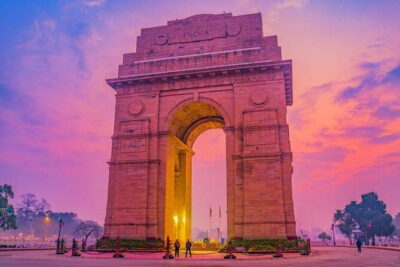
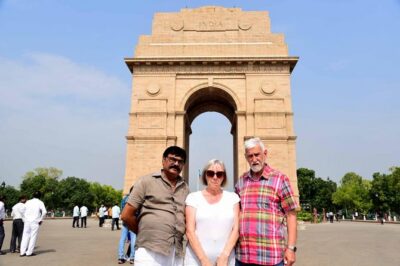
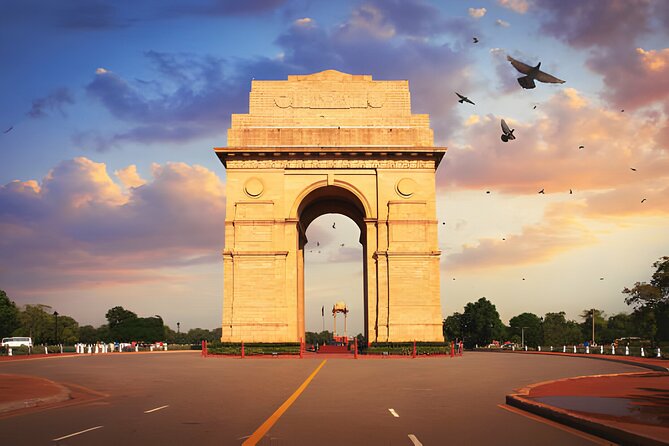
You typically stop at India Gate, a memorial built in honor of 90,000 Indian soldiers who died in the First World War. It was designed by Edwin Lutyens, and the symbolism is felt the moment you see the scale.
From there, the route includes Sansad Bhavan, India’s Parliament House, which houses both the Lok Sabha and the Rajya Sabha. Nearby is the presidential complex.
The big-ticket visual here is Rashtrapati Bhavan, the President’s House. The details matter: the building is described as having 2.5 km of corridors, about 340 rooms, a dome-shaped Durbar Hall, and a presidential library. Even if you don’t go inside, the architecture is worth pausing for, and your guide can explain how the political story shaped the city’s look.
Practical tip: bring something light for sun protection. You’ll spend short bursts outside at these stops even with a vehicle waiting nearby.
President’s House and Gurdwara Bangla Sahib: two different kinds of peace
After the official buildings, the tour shifts to spiritual calm. That contrast is one of the best parts of the day.
Gurudwara Bangla Sahib is famous for a story tied to the tank on site. In the year 1664, the eighth Sikh guru is said to have visited the king and helped people during a smallpox and cholera epidemic by distributing water from the tank. That story adds meaning when you’re standing near the water feature.
What you’ll notice is the atmosphere: it’s not quiet like a museum. It feels like a working place of worship, with people coming and going.
The tour keeps this stop fairly reasonable—around 30 minutes. That’s enough time to see the layout and understand the story without turning the visit into a time sink.
Jama Masjid and Chandni Chowk: the Old Delhi combo that needs a guide
Old Delhi can feel like sensory overload, especially if it’s your first time in India. This tour tackles that with one of the smartest pairings: Jama Masjid plus the Chandni Chowk market area.
Jama Masjid is one of the largest mosques in India, built by the Mughal emperor Shah Jahan between 1650 and 1656. Your visit is timed so you can actually enjoy it, not just speed through. The scale hits fast when you arrive, and your guide can point out what to watch for so you don’t miss the details.
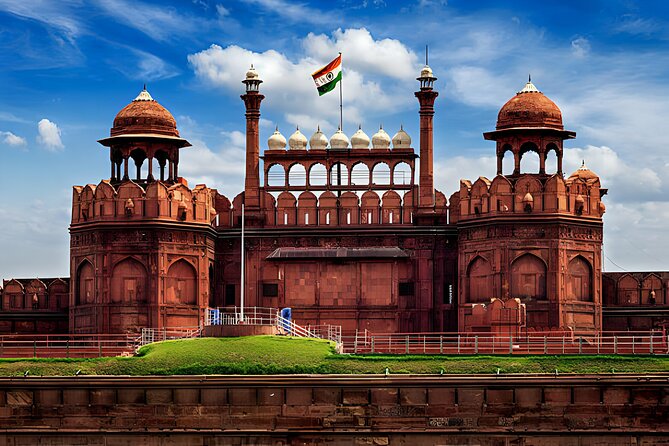
Then you head toward Chandni Chowk, one of Old Delhi’s oldest and busiest markets. It’s located near the Old Delhi Railway Station, and the Red Fort is at the eastern end of Chandni Chowk—so the area sits in the heart of the old city’s story.
Here’s where I think the private guide really pays off. A guide helps you move through the market without wasting time backtracking, and you’re more likely to end up in the right streets for what you want to see. In the reviews, people also specifically praised feeling safe with the guide with clear advice on what to do and what to avoid.
A small caution: markets can be crowded and sometimes hectic. If you’re sensitive to noise or close contact, go in with a calm plan and keep your phone secure.
You can also read our reviews of more private tours in New Delhi






Humayun’s Tomb and Qutub Minar: UNESCO gravity, explained simply
If New Delhi is the official face, the Mughal-era sites are Delhi’s deep history in stone.
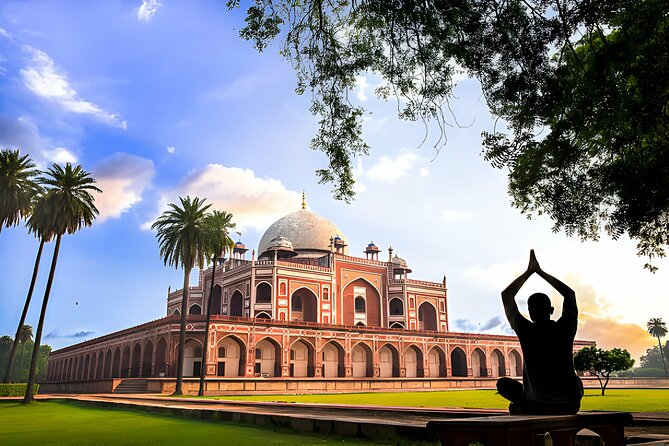
Humayun’s Tomb is the tomb of the Mughal emperor Humayun. It was commissioned by his first wife and chief consort, Empress Bega Begum, in 1569–70. Your visit is around an hour, which is a good length for soaking in the symmetry and reading the space as more than a big building.
This tour also includes the UNESCO spotlight of Qutub Minar. Even though not every day runs exactly the same way, Qutub Minar shows up as a key part of the full-day plan, and it’s mentioned repeatedly in the experience feedback. One guide even recommended a night visit to Qutub Minar for a different look, so if your schedule allows, it’s worth thinking about.
At these UNESCO sites, entry requirements can include checking your photo ID. Also, plan for walking over uneven or busy ground. Your guide can help you pace it so you’re not rushing photos.
Akshardham and Lotus Temple: the modern spiritual side of Delhi
Delhi isn’t only Mughal and British. It also has a newer spiritual and architectural “wow” factor, and this day tour includes both.
Swaminarayan Akshardham is a Hindu temple and spiritual-cultural campus near the Noida border. The complex is described as showcasing major elements through temple and campus design, so it’s less about one tomb and more about a complete experience.
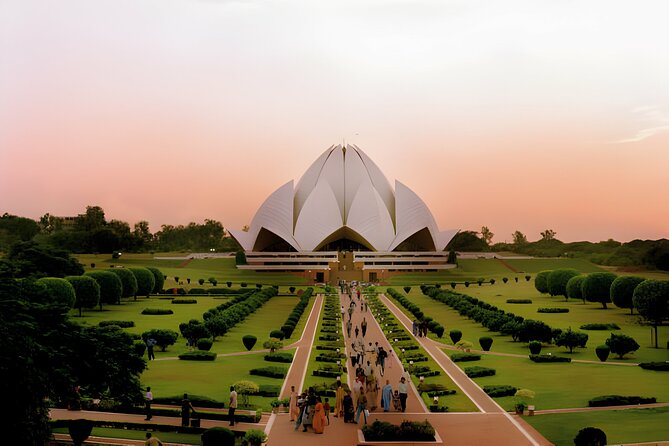
Then comes Lotus Temple, a Baháʼí house of worship that opened in December 1986. Its flower shape is the headline, but what you’ll appreciate is how it changes the feel of the city. It looks calm and clean compared to the older quarters nearby.
Important planning note: Lotus Temple and Akshardham are closed every Monday. If your dates land on Monday, ask your guide about a swap so your full day doesn’t lose its best modern stops.
Agrasen Ki Baoli: the legend stop people remember

This is the kind of stop that you might skip on a fast tour, but it’s fun because it’s different.
Agrasen ki Baoli is known for urban legends of hauntings and strange incidents. Many people consider it haunted, and it’s been the center of paranormal stories. Even if you don’t buy into the supernatural angle, the stepwell structure and the mood make it an unusual pause point.
Your time is about 30 minutes, which works well because it’s a short visit by nature. I like using a place like this as a mental reset after the heavier UNESCO sites and religious spaces.
Ending the day: free transfer and what to do next
In the evening, the tour ends with a free transfer back to your choice of location in Delhi, Noida, Gurugram, Ghaziabad, or Faridabad. That helps you avoid the late-day headache of finding transport after a full day of stops.
If you still have energy, this tour often makes you hungry for a second look at one major site. For example, based on the advice your guide may give, you might want to revisit Qutub Minar later in the day or evening, since light and photo opportunities change a lot.
And if you prefer to stay practical, use the remaining time to get a proper meal and rest. A 7 to 8 hour city tour is a real day workout in Delhi.
Who this tour is best for
This is a great match if you want a lot of Delhi in one day without playing navigation roulette. A private guide helps most when you’re either new to the city, short on time, or you want context that you simply won’t get by walking around alone.
It also fits families and solo travelers who want structure and a sense of safety in crowded areas. The reviews repeatedly highlight feeling looked after and safe, and that matters in places like Old Delhi.
If you hate long days, or you prefer a slow, neighborhood-by-neighborhood pace, you might find this format tiring. But if you want your first Delhi day to cover both “ancient grandeur” and “real street Delhi,” this tour is built for that.
Should you book this New and Old Delhi full-day tour?
Yes, if your goal is a one-day overview that still feels organized and meaningful. For the price, the private car, bottled water, government-approved English-speaking guide, and the mix of major landmarks make strong value—especially because the tour doesn’t treat Old Delhi like a quick photo stop.
Book it if you want help with timing, explanations, and moving safely through crowded areas. I’d also book it if you want UNESCO highlights plus living religious sites in the same day.
Skip or adjust if it’s Monday and Akshardham and Lotus Temple are must-dos for you, since both close weekly. If that’s your case, ask about alternatives before you pay.
FAQ
Is this tour private or shared?
This is a private tour/activity, meaning only your group participates.
How long is the tour and what time does it start?
It runs about 7 to 8 hours. Pickup is available between 8:00 AM and 10:00 AM.
Where can pickup happen?
Pickup is offered from anywhere in Delhi, Noida, Gurugram, Ghaziabad, and Faridabad.
Are monument tickets included?
Entrance fees are included if you choose the option for monuments. Jama Masjid and Humayun’s Tomb are specifically marked as included, and several other stops are listed as admission-free.
What should I bring for visiting monuments?
Bring a valid photo ID to register at the monuments.
What happens if I’m traveling on a Monday?
Lotus Temple and Akshardham Temple remain closed every Monday.