REVIEW · NEW DELHI
Private Old and New Delhi City Full Day or Half Day Tour
Book on Viator →Operated by Markable Joy · Bookable on Viator
Delhi in one day is a lot. What makes this tour work is the way it strings together Old Delhi and New Delhi with a personal guide, plus door-to-door hotel pickup so you’re not fighting transit or timing. I love the private, air-conditioned car with chauffeur for comfort in Delhi traffic, and I love that you get an Old Delhi tuk-tuk segment so the experience feels local, not just like driving past sights.
One thing to watch: the day’s flow can adjust to traffic and timing, and extra items like tuk-tuk ride cost in Old Delhi and meal plans can affect your final out-of-pocket total. If you care about hitting every stop you want, confirm the day’s order and ticket options ahead of time.
In This Review
- Key Highlights You’ll Care About
- Why This Old + New Delhi Day Plan Works
- Getting Around: Private Car Comfort + Old Delhi Street Time
- Jama Masjid: The Mosque You Notice From the Courtyard
- Red Fort + Mughal Power, Up Close
- Chandni Chowk: Spices, Senses, and Smart Shopping Stops
- India Gate and Bangla Sahib: War Memory to Sikh Faith
- President’s House: The Photo Stop That’s Mostly About the Setting
- Humayun’s Tomb: The Garden-Tomb Idea in Practice
- Akshardham Choice: Either This or Humayun’s Tomb
- Qutub Minar: The Brick Tower That Holds Your Attention
- Raj Ghat and Lotus Temple: Gandhi Memory to a Bahá’í Flower
- Price and What You Really Get for Around $21
- Timing Reality: An 8-Hour Day in Delhi Traffic
- Who This Tour Fits Best
- Should You Book This Tour?
- FAQ
- How long is the Old and New Delhi tour?
- Is hotel pickup and drop-off included?
- Is this tour private?
- What kind of transportation do I use during the tour?
- Is the tuk-tuk ride in Old Delhi included?
- Are entrance fees included?
- What stops do you visit?
- Is Akshardham open every day?
- Do I need a photo ID?
- Is free cancellation available?
Key Highlights You’ll Care About

- Hotel pickup and drop-off keep your day simple in a city where traffic is the real main attraction
- Private guide + your pace means you can ask questions and slow down at the stops that grab you
- Old Delhi by tuk-tuk helps you see lanes and market vibes without doing the “lost tourist” loop
- Major sights covered in one circuit from Jama Masjid and Chandni Chowk to Humayun’s Tomb and Qutub Minar
- Monument tickets depend on your option (some are listed as included only if chosen)
- Akshardham timing matters because it’s closed on Mondays, so the plan shifts
Why This Old + New Delhi Day Plan Works
Delhi can feel like three cities wearing one coat: the Mughal-era lanes, the imperial garden-tomb era, and the modern government zone. This tour’s big advantage is that it doesn’t force you to pick just one side. You get a full sweep: Old Delhi’s religious landmarks and markets, then New Delhi’s iconic monuments in a single day.
What you’ll feel most is the “less hassle” factor. With round-trip transfers from your Delhi hotel, you spend less time coordinating and more time looking. The private car also matters because the city’s main sight “enemy” isn’t a lack of things to see—it’s time lost in traffic and heat.
This setup also fits how most people travel. You’re not stuck on a fixed route where every stop is timed to the minute and you’re herded along. The tour is designed for a private group, so you can linger where it feels meaningful (mosques, tomb gardens, Qutub’s stonework) and move on when you’ve had your fill.
You can also read our reviews of more city tours in New Delhi


Getting Around: Private Car Comfort + Old Delhi Street Time
The backbone of your day is a private air-conditioned vehicle with a chauffeur. That’s a practical win, especially if your visit overlaps with hot weather. The tour also includes bottled water and umbrellas, which sounds small until you’re standing in sun with a bag that weighs more than you do.
Then comes the part many people actually remember: getting into Old Delhi by tuk-tuk. Streets here are narrow, busy, and not built for big vehicles to glide through. Even if you’re only in the tuk-tuk for part of the day, it changes the feel of the experience from “viewing” to “being there.”
One practical note: the tour data lists the tuk-tuk ride in Old Delhi as not included. That doesn’t mean you won’t get the street time, but it does mean you should treat the tuk-tuk cost as a potential add-on unless your specific booking option says otherwise.
Jama Masjid: The Mosque You Notice From the Courtyard
You start Old Delhi with Jama Masjid, described as India’s largest mosque. Even if you’re not there for religious study, it’s the scale that hits first: a huge red-sandstone courtyard and a deep sense of how important this place has been for centuries.
You’ll spend about an hour there, enough time to walk around and take it in slowly. Jama Masjid was built in 1656 and involved a major workforce effort (the tour details mention 5,000 workers). That kind of construction detail isn’t trivia—it helps you look at the space with perspective rather than just photos.
If you want your visit to go smoothly, plan for basic mosque etiquette: dress modestly, be ready to follow instructions, and keep your questions respectful. A good guide will also explain what you’re seeing in plain language, and that’s often where the best tours earn their money.
Red Fort + Mughal Power, Up Close
After Jama Masjid, the day shifts to the Red Fort, built by Shah Jahan between 1639 and 1648. This is one of those stops where architecture does the storytelling: the fort’s design reflects Indo-Islamic and Mughal styles, and you’ll likely notice how carefully the structure signals power and order.
The tour doesn’t pretend you’ll absorb everything. Time is limited, and Delhi traffic doesn’t care about your museum ambitions. But a guided visit helps you read the fort’s meaning quickly: it wasn’t just a building, it was the main residence for Mughal emperors.
If you’re the type who likes to get your bearings fast, go at an even pace here. You’ll get more out of the fort if you pause for a few moments rather than sprint from one angle to the next.
Chandni Chowk: Spices, Senses, and Smart Shopping Stops
Next is the Chandni Chowk spice market. This is where Delhi becomes less about monuments and more about daily life. The tour is set up to get you “sense level” ready—spices are the focus, and you’re meant to slow down long enough to look closely.
The biggest practical value of doing this with a guide is avoiding the tourist trap version of market time. A guide can tell you what to ask about, how spice blends are used, and what’s worth tasting or buying. You can also move through busy lanes without constantly checking maps.
If shopping is part of your plan, set a simple rule for yourself: buy only what you’ll actually use at home. Spice markets are a yes-machine. Everything smells great. Your job is to keep it from turning into luggage you regret.
You can also read our reviews of more private tours in New Delhi






India Gate and Bangla Sahib: War Memory to Sikh Faith
From the older layers of Old Delhi, the tour rolls into central sights.
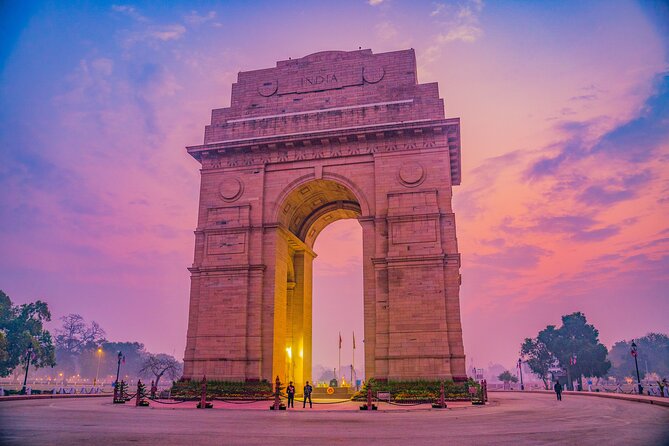
India Gate gets a quick stop, including the 1921 Tomb of the Unknown Soldier with names carved for 13,300 Indian servicemen who died in the First World War. It’s a short visit, but it’s powerful because it turns a landmark into a specific human story.
Then you head to Gurudwara Bangla Sahib, where the tour highlights a story tied to the eighth Sikh Guru visiting during a smallpox and cholera epidemic. The details include water from the tank being used as part of healing efforts during that outbreak. It’s the kind of narrative that makes a religious site more than a photo background.
Both India Gate and Bangla Sahib are solid stops if you want variety without rushing. Just remember: these are also places where people live their faith and routines, so keep your voice low and your attention on the moment.
President’s House: The Photo Stop That’s Mostly About the Setting
The tour also includes a drive-by for President’s House. This isn’t a long linger-and-explore stop, and that’s okay. It gives you context for how New Delhi’s power is staged—big spaces, government architecture, and a different pace than Old Delhi.
This is the kind of stop where timing matters more than details. If you’re in a hurry, take the photo quickly and let the rest of the day do the heavy lifting.
Humayun’s Tomb: The Garden-Tomb Idea in Practice
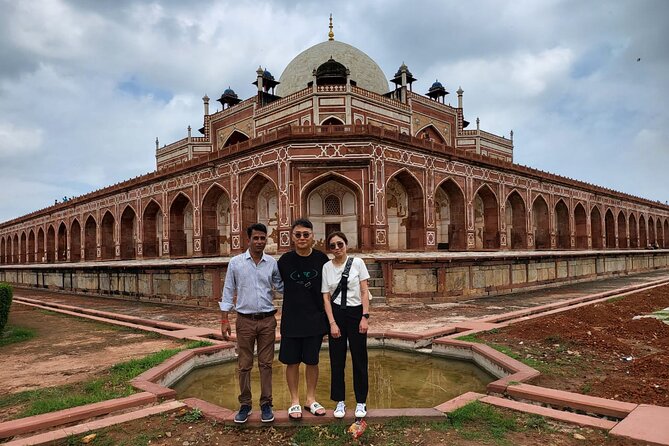
Next comes Humayun’s Tomb, a UNESCO World Heritage Site and described as the first garden tomb of India. The tour notes that it was built after Humayun’s death at the initiative of his wife—another detail that helps you read the monument as a memorial, not just a structure.
You’ll have around 30 minutes, which is short but workable if you focus. Look at how the garden layout guides your attention. Then glance at the main tomb elements and notice how the design balances formality with the softer landscaping around it.
If you only have time for one “tomb plus garden” site in Delhi, Humayun’s Tomb is a strong choice because it’s built to be understood in a single calm loop.
Akshardham Choice: Either This or Humayun’s Tomb
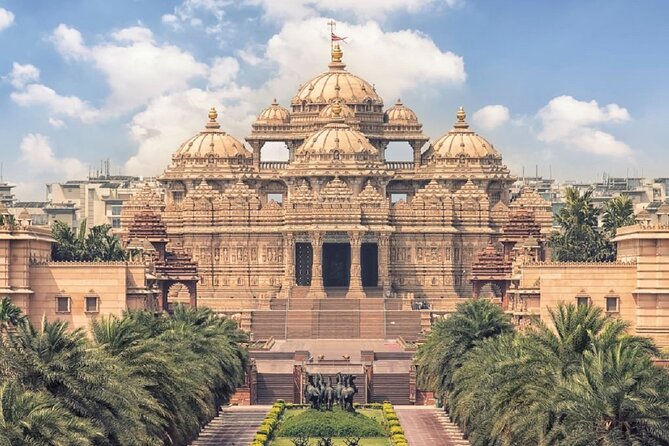
The tour includes Swaminarayan Akshardham, described as one of the biggest Hindu temples, and notes it was constructed in 2005 but has an architecture style meant to feel centuries old. You’ll also get guidance on an either/or decision: you may visit Akshardham or Humayun’s Tomb, depending on the day’s plan.
There’s an important timing rule: Akshardham is closed on Monday, and then you’ll be taken to Humayun’s Tomb instead. If your trip overlaps a Monday, you should treat Humayun’s Tomb as your guaranteed tomb visit.
This is also where I’d think about your energy. If you love large temple complexes with lots of sightlines and visual elements, Akshardham can feel spectacular. If you prefer quieter, garden-focused reflection, you might prefer the Humayun’s route.
Qutub Minar: The Brick Tower That Holds Your Attention
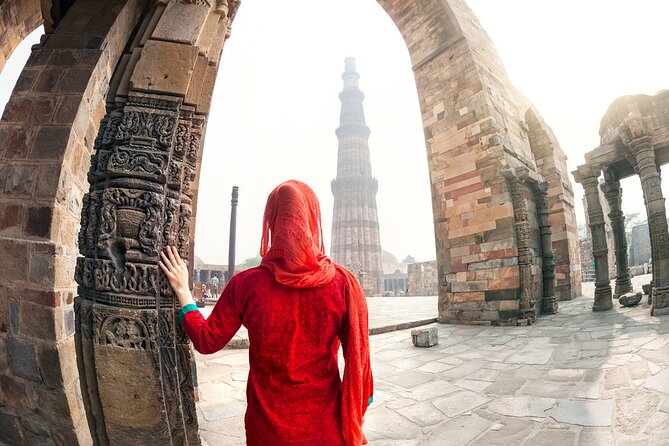
On the New Delhi side, you’ll reach Qutub Minar, noted as the tallest minaret built in 1192 using bricks. It’s part of a UNESCO World Heritage Site, and the complex around it is a big reason this stop feels like a real destination.
With about 45 minutes, you get time to walk around and understand the site’s layout instead of just staring upward for a few seconds. If you enjoy early architecture, this is where you’ll likely feel the most “wow” in the stone and scale.
Quick tip: keep your eyes moving. Qutub’s appeal isn’t only height—it’s also the whole environment: surrounding structures, the way the complex sits, and how everything feels cohesive.
Raj Ghat and Lotus Temple: Gandhi Memory to a Bahá’í Flower
The tour includes Raj Ghat as optional. Raj Ghat is the memorial dedicated to Mahatma Gandhi, and the tour notes that the name was originally tied to a historic ghat in Old Delhi, plus references to a gate connected to the walled city.
If you want the reflection side of Delhi, take this optional stop. It won’t take long, and it gives a different kind of meaning than the forts and tombs.
Finally, you end with Lotus Temple, a Bahá’í House of Worship dedicated in December 1986. It’s known for its flower-like shape, and you’ll have about an hour. This stop often works well at the end because it’s visually calming compared with the denser Old Delhi experience.
If crowds show up, don’t fight it. Step back, find your angle, and enjoy the shape rather than rushing to the front.
Price and What You Really Get for Around $21
At about $21.43 per person, this tour is priced as a budget-friendly way to cover major Delhi highlights with minimal stress. The key value isn’t just the number—it’s what’s bundled:
- Private chauffeur-driven car (big cost in many places)
- Private live guide (translation of history into something you can actually use)
- All parking fees, tolls, fuel, and taxes
- Water bottles and umbrellas
But don’t ignore the add-ons:
- Tips and gratuities are not included.
- Meals are not included.
- Tuk-tuk ride in Old Delhi is listed as not included.
- Monument tickets are included only if you choose the option with entrance fees.
So the real decision comes down to your travel style. If you want comfort, a guide, and a tight loop of major sites without spending hours planning, the base price can feel like a deal. If you’re already comfortable navigating on your own and you’re picky about paying for guide time, you might compare alternatives.
Timing Reality: An 8-Hour Day in Delhi Traffic
The tour runs about 8 hours, give or take. That’s enough time to see a lot—if you accept that Delhi traffic can change the order and pacing. One of the most practical review-based takeaways here is simple: don’t assume the day will run like a school timetable. If you care about a specific priority, ask for confirmation early and be flexible.
Also pay attention to which stops are shorter by design. India Gate is around 15 minutes, and Raj Ghat is 30 minutes. Those durations are meant to keep the whole circuit moving, so treat them as “first look” stops rather than deep study sessions.
Carry a valid photo ID for monument checks. That’s not optional trivia. It can save you a headache if a site asks for it at the entrance.
Who This Tour Fits Best
This tour is a good match if you want:
- Big-sight coverage without planning every turn
- A guide who handles logistics so you can focus on seeing
- A mix of religious landmarks and Mughal/UNESCO monuments
- A day that feels private, with your group setting the pace
It’s also a solid option if you hate the “where do we change lines, and which exit is correct” game. Delhi’s scale and traffic are easier when someone else is driving.
If you’re the type who wants ultra-detailed explanations at every stop, you might find that time is tighter than you’d prefer at a few locations. That’s not a failure of the tour—it’s just the math of an 8-hour day.
Should You Book This Tour?
Book it if you want a stress-reducing, highlights-first day that pairs Old Delhi street energy with New Delhi monument power. The private car, hotel pickup/drop-off, and guided context are the big wins, and the price makes sense if you’re not trying to skip the guide and do it all solo.
Consider skipping or rechecking the details if you know you’re very sensitive to itinerary changes due to traffic, or if you’re expecting every cost to be fully included. Confirm whether your booking includes monument entrance fees and whether the Old Delhi tuk-tuk ride is covered for your option. Also, if your dates include a Monday, plan for the Akshardham closure and be ready for the Humayun’s Tomb swap.
If you do those checks, this is a smart way to see a lot of Delhi in one day without turning the trip into a logistics project.
FAQ
How long is the Old and New Delhi tour?
The tour is listed as about 8 hours (approx.).
Is hotel pickup and drop-off included?
Yes. Round-trip transfers from your Delhi hotel are included.
Is this tour private?
Yes, it’s a private tour/activity with only your group participating.
What kind of transportation do I use during the tour?
You use a private air-conditioned car with a chauffeur for sightseeing. The Old Delhi experience includes a tuk-tuk segment.
Is the tuk-tuk ride in Old Delhi included?
The tuk-tuk ride in Old Delhi is listed as not included.
Are entrance fees included?
Monument tickets are included only if you choose the option with entrance fees.
What stops do you visit?
Key stops include Jama Masjid, Red Fort, Chandni Chowk spice market, India Gate, Gurudwara Bangla Sahib, President’s House (drive past), Humayun’s Tomb or Akshardham Temple, Qutub Minar, Raj Ghat (optional), and Lotus Temple.
Is Akshardham open every day?
Akshardham is closed on Mondays, so you’ll be taken to Humayun’s Tomb instead.
Do I need a photo ID?
Yes. You should carry a valid photo ID for monument checks.
Is free cancellation available?
Yes. Free cancellation is available up to 24 hours in advance for a full refund.