REVIEW · NEW DELHI
Sanjay Colony Slum Tour
Book on Viator →Operated by Reality Tours & Travel Pvt Ltd · Bookable on Viator
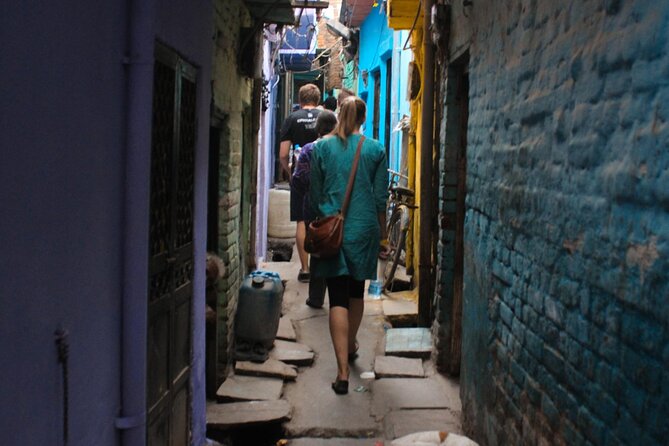
Sanjay Colony isn’t on most Delhi itineraries. This respectful, locally guided walk shows how everyday life works in a residential slum community in South Delhi, and why that context changes how you see the city. You’ll move through the neighborhood with a guide who knows the area and you’ll see more than just streets and buildings.
What I like most is the tour’s small-group format (groups limited to six), which keeps the walk from feeling like a drive-by. Second, I appreciate that your payment is tied to educational and social impact projects in the community, so you’re not just observing.
One thing to think about: no photography is permitted inside Sanjay Colony, and the dress expectations are conservative (shoulders and knees covered). If you’re coming for quick, casual sightseeing with your phone out, this won’t be that kind of tour.
In This Review
- Key things that make this Sanjay Colony tour worth your time
- Sanjay Colony in South Delhi: why this walk hits different
- Price, timing, and group size that keep things human
- Meeting at Harkesh Nagar Okhla metro and finishing nearby
- Stop 1 in the neighborhood: the Sanjay Colony market and All Surplus Store
- Homes, small businesses, temples, and a local school: what you’ll actually see
- The impact side: where your money goes and why it matters
- Respect rules you should follow: dress code and no photography
- Who should book (and who might want a different kind of Delhi tour)
- Should you book the Sanjay Colony Slum Tour?
- FAQ
- How long is the Sanjay Colony Slum Tour?
- How much does it cost?
- Is hotel pickup included?
- What’s included in the tour price?
- Where do I meet for the tour?
- Where does the tour end?
- Are there morning and afternoon departures?
- Are there any rules about photography?
- What should I wear?
- FAQ (continued)
- Is there a group size limit?
- Where does my money go?
Key things that make this Sanjay Colony tour worth your time
- Small groups: limited to six people, with a private option if you want more space
- Local English-speaking guide: you get on-the-ground explanations, not stock facts
- Designed for clarity: the guide helps you navigate an area that can feel confusing without local context
- You’ll see daily life in motion: homes, small businesses, religious spaces, and a local school
- Impact with your ticket: proceeds support education and social projects locally
- Resident comfort matters: no photography while you’re in Sanjay Colony
Sanjay Colony in South Delhi: why this walk hits different
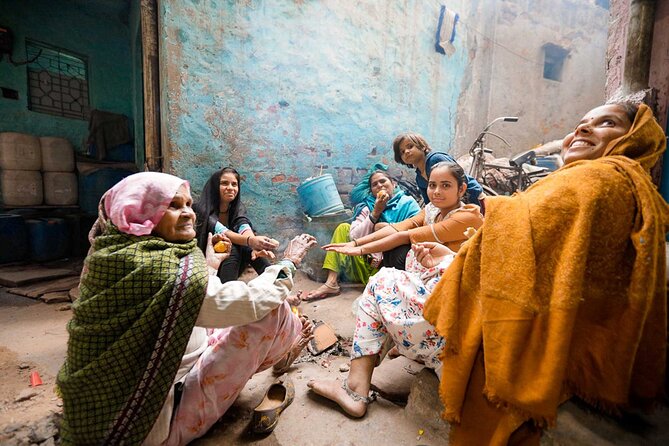
Most first-time Delhi days are all about monuments, markets, and big sights. This tour shifts the focus to a place many visitors never even try to understand, a residential community called Sanjay Colony. The point isn’t shock value. It’s context.
I like that the tour is built around respectful introductions: who lives here, what families do each day, and how local institutions shape daily life. You learn the difference between seeing a place from outside and understanding what it takes to make it work from within.
You also get a real-world perspective on how neighborhoods function when government services don’t fully arrive. Some of what you’ll hear is hard. But it’s framed with the community’s own priorities—work, schooling, faith, and mutual support. That balance is what makes the tour feel more human and less like a lecture.
You can also read our reviews of more tours and experiences in New Delhi.



Price, timing, and group size that keep things human
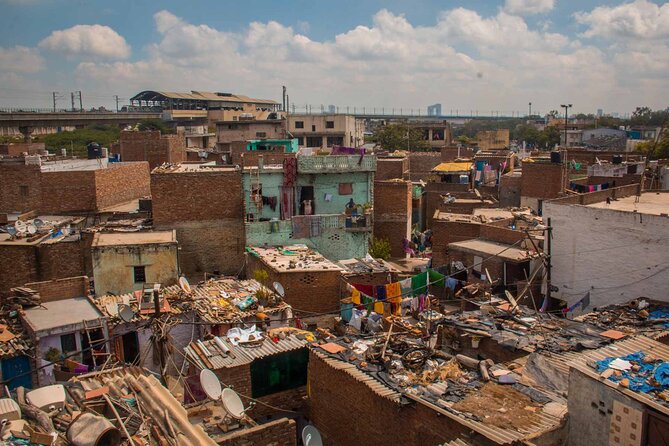
The price is $21.20 per person for about 1 hour 45 minutes. That’s surprisingly good value for what you’re getting: a local English-speaking guide, a water/cold drink, and a structured route that takes the guesswork out of where to go and what to ask. When a tour also feeds back into local education and social impact, the value reads even clearer.
Departures are offered in both the morning and afternoon, so you can fit it into your Delhi rhythm. It’s not a half-day commitment, which helps if you’re juggling traffic, museum time, or a slower pace the next day.
Group size is where this tour really earns its reputation. You’ll be walking in a group limited to six (with an optional private upgrade). Even though the overall activity has a maximum of 25 travelers, the small working group structure keeps the experience conversational and reduces that awkward crowd energy.
Meeting at Harkesh Nagar Okhla metro and finishing nearby
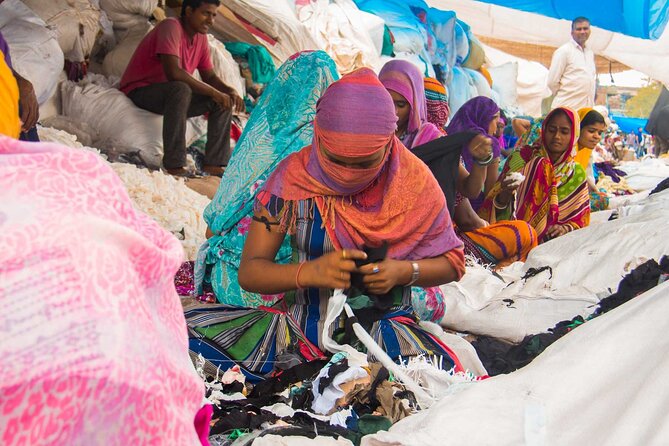
You start at Harkesh Nagar Okhla, Okhla Phase II, Okhla Industrial Estate (near the metro area). The tour ends at Harkesh Nagar Okhla metro station, which is convenient because you can easily connect back into the city. No long backtracking required.
Hotel/residence pickup and drop-off are not included, so plan on getting yourself to the meeting point using local transit. The good news is the meeting area is described as being near public transportation, and the ending point is a metro station for an easy exit.
One practical tip: go in with a little patience for walking navigation. The neighborhood doesn’t have the kind of signage you’re used to in tourist zones. That’s exactly why the guided format matters.
Stop 1 in the neighborhood: the Sanjay Colony market and All Surplus Store
The tour includes a stop at the Sanjay Colony market, specifically All Surplus Store. This is one of those moments that helps you shift from thinking about “a slum” to seeing an everyday economy.
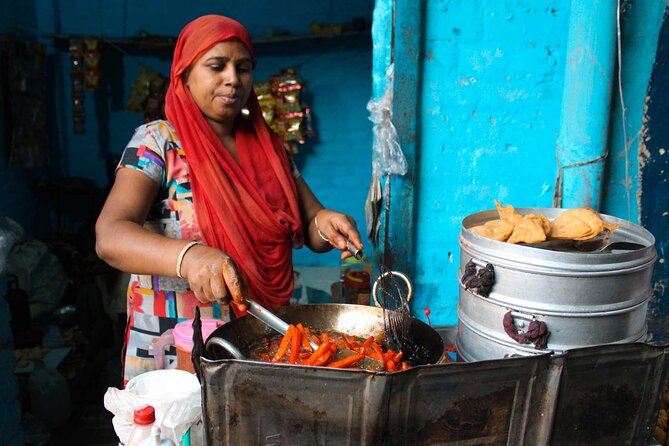
Markets like this aren’t just places to buy stuff. They’re where news moves, where workers cross paths, and where local needs meet local supply. You’ll also get a sense of why the area feels busy even though it’s mainly residential. Many industries are tied to daily activity here.
For first-timers, this stop can be the fastest way to get oriented. It gives you an anchor point inside the community, and it helps you understand how people make a living before the tour moves on to homes and community spaces.
Homes, small businesses, temples, and a local school: what you’ll actually see
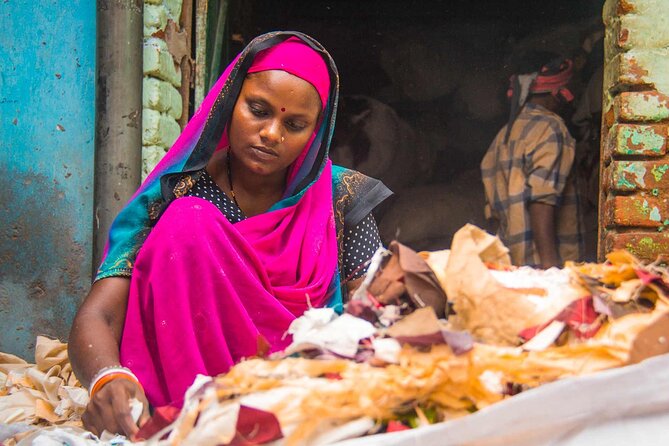
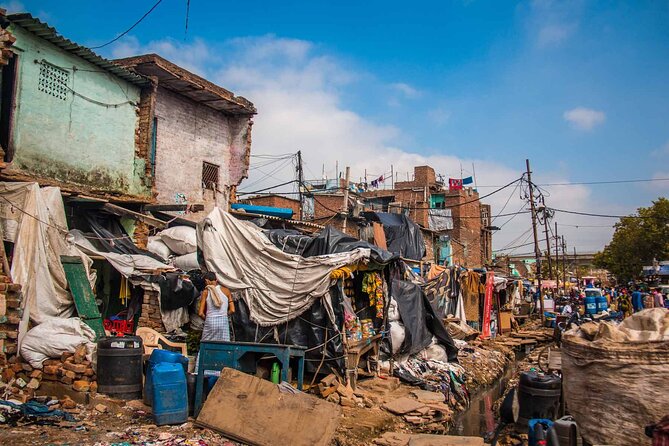
The heart of the experience is a guided walking route through everyday spaces: family homes, small enterprises, temples, and a local school. The guide’s job is to connect those dots so you don’t reduce the area to poverty alone.
A few themes come through in the way the guides explain things:
- Daily routines: what work looks like, where people spend time, and how families organize life
- Community services: education and local institutions that help kids attend school
- Neighborhood mix: multiple religious spaces and the way community life works across them
- Small enterprise culture: how businesses operate at street level
From guide examples shared in the experience, you might hear firsthand background from people like Ajay (described as a former resident) or storytelling-style explanations from guides such as Dolly, Doli, or Sam. Names can vary by day, but the consistent idea is the same: you’re getting a local lens, not a distant one.
If you’re hoping for factories or formal sites, you might find your route includes demonstrations of work environments too. In one account, the tour included a look at a women’s work setting on an hourly basis, plus details about schooling and medical coverage. Don’t assume every day has the exact same access, but the tour is clearly built to show real working life, not just scenery.




The impact side: where your money goes and why it matters
Proceeds from the tour go toward educational and social impact projects within local communities. In plain terms, you’re paying for a guided introduction, and you’re also funding local programs.
That matters because it changes what the tour is doing while you’re there. You’re not just passing through. The tour’s operator explicitly reinvests a significant portion back into the community, including support for education and local services.
This is also why guides talk about the school. The tour isn’t only pointing out that a school exists—it’s showing that learning has real support behind it. Some accounts specifically note a school funded by the tour operator and the work it does for local children.
If you’re on the fence about ethical travel experiences, this is one of the stronger arguments in favor of booking. The value isn’t only your photos or your curiosity. It’s your contribution to systems that help kids attend school and families stabilize day-to-day life.
Respect rules you should follow: dress code and no photography

This is not a “wander in and out” kind of tour. It comes with clear respect expectations, and those expectations help keep the experience comfortable for residents and for you.
Dress code is conservative throughout India: cover shoulders and knees. Plan on breathable layers, especially if you’re doing a warmer-weather departure. Comfortable walking shoes also make sense for a street walk in an active neighborhood.
Most important: no photography is permitted while in Sanjay Colony. That’s a big deal, and it’s worth respecting at face value. If your travel style is photo-heavy, this will feel different. Consider storing your camera energy for outside moments or after you’ve met your guide’s instructions.
Also, treat the whole experience like a conversation, not a spectacle. You’ll be asked to stay with the group and follow the guide’s pacing. The reward is that the tour feels less like surveillance and more like guided understanding.
Who should book (and who might want a different kind of Delhi tour)
I’d steer most people toward this if you want your Delhi trip to include more than just monuments. It’s a strong choice if you like walking tours with explanations, and if you care about seeing how communities operate in real life.
This tour is especially suited to:
- You want a short, structured experience (about 1h45)
- You prefer a small group setting (limited to six)
- You’re open to learning from local guides who explain daily life
- You’d like your visit to support education and social projects
It may be less ideal if:
- You want a typical sightseeing day with photos everywhere
- You don’t handle uncomfortable subjects well (poverty and working conditions can be difficult topics)
- You expect a high-volume tourist-style route with constant sights
A final note on comfort: the tour format is clearly organized with a guide leading you through the area. Many accounts also describe it as safe and not intrusive. The best way to keep it positive is to show respect, follow the rules, and keep questions thoughtful and grounded.
Should you book the Sanjay Colony Slum Tour?
If your goal is to understand Delhi as a living city, not just a postcard capital, I think you should strongly consider booking. The big reasons are practical: small-group guidance, a guided route that helps you navigate, and a fee that supports education and social impact locally.
At $21.20 for roughly two hours, you’re not paying for a long, expensive day. You’re paying for context, interpretation, and local leadership—and that combination is exactly where value shows up.
Book it if you can meet the basics (dress respectfully, skip photography, and walk along with the group). Skip it if your idea of a tour is mostly about taking photos and ticking off sights without engaging with human realities.
If you decide to go, bring an open mind, plan your departure time around the metro endpoint, and let your guide do what they do best: explain a place most visitors miss.
FAQ
How long is the Sanjay Colony Slum Tour?
The tour lasts about 1 hour 45 minutes (approx.).
How much does it cost?
The listed price is $21.20 per person.
Is hotel pickup included?
No. Hotel or residence pickup and drop-off are not included, so you’ll need to reach the meeting point yourself.
What’s included in the tour price?
The tour includes a local English-speaking guide and water/cold drink.
Where do I meet for the tour?
The start point is Harkesh Nagar Okhla, Okhla Phase II, Okhla Industrial Estate, New Delhi, Delhi 110020, India.
Where does the tour end?
The tour ends at Harkesh Nagar Okhla metro station, with easy connectivity to the rest of Delhi.
Are there morning and afternoon departures?
Yes, morning and afternoon departures are available.
Are there any rules about photography?
Yes. Out of respect for residents, no photography is permitted while in Sanjay Colony.
What should I wear?
Dress code is conservative: cover shoulders and knees.
FAQ (continued)
Is there a group size limit?
The tour experience is described as group-limited (six people) or an optional private upgrade, and it has a maximum of 25 travelers for the activity.
Where does my money go?
Proceeds support educational and social impact projects within local communities through the local tour operator.