REVIEW · NEW DELHI
12 Days Golden Triangle With Udaipur Jodhpur Jaisalmer Pushkar
Book on Viator →Operated by Golden Triangle Tours India · Bookable on Viator
Stone-and-saffron India, mapped with zero guesswork. This 12-day route is built for first-time visitors who want Golden Triangle highlights plus Rajasthan variety, with local guides helping you connect the dots at UNESCO sites. You also get two different Taj Mahal moments, including a sunset viewpoint that helps you dodge some of the worst crowd pressure.
What I like most is the mix of major landmarks and smaller, more personal stops. You’ll get Delhi’s big sights like Qutub Minar and Jama Masjid, then slip into Old Delhi at Chandni Chowk, where the energy is different and the shopping streets give you a real sense of daily life. I also love the practical comfort details: private air-conditioned vehicle with your driver, bottled mineral water during journeys, and guides in each city to keep the day from turning into a chaotic checklist.
One thing to consider before you book: most monument entry fees and meals are not included. You’ll still need to budget for admissions on top of the tour price, and some travel days are long because cities like Agra, Jaipur, Udaipur, Jodhpur, Jaisalmer and Pushkar are spread out.
In This Review
- Key highlights worth planning for
- How this 12-day Golden Triangle plus Rajasthan route feels day-to-day
- Delhi in one day: Gurudwara Bangla Sahib, Qutub Minar, Lotus Temple, Jama Masjid, and Chandni Chowk
- Agra travel day plus Taj Mahal sunset viewpoint: the approach that helps you breathe
- Sunrise Taj Mahal plus Agra Fort and Fatehpur Sikri: trading marble for muscle
- Jaipur highlights that make sense: Amber, Jal Mahal, City Palace, Jantar Mantar, Hawa Mahal
- Udaipur’s slower mood: Lake Pichola, City Palace views, Jagdish Temple, and Bagore Ki Haveli
- Jodhpur’s fort drama and the blue city feel, then the Thar desert shift to Jaisalmer
- Jaisalmer Fort, ornate merchant haveli lanes, and Gadisar Lake for golden-hour recovery
- Pushkar’s Brahma Temple and Brahma Ghat: a religious ending by the water
- Price and what $720 buys you beyond the big names
- Comfort and logistics that reduce stress (and what you should prepare for)
- Who should book this tour, and who might want a different pace
- Should you book this Golden Triangle plus Udaipur, Jodhpur, Jaisalmer and Pushkar?
- FAQ
- Where does the tour start, and is airport pickup included?
- Are monument entrance fees included in the tour price?
- Are lunch and dinner included?
- Is daily breakfast included?
- Is the battery bus to the Taj Mahal included?
- What transport will I use during the tour?
- Is this tour private or shared with other groups?
- Will I get mineral water during the journey?
- Can I get a full refund if I cancel?
Key highlights worth planning for

- Private local guides in every city help make UNESCO stops feel less like names on a map
- Two Taj Mahal viewpoints (sunrise and a sunset viewing point) spread out the experience
- Taj Mahal battery bus support helps you manage the approach without extra hassle
- Rajasthan in full contrast from Amber and Jantar Mantar to Lake Pichola and Thar desert nights
- Optional flexibility on at least one stop (you can skip Bagore Ki Haveli) so the day doesn’t feel forced
How this 12-day Golden Triangle plus Rajasthan route feels day-to-day
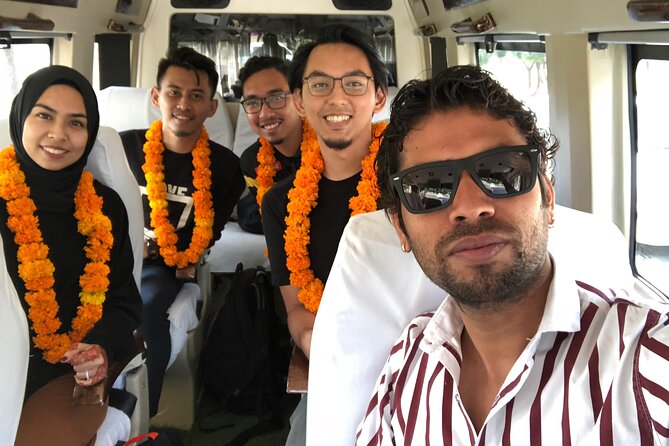
This tour works because it turns a big geographic chunk of North India into something you can actually handle. Instead of you coordinating trains, drivers, and ticket lines between cities, you’re essentially buying a structure: pickup, private transport, hotel nights (if you choose the hotel option), daily breakfast, and a local guide to guide your time inside each city.
The best part is that it doesn’t only chase famous monuments. Delhi gives you both New Delhi monument geometry and Old Delhi street life. Rajasthan then shifts moods repeatedly: lakeside calm in Udaipur, fort drama in Jodhpur, and sand-and-heritage nights in Jaisalmer before you end at Pushkar’s lake and temple rituals.
The pacing is also friendly for first-timers. Many days include a handful of high-impact stops rather than stacking everything into one exhausting block. Still, you’re moving through several cities, so plan for travel time and carry a light attitude toward “perfect timing” at every site.
You can also read our reviews of more tours and experiences in New Delhi.



Delhi in one day: Gurudwara Bangla Sahib, Qutub Minar, Lotus Temple, Jama Masjid, and Chandni Chowk
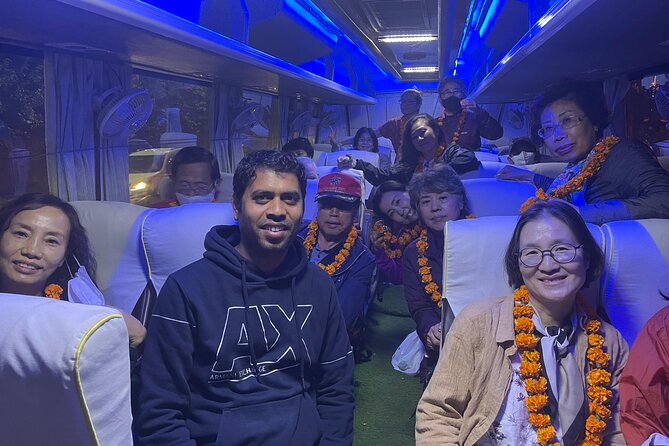
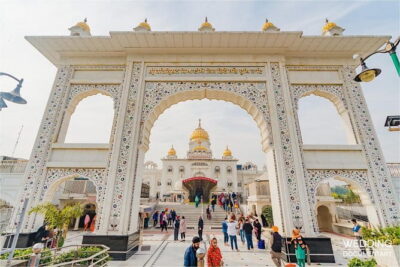
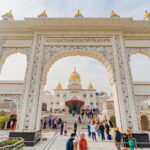
Delhi here is two different worlds in one itinerary. You start with Gurudwara Bangla Sahib, where you’ll see a temple built around a water tank tradition connected to the Sikh Guru who visited in 1664 and distributed water to help people during epidemics. It’s quiet, reflective, and a smart opener because it shifts your headspace away from monuments and toward lived culture.
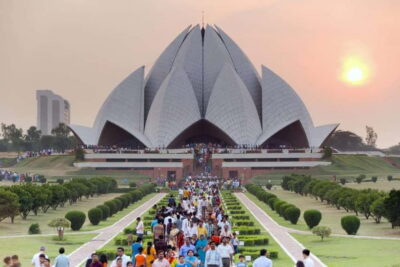
Then the day pivots to architectural power. Qutub Minar rises to about 73 meters and was constructed in 1193, tied to the Delhi Sultanate. From there, you add Lotus Temple, known for its flower-like shape and its open approach to people of all religions.
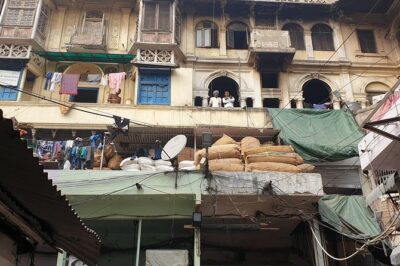
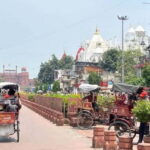
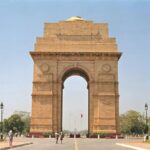
After that, the tour balances “state landmark” with “religious landmark.” India Gate is your wide-open pause near Rajpath, while Parliament House adds a modern symbol that references the Ashoka Chakra circle. Later, Jama Masjid gives you the big Mughal-era scale (built by Shah Jahan between 1650 and 1656). You finish the day with Old Delhi atmosphere at Chandni Chowk, where shopping lanes pull you into the sensory side of the city: spices, dried fruit, silver jewelry, and textiles.
Practical note: the day is packed, but it’s packed with variety. That’s the point—Delhi won’t feel repetitive because you’re constantly changing settings.
Agra travel day plus Taj Mahal sunset viewpoint: the approach that helps you breathe
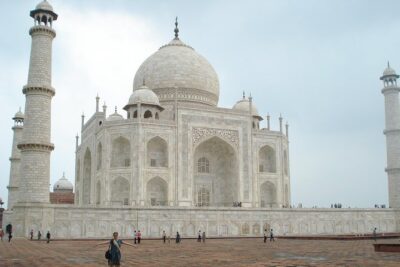
The drive to Agra is set up so you’re not stuck idling around. After breakfast, you head out and use the Yamuna Expressway for the transfer. When you arrive, the first Taj Mahal plan centers on a sunset view point across the river, described as a great way to see the marble beauty while moving away from heavier crowd zones.
That choice matters. If you’ve ever visited the Taj Mahal at peak hours, you know it can become more about pushing through people than noticing details. A sunset viewpoint helps you slow down. Even if you don’t plan to be a photography person, the lighting shift and softer sky angle make the experience feel more human.
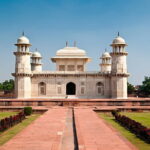
You also fit in the “Baby Taj” (Itmad-ud-Daula) and Mehtab Bagh, the garden area across the river. Mehtab Bagh’s value is perspective: it frames the monument like an intentional landscape composition rather than a sudden stop on a tour route.
This is one of those days where your guide’s pacing helps a lot. If you move too fast, Taj Mahal becomes just a big sight. If you take it in stages, it becomes a story.
Sunrise Taj Mahal plus Agra Fort and Fatehpur Sikri: trading marble for muscle
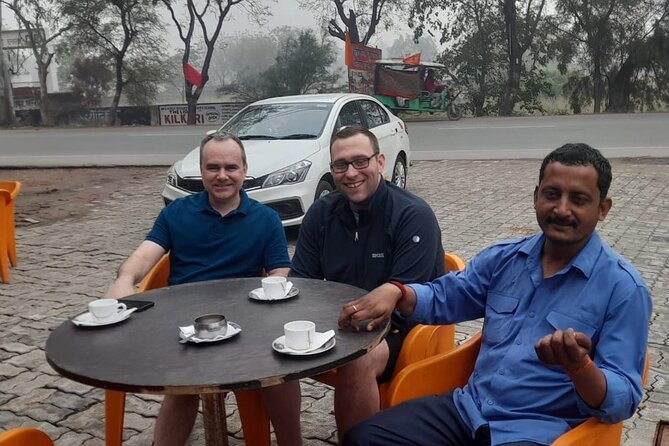
Next morning, the plan returns to the Taj Mahal for sunrise. Sunrise isn’t included just for romance; it’s a strategy for getting a cleaner experience before the day heats up and crowds stack in. You’ll see the mausoleum commissioned in 1632 by Shah Jahan to house his wife’s tomb.
After that, you swap marble for fort power at Agra Fort, a massive Mughal complex made of red sandstone associated with Emperor Akbar. Forts read best when you understand how the palace spaces connect to defense and administration. With a local guide, you’re more likely to notice the layout instead of just wandering.
Then comes Fatehpur Sikri, the City of Victory built in the late 16th century when Akbar made it a capital for about a decade. The key benefit of including Fatehpur Sikri in a “second Agra day” is that it shifts your view from one royal landmark to an entire imperial era in stone.
You also stop at Chand Baori in Abhaneri, a stepwell that goes about 30 meters into the ground and is famous for scale and depth. Stepwells can feel like side quests until you see one. Then you realize they’re climate-smart architecture and social infrastructure, not just a photo stop.
And you don’t end here. You arrive in Jaipur after the Agra-to-Rajasthan leg, which keeps your energy moving toward your next theme: Rajput-era planning and palace geometry.
Jaipur highlights that make sense: Amber, Jal Mahal, City Palace, Jantar Mantar, Hawa Mahal
Jaipur days work best when you treat them like different “views” of the same city. The tour does that by mixing forts, observatories, markets, and palace exteriors.
You begin with Panna Meena ka Kund, a stepwell near Amber Fort. Stepwells show you engineering and water thinking that feels practical, not just decorative. Then you head to Amber Palace, formerly the capital area until 1728, with a guided look at palaces and monuments tied to Raja Man Singh I.
You also get Jal Mahal for a quick photo moment. It’s a palace set on Man Sagar Lake, and the lake setting is the whole point. Even a short stop can be worthwhile because it breaks the day into “forts and stone” versus “water and reflections.”
From there, City Palace brings you to the administrative and ceremonial heart of Jaipur. The guide context helps here because the palace is also a museum-like collection: weapons, guns, sedan chairs, and more are part of the story, not random display items.
Next you visit Jantar Mantar, a UNESCO World Heritage site built in 1734 with astronomical instruments attributed to Sawai Jai Singh II. This stop is a reality check in the best way: Jaipur wasn’t only about royalty and battles; it also fed serious science and measurement.
You round out with Hawa Mahal, the Palace of Winds with its distinctive five-storey facade in red and pink sandstone, plus time at Albert Hall Museum, described as Rajasthan’s oldest museum.
If you’re wondering how to handle crowds and heat, the tour’s guide-led approach gives you the order you need. Jaipur’s sights are close enough to be efficient, but not so close that everything feels like repetition.






Udaipur’s slower mood: Lake Pichola, City Palace views, Jagdish Temple, and Bagore Ki Haveli
Udaipur is where the pace finally breathes. After an early drive from Jaipur, you check in, then you have time in the city for local markets and an easy evening dinner plan on your own.
Lake Pichola is the centerpiece. You get the option of a boating experience around the lake, described as a private boat ride with a stop at the Jagmandir Palace island. That’s a big value addition because it changes your relationship to the palaces—you see them reflected and framed rather than standing in front of them on a road.
Then you visit City Palace, located on the bank of Pichola, for a guided look that includes a collection with weapons and royal artifacts. The viewpoint angle helps too: Udaipur’s landscape is part of the palace story.
Jagdish Temple follows, set within the City Palace complex. The tour frames it as Indo-Aryan architecture, and it’s one of those religious sites that feels more integrated into daily city life than a distant museum.
Finally, Bagore Ki Haveli Museum is included as a guided stop with private transportation. There’s also a very practical perk: if you don’t want this stop, you can say no and skip to the next attraction. That small flexibility matters on a long circuit where stamina is real.
Jodhpur’s fort drama and the blue city feel, then the Thar desert shift to Jaisalmer

The Jodhpur day starts with a drive to the city and then a move into the blue city area. You check in, then the tour plans Clock Tower Market, giving you a grounded sense of where local life concentrates.
But the “main character” is Mehrangarh Fort, a former palace now used as a museum that overlooks the walled city. The fort is described as displaying weapons, paintings, and elaborate royal palanquins. A good guide will help you read the fort as a record of power and daily ritual, not just a scenic wall.
Next, Umaid Bhawan Museum brings the story into a more modern royal-era context. Then comes Jaswant Thada, a marble cenotaph described as the Taj Mahal of Jodhpur, built as a memorial and mausoleum for Marwar kings.
The emotional tone changes in the evening when you head toward Jaisalmer, described as a desert fortress city in the Thar. It’s a clean transition: from fort stone to sand geography.
You then go into the desert with a safari plan in the evening, and the tour sets you up for an overnight stay in a Jaisalmer hotel. Even if you’re not a desert person, the contrast with Rajasthan’s palace-cities makes this a useful arc, not just a tourist add-on.
Jaisalmer Fort, ornate merchant haveli lanes, and Gadisar Lake for golden-hour recovery
Jaisalmer is built on details, and the tour matches that. The first stop is Jaisalmer Fort, noted as a living fort where people still reside inside. That’s one of the reasons Jaisalmer feels different from other Rajasthan forts: it’s not only a view; it’s a place.
Then you visit the merchant residences, often called haveli stops, including Patwon Ki Haveli, Salim Singh-ki Haveli, and Nathmal Ji Ki Haveli. The tour frames them by style and function: ornate sandstone work, jaalis (lattice screens), and facades that show how wealth expressed itself through stone craftsmanship.
You end with Gadisar Lake, described as built by Raja Rawal Jaisal and later reconstructed in 1367 AD. Lake stops in desert cities are never just scenic. They’re a reminder that water and trade shaped where these communities could survive and prosper.
This day can feel like walking through layers of time. If your feet are tired, pace matters. The haveli trio is compact, but each stop is different enough that it doesn’t feel like repeats.
Pushkar’s Brahma Temple and Brahma Ghat: a religious ending by the water
The tour finishes in Pushkar, a shift away from forts and into a spiritual lake-city mood. You check in, then visit Brahma Temple, described as the only temple dedicated to Lord Brahma. The tour also mentions architecture and mythology as key reasons for the visit.
The final day centers on Pushkar Lake and Brahma Ghat, including a plan for prayers and tribute rituals. It’s framed as a place known for photography and blessings rituals. Even if you’re not participating in prayers, the atmosphere gives you a meaningful endpoint—your Rajasthan journey lands back at water, where the culture’s daily rhythm becomes visible.
Afterward, you drive back to Delhi, with the ride described as about five hours.
Price and what $720 buys you beyond the big names
At $720 per person, the value depends on what you expect to pay separately. The tour includes private transport with driver, all sightseeing with private local guides, and (when booked with the hotel option) 9 nights of accommodation plus daily hotel breakfast. It also includes bottled mineral water during journeys and a battery bus ride to and from Taj Mahal parking up to the monument.
Those details add up fast in India. Private transport and guided sightseeing are the heavy costs. Battery bus help is also real value because it removes friction around the Taj Mahal approach.
What’s not included is equally important. Monument entrance fees aren’t included, and lunch and dinner are not included either. Tips for driver and guide are also not included. So the final trip cost will be higher once you total admissions plus meals plus any optional activities you choose.
A smart way to budget is simple: assume you’ll add a meaningful amount for entrance tickets, and keep some cash for meals. The tour covers the structure and the guidance; you cover the on-site costs.
Comfort and logistics that reduce stress (and what you should prepare for)
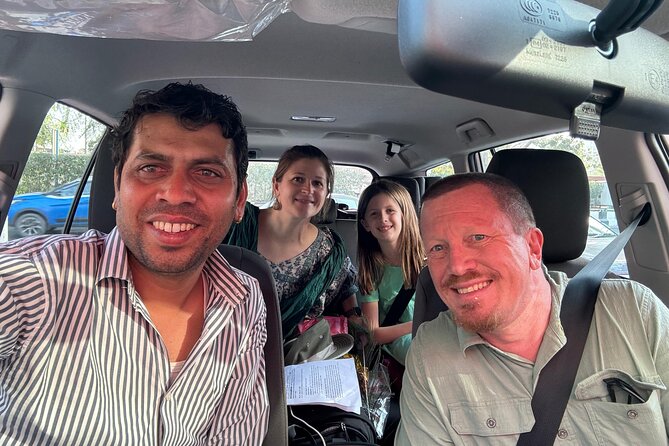
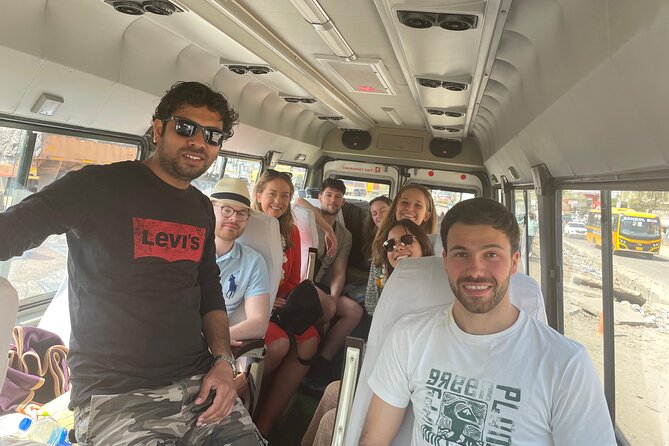
You’re traveling in an air-conditioned vehicle, with vehicle size adjusted to group size: a 4-seater sedan for 1–2 people, a 6-seater wagon for 3–4 people, and a 10-seater minivan for 5–10 people. That matters because it affects comfort on long drives between cities.
You also get hotel or airport pickup and drop-off, and the tour uses mobile tickets. The day plan includes frequent guided sightseeing blocks, which helps you avoid the mental load of figuring out where to go next.
On the day-to-day basics, you have mineral water during journeys, daily breakfast (when hotels are included), and a private tour format where only your group participates. That last bit is worth your attention: private means fewer compromises and less waiting for other schedules.
The one practical preparation you can’t skip: charge your phone and bring a power bank, because you’ll likely rely on mobile tickets and maps across several cities.
Who should book this tour, and who might want a different pace
This is a great fit if you’re:
- First-time visitors who want major highlights across multiple cities without arranging everything yourself
- Travelers who like learning with guides at monuments, temples, and forts rather than doing it all solo
- People who want a Rajasthan arc that includes lake Udaipur, fort-focused Jodhpur, desert-focused Jaisalmer, and lake temples in Pushkar
If you’re the type who hates long drives, you might still enjoy it, but you’ll want to manage expectations. The itinerary includes several city-to-city transfers, so this is less about slow wandering and more about smart routing.
One more note: the tour quality is strongly supported by high satisfaction scores, and reviews praise punctual, professional drivers such as Surendra, Vinod, and Maan. Like any service, there can be odd negative experiences; one harsh complaint exists in the record, and the company response disputes that it was from a customer who booked through them.
Should you book this Golden Triangle plus Udaipur, Jodhpur, Jaisalmer and Pushkar?
Yes, if you want a structured route with private guides, comfortable transport, and a clear path through Delhi, Agra, Jaipur, Udaipur, Jodhpur, Jaisalmer, and Pushkar. The included guidance and transport value is real, especially the Taj Mahal battery bus support.
Before you say yes, do two quick checks:
- Confirm whether you’re booking the option that includes hotels and breakfast, since that’s a major part of the value
- Budget for monument entrance fees and your own lunch and dinner, because those are not included
If that sounds like your style, this tour is a strong way to see a lot of India without turning your trip into logistics homework.
FAQ
Where does the tour start, and is airport pickup included?
The tour starts at Indira Gandhi International Airport in New Delhi, and hotel or airport pickup and drop-off are included.
Are monument entrance fees included in the tour price?
No. Monument entrance fees are not included.
Are lunch and dinner included?
No. Lunch and dinner are not included.
Is daily breakfast included?
Yes, daily hotel breakfast is included if you book the option that includes hotels.
Is the battery bus to the Taj Mahal included?
Yes. Battery bus ride to and from the Taj Mahal parking lot up to the monument is included.
What transport will I use during the tour?
You’ll travel by a private, air-conditioned vehicle with a driver.
Is this tour private or shared with other groups?
It’s private. Only your group participates.
Will I get mineral water during the journey?
Yes. Bottles of mineral water are included during journeys.
Can I get a full refund if I cancel?
Yes. You can cancel up to 24 hours in advance for a full refund.