REVIEW · NEW DELHI
8 Days Private Luxury Golden Triangle Tour with Udaipur & Pushkar
Book on Viator →Operated by Golden Triangle Tour · Bookable on Viator
Eight days, zero map anxiety. What makes this tour fun is the simple way it stacks Delhi, Agra, Jaipur, Udaipur, and Pushkar into one trip, with door-to-door private driving and built-in hotel options. I especially like how the pacing lets you see big-ticket sights without constantly re-planning your day.
I also like the human touch: you get private local guides at most stops, plus a driver who keeps logistics smooth. One bonus detail I’d flag is that the package includes the battery-bus ride to and from the Taj Mahal parking area, so you don’t waste energy figuring out the access part.
One catch: you should budget extra because many monument admission tickets aren’t included, including the Taj Mahal. It’s still great value if you plan for it early and don’t assume everything is covered.
In This Review
- Key points I’d plan around
- A private route that connects Delhi, the Taj, Jaipur, Udaipur, and Pushkar
- Day 1 in Delhi: Qutub Minar, Old Delhi, and the calm break of Lotus Temple
- Day 2 and Day 3 in Agra: two Taj Mahal sessions plus the best “where to stand” approach
- En route to Jaipur: Chand Baori’s stepwell engineering and a calmer afternoon
- Day 4 in Jaipur: Amber Fort, City Palace, Jantar Mantar, and Hawa Mahal
- Udaipur on the lakeshore: City Palace views and optional boat time on Lake Pichola
- Pushkar: Brahma Temple and the morning prayers at Brahma Ghat
- Price and logistics: what’s included in this $428.58 private tour (and what you’ll still pay for)
- How to make this run smoothly (especially with big-city crowds and early mornings)
- Should you book this Golden Triangle with Udaipur and Pushkar?
- FAQ
- What cities are included on this 8-day tour?
- Is the tour private or shared?
- Is airport pickup included?
- What transport do I get between cities?
- Are hotel rooms and breakfasts included?
- Are monument tickets included?
- Does the package include Taj Mahal access transport?
- How long is the driving back to Delhi on the final day?
- What’s the cancellation policy?
- What if weather is bad?
Key points I’d plan around
- Private door-to-door transport between five cities, so your days don’t break apart
- Battery-bus transport for Taj Mahal access (tickets still separate)
- Two Taj Mahal moments: sunset viewing on Day 2 and sunrise on Day 3
- Real variety beyond the usual Golden Triangle with Udaipur and Pushkar added
- Temple-city finish in Pushkar, tied to Brahma Temple and Pushkar Lake (Brahma Ghat)
A private route that connects Delhi, the Taj, Jaipur, Udaipur, and Pushkar
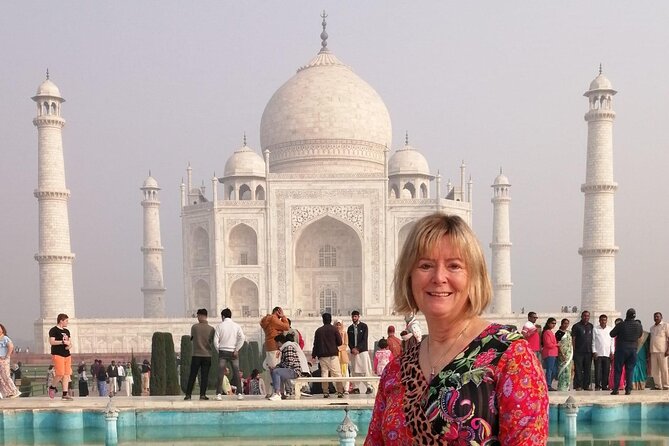
This is a classic north-India circuit, but with two smart upgrades: Udaipur (the lake-and-palace city) and Pushkar (the temple town built around the lake). Instead of jumping between buses and trains, you stay in “vacation mode” with private, air-conditioned driving and a guide for most major stops.
The tour is also designed for groups who want flexibility. It’s private, so it’s just your party, not a shared scramble with strangers. If you’re traveling as a couple, solo, or with friends and you want a plan that runs even when you’d rather not negotiate with every ticket counter, this style fits.
You can also read our reviews of more private tours in New Delhi


Day 1 in Delhi: Qutub Minar, Old Delhi, and the calm break of Lotus Temple

Delhi on this route mixes two different faces of the city in one day: big monuments from different eras, then the sensory overload of Old Delhi markets. That’s actually a good way to start, because you get context early instead of spending the whole trip staring at the same “Delhi checklist.”
Start with Qutub Minar, the tall UNESCO-listed tower from 12th/13th-century rule. It’s the kind of site that looks different in person than in photos, mostly because you feel the height and the craftsmanship up close. Plan for a walk-and-stand rhythm; it’s not a long-stop kind of place.
Next is Lotus Temple, famous for its flower-like shape and for welcoming visitors regardless of religion. It’s a quick reset from the heavier sightseeing mood, and it’s also an easy stop because it’s shorter and free.
From there you move to the more monumental-but-quick stops around central Delhi: India Gate (a war memorial and popular picnic spot) and a drive-by of Parliament House. The drive-by is practical: you get the visual and the big context without burning time on inside access.
Then comes Old Delhi with Jama Masjid and Chandni Chowk. Jama Masjid is one of the big “wow” mosques in the city, and Chandni Chowk is where the day gets loud: spices, dried fruit, jewelry, saris, and tiny lanes packed with small shops. This is where you’ll either love the energy or find it a lot—either way, it’s memorable.
You finish Day 1 with calmer, cultural stops: Gurudwara Bangla Sahib and the stepwell Agrasen Ki Baoli. Bangla Sahib is tied to Sikh history and a tank inside the complex, and it’s a meaningful place to visit. Agrasen ki Baoli adds a quieter architectural angle—less “standing in a crowd” and more “spotting details.”
Practical consideration for Day 1: several stops are listed as free, but that doesn’t mean you’ll never face ticket gates or rules. Also, Old Delhi timing can mean dust, sun, and crowds—so bring a hat and keep water in mind.
Day 2 and Day 3 in Agra: two Taj Mahal sessions plus the best “where to stand” approach
Agra is the center of gravity on this trip. What makes it work is that you get two different Taj Mahal experiences, rather than one rushed visit and done. Day 2 is built around a sunset viewing setup across the river, and Day 3 is for sunrise Taj Mahal.
On Day 2, you start with Agra Fort (massive red sandstone walls and Mughal-era palaces). It’s a strong pick if you like history that feels physical—stone, gates, and big interior spaces. The only downside is that the fort part can be tiring if you’re already sun-loaded from Delhi. Still, the structure and scale are worth it.
Then it’s to Itmad-ud-Daula—often called the Baby Taj—plus Mehtab Bagh, a garden area with views over toward the Taj Mahal across the Yamuna. These stops are valuable because they add variety: mausoleum design details and a garden vantage point, not just the single main monument.
Day 2’s centerpiece is the Taj Mahal Sunset View Point, scheduled for around two hours. The listing specifically notes a viewpoint away from crowds. That matters. You’ll get that “marble appears to change” effect without feeling boxed in.
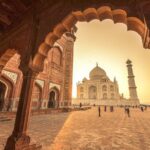
Day 3 goes for Taj Mahal at sunrise, again for about two hours. Sunrise at the Taj is dramatic mostly because the light shifts fast and the air feels different than midday. If you’re the kind of person who likes photos, you’ll appreciate the chance to see the Taj twice in different moods.
One logistics win here: the package includes the battery-bus ride to and from the Taj Mahal parking lot up to the monument area. That’s not flashy, but it saves time and walking when you’re dealing with heat and foot traffic. Just remember: the Taj Mahal monument admission ticket itself is not included.
Also on Day 3, you visit Fatehpur Sikri, the “City of Victory” built by Akbar and served as a Mughal capital for about a decade. It’s a different style of attraction than Agra: large-scale ruins and religious architecture in one complex, with Jama Masjid inside the site. If you want one day that feels like you stepped back in time, this is it.
En route to Jaipur: Chand Baori’s stepwell engineering and a calmer afternoon
After Fatehpur Sikri, the itinerary adds Chand Baori (a stepwell near the village of Abhaneri). This is the kind of place that feels almost like a puzzle: a huge stepped structure going down into the earth. You don’t need a long lecture to appreciate it—you just need time to look from different angles and notice the scale.
Then you’re in Jaipur, where you check in and get an overnight. The day is long enough that this “arrive, reset, sleep” approach is helpful. Jaipur is where the trip turns into palace-and-fort mode, so saving your energy for the next day is smart.
Day 4 in Jaipur: Amber Fort, City Palace, Jantar Mantar, and Hawa Mahal
Jaipur is built for people who love details: gates, courtyards, instruments, windows, and panoramic views. This day is packed, but it’s packed in a way that keeps switching styles so you don’t get monotone “fort after fort fatigue.”
Start with Panna Meena ka Kund, a short stop at a stepwell near Fort areas. It’s quick, but it helps set the “Jaipur is for architecture” tone.
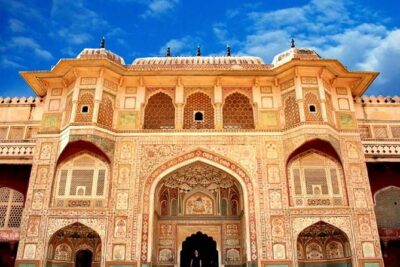
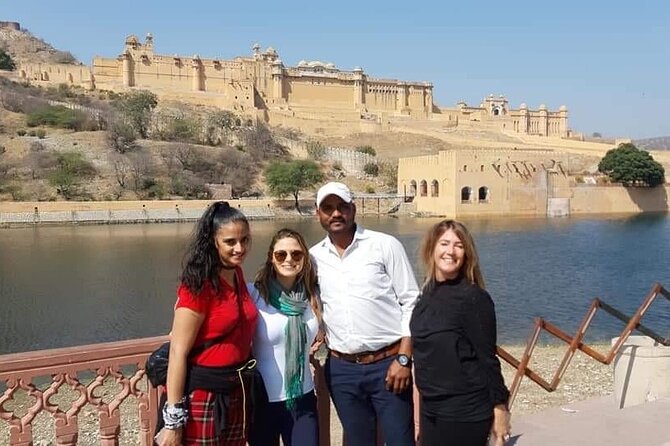
Then you head to Amber Palace. It’s described as a two-hour guided tour through palaces, squares, and monuments. This is one of the days you’ll want comfortable shoes for, because the terrain and movement add up. The upside: you get the grandeur and the layout, not just a quick photo.
Next is Jal Mahal, a palace-like structure on Man Sagar Lake. You’re not meant to linger like it’s a full museum stop—it’s a photo-friendly break. Even so, it’s a good way to change the visual theme from fort walls to water views.
Then it’s City Palace of Jaipur and the Jantar Mantar observatory. City Palace gives you royal residence and museum context, while Jantar Mantar is UNESCO-listed and built around nineteen astronomical instruments meant to observe the sky with the naked eye. That combination—political center plus “how people measured the heavens”—makes Jaipur feel more than just decorative.
You wrap with Hawa Mahal, the Palace of Winds, and Albert Hall Museum. Hawa Mahal’s five-storey look and window design makes it perfect for quick understanding: you see why it was built, then you move on. Albert Hall is a shorter stop, and it’s positioned as Rajasthan’s oldest museum. If you’re museumed out, the short time here is a plus.
Practical consideration for this full Jaipur day: you’ll likely spend more time waiting for small transitions than you think, because multiple sites are concentrated but not all next-door. Keep your water, sunscreen, and a light layer handy.
You can also read our reviews of more tours and experiences in New Delhi






Udaipur on the lakeshore: City Palace views and optional boat time on Lake Pichola
Udaipur is where the tour tone changes. After the fort-palace intensity of Jaipur, you get the slower rhythm of Lake Pichola and palace architecture on the water.
Day 5 is arrival and check-in, with a long block of time listed for Udaipur. That’s a “settle in” setup, and it matters because Udaipur evenings are the kind that make you want to wander a little. You’ll then have a full sightseeing day on Day 6.
Day 6 begins at Lake Pichola, where sightseeing and boating are part of the experience. The plan points you toward a private boat ride and the chance to stop around Jagmandir Palace island. Even if you skip the boat component, Lake Pichola is still the visual anchor of the day. You’ll feel the calm right away compared to Delhi traffic and Agra heat.
Then comes City Palace of Udaipur, positioned right by the lake. You get city views from the palace area and a look at museum-style collections inside, including weapons and royal objects. The listing also notes a ferry ride operating from within the City Palace area, and it highlights that the royal family still resides in part of the palace complex. That last detail helps you understand why this isn’t just “a building.” It’s an active living heritage site.
You also visit Jagdish Temple, located within the broader City Palace area. It’s described as Indo-Aryan in style and a nice contrast to the palace mood: more spirituality, more stonework, and more quiet.
Finally there’s Bagore Ki Haveli Museum, which you can keep or skip. That optional feel is useful in Udaipur, because the city is pleasant when you choose your pace.
Pushkar: Brahma Temple and the morning prayers at Brahma Ghat
Pushkar is a different kind of finish. It’s not about one enormous monument; it’s about the ritual flow of a place built around the lake and a specific spiritual identity.
On Day 7, you arrive and check in, with an overnight. Then Day 8 is a focused morning in Pushkar: Brahma Temple and Pushkar Lake.
Brahma Temple is central here, with the guide context that it’s famous for architecture and mythology and that Brahma has only one temple in the world (as stated in the tour details). It’s a short stop, but it sets the tone for why Pushkar matters to many visitors.
Then you head to Brahma Ghat on the lake for prayers and remembrance. The listing notes that families offer prayers for happiness and tribute the dead souls, and that this spot is known for photography and the ritual atmosphere. Even if you’re not focused on religious practice, it’s one of those moments that makes the trip feel human and real.
After that, you drive back to New Delhi for the end of the tour, with the drive estimated around five hours and the total day around six hours.
Price and logistics: what’s included in this $428.58 private tour (and what you’ll still pay for)
At $428.58 per person for an 8-day private package, the value comes from the “stop wasting time” parts. You’re paying for private air-conditioned driving, most site visits with local guides, and the ability to move city to city without booking your own intercity logistics.
Also included (if you choose the hotel option) are 7 nights accommodation, daily breakfast at the hotel, hotel taxes, and mineral water during journeys. Pickup and drop-off from the Indira Gandhi International Airport area are included as well, which is big if you’re trying to avoid first-day stress.
The itinerary also includes that practical battery bus ride to and from the Taj Mahal parking lot. That’s a small line item with real effect on comfort.
What to budget extra:
- Monument tickets are not included, and the Taj Mahal admission is specifically noted as not included.
- Pushkar Guide is listed as not included.
- Travel insurance and flights/trains are not included.
- Personal expenses always sit outside the package.
Vehicle type is set by group size: for 1–2 people, you get a four-seater sedan; for 3–4 people, a six-seater MPV. If you’re prone to motion discomfort, the private vehicle setup helps because you control breaks and pace.
One more practical note: a lot of the stops are listed as free admissions, but not all. In other words, your day will mix free and paid-entry sites. I’d make a mental cash plan early so you don’t get surprised at the gates.
How to make this run smoothly (especially with big-city crowds and early mornings)
This tour works best if you keep your expectations tight and your routine simple.
First, treat the Taj Mahal mornings as “real wake-up” moments. Sunrise visits are often cool and worth it, but you’ll want to get to the access point on time and avoid scrambling. Bring water, wear layers, and keep a hat and sunglasses ready.
Second, for Delhi and Old Delhi, plan for walking and crowds. Chandni Chowk can feel intense fast, and you’ll likely be moving through tight streets. If you’re shopping, go slow and be ready to bargain. If you’re just sightseeing, you’ll still get plenty of sensory input without needing to buy anything.
Third, respect religious spaces. You’ll visit places like Jama Masjid and Gurudwara Bangla Sahib, plus Brahma Temple and Pushkar Lake prayers. Dress modestly, keep voices down, and follow any entry rules your guide mentions.
Finally, double-check your energy balance. Jaipur and Agra stack multiple major stops in a day, while Udaipur and Pushkar are more about mood. If you’re the type who gets exhausted by packed schedules, consider taking shorter snack breaks instead of longer sit-down breaks.
Should you book this Golden Triangle with Udaipur and Pushkar?
Book it if you want a private, guided route that covers five major cities with minimal logistical friction. The big appeal is the structure: Delhi sets the stage, Agra delivers the Taj Mahal twice, Jaipur gives you palace-and-fort variety, and then Udaipur and Pushkar shift the mood into lakeside beauty and temple rituals.
Skip it (or at least think hard) if you hate early mornings or you don’t want to deal with separate monument tickets. The itinerary is strong, but it’s not a “everything is paid for” package.
If you’re choosing based on comfort and clarity, I’d also pay attention to your driver and guide match. Past experiences tied to this tour have praised drivers like Maan and Vinod for safe, helpful driving and English-speaking support, and an Agra guide named Anil for being very informative. That kind of guidance is often what turns a good itinerary into a great day.
FAQ
What cities are included on this 8-day tour?
This tour covers New Delhi, Agra, Jaipur, Udaipur, and Pushkar.
Is the tour private or shared?
It’s a private tour/activity, and only your group participates.
Is airport pickup included?
Yes. The tour includes hotel or airport pick-up and drop-off, and the start meeting point is Indira Gandhi International Airport, New Delhi.
What transport do I get between cities?
You travel in a private, air-conditioned vehicle with a driver. Vehicle size depends on group size: a 4-seater sedan for 1–2 people, and a 6-seater MPV for 3–4 people.
Are hotel rooms and breakfasts included?
The tour includes 7 nights accommodation if booked with the hotel option, and daily hotel breakfast is included with that option.
Are monument tickets included?
No. Monuments Tickets are not included. Many stops list admission as not included, including the Taj Mahal.
Does the package include Taj Mahal access transport?
Yes. It includes the battery bus ride to and from the Taj Mahal parking area up to the monument.
How long is the driving back to Delhi on the final day?
The return drive is listed as approximately five hours, with the final day total around six hours.
What’s the cancellation policy?
You can cancel for a full refund up to 24 hours in advance. If you cancel less than 24 hours before the start time, the amount paid is not refunded.
What if weather is bad?
This experience requires good weather. If it’s canceled due to poor weather, you’ll be offered a different date or a full refund.