REVIEW · NEW DELHI
2 Days Taj Mahal Tour and Agra Tour by Car from Delhi
Book on Viator →Operated by Welcome Taj Mahal Tour · Bookable on Viator
Taj Mahal dreams start with a car ride. This 2-day Delhi to Agra trip is built for efficiency: you get round-trip transport, an English-speaking guide, and a focused mix of Mughal-era sights—without the hassle of piecing everything together yourself. You’ll also hit Fatehpur Sikri, Akbar’s red-stone capital, which feels like history with the lights turned off.
What I like most is how it keeps the big moments on schedule: sunrise Taj Mahal on Day 2 gives you the best light and an easy photo plan. I also love the hands-on guidance—drivers like Ravi-ji and Gurmeet Singh are described as punctual and careful, while guides such as Mansingh bring the kind of historical explanations that make the marble and stone feel specific, not generic.
One thing to consider: entry tickets can be a separate cost depending on the option you choose, and Taj Mahal is closed every Friday. If you’re traveling on a Friday, you’ll want an alternate plan ready before you go.
In This Review
- Key highlights worth your time
- The Delhi to Agra drive: comfort that actually matters
- Day 1 in Agra: Agra Fort sets the tone
- Baby Taj (Itimad-ud-Daula): the jewel-box vibe
- Mehtab Bagh: Taj Mahal across the river
- Day 2 sunrise Taj Mahal: the classic “morning marble” plan
- Fatehpur Sikri: Akbar’s red-stone “ghost town”
- Price and logistics: is $93 good value?
- Who this tour suits best (and who should look elsewhere)
- Practical tips that keep the trip smooth
- Should you book this 2-day Taj Mahal and Agra tour by car?
- FAQ
- How long is the drive from Delhi to Agra?
- Does the tour include pickup from my hotel or station?
- What meals are included during the tour?
- Is the hotel included?
- Are entrance tickets included for the monuments?
- Is the Taj Mahal open every day?
- What documents and items should I bring?
Key highlights worth your time
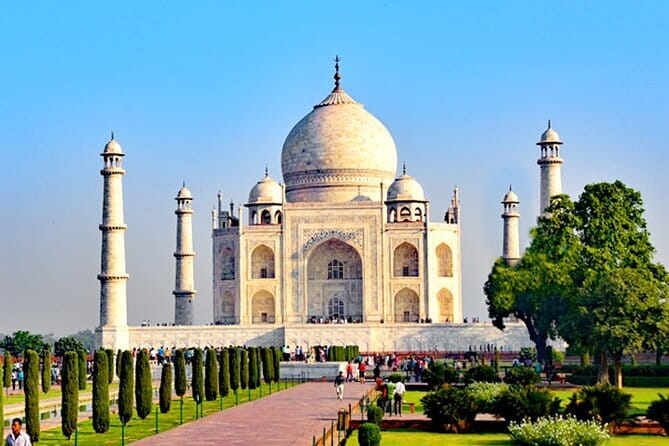
- Sunrise Taj Mahal timing for great viewing and photos
- Private AC vehicle with hotel/airport/train pickup and drop-off
- Agra Fort + Baby Taj for two different moods of Mughal architecture
- Mehtab Bagh for a classic Taj viewing angle across the river
- Fatehpur Sikri as a UNESCO-listed, “ghost town” style stop
- Multilingual private guide in English, Spanish, French, or German
The Delhi to Agra drive: comfort that actually matters
This is a car tour, not a bus hop. You’re picked up from your desired spot in Delhi or Gurugram, then you’re on the road to Agra for about 3 hours 30 minutes (traffic can change this). The value here is simple: you lose less time figuring out transport and more time using your daylight wisely in Agra.
The vehicle is private and air-conditioned, and the price includes the driver’s costs such as fuel, parking, tolls, and allowances. That means you’re not stuck doing math on random add-ons like local transport fees. You also get a guide on the sightseeing side, which helps when places are spread out and you want to understand what you’re looking at.
A small but important practical note: the itinerary assumes a moderate amount of walking. Comfortable shoes are not optional if you want your feet to survive the marble-and-stone circuit.
You can also read our reviews of more tours and experiences in New Delhi



Day 1 in Agra: Agra Fort sets the tone
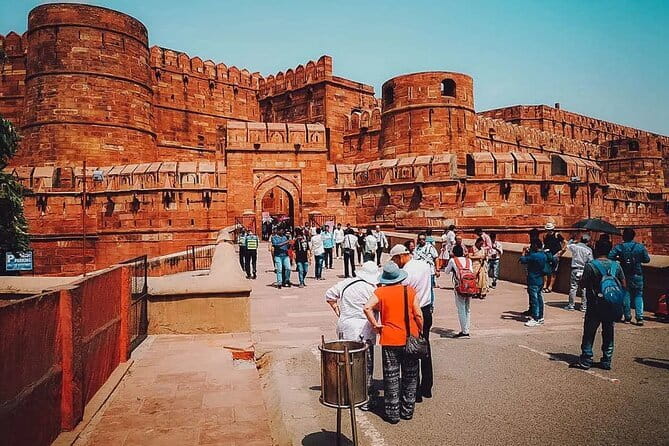
After you arrive and check into your 3-star hotel with breakfast, the plan turns to Agra Fort. This is a powerful opening stop because Agra Fort is built from red sandstone, and it tells you Mughal power wasn’t just about white marble monuments.
You’ll spend about one hour here. Even if you don’t go deep into every structure, you’ll quickly get the feel of the fortress layout—big walls, strategic positioning, and the sense of a city designed for control. It’s also a good “reset” after the drive. You’re not immediately rushed into the Taj Mahal crowds and photo lines; you’re eased in with something architectural and story-heavy.
One caution: the stop is marked as entry ticket not included, so factor that in. If you want everything handled in advance, ask what’s included for the tickets you plan to use.
Baby Taj (Itimad-ud-Daula): the jewel-box vibe
Day 1 also includes Itmad-ud-Daula, often called the Baby Taj. This is one of those sites that rewards paying attention. It’s smaller than the Taj Mahal, but the craftsmanship is why people keep talking about it. The name “jewel box” is fitting—details feel delicate, and the layout makes you notice symmetry and stonework.
Your time here is short—around 30 minutes—so don’t show up scanning your phone. Go with a slow pace. Look at the patterns and the structure of the tomb before you rush to photos. Because the stop is marked as not included for admission, keep your ticket plan clear so you’re not scrambling.
Mehtab Bagh: Taj Mahal across the river

Then you move to Mehtab Bagh, the Moonlight Garden. This is the “Taj from a different angle” stop, and it’s genuinely worth it because it reframes the Taj Mahal as part of a landscape rather than only a single frontal monument.
The schedule gives you about 30 minutes. That’s enough time to find your viewing spot and settle in for the light. It’s also recommended as a great place to catch the Taj Mahal’s beauty during sunset. If your energy is running low from the drive, this is still a good use of time because you’re not constantly walking between distant stops—you’re mostly watching, which is a nice change.
Mehtab Bagh is also marked as not included for admission. If you want smooth sailing, confirm which entrances your ticket option covers.
Day 2 sunrise Taj Mahal: the classic “morning marble” plan

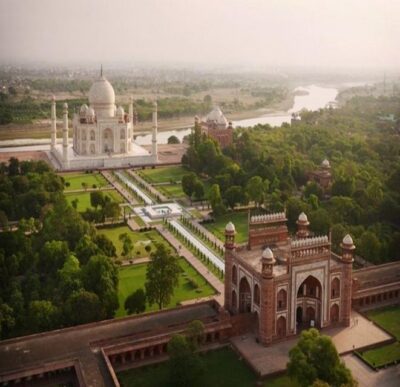
On Day 2, the big moment is Taj Mahal at sunrise. This part is scheduled for about two hours, and it’s timed so you can view the marble mausoleum in soft light. You’ll get help with photo spots, which matters because the “best angles” aren’t always obvious when you first arrive.
The Taj Mahal stop notes admission ticket not included, so again: know what you’re purchasing ahead of time. Also, plan around the rule that the Taj Mahal is closed every Friday. If that’s your travel day, the whole sunrise concept needs adjusting.
If you’re the type who likes understanding what you see, having a guide helps a lot. This is where explanations turn architecture into something you can actually visualize—materials, design choices, and why the whole complex feels emotionally intentional rather than just impressive.
After the Taj Mahal visit, you’ll drive back to the hotel for breakfast. That structure is practical. It means the early wake-up isn’t followed by a chaotic food search, which can ruin the mood fast.






Fatehpur Sikri: Akbar’s red-stone “ghost town”

After breakfast, you head to Fatehpur Sikri, about 40 km from Agra. The trip includes sightseeing time plus lunch and then the return toward Delhi. Total time on this day is listed at about 5 hours for the Fatehpur Sikri segment.
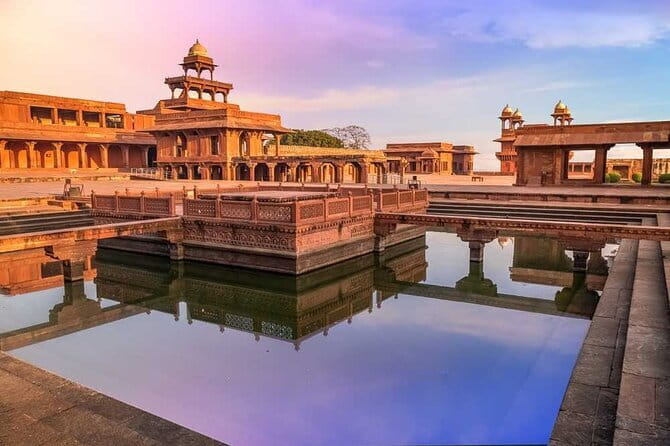
Fatehpur Sikri is described as a deserted capital built by Mughal Emperor Akbar, made of red sandstone, and it’s listed as a UNESCO World Heritage site. What makes it special is that it doesn’t feel like a museum display. It feels like a place people once lived in—then left behind—so the scale and emptiness do some of the work for you.
This is a strong pairing with the Taj Mahal day. You go from a perfectly maintained icon to a city that feels paused in time. It’s a reminder that Mughal ambition wasn’t one building or one reign—it was a system of power, religion, and architecture.
Price and logistics: is $93 good value?

At $93 for a 2-day car tour from Delhi to Agra, the value depends on what you consider the “core” costs of your trip.
Here’s what you’re clearly getting from the package:
- Private AC vehicle with pickup/drop-off from your Delhi/Gurugram location
- Live private guide in English, Spanish, French, or German
- 3-star hotel with breakfast (one/double/triple sharing basis)
- Breakfast and lunch are included
- Local costs like tolls, taxes, parking, fuel, and driver allowance are covered
What might be extra:
- Monument entry tickets show mixed inclusion signals (Taj Mahal and several Agra stops are marked as not included). Because the package also mentions entrance fees as optional, you should confirm which ticket option you’re choosing before you pay.
So is it a bargain or just “cheap”? It’s a good deal if you want the transport and guided flow handled and you’re okay coordinating the ticket piece. If you already hate dealing with ticket logistics, you’ll want the ticket setup nailed down in writing before arrival.
The fact that there are group discounts and mobile ticket support also helps. In India, small administrative speed matters—having the right paperwork ready saves time and stress on busy days.
Who this tour suits best (and who should look elsewhere)

This setup is a good fit for:
- Couples and families who want private transport instead of figuring out train schedules
- Travelers who care about seeing Taj Mahal at sunrise, not just “sometime in the day”
- People who enjoy a guided narrative, especially around Mughal architecture and layout
- Anyone who wants a structured 2-day schedule that still includes downtime like hotel breakfast
You might want a different style of tour if:
- You’re traveling on a Friday, since Taj Mahal is closed
- You want long, slow museum-style time at every site. The schedule is efficient, not leisurely
- You strongly dislike ticket coordination, given that admission inclusion can vary by stop
Practical tips that keep the trip smooth
A few things make a noticeable difference:
- Wear comfortable shoes for the walking you’ll do across tombs and courtyards. Your feet will thank you.
- Bring your passport—it’s required on the day of travel. If you forget it, you can lose access and time.
- Plan for early mornings. Sunrise Taj Mahal means you’ll feel the day shift fast.
- If you have kids, note that children must be accompanied by an adult.
- Keep an eye on timing: transfer durations are approximate and depend on traffic.
Also, it helps to be flexible with lunch. Lunch is included, but drinks during lunch or dinner are not. If you like bottled water or soft drinks, budget for it separately.
Should you book this 2-day Taj Mahal and Agra tour by car?
I’d book it if you want a straightforward, value-focused way to see the big Mughal hits—Taj Mahal at sunrise, Agra Fort, Baby Taj, Mehtab Bagh, and Fatehpur Sikri—using private AC transport and a guide who can explain what you’re seeing. The balance of sightseeing and logistics is the real selling point: you won’t spend your limited vacation energy arguing with buses or searching for ticket counters.
Hold off or ask more questions first if you’re traveling on a Friday or if the ticket inclusions aren’t clear to you. Get the ticket plan confirmed up front, and you’ll feel much more relaxed when you arrive.
FAQ
How long is the drive from Delhi to Agra?
The drive is about 3 hours 30 minutes, though actual time depends on traffic.
Does the tour include pickup from my hotel or station?
Yes. Pickup and drop-off are included from your Delhi hotel, airport, or train station (and also from Delhi/Gurugram).
What meals are included during the tour?
Breakfast and lunch are included.
Is the hotel included?
Yes. You stay in a 3-star hotel with breakfast (with one/double/triple sharing options).
Are entrance tickets included for the monuments?
The schedule shows monument entrance tickets as mixed. Some stops are marked as not included, and Taj Mahal is marked as not included here, so you should confirm which ticket option you’re selecting for your dates.
Is the Taj Mahal open every day?
No. The Taj Mahal is closed every Friday.
What documents and items should I bring?
You’ll need a current valid passport on the day of travel. You should also wear comfortable shoes since the tour includes moderate walking.