REVIEW · NEW DELHI
Delhi: Qutub Minar UNESCO World Heritage Site Walking Tour
Book on GetYourGuide →Operated by Crystal India Holidays · Bookable on GetYourGuide
One minaret tells a whole Delhi story. This walking tour takes you through the Qutub Minar UNESCO area, where every turn adds another layer of design, faith, and engineering.
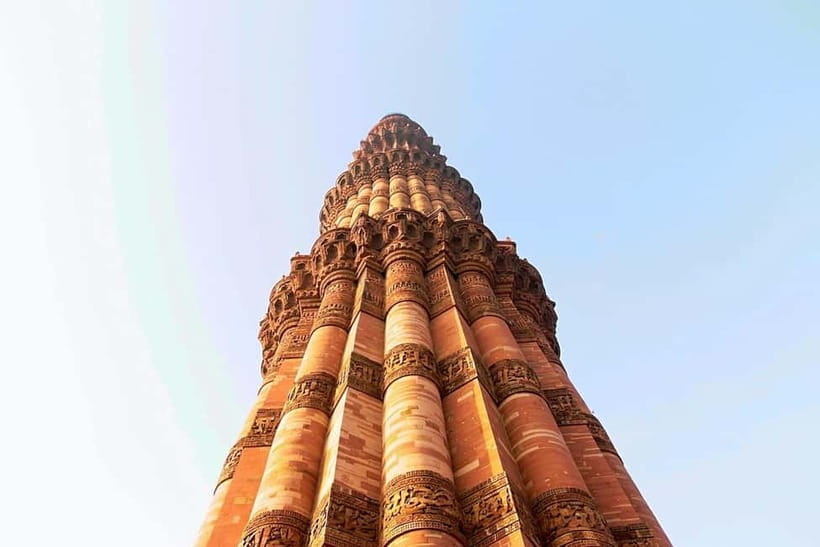
I like how the experience centers on the 73-meter-high Qutub Minar, especially the way the minaret’s storeys vary as different rulers shaped it over time. I also love that you’re not stuck staring at one monument; you bounce between key structures, including the Quwwat-ul-Islam Mosque and the Iron Pillar, so the whole site feels like a connected set-piece rather than separate stops.
One consideration: it is still a walking tour in an active historic complex, so wear comfy shoes and plan for some uneven, stone-heavy ground while you take it all in.
In This Review
- Key highlights you’ll remember
- Qutub Minar: the 73-meter moment you feel instantly
- How the Mamluk carvings and storeys tell the story
- Quwwat-ul-Islam Mosque: reused pillars and a first-of-its-kind mosque
- Iron Pillar: the rust-resistant metallurgy stop
- Alai Darwaza and the unfinished Alai Minar: ambition you can see
- Time on the ground: what a 2–3 hour tour really means
- Price and value: what $9 buys you at Qutub Minar
- Guide quality in practice: English or Hindi, with Madhuvan
- Who this walking tour suits best (and who might want a different plan)
- Should you book this Qutub Minar walking tour?
- FAQ
- How long is the Qutub Minar walking tour?
- What sights will I see during the tour?
- Is the tour guided?
- What languages are offered?
- Is there private transportation included?
- Is the group private?
- Is the tour wheelchair accessible?
- How much does it cost?
- What is the cancellation policy?
Key highlights you’ll remember
- Qutub Minar at 73 meters: the height hits you fast, and the storeys reward slow looking
- Mamluk carving details: Arabic inscriptions and geometric patterns you can track as you move around
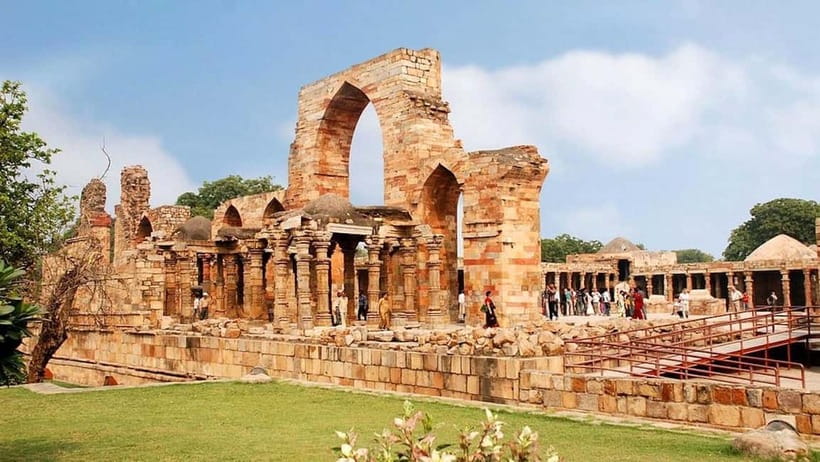
- Quwwat-ul-Islam Mosque: arched gateways and pillars that were reused from earlier Hindu and Jain temples
- Iron Pillar: the famous rust-resistant surface that signals serious ancient metallurgy
- Alai Darwaza + unfinished Alai Minar: a complete doorway statement, plus an abandoned ambition
Qutub Minar: the 73-meter moment you feel instantly
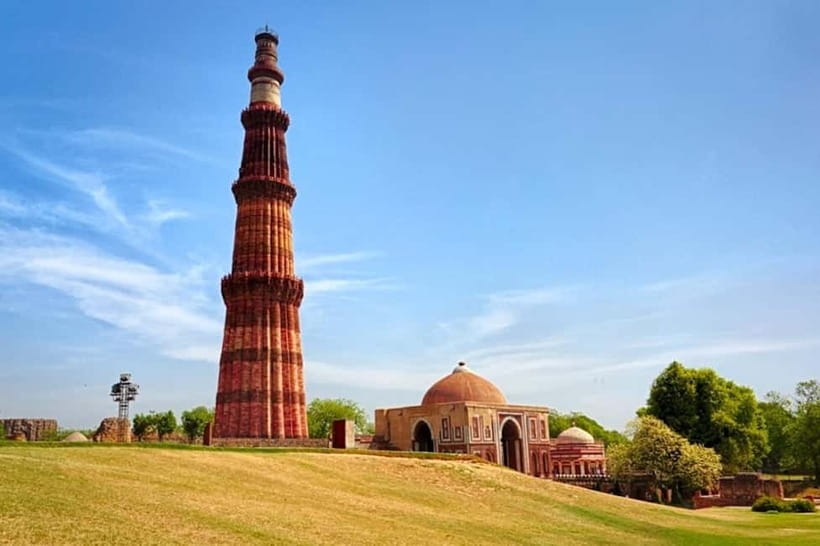
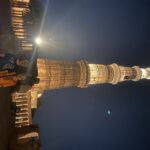
Qutub Minar is the star, and it earns the attention. Even from the base area, the minaret’s scale reads more like architecture than decoration. You’ll spend time looking at how red sandstone and marble come together, and how the structure’s form stays clear even when you shift positions around it.
What I like for your experience: this is one of those monuments where photos lie by omission. On the ground, you notice the rhythm of the edges and the way the height dominates your sense of space. If you tend to speed past big “must-sees,” this one actually rewards a slower pace because each storey has its own look.
You can also read our reviews of more walking tours in New Delhi



How the Mamluk carvings and storeys tell the story
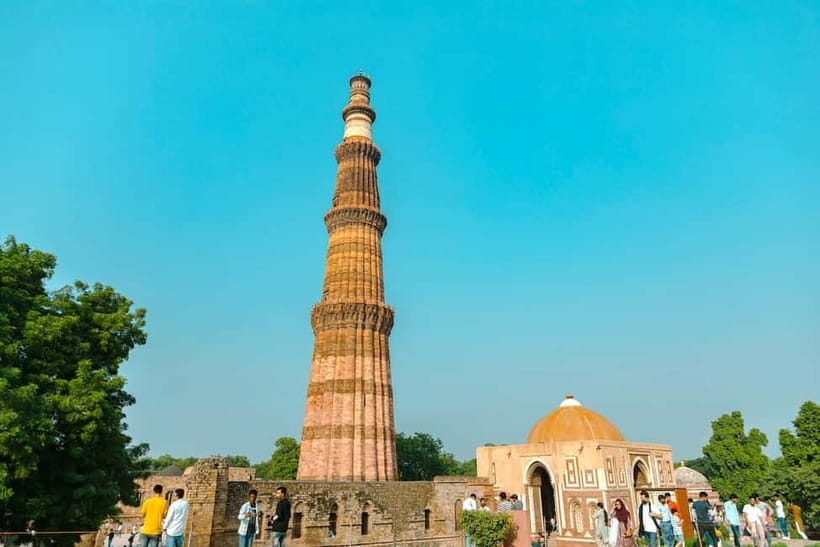
One of the most practical benefits of doing a guided circuit is that it helps you “read” what you’re seeing. Here, that means paying attention to the Arabic inscriptions and geometric patterns that show up across the tower’s surfaces. The goal isn’t to memorize calligraphy; it’s to understand that the minaret is layered work, not one single project.
The minaret’s different storeys matter. Each level has a distinct design, and the changes reflect successive rulers shaping the monument over time. When you understand that, the carvings stop feeling like random ornament. They become part of a timeline you can see with your eyes.
Quwwat-ul-Islam Mosque: reused pillars and a first-of-its-kind mosque
Right near Qutub Minar, the Quwwat-ul-Islam Mosque shifts the mood from towering vertical drama to grounded, architectural textures. This site is especially interesting because it’s described as the first mosque built in India. You’ll see arched gateways and pillars that were repurposed from earlier Hindu and Jain temples, which creates a visible fusion of artistic traditions.
For you, the value is that this stop adds meaning beyond beauty. You’re not just looking at an old building; you’re seeing how materials and craft moved across eras. When you notice the reused pillars, the complex starts to feel like a living record of what different communities built, adapted, and preserved.
A small drawback to keep in mind: mosque courtyards and gateway areas can be visually busy. If you’re visiting when it feels crowded, you’ll need to slow down and angle your body so you can actually pick out the details instead of scanning from a distance.
Iron Pillar: the rust-resistant metallurgy stop
Then comes one of the most memorable roadside-museum moments in Delhi: the Iron Pillar. It’s described as mysterious, and that reputation makes sense when you consider what’s being highlighted—its rust-resistant surface. Even if you don’t know the chemistry behind it, you can still appreciate the implied message: someone solved a hard materials problem long ago and left behind a structure that keeps demonstrating results.
I like this stop because it changes the kind of attention you’re paying. Up to this point, you’ve been mostly reading forms and inscriptions. Here, you’re looking for material evidence—how something has held up. It’s a strong reminder that this complex isn’t only about religious architecture; it also reflects skilled engineering.
Alai Darwaza and the unfinished Alai Minar: ambition you can see
Two final visual payoffs close out the circuit: the Alai Darwaza and the unfinished Alai Minar. The Darwaza is called out for its stunning Indo-Islamic architecture, which makes it a perfect counterpoint after the tall minaret. You get a different scale and a different kind of detail—more doorway-focused, more about proportion and rhythm than vertical reach.
Right after that, you’re shown the unfinished Alai Minar. That contrast is the point. A finished monument can feel like a completed thought, but an unfinished one makes the process visible. You see ambition on the move—an idea in construction rather than only a final object.
You can also read our reviews of more historical tours in New Delhi



Time on the ground: what a 2–3 hour tour really means
With a duration of 2–3 hours, you should expect a brisk but not rushed walk through the UNESCO site. The exact pace depends on your group’s comfort and photo habits, but the structure of the experience is clear: you’re moving between the major monuments and spending time at each one to connect the details.
This timing is good value for people who want the big hits without turning their day into a full-day marathon. It’s also enough time to notice how the complex changes in feel—height and carvings, then mosque gateways, then the material science moment of the Iron Pillar, and finally the doorway statement and the unfinished tower.
Practical tip for you: build in a little extra time for slow looking. If you treat this like a checklist, you’ll miss the way the storeys vary and the way reused pillars create an architectural dialogue.
Price and value: what $9 buys you at Qutub Minar
At $9 per person, the value is mostly about interpretation. The fee isn’t really buying transportation in most cases—it’s buying a professional guide and their ability to explain what you’re seeing without turning it into a lecture. For a UNESCO complex that can feel overwhelming on your own, a guided walkthrough can turn confusion into clarity fast.
You also have the option for a transfer in a private car (if that add-on is selected). That matters because reaching the site and moving around efficiently reduces friction, especially when you want to start viewing quickly instead of spending the first chunk of your visit figuring things out.
Guide quality in practice: English or Hindi, with Madhuvan
This tour includes a professional live guide available in English and Hindi. The strongest review signal from the information you provided is that the guide experience is not passive. One highlighted guide is Madhuvan, described as very engaging, which is exactly what you want in a place where details can easily blur together.
When the explanation is engaging, you can focus on seeing. You’re not just standing in front of old stone; you’re learning how the carvings relate to the people who built them, and how different structures fit into one shared complex. That’s the difference between looking and actually understanding.
For your planning: if you’re more comfortable in English or Hindi, pick the language that lets you ask questions. The more you can interact, the more your time at each stop stretches beyond the visible surface.
Who this walking tour suits best (and who might want a different plan)
This Qutub Minar walking tour is ideal if you want:
- A guided UNESCO circuit focused on the core monuments in a short time
- A mix of architectural design, inscriptions, and a materials-focused stop (the Iron Pillar)
- A private group format, which usually helps if you prefer less crowding in your viewing rhythm
It may be less ideal if you want:
- A slow, stand-still museum style experience with long breaks (this is structured around a 2–3 hour walkthrough)
- A completely minimal-walking visit (it is a walking tour by design)
If you’re traveling with limited mobility, it’s listed as wheelchair accessible, which is a helpful baseline for planning.
Should you book this Qutub Minar walking tour?
If you want maximum impact in a short window, I’d book it. The combination of Qutub Minar’s towering height, the Quwwat-ul-Islam Mosque’s reused-pillars story, and the Iron Pillar makes this more than the usual “big photo spot” route. Add an engaging guide like Madhuvan, and the explanations can help you actually see what makes this UNESCO complex tick.
I’d say skip it only if you’re set on moving at your own pace with zero structure. If that’s your style, you could read up and visit independently—but you’d be giving up the on-the-ground guidance that turns details into understanding.
FAQ
How long is the Qutub Minar walking tour?
The duration is listed as 2 to 3 hours.
What sights will I see during the tour?
You’ll see Qutub Minar, Quwwat-ul-Islam Mosque, the Iron Pillar, Alai Darwaza, and the unfinished Alai Minar.
Is the tour guided?
Yes. It includes a professional live tour guide.
What languages are offered?
The live guide is available in English and Hindi.
Is there private transportation included?
A transfer in a private car is included if you select that option. Otherwise, the tour includes the guide.
Is the group private?
Yes. It is described as a private group.
Is the tour wheelchair accessible?
The tour is listed as wheelchair accessible.
How much does it cost?
The price is listed as $9 per person.
What is the cancellation policy?
Free cancellation is available up to 24 hours in advance for a full refund.