REVIEW · NEW DELHI
4 Days Golden Triangle Tour from Delhi
Book on Viator →Operated by Taj Tours India · Bookable on Viator
Golden Triangle in four days feels like speed-dating history. You’ll move through Delhi, Agra, and Jaipur with a government-approved guide, private car, hotel for 3 nights, and a 6 a.m. run for the sunrise Taj Mahal. I also like the added rhythm stops—Old Delhi by rickshaw, plus the big Jaipur classics—so you’re not just driving past landmarks. One thing to keep in mind: the schedule is packed, and monument entry costs are not always crystal-clear, so you should budget time and money for tickets.
This tour is priced at $209 for 4 days (about), which is attractive when you factor in hotel nights, breakfast, and transport. You’ll get unlimited bottled water, and you start with airport pickup and even flower garlands on arrival. The main practical caution is simple: wear good shoes and plan for long travel legs, because Delhi–Agra and Jaipur–Delhi days are real drives.
In This Review
- Key things that make this Golden Triangle tour work
- The 4-day rhythm: how this Golden Triangle tour actually plays out
- Delhi arrival with pickup and real “start-of-trip” comfort
- Old Delhi by Chandni Chowk and rickshaw: a fast taste of street India
- Jama Masjid: size and space matter
- Chandni Chowk: ride first, shop after (if you want)
- Raj Ghat: a quiet contrast
- New Delhi classics: Qutub Minar, India Gate, and Humayun’s Tomb
- Qutub Minar: 72.5 meters of old-school ambition
- India Gate and Rashtrapati Bhavan: power and memory
- Humayun’s Tomb: the garden plan you can feel
- Delhi to Agra: a long drive that sets up the next morning
- Agra at 6 a.m.: why the Taj Mahal sunrise stop is the heart of the trip
- Taj Mahal: what to focus on
- Agra Fort and the rickshaw ride: Mughal power, up close
- Fatehpur Sikri on the way to Jaipur: a detour that gives context
- Jaipur begins with Amber Fort and an elephant ride option
- City Palace, Jantar Mantar, and the royal layout of Jaipur
- City Palace: still active, still royal
- Jantar Mantar: UNESCO observatory energy
- Jal Mahal photos, Hawa Mahal’s windows, and Birla Mandir in the skyline
- Jal Mahal: quick lake-palace photo stop
- Hawa Mahal: the Palace of Winds at the street level
- Birla Mandir Temple: white marble skyline contrast
- Galtaji (Monkey Temple): a local pilgrimage stop with natural springs
- Price and logistics: what you get for $209 and what to budget for
- The guide and driver factor: why coordination matters in India
- Who should book this Golden Triangle tour?
- Should you book the 4 Days Golden Triangle Tour from Delhi?
- FAQ
- How long is the Golden Triangle tour from Delhi?
- Which cities does the tour cover?
- Do I get airport pickup and drop-off?
- What is included in the price?
- Are lunch and dinner included?
- Are monument entrance tickets included?
- What time is the Taj Mahal visit?
- Is there a cancellation policy?
Key things that make this Golden Triangle tour work
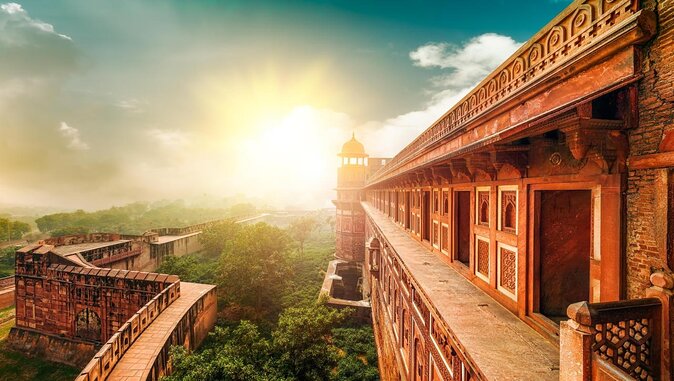
- Sunrise Taj Mahal timing: the early start lets you see the Taj before the day crowds.
- Old Delhi + rickshaw ride: you get a shortcut to local street life around Chandni Chowk.
- A guided hit list in both cities: Jama Masjid, Qutub Minar, Humayun’s Tomb, then Agra Fort and Fatehpur Sikri.
- Jaipur’s big views in one day: Amber Fort, City Palace, Jantar Mantar, and photo stops like Jal Mahal.
- Private transport with experienced drivers and guides: car pick-ups and guided admissions keep the day moving.
- Good value for a first-timer itinerary: three cities, major sights, and included breakfasts.
The 4-day rhythm: how this Golden Triangle tour actually plays out
The Golden Triangle (Delhi–Agra–Jaipur) is the first route most people take for a reason: it’s dense. In four days, you’re stacking three different “eras” of India—political and modern Delhi, Mughal grandeur in Agra, and royal Jaipur with forts and observatories.
Here’s what that means for you on the ground. Days start early, you’ll spend meaningful time in the car, and each day has a set of priority stops that you’ll hit without arguing about logistics. If you like having your day laid out—rather than building a new plan from scratch—this tour fits that style.
Value-wise, what you’re really buying is time saved. Hotel, airport transfer, private transportation, and a guide at the main sites reduce the hassle. The one area you need to watch: meals and monument entrance fees. Lunch and dinner are not included, and the tour notes monument entrance fees as not included—so you should confirm which sites in your final plan have admissions covered.
You can also read our reviews of more tours and experiences in New Delhi


Delhi arrival with pickup and real “start-of-trip” comfort
Day 1 is all about getting you settled with minimal stress. You land at Indira Gandhi International Airport, and there’s a representative meeting you with flower garlands—small detail, big morale boost after a flight. From there, you’ll be whisked to your hotel in an air-conditioned car and check in.
Why I like this approach: the tour doesn’t make you figure things out on arrival day. Delhi can feel chaotic if you’re landing tired. An actual pickup plus organized transfer means you can focus on sleep, water, and getting ready for a long sightseeing day.
Practical tip: if you’re jet-lagged, treat the evening as a buffer. You’ll be doing a full Old/New Delhi mix the next morning, plus later you drive toward Agra.
Old Delhi by Chandni Chowk and rickshaw: a fast taste of street India
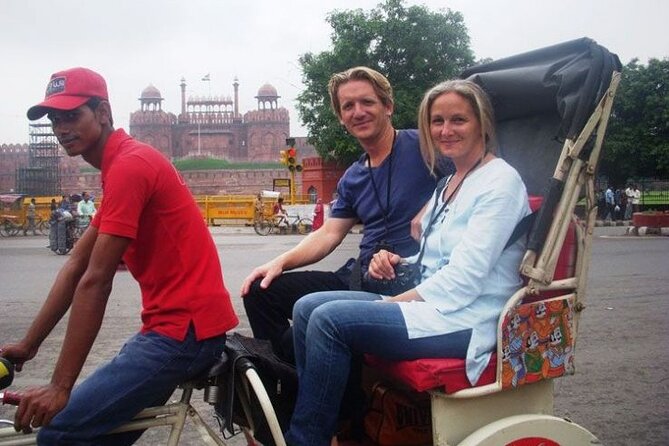
The next morning starts in Old Delhi with a guided loop that includes Jama Masjid, the Chandni Chowk shopping streets, and a rickshaw ride through the lane network.
Jama Masjid: size and space matter
Jama Masjid is described as India’s largest mosque, with a courtyard that can fit an enormous crowd. It’s one of those places where you feel the scale immediately—architecture plus open space, not just a building to look at.
What to watch for: dress modestly. Even if the guide helps you with timing and entry, you’ll still want to be ready with the right clothing for a religious site.
Chandni Chowk: ride first, shop after (if you want)
You’ll also hit Chandni Chowk, a famous shopping plaza area. The big win here is the rickshaw ride. You don’t just walk; you get a guided route through the tight, busy street corridors. It’s a way to get your bearings fast and see how the neighborhood functions.
If you’re the type who likes photos, this is where you’ll likely spend the most “stop and stare” moments—stall fronts, gateways, temple-like street rhythms.





Raj Ghat: a quiet contrast
After the lively Old Delhi section, you go to Raj Ghat, the cremation site of Mahatma Gandhi on the Yamuna’s west bank. This stop works as a mood change: from shopping lanes to a contemplative memorial space.
It’s not “old city scenery.” It’s a checkpoint for modern India’s moral history—worth slowing down for, even if your overall schedule is fast.
New Delhi classics: Qutub Minar, India Gate, and Humayun’s Tomb
New Delhi rounds out the day with Mughal and imperial-age landmarks.
Qutub Minar: 72.5 meters of old-school ambition
You’ll visit Qutub Minar, noted as one of the world’s highest minarets at about 72.5 meters. The description points to its early construction around 1192 by Qutab-ud-din Aibak. Even without getting lost in dates, you’ll appreciate the vertical drama—this is a monument you can spot at angles around the complex.
Try this: walk slowly around the base area so you’re not just taking one front-on photo. The proportions matter.
India Gate and Rashtrapati Bhavan: power and memory
Then come two famous New Delhi symbols:
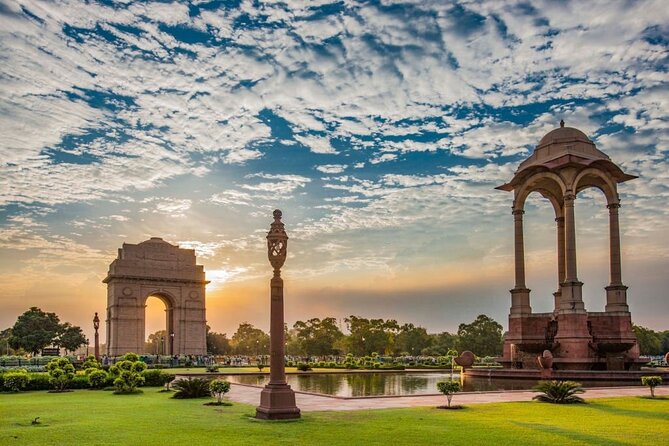
- India Gate, a 42-meter-high archway honoring about 70,000 Indian soldiers who died serving for the British Army in World War I.
- Rashtrapati Bhavan, the official residence of the President of India.
These stops are short but useful because they anchor you in modern government geography—how Delhi is laid out around ceremonial spaces.
Humayun’s Tomb: the garden plan you can feel
You’ll also see Humayun’s Tomb, completed in 1565 by Bega Begum, with a chahar bagh garden layout (garden squares and water channels). This is one of those sites where the design tells the story: symmetry, water, and a central mausoleum layout.
If you like gardens and proportion, you’ll probably enjoy the time here more than you expect. If you’re mostly there for photos, still take 10 minutes longer than you think. The geometry rewards patience.
Delhi to Agra: a long drive that sets up the next morning
After the Old and New Delhi sightseeing, you’ll head to Agra via the Yamuna Expressway. The transfer time is listed as about 3 hours.
This matters because Day 3 is an early start. So Day 2’s drive is not dead time—it’s part of your Taj Mahal morning plan. The best way to handle the ride is simple: hydrate (you’ll have unlimited mineral water) and avoid using up your energy on “let’s snack constantly” habits.
When you arrive, you check into your hotel for an overnight stay and reset for sunrise.
Agra at 6 a.m.: why the Taj Mahal sunrise stop is the heart of the trip
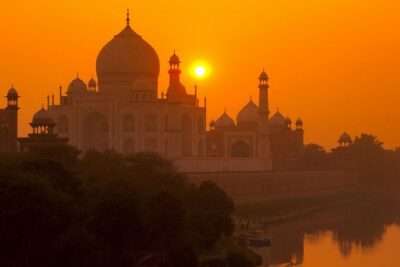
Day 3 is where the Golden Triangle tour earns its reputation: a sunrise Taj Mahal visit at around 6 a.m. The driver and guide pick you up early, and you head straight to the monument for that first-light experience.
I like this format because it solves a common problem in Agra. If you arrive late, you miss the softer light and the slower-feeling pace. Sunrise doesn’t make the Taj less famous—it just makes the experience easier to enjoy.
Taj Mahal: what to focus on
You’ll have about 1 hour 30 minutes for the Taj Mahal area. That’s usually enough to:
- see the main mausoleum from your first viewpoint,
- walk around for perspective,
- and take photos without feeling like you’re getting rushed.
Practical tip: bring something for early morning comfort (even a light layer can help). The tour includes timings, but weather still has its say.
Agra Fort and the rickshaw ride: Mughal power, up close
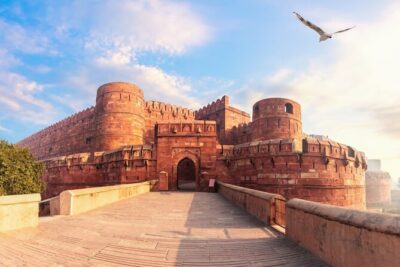
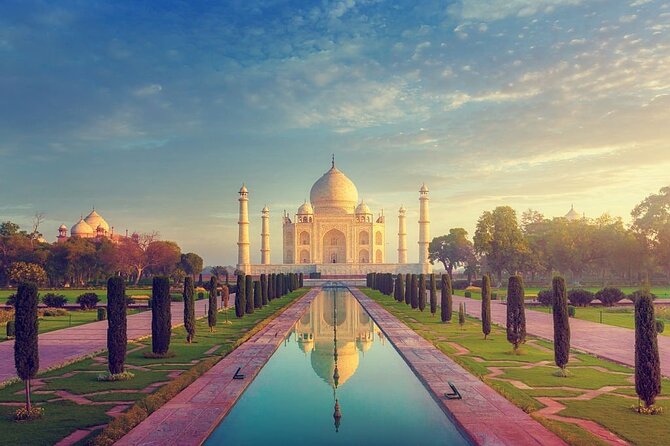
After Taj Mahal, you return to the hotel for breakfast and checkout, then head to Agra Fort. The day includes another rickshaw ride, this time tied to getting you to the fort area.
The fort is described as built when the Mughal capital was in Agra, and specifically linked to Emperor Akbar. This is important because it shifts the story from “a single monument” to a whole fortified complex—defense, administration, and court life all packed into one structure.
If you’re tired by mid-day, Agra Fort can still be satisfying because it’s different from the Taj. You’ll be looking at walls, gates, and fortress planning rather than a single symmetrical marble icon.
Fatehpur Sikri on the way to Jaipur: a detour that gives context
On Day 3, you leave Agra for Jaipur and stop at Fatehpur Sikri, about 37 kilometers from Agra. The plan says it’s a red sandstone city created in honor of Sufi mystic Sheikh Salim Chisti.
This stop is valuable because it connects the dots between Mughal architecture and Mughal spirituality. It also gives you a “pause” from the Taj/fort rhythm before you hit Jaipur’s fort-palace overload.
Since your time is about 1 hour 10 minutes, treat Fatehpur Sikri as orientation: you want the big scenes and main layouts, not a museum-level reading session.
Jaipur begins with Amber Fort and an elephant ride option
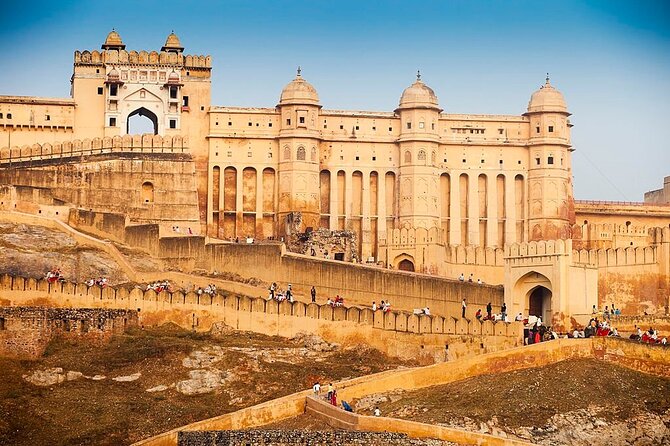
Day 4 is Jaipur-heavy, which is exactly what you want after spending so much time in Agra monuments. The tour starts at Amber Fort (Amer Palace Fort), and it includes an elephant ride experience.
Here’s a balanced way to think about it: elephant rides are part of the attraction package at Amber Fort in many itineraries, and this one lists it as included. If you have strong feelings about animal rides or want to avoid them, confirm in advance what alternatives exist inside this tour format.
The time block is listed as about 2 hours for Amber Fort, enough to see the main palace-fort areas and get those classic Amber fort views.
City Palace, Jantar Mantar, and the royal layout of Jaipur
After Amber Fort, you visit:
- City Palace of Jaipur
- Jantar Mantar
City Palace: still active, still royal
The City Palace complex is said to have been conceptualized and constructed by Maharaja Sawai Jai Singh II, the founder of Jaipur. It’s located within the walled city. The plan notes it’s still inhabited, so you’ll be seeing a living palace layout rather than a dead set.
This makes the visit feel different. Even if you don’t read every inscription, you’ll sense that this place wasn’t abandoned just because a new age arrived.
Jantar Mantar: UNESCO observatory energy
Next is Jantar Mantar, described as a UNESCO World Heritage Site and identified as the grandest of five astronomical observatories built by Sawai Jai Singh II.
This stop is for people who like “science in plain sight.” It’s not a single monument like the Taj. It’s a collection of instruments and structures designed for measuring the sky. The best part is that it’s visually striking even if you don’t know the exact math.
Jal Mahal photos, Hawa Mahal’s windows, and Birla Mandir in the skyline
Jaipur continues with a mix of palace-style iconic stops and temple breaks:
Jal Mahal: quick lake-palace photo stop
You’ll take a photo stop at Jal Mahal (Lake Palace) in Man Sagar Lake, where it appears to float. This is not a long hangout stop, but it’s a good one for a postcard-style moment without losing your whole afternoon.
Hawa Mahal: the Palace of Winds at the street level
Then comes Hawa Mahal, built in 1799 as a summer resort. It’s described as a safe haven for ladies of the royal household, which adds a human layer to the façade. It’s known for its many small windows, and you’ll likely see why people love photographing it from different angles.
Birla Mandir Temple: white marble skyline contrast
You’ll also visit Birla Mandir Temple (Lakshmi-Narayan Temple), built completely of white marble and dominating the skyline in south Jaipur. This one is newer compared to the fort and palace areas, but it provides a different architectural mood.
Galtaji (Monkey Temple): a local pilgrimage stop with natural springs
The last Jaipur stop is Galtaji, also called the Jaipur Monkey Temple. The plan describes it as a historic pilgrimage site set among low hills, with temples, pavilions, and kunds (natural spring water tanks).
This stop is often the one that feels most “day-to-day Jaipur.” It’s not only about royalty and marble. It’s about how locals use the space. It can also be crowded, so keep your pace steady and expect people to be around you while you walk.
Price and logistics: what you get for $209 and what to budget for
At about $209 for 4 days, this tour is trying to deliver a big-hit itinerary without you dealing with train timing, hotel research, and daily route planning. Here’s what’s included in the deal:
- Private transportation
- 3 nights in 3-star hotels
- Breakfast on 3 mornings
- Rickshaw ride in Delhi
- Unlimited bottled water
- Government-approved guides at destinations
- Pickup offered (airport and transfers)
What’s not included:
- Lunch and dinner
- Alcoholic drinks
- Monument entrance fees are listed as not included in the overall package notes
Now, one note that’s important: the stop-by-stop schedule indicates admissions are included for many sights, so you should confirm your exact final inclusions. Don’t assume every monument ticket is covered just because it’s mentioned near the stop list.
My practical advice: budget extra cash for meals and possible entry fees, and ask your operator to send a simple “ticketed sites list” before you go.
The guide and driver factor: why coordination matters in India
One reason tours like this work for first-timers is that someone else handles the transitions. You’ll likely work with the kind of coordination style associated with contacts like Aditya, and names like Gurdeep show up in connection with prompt driving. Even if you never think about it again, these little coordination details reduce stress during a country-wide road trip.
Also, a government-approved guide at each key destination matters. It’s not just “explaining stuff.” It helps you enter correctly, avoid confusion about timing, and get the right amount of context without turning every stop into a 2-hour lecture.
Who should book this Golden Triangle tour?
This tour is a good fit if:
- you’re seeing Delhi–Agra–Jaipur for the first time,
- you want a guided, structured route with fewer decisions,
- you like early starts when they unlock a better Taj experience,
- and you’re comfortable with a full day of sightseeing plus hotel resets.
It may not be ideal if:
- you hate tight pacing,
- you want long, slow, unplanned exploration with no set list,
- or you strongly prefer to avoid all animal rides (because Amber Fort includes an elephant ride in the plan).
Should you book the 4 Days Golden Triangle Tour from Delhi?
Yes, you should book it if you want maximum landmark coverage with minimal planning stress. The sunrise Taj Mahal stop, the Old Delhi rickshaw experience, and the single-day Jaipur concentration make this a strong “first India” route. At $209, you’re not paying luxury prices—you’re paying for logistics and guidance that keep the trip moving.
But book with your eyes open. Confirm the exact monument entrance fee situation for your final ticket set, plan for lunch and dinner costs, and mentally accept that you’ll be in the car more than you’d be on a local city walk. If that sounds like your travel style, this is one of the more sensible ways to hit the Golden Triangle in four days.
FAQ
How long is the Golden Triangle tour from Delhi?
The tour runs about 4 days.
Which cities does the tour cover?
You visit Delhi, Agra, and Jaipur.
Do I get airport pickup and drop-off?
Yes. The plan includes pickup from Indira Gandhi International Airport on arrival, and you are dropped at the airport or hotel in Delhi after the Jaipur day.
What is included in the price?
Included items are private transportation, 3 nights in 3-star hotels, breakfast (3), a rickshaw ride in Delhi, unlimited bottled mineral water, and guides at destinations.
Are lunch and dinner included?
No. Lunch and dinner are not included, and you’ll eat at restaurants or hotels on your own.
Are monument entrance tickets included?
The package notes monument entrance fees are not included, while the stop schedule indicates admission tickets included for multiple sights. You should confirm what is covered in your final plan.
What time is the Taj Mahal visit?
You go for a sunrise tour with an early morning start around 6 a.m.
Is there a cancellation policy?
Yes, free cancellation is offered up to 24 hours in advance for a full refund.