REVIEW · NEW DELHI
Half-Day Delhi Temple Tour with Pick-Up & Drop-Off
Book on Viator →Operated by Go City Adventures · Bookable on Viator
Delhi temples hit different when you do them in one loop. I like that this half-day tour strings together four major sites—so you can compare religions and architecture without spending your whole day figuring out logistics. You’ll ride in a private, air-conditioned vehicle with round-trip hotel transfers, which is a big deal in Delhi traffic. I also love that the tour guide helps connect the dots across Hindu, Sikh, and Bahai traditions while keeping admissions simple at most stops. One drawback to keep in mind: the style and depth of explanations can vary by guide, so it’s smart to ask your guide what they’ll focus on early in the day.
The route is built for people who want a focused introduction: you start around 9 AM and finish with enough time left to explore on your own. With a maximum group size of 12, it’s not a cattle-car day, and you can usually ask questions without shouting. If you’re the type who wants a strict, academic lesson plan at every stop, be prepared that the day is more “culture and context” than “lecture and thesis.”
In This Review
- Key things I’d actually plan around
- Why This 9 AM Temple Circuit Works Well in Delhi
- Getting Comfortable: Pickup, Private Car, and a Guide You Can Ask Questions
- Lotus Temple: Bahai Architecture, Free Admission, and Crowds You Can Handle
- ISKCON Temple Delhi: Krishna Devotion in a Short, Focused Stop
- Swaminarayan Akshardham: When One Temple Complex Becomes the Main Event
- Gurudwara Bangla Sahib: Sikh Hospitality, Langar, and Community Life
- Laxmi Narayan Temple (Birla Mandir): Hindu Devotion and Extra Shrines in One Complex
- Price and Value: What You Pay For (and What You Don’t)
- How to Get the Best Explanation From Your Guide
- What to Wear and Bring for a Smooth Temple Day
- Who This Tour Suits Best
- Should You Book This Half-Day Delhi Temple Tour?
- FAQ
- How long is the Half-Day Delhi Temple Tour?
- What time does pickup happen?
- Is hotel pickup and drop-off included?
- Are temple admissions included?
- What should I wear to visit the temples?
- How big is the group?
Key things I’d actually plan around
- Small group cap (up to 12): easier questions, less waiting around, and calmer temple visits.
- Air-conditioned private car: you get relief from heat and dust between sites.
- Four faiths, one day: Bahai, Hindu, and Sikh landmarks in a logical flow.
- Mostly free temple admissions: you’re paying for guiding and transport more than tickets.
- Queue-friendly with a guide: it’s not just photo stops; you stay oriented during busy moments.
- Modesty + shoes rules: you’ll want the right clothes and expect shoe removal.
Why This 9 AM Temple Circuit Works Well in Delhi
This tour is a practical way to understand Delhi’s religious variety fast. Instead of trying to piece together separate visits across town, you get a planned route that compares three different faith traditions through architecture, rituals, and daily practice.
Starting around 9 AM helps too. Early hours usually mean fewer crowds at some sites, and you’re not stuck doing a long day in the hottest part of the afternoon. The total time is listed at about 5 to 7 hours, which feels “half-day” in real life because you’re also getting pickup and drop-off handled.
The best part for many people: the day gives you language for what you’re seeing. You’re not just taking pictures of impressive structures; you’re learning what the spaces represent—like why one temple is designed to feel open and welcoming, while another is about devotional focus and disciplined worship.
You can also read our reviews of more tours and experiences in New Delhi



Getting Comfortable: Pickup, Private Car, and a Guide You Can Ask Questions
The tour includes hotel pick-up and drop-off, plus English-language guidance. In Delhi, that matters. Even if you know the city, coordinating routes, traffic, and local transport can turn into wasted energy. Here, you’re inside an air-conditioned private vehicle, which is a real quality-of-life upgrade.
Group size is capped at 12, and that small number changes the feel of the day. You’re more likely to get direct answers instead of a one-size explanation. From guide experiences shared in feedback, I’d expect a lot of Q&A and practical pacing—especially with named guides like Satish, Rahul, Rajendra, Suraj, and Deepak showing up in different sessions.
One more small but useful detail: shoe-keeping fees are included. It’s one less thing to manage while you’re trying to follow the rules at places of worship.
Practical expectation: you’ll walk at each stop, sometimes inside areas with crowds. Pack for that mentally, and you’ll have a smoother day.
Lotus Temple: Bahai Architecture, Free Admission, and Crowds You Can Handle
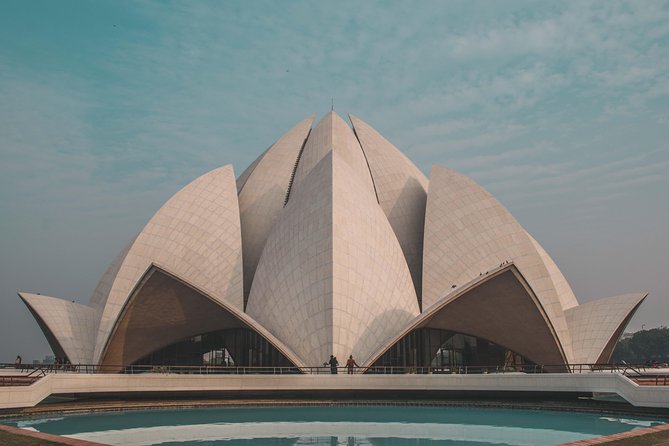
Your day kicks off with the Lotus Temple, a Bahai House of Worship. The timing is about 35 minutes, and admission is listed as free. Even in a short visit, you’ll be able to see why the Lotus Temple is so iconic: it’s built to feel peaceful and balanced, even when the grounds are busy.
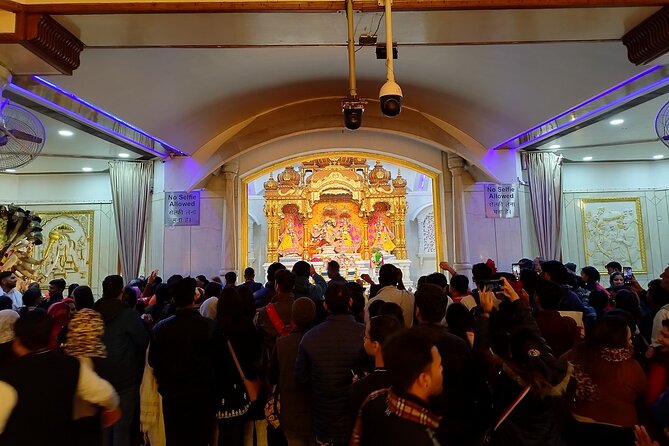
A key “plan for it” point: this temple can have lineups. In feedback I’ve seen, people specifically appreciated guides who were patient with queue time and kept everyone comfortable while waiting. Translation: you won’t just stand there blindly watching the clock. You’ll get context for what you’re seeing while you’re waiting.
Also note the basics for temples in the region: dress modestly (arms and legs covered for both men and women). And in most worship spaces, you’ll need to remove shoes. You’ll be happier if you show up with easy-to-handle footwear—something that comes off quickly and goes back on without drama.
If you’re someone who likes architecture, the Lotus Temple is your “reset.” You’ll probably feel the contrast right away when you move from that calm geometry to the more devotional temple complexes later.
ISKCON Temple Delhi: Krishna Devotion in a Short, Focused Stop
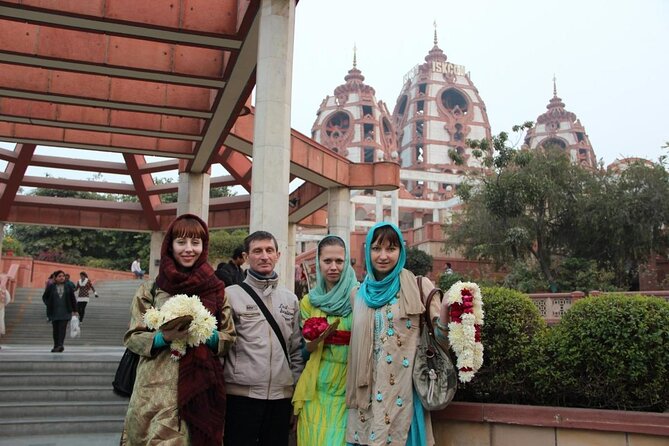
Next up is the ISKCON Temple Delhi, devoted to Lord Krishna. Your visit is about 40 minutes, and admission is listed as free.
This stop shifts the tone. The Lotus Temple is designed for stillness, while ISKCON brings a more devotional, community-driven vibe. Even if you’re not familiar with the symbols, a good guide can help you map what you’re looking at—without forcing you into religious homework.
What I like about this placement: it’s not too early in the day, and it’s not the last stop. You get a chance to absorb one tradition after you’ve already started the day with an easier-to-understand “welcome” style of worship at the Bahai site.
Tip for getting value here: don’t be shy about asking your guide what specific details mean. In sessions with guides like Rahul and Rajendra (names tied to strong feedback), the common thread was clear explanations and room for questions.
Swaminarayan Akshardham: When One Temple Complex Becomes the Main Event
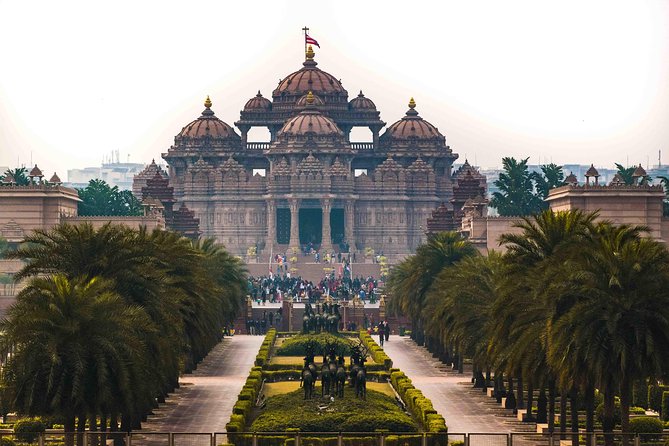
Then comes Swaminarayan Akshardham, with about 1 hour on-site. Admission is listed as free for this experience. This is where the tour turns from “introduction” into “wow.”
Akshardham covers hundred acres, and it has a Guinness World Record for being the biggest comprehensive Hindu temple. That record alone tells you why the visit feels like more than a quick stop—you’re dealing with a huge, planned complex rather than a single building.
You’ll also get an explanation of the complex and the founder (the specific founder name isn’t provided in the tour details you shared, so I won’t guess). Expect storytelling that ties the physical space to the ideas behind it.
The main practical caution here: because Akshardham is large, it helps to wear comfortable shoes and keep your expectations realistic. You might not see everything in the hour, but you’ll get oriented. The goal is to leave with a sense of what the complex is and how it fits into Hindu devotion and community life.
If you care about photography: go in ready to walk and to wait your turn. Even when you’re moving efficiently, this kind of major site naturally creates crowds.





Gurudwara Bangla Sahib: Sikh Hospitality, Langar, and Community Life
After Akshardham, your next stop is Gurudwara Bangla Sahib, listed as the largest Sikh temple in Delhi. Plan about 45 minutes, with admission also listed as free.
Here’s what makes this stop meaningful: it’s not just about worship spaces. You’ll learn about the Sikh religion and the day-to-day lives of its followers, and you’ll also hear about hospitality—especially the Langar service, a 24/7 community kitchen.
This is one of those parts of the tour where you come away with something you can carry beyond the sightseeing. Langar is practical religion: shared food, shared dignity. Even if you don’t eat during your visit, the concept helps you understand the tone of the place.
Practical note: you’ll still be dealing with worship rules like modest clothing and shoe removal at most places of worship. Your guide should help you stay compliant without turning it into a stress test.
If you’re visiting Delhi for the first time, this stop often feels grounding. It breaks up the intensity of large temple complexes with a focus on community and service.
Laxmi Narayan Temple (Birla Mandir): Hindu Devotion and Extra Shrines in One Complex
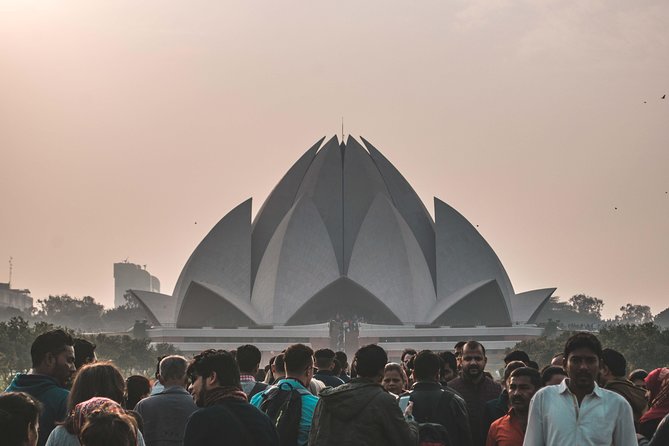
The final temple stop is Laxmi Narayan Temple, also called the Birla Temple. This visit is about 40 minutes, and admission is listed as free.
This is a decades-old Hindu temple dedicated to God Vishnu. The details that stand out here are the grounds and the mix of devotional elements: the complex is described as 3 hectares long, and it includes shrines for Buddha, Ganesha, and Laxmi, among others.
That combination makes the Birla Mandir stop especially useful for travelers who want to understand how religious spaces in India can overlap in material culture. You can see Hindu devotion to Vishnu and still notice how other figures are represented within the same larger complex.
It’s also a good ending point for the day. By now you’ve seen:
- a Bahai worship space designed for openness (Lotus Temple),
- a Hindu devotional institution (ISKCON),
- a large Hindu temple complex built to impress at scale (Akshardham),
- a Sikh place centered on community service (Gurudwara Bangla Sahib).
Ending at Birla Mandir gives you one more lens—another Hindu viewpoint, with added shrines—so the day doesn’t feel repetitive.
Price and Value: What You Pay For (and What You Don’t)
The price is $30.14 per person. For a tour that runs about 5 to 7 hours with hotel pick-up and drop-off, plus an English-language guide and a private air-conditioned vehicle, that pricing is usually fair value.
Here’s how I think about it:
- You’re paying mainly for transport + guidance, not big entrance-ticket costs.
- Most of the listed temple admissions are free for this experience.
- You get included logistics like round-trip transfers and shoe-keeping fees.
One separate item noted as not included is an entrance fee for Jama Masjid at ₹450.00 per person. Since Jama Masjid isn’t listed in the temple stops you provided, I’d treat that as a “possible extra” rather than something you should assume is part of your day. If your guide mentions a change of plan, that’s when you’d ask what’s included versus extra.
Also factor in your time. A guided loop saves you the hassle of planning routes and negotiating between sites—especially helpful if Delhi traffic and distances make your head spin.
How to Get the Best Explanation From Your Guide
The tour experience is heavily tied to the guide. That’s not a bad thing—it’s just reality. Strong feedback highlighted guides like Satish, Rahul, Rajendra, Suraj, and Deepak for being patient, thorough, and able to adapt the day.
Here’s how you can “steer” the day toward what you want:
- Ask at the first stop what your guide will emphasize across the four faiths.
- If you’re most interested in architecture, say that early so the guide can spend more time on the design and symbolism.
- If you want practical context—rituals, why shoes are removed, how Langar works—ask directly. That kind of question tends to pull clear, useful answers.
One caution: there is at least one low-rating note tied to weaker enthusiasm or less engaging temple-history presentation. You can’t control everything, but you can correct course early. If the first stop feels like “too little story,” ask for more context right away.
What to Wear and Bring for a Smooth Temple Day
You’ll have rules, so plan your outfit like you’re visiting places of worship, because you are.
The tour notes:
- Dress modestly: arms and legs covered for both men and women.
- Shoes must be removed at most places of worship.
- Comfortable walking shoes are recommended.
Beyond that, I’d add just a couple of commonsense extras based on Delhi realities: keep water handy for your breaks (meals and drinks are not included), and bring a light layer if the weather shifts between morning and afternoon.
Who This Tour Suits Best
This tour fits well if you want a clean, guided introduction to Delhi’s religious life without turning your day into transportation math.
You’ll likely enjoy it if:
- you’re short on time and want the “big picture” across faiths,
- you like asking questions and learning from a guide,
- you prefer a comfortable ride and a tight route over wandering.
It might feel less ideal if:
- you want an in-depth historical seminar at every stop,
- you dislike guided pacing or prefer private, self-directed temple time.
Should You Book This Half-Day Delhi Temple Tour?
I’d recommend booking if you want a structured, comfortable way to see major Delhi worship sites in one go—especially with the included hotel pickup/drop-off and a small group size up to 12. The value is strongest when you appreciate the guide’s role in explaining what you’re seeing across Bahai, Hindu, and Sikh traditions.
I’d skip—or at least manage expectations—if your main goal is heavy, detailed temple history with nonstop storytelling. In that case, ask more questions at the start and confirm what your guide plans to cover beyond the basics.
If you’re planning your first Delhi trip and you want to get your bearings fast while learning real cultural context, this one is a sensible choice.
FAQ
How long is the Half-Day Delhi Temple Tour?
It runs about 5 to 7 hours.
What time does pickup happen?
Pickup is around 9 AM from your Delhi hotel.
Is hotel pickup and drop-off included?
Yes, round-trip hotel transfers are included.
Are temple admissions included?
The tour notes free admission for the listed temple stops. Shoe-keeping fees are included. A separate Jama Masjid entrance fee of ₹450 per person is listed as not included.
What should I wear to visit the temples?
Dress modestly, with arms and legs covered. You’ll also need to remove shoes at most places of worship.
How big is the group?
There’s a maximum of 12 travelers.