REVIEW · NEW DELHI
4 Days Private Golden Triange Tour to Agra and Jaipur from Delhi
Book on Viator →Operated by Indo Routes · Bookable on Viator
Five a.m. Taj dreams start here. This private Golden Triangle circuit strings together Delhi, Agra, and Jaipur with a licensed guide and a big UNESCO focus, including a sunrise visit to the Taj Mahal. It’s the kind of trip that turns famous landmarks into stories you can actually follow, without you wrestling with timing, tickets, or directions.
What I like most is the way this plan is built around understanding, not just checking boxes. You get a licensed guide who explains the history behind each monument, and you ride in a private air-conditioned car with a professional driver, bottled water, and small comfort stops between cities.
One consideration: entrance fees for the monuments aren’t included (about USD 45 per person), and the Taj Mahal day starts very early at 05:00. If you hate early mornings or you’re trying to squeeze every dollar, plan for those realities.
In This Review
- Key highlights worth knowing
- How this 4-day private Delhi–Agra–Jaipur trip really works
- Day 1 in Delhi: India Gate, Qutub Minar, and modern spiritual Delhi
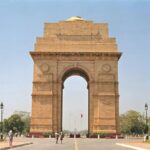
- India Gate (free, about 30 minutes)
- Qutub Minar (about 1 hour, UNESCO; admission not included)
- Lotus Temple (about 1 hour)
- Sansad Bhawan (Parliament House) and garden setting (included as a stop)
- Swaminarayan Akshardham (free, about 1 hour)
- Raj Ghat (free, about 30 minutes)
- Day 2: Taj Mahal at 05:00, Agra Fort, and the Baby Taj
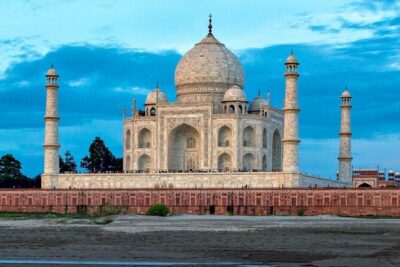
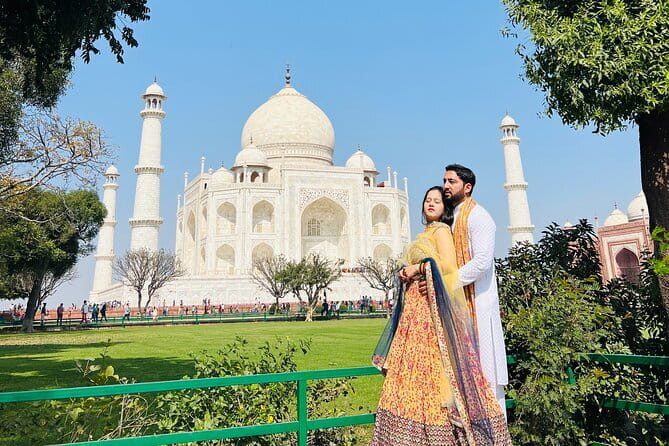
- Taj Mahal sunrise visit (about 2 hours; admission not included)
- Agra Fort (about 2 hours; UNESCO; admission not included)
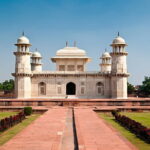
- Itmad-ud-Daula (about 1 hour; “Baby Taj”)
- Fatehpur Sikri (about 1 hour 30 minutes; free)
- Day 3 in Jaipur: City Palace, Hawa Mahal, Jantar Mantar, and Jal Mahal photos
- City Palace (about 2 hours; admission not included)
- Hawa Mahal (about 30 minutes; admission not included)
- Jantar Mantar (about 1 hour; admission not included)
- Jal Mahal (about 30 minutes; free)
- Albert Hall Museum (about 1 hour; admission not included)
- Price and logistics: where your money goes (and what costs extra)
- Car choice and comfort: sedan vs Innova vs van
- Timing, lines, and how to make each day feel worthwhile
- Who this tour fits best
- Should you book this Golden Triangle tour?
- FAQ
- What is the price per person for this 4-day private tour?
- How long is the tour?
- Is this a private tour or a shared group?
- What’s included in the tour price?
- Are entrance fees to monuments included?
- What time does the Taj Mahal sunrise visit start?
- What car will we ride in?
- What is the cancellation refund window?
Key highlights worth knowing
- Sunrise Taj Mahal visit timed for a 05:00 departure and a guided walk through the complex
- Eight UNESCO-focused stops across Delhi, Agra, and Jaipur, including major sights like Qutub Minar and Agra Fort
- Licensed guide explanations that tie the architecture to the rulers and eras that built it
- Door-to-door private transport with experienced drivers, parking handled, and a car cleaned and sanitized after travel
- Breakfast included on 3 days plus mineral water and light snacks during intercity driving
How this 4-day private Delhi–Agra–Jaipur trip really works
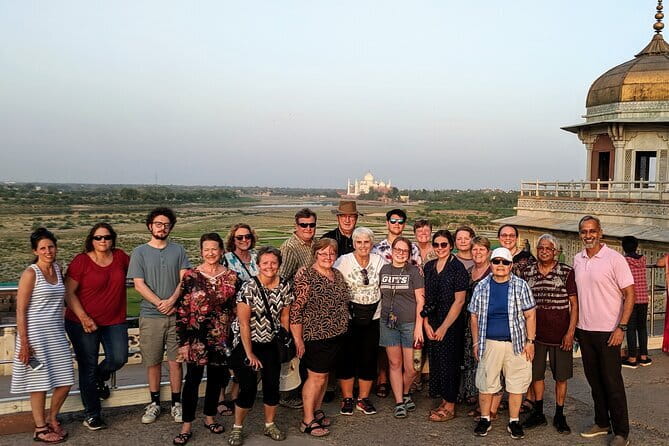
This is a true private format: it’s only your group, so you’re not stuck with random pacing or constant re-grouping. That matters on a short schedule like this, because the Golden Triangle can eat your time fast—especially when you’re trying to cover multiple UNESCO sites in three cities.
The trip runs roughly four days and is organized around efficient driving and specific visit lengths. You’ll also be picked up and dropped off at the hotel or airport, depending on your timing. Between Delhi and the other cities, you’re in a private air-conditioned vehicle with a professional driver, and the car is described as cleaned and sanitized after each travel segment.
Here’s the practical value for you: you can focus on what you came for—architecture, history, and photography—while someone else handles routing and logistics. And because you have an office representative providing personal care in Delhi, Agra, and Jaipur, you’re not entirely on your own if something needs adjusting.
One more “small” detail that adds up: mineral water in the car, plus seasonal fruits and biscuits/cookies during intercity travel. It’s not a luxury spa touch, but on long road days it helps you stay comfortable without overpaying for snacks at every stop.
You can also read our reviews of more private tours in New Delhi


Day 1 in Delhi: India Gate, Qutub Minar, and modern spiritual Delhi
Day 1 is a smart mix: a war memorial, a towering monument of early Delhi Sultanate power, a modern architectural icon, and a major Hindu spiritual-cultural campus. You get a spread that shows how Delhi’s story keeps layering itself.
India Gate (free, about 30 minutes)
India Gate is a war memorial near Rajpath, dedicated to soldiers of British India who were martyred fighting for India. Even if you don’t spend long here, it’s a useful starting point because it grounds you in the city’s 20th-century context before you jump into medieval-era architecture later.
Practical tip: this is a place where you’ll usually want a few photos and then keep moving. Use your time for one good viewpoint and a quick read of the memorial context.
Qutub Minar (about 1 hour, UNESCO; admission not included)
Qutub Minar is a 73-meter-tall, five-storey tower tied to the early Delhi Sultanate period, constructed by Qutub-ud-din Aibak in 1193. It’s the kind of landmark that rewards your eyes if someone gives you guidance—height, shape, and the “why” behind it are easier to grasp with a guide explaining what you’re looking at.
If you’re sensitive to crowds, go with a calm pace. Expect some foot traffic near major monument points.
Lotus Temple (about 1 hour)
The Lotus Temple is famous for its flower-like design and the fact it was built in 1986. It’s one of Delhi’s most visited monuments, and even with limited time, it’s worth experiencing because the structure changes how you think about space—calm, airy, and designed to pull your attention inward.
This is also a nice change of mood from the older, heavier stone monuments.
You can also read our reviews of more tours and experiences in New Delhi





Sansad Bhawan (Parliament House) and garden setting (included as a stop)
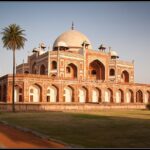
You’ll pass by the Sansad Bhawan complex, built in 1927 and designed by British architects Sir Edwin Lutyens and Sir Herbert Baker. The surrounding gardens are part of why it feels pleasant even if you don’t stay long.
Swaminarayan Akshardham (free, about 1 hour)
Akshardham is described as a Hindu temple and spiritual-cultural campus showcasing both traditional and modern Hindu culture and architecture. You’re not just “seeing a temple sign”—you’re looking at a whole cultural space designed for visitors.
Time-wise, you’ll have about an hour, so focus on your priorities: exterior views and key architectural details, rather than trying to absorb everything at once.
Raj Ghat (free, about 30 minutes)
Raj Ghat is a marble platform built in memory of Mohandas Karamchand Gandhi, cremated there on January 31, 1948. It’s a quiet stop that balances the day’s monumental scale with reflection and respect.
If you’re the type who likes to understand why places matter, ask your guide to connect it back to how modern India remembers its founding leadership.
Day 2: Taj Mahal at 05:00, Agra Fort, and the Baby Taj
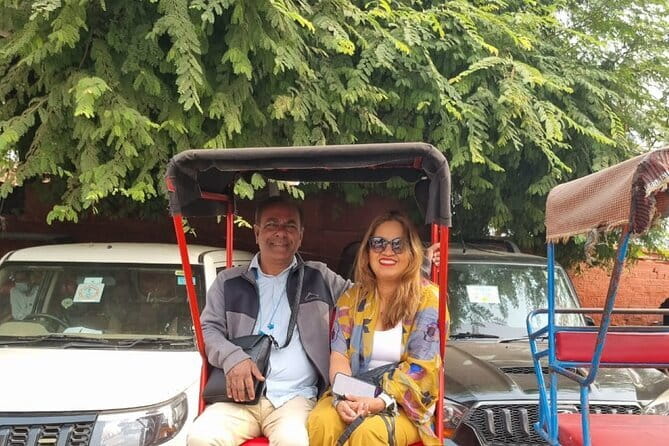
Day 2 is the big reveal day. The plan takes you to the Taj Mahal at 05:00 a.m., where your guide meets you for a guided visit. Starting this early is not just tradition—it’s a way to experience the site when it’s calmer and the light is more forgiving for photos.
Taj Mahal sunrise visit (about 2 hours; admission not included)
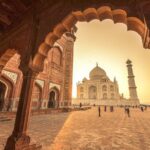
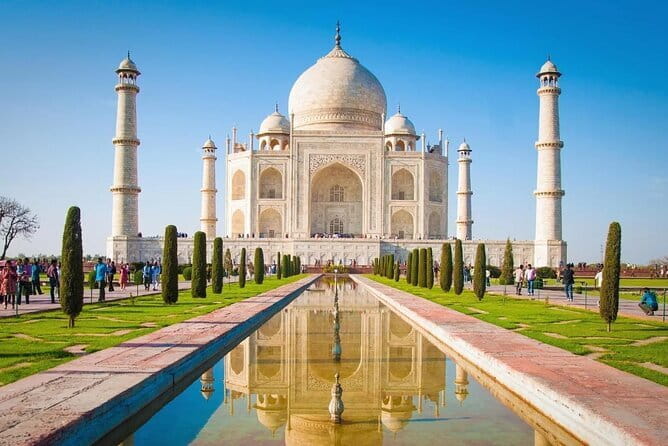
You’ll spend about 2 hours at the Taj Mahal with a guide explaining the details. The value here isn’t just seeing the building—it’s understanding the design choices, the materials, and how the complex works as a whole.
Even if you’ve seen photos before, the early morning visit helps because the experience feels less like a snapshot and more like a place with atmosphere.
Practical note: the morning start can feel intense. Keep a light layer handy, and don’t plan on sleeping in on this day.
Agra Fort (about 2 hours; UNESCO; admission not included)
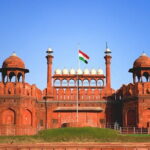
Agra Fort is a historical fort in Agra, also known as Agra’s Red Fort, and it’s tied to Mughal history. The text notes that Humayun was crowned at this fort, and it was later renovated by Mughal emperors.
This stop pairs well with the Taj Mahal visit because it expands the story from memorial architecture to political power and the everyday reality of Mughal rule.
Itmad-ud-Daula (about 1 hour; “Baby Taj”)
Itmad-ud-Daula is a Mughal mausoleum often called the Baby Taj, and it’s frequently viewed as a kind of draft of the Taj Mahal. That name makes a promise: it helps you compare details. If you like noticing how styles evolve, this is a strong “contrast” stop after the main Taj visit.
Fatehpur Sikri (about 1 hour 30 minutes; free)
Fatehpur Sikri was founded as the Mughal Empire’s capital by Emperor Akbar in 1571 and served as capital until 1585, when he abandoned it due to campaigns, and it was eventually left behind in 1610.
This is where you start feeling the “big idea” of Mughal ambition—how a capital can be built, used, and then abandoned. It’s also a good photo day if you’re moving with your guide’s pacing.
Day 3 in Jaipur: City Palace, Hawa Mahal, Jantar Mantar, and Jal Mahal photos
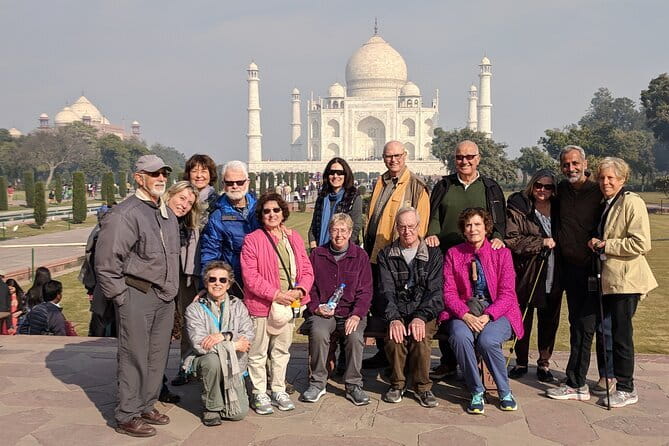
Jaipur gives you a different flavor: Rajput-and-Mughal architectural blending, plus a lot of visual drama. The pacing here is designed so you get iconic exteriors and also at least one deeper interpretive site.
City Palace (about 2 hours; admission not included)
City Palace is located within the walled city and was conceived and built by Maharaja Sawai Jai Singh II, the founder of Jaipur. The complex is described as a fusion of Mughal and Rajput architecture and is still home to the royal family.
This is the place to slow down slightly. If your guide is doing their job well, you’ll walk out with a clearer sense of how political identity and architecture were linked in the region.
Hawa Mahal (about 30 minutes; admission not included)
Hawa Mahal, the Palace of Breeze, is a five-storey building built without a foundation (as described), with a curved façade and a pyramidal shape. It’s also noted as having a dramatic angle of lean.
Because your time here is about 30 minutes, keep it simple: take the key exterior views, and don’t waste time trying to see everything in one quick pass.
Jantar Mantar (about 1 hour; admission not included)
Jantar Mantar is an observatory, and the name means instruments for measuring the harmony of the heavens. It includes 13 architectural astronomy instruments, built by Maharaja Jai Singh II.
This is a standout for people who like logic and design. You can walk through it like a science museum, but in stone. A guide helps a lot here because the instruments only make full sense when you understand what they were meant to measure.
Jal Mahal (about 30 minutes; free)
Jal Mahal is described as the water palace and one of the most visited monuments in Jaipur, with it being a nice photography location. Since your time is limited, treat this as a quick visual stop—get your images and move on.
Albert Hall Museum (about 1 hour; admission not included)
Albert Hall Museum has a collection of artifacts including paintings, jewelry, carpets, ivory, sculptures in stone and metal, and works in crystal. It also lists coins from Gupta, Kushan, Delhi Sultanate, and Mughal periods.
If you want a break from outdoor monuments on day three, this museum stop gives you indoor context. It’s also a helpful bridge across time periods beyond the palace and temple architecture.
Price and logistics: where your money goes (and what costs extra)
The listed price is $226.66 per person for a private four-day Golden Triangle tour from Delhi with Agra and Jaipur. At this price point, the value comes from what you avoid: logistics headaches, wasted time, and the need to coordinate multiple transportation and guide arrangements yourself.
Here’s what’s included based on the package details:
- Private air-conditioned car with a professional driver (and parking fees, fuel surcharge, GST are covered)
- 3 nights of accommodation if you book the option including hotels
- Breakfast included for 3 days
- Mineral water in the car during travel
- Seasonal fruits/biscuits/cookies during intercity drives
- Personal care and attention by an office representative in Delhi, Agra, and Jaipur
- Hotel or airport pick-up and drop-off
- Car size matches group size: sedan for 1–2, Innova for 3–4, and a larger van for 5–10
What’s not included:
- Entrance fees for monuments, listed as approximately USD 45 per person including all monuments.
That last line matters. If you’re budgeting tightly, entrance fees are the biggest extra cost. If you’re the kind of traveler who prefers paying a single rate and letting others handle the details, this setup tends to feel smoother than piecing everything together.
Car choice and comfort: sedan vs Innova vs van
One underrated part of a private tour is comfort during the driving days. This tour specifies car types by group size:
- 1 to 2 people: four-seater sedan car
- 3 to 4 people: six-seater Innova
- 5 to 10 people: 11-seater Tempo traveller/van
Why this matters: it reduces the chance you end up crowded or uncomfortable on long segments. You also get a driver allowance and parking handled, so your time stays in your plan.
Also note the cleaning approach: the overview states cars are cleaned and sanitized after each travel. That’s especially welcome on a multi-day schedule.
Timing, lines, and how to make each day feel worthwhile
This tour packs a lot of landmark time into four days, so your success depends on how you manage your own energy.
A few practical expectations:
- You start very early on the Taj Mahal morning, with a 05:00 departure and a guided 2-hour visit.
- Delhi day includes several different types of sites—monuments, a modern temple structure, and a spiritual-cultural campus—so you’ll likely be switching moods and walking styles.
- Agra day includes both major icons and supporting Mughal sites like Itmad-ud-Daula, which helps the whole story feel connected.
- Jaipur day mixes palaces and architecture with an observatory and a museum, so it’s not just “standing and staring.”
My best advice: wear comfortable walking shoes, keep water handy even though the car includes bottled water, and plan for short attention spans to pop up when a stop is only 30 minutes. In those cases, go for quality: your best photo, one key detail your guide highlights, then move on.
Who this tour fits best
This is a great fit if:
- You’re visiting India for the first time and want a tight, guided overview of Delhi–Agra–Jaipur
- You care about UNESCO sites and want a guide to explain what you’re seeing
- You want private transport so your day doesn’t depend on schedules you don’t control
- You value early access, especially for the Taj Mahal sunrise experience
It may be less ideal if:
- You’re extremely price-sensitive once you add the monument entrance fees
- You hate early starts and don’t handle mornings well
- You prefer a very slow travel pace with lots of free time
Should you book this Golden Triangle tour?
If your goal is to see Delhi, Agra, and Jaipur in four days without turning your vacation into a logistics project, I think this is a solid booking choice. The combination of licensed guide time, private AC transport, and a plan built around major UNESCO highlights makes it feel efficient without feeling rushed in the wrong way.
Before you say yes, do two quick checks:
- Budget for entrance fees (about USD 45 per person is listed).
- Decide if the Taj Mahal sunrise timing works for your body clock.
If both answers are yes, booking makes a lot of sense.
FAQ
What is the price per person for this 4-day private tour?
The price is listed as $226.66 per person.
How long is the tour?
It runs for about 4 days.
Is this a private tour or a shared group?
It is private, meaning only your group participates.
What’s included in the tour price?
Included items include a private air-conditioned car, professional driver, mineral water in the car, seasonal fruits/biscuits/cookies during intercity travel, personal care from an office representative in Delhi, Agra, and Jaipur, parking fees, fuel surcharge, GST, hotel or airport pick-up and drop-off, and breakfast (3). Accommodation for 3 nights is included if you select the option that includes hotels.
Are entrance fees to monuments included?
No. Entrance fees are not included and are listed as approximately USD 45 per person for all monuments.
What time does the Taj Mahal sunrise visit start?
The driver takes you to the Taj Mahal at 05:00 am, and your guide meets you there for the guided visit.
What car will we ride in?
For 1–2 people it’s a four-seater sedan, for 3–4 people it’s a six-seater Innova, and for 5–10 people it’s an 11-seater Tempo traveller/van.
What is the cancellation refund window?
You can cancel up to 6 days in advance for a full refund. Cancel 2–6 days before for a 50% refund, and cancel less than 2 days before with no refund.