REVIEW · NEW DELHI
7 Days Golden Triangle Delhi,agra, Jaipur
Book on Viator →Operated by Abyss Tours · Bookable on Viator
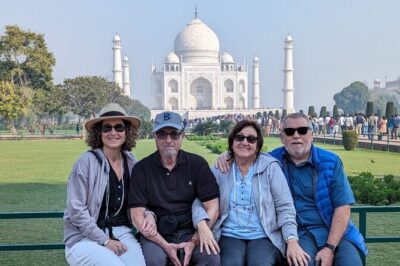
That first Taj Mahal morning changes everything.
This 7-day Golden Triangle works because you get private transport between cities and breakfast included every morning, so your day starts with less stress and more time to look closely. I also like that the plan builds in real sightseeing time at key Mughal landmarks in Delhi, Jaipur, and Agra. One thing to keep in mind: monument and camera fees are not included, and the Delhi sightseeing is listed without an English-speaking guide unless you arrange one for an extra cost.
What makes this tour feel practical is the pace. You’ll do the big sights, but it’s not just a photo sprint, and there are easy breaks like coffee stops on the way to Jaipur. The trip also includes a sunrise visit to the Taj Mahal, which is exactly the kind of schedule that’s worth paying for.
You travel in air-conditioned comfort, sized to your group. A solo or pair typically rides in a Swift Dzire or Etios, while 4–6 people use a Toyota Innova and 7–10 people use a Tempo Traveler. That matters because traffic can be unpredictable, and having the right vehicle size helps the whole day run smoother.
In This Review
- Key things I’d circle before you go
- The Golden Triangle in 7 days: what you’re really buying
- Day 1 landing in Delhi: meet, check in, then sleep like a human
- Old Delhi’s grand mix: Jama Masjid, Red Fort, and the India Gate drive-by
- Jama Masjid: free entry, big scale
- Red Fort: plan your entry fees
- Qutub Minar and Humayun’s Tomb: two stops that contrast well
- Lotus Temple at night: a calm break from monuments
- Jaipur arrival and the “eyes-on” approach: Jantar Mantar and City Palace
- Jantar Mantar: science you can actually see
- City Palace: where Rajput and Mughal shapes overlap
- Albert Hall drive-by, Hawa Mahal, and Amber Palace: the Jaipur hits that matter
- Hawa Mahal: built for views, not just photos
- Amber Palace: the hilltop payoff
- Jal Mahal and a shopping detour that actually helps
- Abhaneri and Chand Baori: the countryside stop that fixes your long driving day
- Sunrise Taj Mahal: why this plan is worth the early wake-up
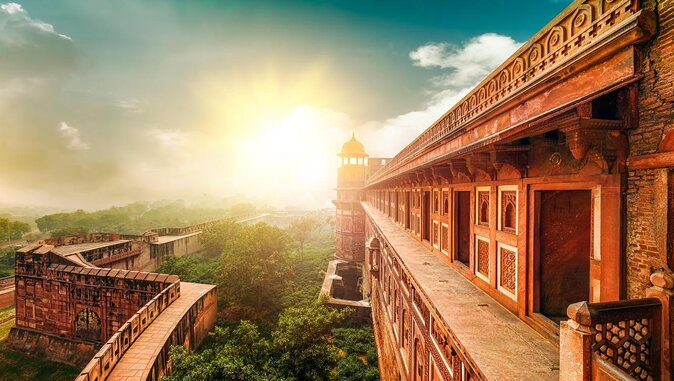
- Agra Fort: don’t skip the other Mughal landmark
- Day 7 in Delhi: free time, then you’re out
- Price and value: is $346.67 fair for private rides and major sights?
- The fine print you’ll thank yourself for noticing
- Who this Golden Triangle tour suits best
- Should you book it?
- FAQ
- What’s included in the 7-day Golden Triangle price?
- Are entrance tickets for monuments included?
- Do I get a tour guide in Delhi as well as Jaipur and Agra?
- How do airport transfers work?
- What vehicle will I ride in?
- Is this a private tour?
- Do I need a passport for this tour?
- Can I cancel for a full refund?
Key things I’d circle before you go
- Private airport transfers so you’re not stuck figuring out logistics on arrival
- Sunrise Taj Mahal timing, with early access planned into Day 6
- Delhi highlights without a free-for-all: Jama Masjid, Red Fort, Qutub Minar, Humayun’s Tomb, and Lotus Temple
- Local guiding in Jaipur and Agra (Delhi guide is optional at extra cost)
- A smart countryside break en route to Agra at Chand Baori in Abhaneri
- Hotel stays for 6 nights with breakfast, plus private transport across the triangle
The Golden Triangle in 7 days: what you’re really buying
This tour is built around India’s northwest triangle: Delhi, Agra, and Jaipur. It’s designed for people who want the headline sites, but also want structure—pickup, hotels, and transport handled—so you can spend your mental energy on actually seeing things.
The value is strongest in the stuff that usually turns into time-sink headaches: airport transfers, point-to-point driving, and daily breakfast. You get 6 nights of accommodations and breakfast for 6 days, which adds up fast. It also helps if you’re trying to manage costs, because your meals are otherwise mostly on you (lunch and dinner aren’t included unless specified).
The trade-off is that you’ll still pay for monument entry and camera fees on-site. The plan calls this out clearly: you’re not locked into one bundle of fees. So go in expecting to budget extra for entries, and bring a camera plan (even a phone camera has different rules depending on the site).
You can also read our reviews of more tours and experiences in New Delhi


Day 1 landing in Delhi: meet, check in, then sleep like a human
On arrival at Delhi’s Indira Gandhi International Airport, you’re met at Terminal 3. The representative waits at the Arrival Terminal-3 exit area at Exit gate number 5, with a placard. That kind of meeting point detail matters in Delhi because once you’re tired, “where do I meet” can become the whole trip.
After you get settled in your hotel, the day is yours. That free time is not filler. It’s your buffer for jet lag, a quick look at your neighborhood, and eating something that won’t upset your stomach on Day 2 when you’re out in the sightseeing flow.
If you’re sensitive to pacing, this first-day setup is a win. It gives you a soft start instead of rushing straight into crowds the moment you step off the plane.
Old Delhi’s grand mix: Jama Masjid, Red Fort, and the India Gate drive-by
Day 2 is your classic Delhi day, and it’s set up well for first-timers: you begin with Old Delhi.
Jama Masjid: free entry, big scale
You visit Jama Masjid, and the admission ticket is listed as free. Jama Masjid is one of those places where the first impression is size—courtyards, arches, and the feeling that you’ve stepped into an older rhythm of the city.
Practical tip: start early in the day so you can move at your own pace and get photos without feeling like you’re constantly dodging. The tour gives you that start because breakfast comes first.
Red Fort: plan your entry fees
Next is the Red Fort, with a solid time block. Admission is not included, so you’ll need to pay your entry fee on your own. Still, this is one of those monuments that rewards you for slowing down. The walls, the layout, and the sheer scale make it worth budgeting for.
Also note: the itinerary includes a drive pass by India Gate. Even if you only see it from the car, it’s a nice way to orient yourself to Delhi’s more ceremonial central axis.




Qutub Minar and Humayun’s Tomb: two stops that contrast well
After Old Delhi, the tour shifts to the southern historic belt.
- Qutub Minar is listed for about an hour. Admission is not included. It’s famous for being an early Indo–Islamic masterpiece, and the minaret’s height makes it instantly recognizable from many angles.
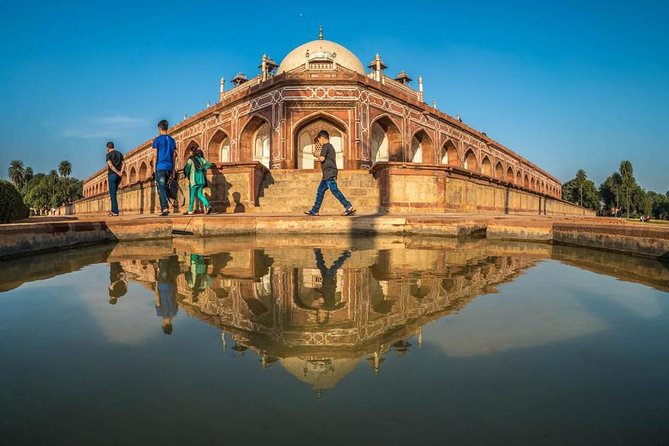
- Humayun’s Tomb is also around an hour, again with admission not included. The tour even hints at the connection you’ll notice: it’s considered a forerunner in the style that later shaped the Taj Mahal’s design language.
If you like architecture and symmetry, this pairing is strong. It turns your day into a story: early Mughal-era influence, then the lineage that leads you to Agra later.
Lotus Temple at night: a calm break from monuments
The last stop on Day 2 is the Lotus Temple. It’s on the schedule for a short visit, and admission is listed as free.
This is the kind of stop that works even if you’re monumented out. The Lotus Temple has a different feel from forts and minarets. It’s modern and calm, and the tour notes it can be particularly pretty at night when lit up.
If you’re sensitive to long days, this timing is smart. You get a break from the older stone-and-brick intensity, and you end the day with something lighter.
Jaipur arrival and the “eyes-on” approach: Jantar Mantar and City Palace
Day 3 turns toward Rajasthan. You drive from Delhi to Jaipur, with a tea/coffee break after about two hours. That kind of break is underrated; it keeps drivers rested, passengers happier, and the route from feeling endless.
Jantar Mantar: science you can actually see
In Jaipur, your first sightseeing stop is Jantar Mantar, the observatory. Admission is not included here, and the time you get is about 40 minutes.
This site is worth it because you can see the instruments. It’s not just a monument you walk past. You learn by looking at the forms and how they measure time and movement. Even if you’re not a science person, the sheer physicality of it makes it feel real.
City Palace: where Rajput and Mughal shapes overlap
Next is the City Palace of Jaipur, set in the heart of the old city and allocated about an hour. Admission isn’t included.
The palace complex is a blend of Rajput and Mughal architecture. You’ll also see the mention of Chandra Mahal, a seven-storeyed structure inside the complex. It’s exactly the kind of detail that helps you understand Jaipur as more than scenery. It’s a living statement of power and design.
Albert Hall drive-by, Hawa Mahal, and Amber Palace: the Jaipur hits that matter
Day 4 is Jaipur’s big visual day.
The schedule begins with a drive pass near Albert Hall, then it moves into the classic postcard cluster.
Hawa Mahal: built for views, not just photos
Hawa Mahal, the Palace of Wind, gets a short stop—about 15 minutes—with free admission listed. The five-storeyed semi-octagonal facade is instantly recognizable.
Try this: before you take photos, look at it from the street angle and then from the edges. The structure’s intention is partly about looking outward and catching the airflow. That makes the facade feel more purposeful than just pretty walls.
Amber Palace: the hilltop payoff
Next is Amber Palace, about an hour, with admission not included.
Amber’s appeal isn’t only the buildings. It’s the setting on craggy hills, which makes the fort feel like it owns the horizon. If you’ve been indoors all day on other trips, you’ll appreciate that Amber gives you both architecture and a strong sense of place.
Jal Mahal and a shopping detour that actually helps
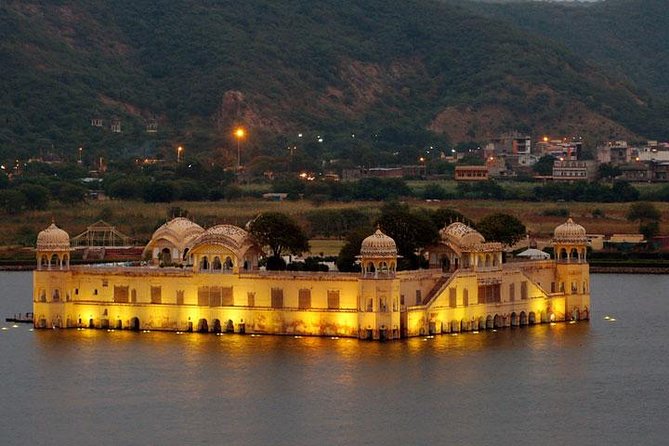
The itinerary includes Jal Mahal for a brief stop (15 minutes) with free admission listed. Jal Mahal sits on Man Sagar Lake, so you get water-and-palace contrast.
Then you’re set up for local shopping in Johari Bazar. This isn’t a random stop. It’s a practical break where you can stretch legs, pick up small souvenirs, and break the “only temples” rhythm.
Abhaneri and Chand Baori: the countryside stop that fixes your long driving day
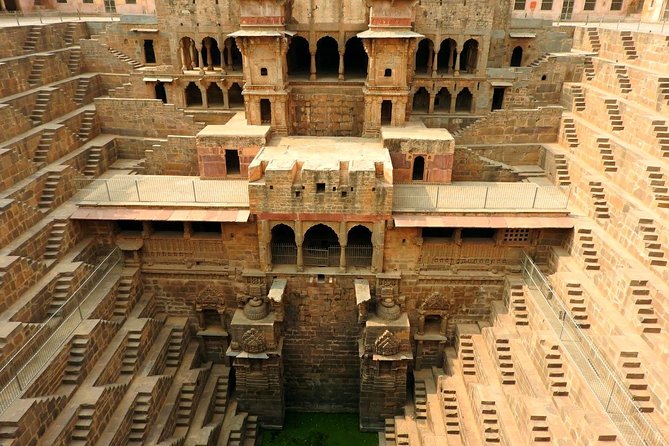
Day 5 is a travel day from Jaipur to Agra, but it’s not just windshield time. Before reaching Agra, you stop at Chand Baori, Abhaneri, about 30 minutes, with admission not included.
Chand Baori is famous for its stepwell concept, and it gives you a different kind of sight than forts and palaces. More importantly, it’s a reset. Your drive continues afterward, but that brief countryside stop helps you feel like the journey itself is part of the experience.
For most people, this is the right amount of detour: enough to refresh, not so much you waste the day.
Sunrise Taj Mahal: why this plan is worth the early wake-up
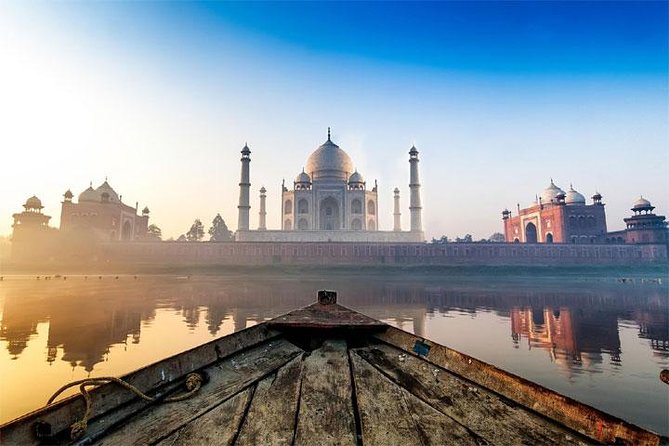
Day 6 is the big one. You wake up early for a sunrise visit to the Taj Mahal, with about two hours on site. Admission isn’t included.
This is the moment in the Golden Triangle that most people plan their whole trip around. The tour’s timing is exactly why: sunrise light changes what you see. It also means the site is less busy than peak midday hours.
Practical advice: plan to dress in layers. Sunrise can be cool, and once the sun rises, temperatures shift quickly.
Agra Fort: don’t skip the other Mughal landmark
After Taj Mahal, you visit Agra Fort for about an hour. Admission isn’t included.
This fort is another strong Mughals-on-display stop, and it sits near the gardens. Even if Taj Mahal is why you booked the trip, Agra Fort helps you understand the bigger picture: palaces and monuments weren’t built as isolated art pieces. They were part of a system of power, defense, and court life.
Day 7 in Delhi: free time, then you’re out
Day 7 starts with breakfast and then you get free time. The itinerary says afternoon transfer to Delhi airport or railway station for your onward destination.
One thing I like about ending this way: you’re not forced into a final “one more museum” scramble. You can pack, grab water and snacks, and handle any last-minute shopping without running late to a rigid evening schedule.
This also matches the tour’s overall style: structured mornings for major sites, then more flexible time when you’re less fresh.
Price and value: is $346.67 fair for private rides and major sights?
At $346.67 per person for about 7 days, the deal makes sense only because the tour includes the expensive time-savers:
- 6 nights accommodation
- Breakfast daily for 6 days
- Private transportation
- Round-trip private airport transfers
If you tried to build this trip alone—especially with airport meet-and-greet and consistent point-to-point driving—you’d pay for those services one way or another. So the price isn’t just “for sightseeing.” It’s for removing the logistics pain.
The main “not included” items are also clearly stated: monument and camera fees, lunches and dinners, and a Delhi English-speaking guide unless arranged for extra cost. So your real budget will depend on how many paid entrances you choose and what you want to do with meals.
If you prefer predictable costs and minimal decision-making, this tour’s setup is built for you. If you love customizing every detail on your own, you might find the fixed structure a little limiting—but the trade is reduced hassle.
The fine print you’ll thank yourself for noticing
A few practical points affect comfort and expectations:
- This is a private tour, meaning only your group participates.
- There’s a minimum of 2 people per booking.
- Vehicle type depends on group size: Swift Dzire or Etios for 1–3, Toyota Innova for 4–6, Tempo Traveler for 7–10.
- You’ll have local tour guides in Jaipur and Agra only. Delhi guidance is not listed as English-speaking unless you arrange it for an additional cost.
- You’ll likely be dealing with daily traffic. The itinerary notes transfer times are approximate and depend on the time of day and road conditions.
On service quality, the company’s handling is a consistent theme in the feedback I saw: clear communication, smooth pickup coordination, and named support staff like Ibrahim showing up as the kind of person who keeps the schedule moving for larger groups. I can’t guarantee who you’ll meet, but the pattern matters if you’re the type who appreciates real coordination over vague handoffs.
Who this Golden Triangle tour suits best
This tour is a strong match for you if:
- You want the classic triangle without planning every segment from scratch.
- You appreciate early starts that make a big difference, like sunrise Taj Mahal.
- You prefer private transport over crowded group shuttles.
- You’re okay paying monument entries and meals on your own.
It’s less ideal if:
- You want an English-speaking guide in Delhi without extra cost.
- You don’t like paying separate entrance fees and camera fees at each stop.
- You want a completely flexible itinerary with no set sightseeing blocks.
Should you book it?
I’d book this tour if you want the Golden Triangle experience with low friction. The included private transfers, transport, and breakfast do the heavy lifting, and the itinerary hits the major sites in a way that feels paced, not chaotic.
The call turns on two things: whether you’re comfortable budgeting for monument and camera fees and whether you’ll want an English-speaking Delhi guide. If those fit your style, this is a straightforward, high-value way to see Delhi, Agra, and Jaipur with less stress and better timing.
FAQ
What’s included in the 7-day Golden Triangle price?
The tour includes 6 nights accommodation, breakfast (6 times), private transportation, and both private airport transfers (pickup and drop). It also includes all taxes, fees, and handling charges.
Are entrance tickets for monuments included?
No. Any monuments and camera fee at entrances are not included, as listed for the various sights.
Do I get a tour guide in Delhi as well as Jaipur and Agra?
A local tour guide in Jaipur & Agra only is included. An English-speaking tour guide in Delhi can be arranged for an additional cost.
How do airport transfers work?
You get both private airport transfers for pickup and drop. On arrival, a representative meets you at IGI Airport Terminal-3, at Arrival Terminal-3 Exit gate number 5 with a placard.
What vehicle will I ride in?
It depends on your group size: 1–3 people travel by Swift Dzire or Etios, 4–6 people travel by Toyota Innova, and 7–10 people travel by Tempo Traveler (all described as air-conditioned).
Is this a private tour?
Yes. It’s a private tour/activity, and only your group will participate.
Do I need a passport for this tour?
Yes. A current valid passport is required at the time of booking.
Can I cancel for a full refund?
Yes. Free cancellation is offered if you cancel up to 24 hours in advance, and you’ll receive a full refund.