REVIEW · NEW DELHI
7-Day Golden Triangle & Ranthambore Tiger Safari from Delhi
Book on Viator →Operated by Holiday Tours And Travels · Bookable on Viator
Tigers and the Taj Mahal in one week. This trip works because it mixes the sunrise tiger safari at Ranthambore with local guides in Jaipur and Agra, so big sights don’t turn into random photo stops. I also like that you get six nights of accommodation plus daily breakfasts, which helps you keep energy for early mornings. One catch: several monument entries are listed as not included (and Ranthambore has a seasonal closure window you should plan around).
This is a car-based route built for first-time North India visitors. You start with airport pickup in Delhi, then move through Jaipur and Agra before finishing back in Delhi with a full day of Old and New Delhi icons. It’s also set up as a private activity for your group only, with group discounts and a mobile ticket—handy if you want structure without the chaos.
In This Review
- Key things that make this tour worth your attention
- The big idea: Golden Triangle highlights plus a real safari week
- Price and what you’ll likely pay on top
- Day 1 in Delhi: airport pickup and a low-stress start
- Day 2: Jaipur and the Pink City first look (City Palace, Jantar Mantar, Hawa Mahal)
- Day 3: Amer Fort, Nahargarh Fort, and Jal Mahal at a calmer pace
- Day 4 and Day 5: Ranthambore National Park and tiger safari reality
- What sunrise really changes
- Seasonal closure warning (big one)
- Day 5 also includes Fatehpur Sikri: a Mughal stop between wildlife and Agra
- Day 6: Agra sightseeing, Taj Mahal at sunrise, plus Agra Fort and Itmad-ud-Daula
- Day 7: Delhi wrap-up with Jama Masjid, Humayun’s Tomb, Lotus Temple, and Qutub Minar
- Group tour feel, private-group comfort, and how this week runs
- Who should book this (and who should reconsider)
- Should you book this 7-Day Golden Triangle & Ranthambore Tiger Safari?
- FAQ
- Where does the tour start?
- How long is the tour?
- What’s included with accommodation and meals?
- Do I get airport pickup?
- Are safari tickets and park fees included?
- What about monument entry fees like the Taj Mahal?
- Is Ranthambore open year-round?
- What’s the cancellation policy?
Key things that make this tour worth your attention

- Sunrise tiger and Taj Mahal timing: you’ll be up early on purpose, not by accident
- Guided time in Jaipur and Agra: local experts handle the big-ticket meaning, not just logistics
- Car travel between cities: less hassling with connections, more time focused on what you came for
- Ranthambore canter safari included (number depends on hotel tier): 1 canter if 3-star, 2 if 4-star
- Breakfast every day: 7 breakfasts included, which matters on early mornings
- Delhi wrap-up with major landmarks: Jama Masjid, Red Fort area sights, Humayun’s Tomb, Qutub Minar
The big idea: Golden Triangle highlights plus a real safari week
If you’re visiting North India for the first time, it can feel like you need three separate trips: Delhi for monuments, Jaipur for forts and palaces, Agra for the Taj Mahal, and Ranthambore for tigers. This plan tries to stack all of it into one smooth week with car travel and consistent hotel stops.
The value is in the mix. You’re not just ticking off names. You’re also getting the rhythm of Mughal-era landmarks in Delhi and Agra, plus the fort-and-palace feel of Jaipur, and then switching gears to wildlife—where you can’t control the outcome, but you can maximize your odds with good timing.
This is the kind of itinerary that rewards sensible expectations. You’ll see a lot, but it’s still paced enough to breathe between cities—mainly because you’re not hopping across regions with complicated transport changes.
You can also read our reviews of more tours and experiences in New Delhi



Price and what you’ll likely pay on top
At $550 per person for about 7 days, the headline price looks fair for a route that includes six nights of accommodation, airport pickup/transport, breakfasts, and national park fees tied to your hotel tier. The transport portion matters here: the plan lists tolls, parking, fuel, and driver allowances as included, which cuts down on surprise add-ons.
That said, the plan is clear that many monument tickets are not included. The itinerary notes several admissions as not included, including places like the City Palace, Jantar Mantar, Hawa Mahal, Taj Mahal, Agra Fort, Itmad-ud-Daula, and others in Delhi. So in your budget, assume you’ll pay extra for entry into several major sights.
If you’re watching costs, it helps to think of this tour as covering the structure—hotel, movement, guidance where listed—and you handle museum/monument entries as the add-on.
Day 1 in Delhi: airport pickup and a low-stress start

On arrival at Delhi’s airport, you’re met by a representative and transferred to your hotel. That simple start is a real win if you land tired or unsure about where to go next. You’re not spending your first evening figuring out transport.
The tour keeps Day 1 straightforward: check in, then a night in Delhi. There’s no pressure to cram sightseeing the same day, which usually makes the rest of the week easier.
Day 2: Jaipur and the Pink City first look (City Palace, Jantar Mantar, Hawa Mahal)
After breakfast, you drive to Jaipur. Once you arrive, you check in and then enjoy a Pink City tour. This is a good “orientation day,” because it sets the visual tone of the city before you go deeper into forts the next day.
Three of the most important stops are built right in:
- City Palace of Jaipur: established by Maharaja Sawai Jai Singh II when his court moved to Jaipur in 1727. You’re seeing the power center that helped define Jaipur’s identity.
- Jantar Mantar: the astronomical instruments built by Sawai Jai Singh II and completed in 1734. Even if you don’t know the math behind them, it’s impressive to see how seriously the Rajput rulers treated science and observation.
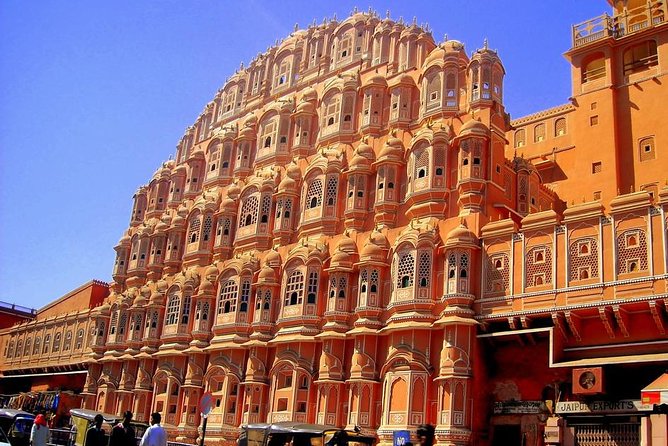
- Hawa Mahal (Palace of Wind): the red and pink sandstone facade that extends toward the zenana area. The architecture is the star here—so even a short stop feels like a highlight.
Practical note: these entries are listed as not included for some stops, so plan to pay on-site or have a buffer in your budget.
Day 3: Amer Fort, Nahargarh Fort, and Jal Mahal at a calmer pace
Day 3 is where Jaipur turns from city-view to fortress-view.
You’ll visit Amber Palace (Amer Fort), located about 11 km from Jaipur, high on a hill. This fort complex tends to be the kind of place where you need to slow down. The views, the scale, and the layout help you understand why forts weren’t just military. They were statements.
Next comes Nahargarh Fort, perched at the edge of the Aravalli Hills and overlooking Jaipur. The tour frames it as part of a defense ring with Amer Fort and Jaigarh Fort. Even if you’re not tracing battle strategy, you’ll feel how these positions were meant to watch and control.
Then you add Jal Mahal, the palace in the middle of Man Sagar Lake. It’s a striking scene—especially because it breaks the “fort on a hill” pattern. It’s also a nice change of tempo before you head toward the wildlife portion of the trip.
This day includes several forts and palaces, and comfort matters. The tour recommends comfortable walking shoes for a reason.
You can also read our reviews of more tours and experiences in New Delhi





Day 4 and Day 5: Ranthambore National Park and tiger safari reality
Now for the reason many people book this tour.
You get time in Ranthambore National Park on Day 4 and then another visit timed for sunrise on Day 5. The plan lists park time as included and admission as free in the itinerary structure, but the safari itself depends on what you booked.
Here’s the key detail you should understand: national park fees are included based on your hotel option—1 canter safari if you book the 3-star option, and 2 canter safaris if you book the 4-star option. Since the itinerary shows two days of Ranthambore time, your exact safari count should match your package tier.
What sunrise really changes
Tiger safaris aren’t guaranteed. You’re trying to spot wildlife in a huge area with natural behavior patterns. That’s why sunrise matters. Morning hours often give you the best combination of visibility and animal activity, and the tour explicitly builds in an early start.
Seasonal closure warning (big one)
Ranthambore is closed from 1st July till 30th September, depending on weather. If your trip falls in that window, you should plan for the fact that tiger safari access may not be available during that time.
Day 5 also includes Fatehpur Sikri: a Mughal stop between wildlife and Agra
On Day 5, after Ranthambore time, you continue to Fatehpur Sikri, a historic complex founded by a 16th-century Mughal emperor. The plan frames it as a small city with red sandstone buildings clustered around the center and highlights key structures like Buland Darwaza and the Jama Masjid entrance.
This stop works because it’s a palate cleanser. After wildlife, you get architecture and history you can actually walk around and process—without the intensity of an all-day palace-and-fort sprint.
Day 6: Agra sightseeing, Taj Mahal at sunrise, plus Agra Fort and Itmad-ud-Daula
Agra gets a full day of major sights, and the day is structured around an early start for the Taj Mahal.
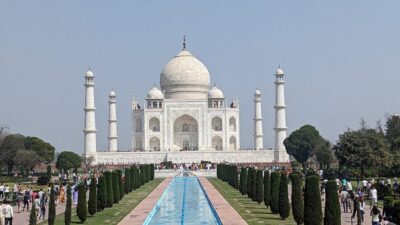
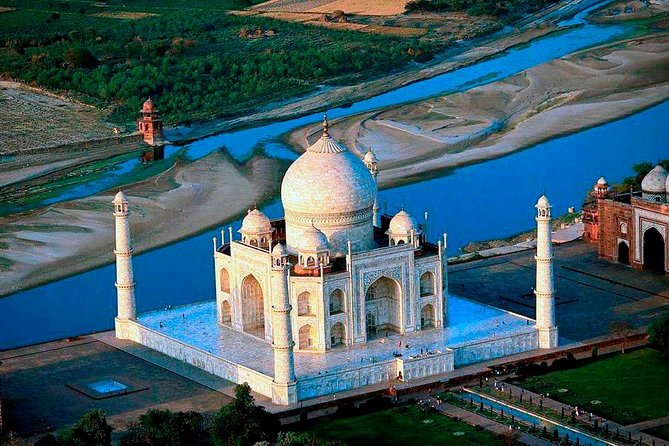
You’ll begin with Agra sightseeing and then go to the Taj Mahal at sunrise before breakfast. The tour notes it’s a UNESCO World Heritage site built in memory of the emperor’s wife. Even if you’ve seen photos for years, seeing it at sunrise changes the mood. The light does what text can’t.
Important: the Taj Mahal ticket is listed as not included, so build that into your budget.
After the Taj Mahal, you check out of your hotel and move through:
- Agra Fort: a UNESCO World Heritage site built by Emperor Akbar in 1565, made of red sandstone with elegant buildings. It’s a strong contrast to the Taj’s marble delicacy.
- Itmad-ud-Daula: often regarded as a draft of the Taj Mahal. It’s the kind of stop that makes you appreciate how the style evolved.
- Agra Bazaar tour: focused on handicrafts like marble and soft-stone inlay work.
This combination is valuable because it covers different “levels” of Mughal art. The Taj is the monument. Agra Fort is power and defense. Itmad-ud-Daula is the smaller-scale refinement that hints at what was coming.
Day 7: Delhi wrap-up with Jama Masjid, Humayun’s Tomb, Lotus Temple, and Qutub Minar
After breakfast, you enjoy sightseeing in Delhi, then transfer to the airport for your onward journey. That means the final day is designed to be memorable, but not so long that it ruins your flight day.
The plan includes:
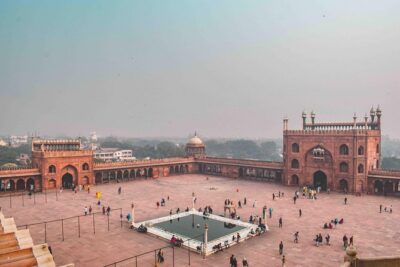
- Jama Masjid: one of the largest mosques in India, built by Shah Jahan between 1644 and 1656.
- Red Fort: Mughal main residence for nearly 200 years, with museums in the fort complex.
- Raj Ghat: Gandhi’s memorial, linked to the historic ghat area of Old Delhi.
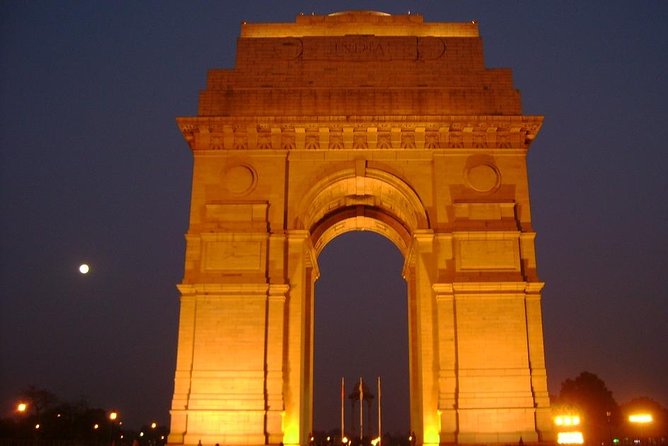
- India Gate: a war memorial along Rajpath.
- Humayun’s Tomb: the tomb commissioned by Humayun’s first wife and designed by Mirak Mirza Ghiyath.
- Lotus Temple: a Bahá’í House of Worship with a distinctive flowerlike shape.
- Qutub Minar: part of the Qutb complex, a UNESCO World Heritage Site.
Some entries are listed as not included, while others like India Gate and Lotus Temple are listed as free in the itinerary structure. Either way, you’ll get a good mix of imperial Mughal-era sights plus modern-era spiritual architecture.
If you want one practical tip: pace your photos. Delhi can feel dense. Pick your must-shots, then actually look around while you’re standing there.
Group tour feel, private-group comfort, and how this week runs
This is set up as a private tour/activity with only your group participating. That typically means you’re not squeezed into a giant bus full of strangers who disappear the moment the driver stops. It also makes the tour feel more “yours,” even though the itinerary is a fixed outline.
The plan also includes pickup support, local guide time in Jaipur and Agra, and daily breakfasts. Those are the kinds of details that keep the week from turning into a scheduling mess.
And you do get that car-based rhythm through diverse regions. You’re seeing different city textures—old city lanes in Delhi, palace-heavy Jaipur, and Agra’s Mughal stonework—without the friction of constant transfers.
One more consideration: the plan notes that minimum numbers apply and cancellation can happen after confirmation if there aren’t enough passengers. If you’re booking close to departure, keep a little flexibility in your schedule.
Who should book this (and who should reconsider)
This tour suits you if:
- You want a first-time North India sampler with the major names: Delhi, Jaipur, Agra, and Ranthambore
- You prefer a structured route with fewer transport decisions
- You’d enjoy an early-morning plan (sunrise safari and sunrise Taj Mahal are built in)
- You want guidance in Jaipur and Agra rather than trying to interpret everything yourself
It may not be ideal if:
- You can’t handle extra ticket costs for monuments listed as not included
- You’re traveling during the Ranthambore closure window from 1st July to 30th September
- You dislike early starts. The sunrise focus is not optional here.
Should you book this 7-Day Golden Triangle & Ranthambore Tiger Safari?
If your priority is seeing the Golden Triangle plus a tiger safari in one tidy week, I think this package makes a lot of sense. The best part is the balance: guided stops in the cities that need context, and safari timing that gives you a real shot at memorable wildlife.
Just be smart about your expectations. You’ll do a lot of highlights, so your comfort will come from how prepared you are—budget for monument tickets, bring comfortable shoes, and plan for the possibility that Ranthambore depends on the season.
Overall: this is a strong value pick for an organized, first-week-in-North-India type of trip—especially if you want the Taj Mahal and tigers without turning your vacation into a logistics project.
FAQ
Where does the tour start?
It starts at Indira Gandhi Intl Airport in New Delhi.
How long is the tour?
The duration is approximately 7 days.
What’s included with accommodation and meals?
The tour includes six nights of accommodation (double/twin and triple sharing) and 7 breakfasts.
Do I get airport pickup?
Yes. You’re met and transferred at Delhi Airport by a representative.
Are safari tickets and park fees included?
National park fees are included, and the safari count depends on the hotel tier: 1 canter safari for the 3-star option and 2 canter safaris for the 4-star option.
What about monument entry fees like the Taj Mahal?
Some attractions are listed with admission not included, including the Taj Mahal and several other sites. Others are listed as admission free in the itinerary, like India Gate and parts of the Delhi/Agra day plans.
Is Ranthambore open year-round?
No. Ranthambore is closed from 1st July till 30th September, and it depends on weather whether it will be open during that period.
What’s the cancellation policy?
This experience is non-refundable and cannot be changed for any reason. Cancellation means you don’t get your money back.