REVIEW · NEW DELHI
7-Day Golden Triangle & Varanasi Tour from Delhi with Guide
Book on Viator →Operated by Holiday Tours And Travels · Bookable on Viator
Dawn sets the pace on this trip. You get a tightly run Golden Triangle to Varanasi route with sunrise visits in Agra and Varanasi, plus private A/C transport between sights. I also like that the plan is built around real logistics—hotels, train tickets with sleeping berths, and daily sightseeing—so you’re not juggling details all week.
One thing to watch: monument entry tickets are often not included, and the sunrise timings mean early starts.
In This Review
- Key moments that make this tour work
- Golden Triangle Plus Varanasi: A route built for first-timers and repeat dreamers
- Price and value: what $675 includes (and what you’ll pay for separately)
- Day 1: Delhi airport pickup, then Jaipur’s Pink City orientation
- Day 2 in Jaipur: Amber Fort up close, then a lake-palace pause at Jal Mahal
- Day 3 Fatehpur Sikri: Akbar’s 16th-century capital-palanace stop
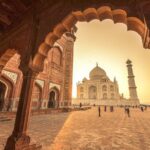
- Day 4 in Agra: Taj Mahal sunrise plus Agra Fort’s red-sandstone grandeur
- Day 5 Varanasi: Dasaswamedh Ghat rituals and Kashi Vishwanath Temple landmarks
- Day 6: Ganges sunrise walking tour, then an overnight A/C train to Delhi
- Day 7 Delhi finale: Jama Masjid, India Gate, Humayun’s Tomb, Lotus Temple, Qutub Minar, and Red Fort
- Logistics you’ll feel: entry fees, passports, vehicle comfort, and mobile tickets
- Who this tour suits best (and who should rethink it)
- Should you book this Golden Triangle & Varanasi tour?
- FAQ
- How long is the tour, and how many nights are included?
- Is airport pickup included?
- Are train tickets included?
- Do I get an English-speaking guide?
- Are monument entrance fees included?
- What type of transportation will I use?
- Can I cancel and get a refund?
Key moments that make this tour work
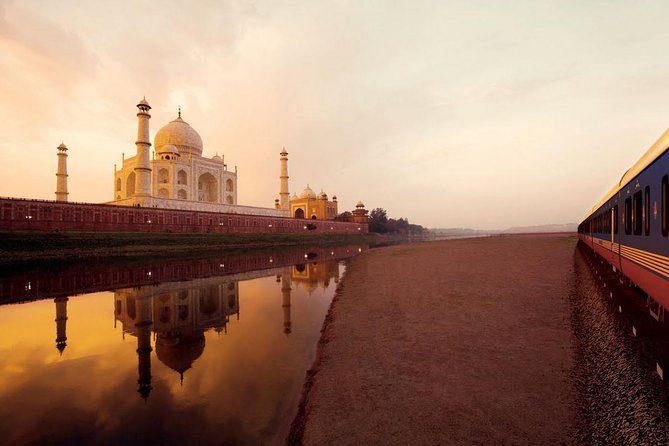
- Sunrise Taj Mahal timing: a dedicated early visit (about 3 hours), with entry fees typically extra
- Ganges sunrise walking tour: early-morning rituals near the river, with the key river-side activity listed as included
- English-speaking guides in Jaipur and Agra: you’ll have support for the big sightseeing days
- Overnight A/C train with sleeping bed: back-to-back travel that saves time compared with flying
- Driver service is repeatedly praised: punctual, helpful, and easy to work with (names like Amit and others appear in guest notes)
- Private tour for your group: your party travels together, using a vehicle sized to your group (Tata Indigo/Swift for small groups, Innova for mid-size, Tempo Traveler for larger)
Golden Triangle Plus Varanasi: A route built for first-timers and repeat dreamers
This is a classic India mash-up done in a practical way: Jaipur and Agra for the Golden Triangle highlights, then Varanasi for the Ganges—and the daily rituals that make this city feel unlike anywhere else in India. The itinerary covers the headline sights you’ve probably seen in postcards, but the schedule is also designed so you spend more time moving between places rather than sitting around waiting.
What makes it compelling is how much is handled for you. You’re not only seeing monuments; you’re also getting the transport structure to connect cities (including an overnight train) and you’re paired with guides for the two big sightseeing-heavy days. If you want a guided “India sampler” that still hits the major moments—this does that.
Just remember: the flip side of hitting many stops is a faster pace. If you’re the type who wants long, slow meals and lots of free wandering time, you might feel the schedule.
You can also read our reviews of more guided tours in New Delhi



Price and value: what $675 includes (and what you’ll pay for separately)
At $675 per person for about 7 days, the value here comes from the package components. You’re paying for:
- 4 nights of hotel accommodation on twin/double sharing with continental breakfast
- Private A/C vehicle transport for sightseeing
- Round-trip A/C train tickets with sleeping bed for the Varanasi ↔ Delhi movement
- Arrival and sightseeing in Delhi
- English-speaking guide in Jaipur and Agra
- Breakfast included on 4 days
What’s not included is equally important:
- Tips, food, and drinks
- Personal expenses
- Many monument admission tickets (several major stops list admission as not included)
So the question isn’t only whether the price sounds fair. It’s whether you want to outsource the hard parts: train bookings, private transfers, guide support, and the sequencing of sights across four cities. If that’s your style, $675 can feel like a deal. If you’re the kind of traveler who prefers fully self-planned days and you’d rather skip guide-led routes, you may find you’re paying for structure you don’t need.
Day 1: Delhi airport pickup, then Jaipur’s Pink City orientation
The week starts with pickup from Indira Gandhi International Airport (or your Delhi hotel), then you’re transferred to Jaipur. Once you check in, the sightseeing day is focused on Jaipur’s “first look”—not an exhausting pile-up of sites.
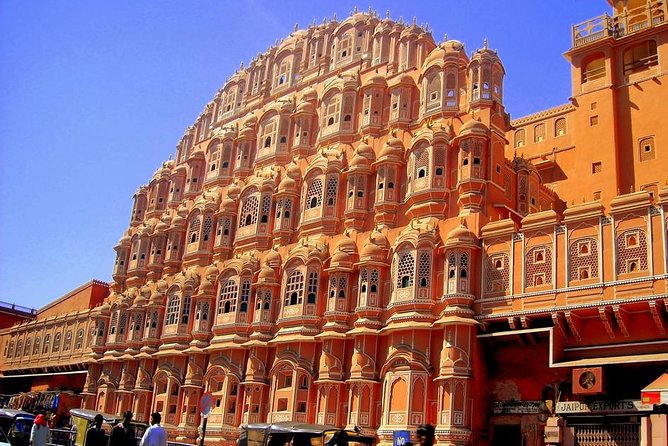
You’ll start with City Palace of Jaipur (entry ticket listed as not included), and then head to the Hawa Mahal (Palace of Wind), also not included for admission. The City Palace is a complex with major palaces inside (including Chandra Mahal and Mubarak Mahal), and it’s a great way to understand Jaipur’s royal layout in one go.
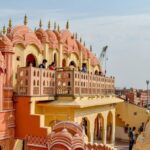
Hawa Mahal is the showpiece that most people recognize instantly. The palace’s red-and-pink sandstone look, and its position extending toward the women’s quarters (zenana), makes it more than just a pretty façade—you can actually connect it to the city’s historic social design.
Practical note: since both City Palace and Hawa Mahal are marked as admission not included, budget for those tickets when you arrive.
Day 2 in Jaipur: Amber Fort up close, then a lake-palace pause at Jal Mahal
Day two leans into Jaipur’s two most iconic contrast points: a hilltop fort and a water-bound palace.
First is Amer Fort / Amber Fort (listed for about 3 hours; admission not included). The fort sits high above Jaipur, and even if you don’t love forts, this one is worth your energy because the views and the scale are part of the experience. Plan to wear shoes you can trust. Even with a guide steering you, you’ll be moving through uneven surfaces and long pathways.
Then you get a quieter, scenic break at Jal Mahal. This palace sits in the middle of Man Sagar Lake, and the listing notes it was renovated and enlarged in the 18th century by Maharaja Jai Singh. The timing is short (about 1 hour), but it works as a decompression stop after Amber’s intensity. Admission for Jal Mahal is listed as free here, so it’s one of those days that gives you a major moment without extra ticket pressure.
If your body runs hot in Rajasthan, you’ll appreciate that the day includes a “restorative” stop instead of being fort-to-fort only.
Day 3 Fatehpur Sikri: Akbar’s 16th-century capital-palanace stop
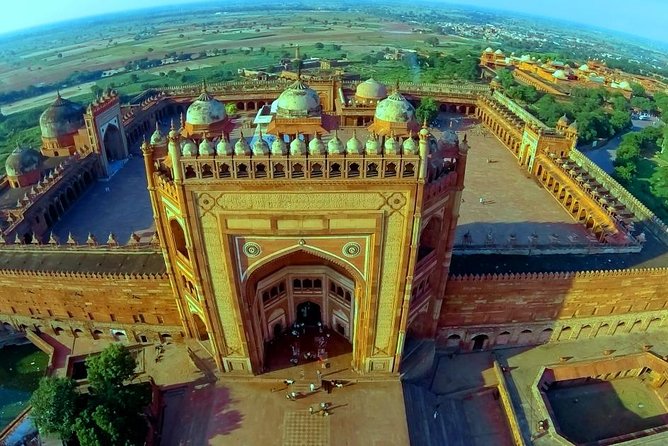
This day trip takes you to Fatehpur Sikri, described in the plan as being built by Emperor Akbar as his capital and palace in the 16th century. The stop is about 2 hours with admission marked as free.
What I like about including Fatehpur Sikri on a Golden Triangle itinerary is that it breaks the “everything is Jaipur or Agra” pattern. It adds a different architectural vibe and helps you see how far Akbar-era planning and power stretched beyond one city.
Because the plan keeps it to a couple of hours, it’s not meant to be a marathon. You’ll be able to walk, see the key structures, and still be ready for the next day’s big climax: Agra at dawn.
You can also read our reviews of more tours and experiences in New Delhi




Day 4 in Agra: Taj Mahal sunrise plus Agra Fort’s red-sandstone grandeur
Agra is where the itinerary turns serious—in the best way.
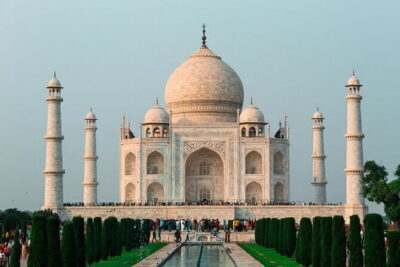
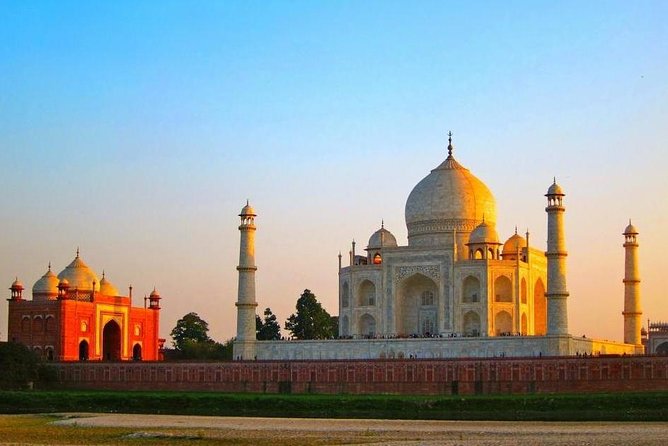
You start with a sunrise visit to the Taj Mahal (about 3 hours). The Taj is listed as one of the seven wonders of the world, and admission is not included. If you’ve never done a sunrise monument visit, here’s the practical reason it matters: early light changes how the marble reads in photos, and it also helps you feel like you truly earned the sight rather than just “arrived and looked.”
Then comes Agra Fort (about 2 hours; admission not included). It’s described as a majestic red-sandstone fortress on the banks of the Yamuna, with palace spaces inside for Rajputs and Mughals. Even if you don’t want to read every plaque, the setting gives you an easy way to connect the fort’s walls to the riverside geography.
Tip: if you’re sensitive to crowds or heat, sunrise-to-morning scheduling can help. But either way, this day is still a full sightseeing block—so keep your plans for dinner and rest flexible.
Day 5 Varanasi: Dasaswamedh Ghat rituals and Kashi Vishwanath Temple landmarks
Then you’re on the move to Varanasi. After arriving at Varanasi Train Station, the representative picks you up and transfers you to your hotel. The plan gives you a chance to rest before the sightseeing tour begins.
Your Varanasi highlights include:
- Dasaswamedh Ghat: described as bustling riverside steps down to the Ganges, used for religious rituals daily (admission not included; about 2 hours)
- Kashi Vishwanath Temple: a riverside temple to Shiva with an 18th-century gold-plated spire and a sacred well (admission not included; about 2 hours)
This is where Varanasi stops feeling like another stop on a route and starts feeling like a living, working city. Even if you’re not religious, the sight of people arriving for daily rites—while the river remains the center of the action—makes the city’s meaning hard to reduce to sightseeing alone.
Dress and behavior matter here. You’ll be around active worship. Keep your phone ready, but your manners ready too. A guide helps with that, and the way the tour pairs you with a local person for the day’s circuit makes the experience smoother.
Day 6: Ganges sunrise walking tour, then an overnight A/C train to Delhi

Day six is the Varanasi “morning you won’t forget” day.
You’ll start early with a sunrise walking tour near the Ganges, and you’ll see early rituals being performed, with thousands of people taking part (the listing describes it as part of the experience). The admission for this river ritual activity is listed as included.
This is also a day where timing affects quality. The early hours are when the city’s rhythm feels sharpest, and when you can watch the flow of activity without the day’s later rush taking over.
After that, you head to Varanasi Train Station for an overnight train to Delhi (about 12 hours). The plan specifies the train is air-conditioned and that you have a sleeping bed. That means you’re not losing a full day to travel—you’re trading a night of rest for daytime continuity.
If you’re a light sleeper, pack your own small comfort items (earplugs, a sleep mask) so you can actually recover for your last day.
Day 7 Delhi finale: Jama Masjid, India Gate, Humayun’s Tomb, Lotus Temple, Qutub Minar, and Red Fort
Your last day is a Delhi sweep: big landmarks, mostly guided, and enough variety to end strong even if you’re tired.
Pickup happens after you arrive, and then the sightseeing tour includes:
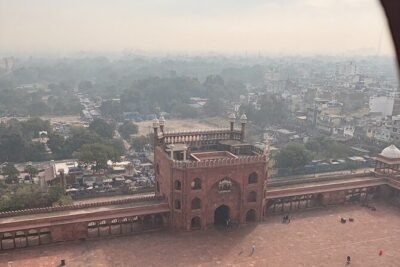
- Jama Masjid (about 1 hour; admission not included), built by Mughal Emperor Shah Jahan between 1644 and 1656, with a cost noted as 1 million rupees
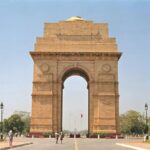
- India Gate (about 1 hour; admission free), a war memorial on Rajpath at the eastern edge of the ceremonial axis
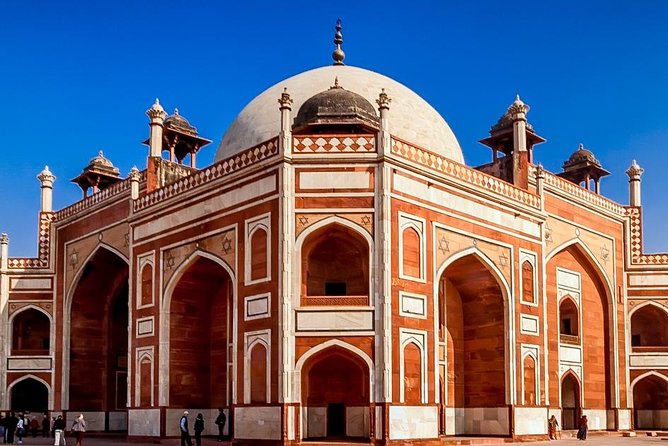
- Humayun’s Tomb (about 1 hour; admission not included), commissioned by Empress Bega Begum
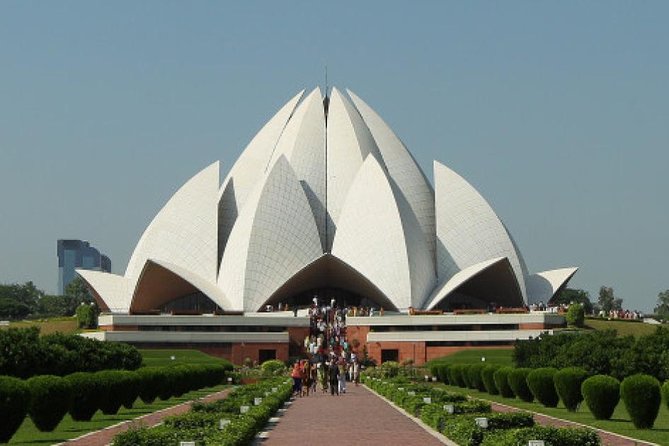
- Lotus Temple (about 1 hour; admission free), dedicated in December 1986 with a flowerlike shape
- Qutub Minar (about 1 hour; admission not included), a UNESCO World Heritage Site in the Mehrauli area
- Red Fort (about 1 hour; admission not included), home of Mughal emperors for nearly 200 years until 1856 and now housing museums
Finally, you’re transferred to the airport for your onward journey.
This day is dense. The trick is to pace your attention: pick the 2–3 sites you most want to linger at, take quick photos for the rest, and don’t let fatigue steal your focus.
Logistics you’ll feel: entry fees, passports, vehicle comfort, and mobile tickets
A few practical things you’ll thank yourself for handling early:
- Entry tickets: The plan marks many monuments as admission not included. Even when the tour gives you time on-site, you should assume you’ll pay for several major sights.
- Passport details required: You’ll need your passport name, number, and expiry at booking, and you need a valid passport on travel day. This matters for train movements.
- Hotel setup: Rooms are twin/double sharing with continental breakfast included on the stated days. Extra persons get an extra bed in the same room setup.
- Transport matches group size: Small groups use a Tata Indigo or Swift Dzire (1–3 people). Mid-size uses Toyota Innova (4–6). Larger groups use Tempo Traveler (7–10).
- Mobile ticket: You get a mobile ticket, which helps with daily check-ins and keeping everything in one place.
Also, the tour is listed as private to your group. That reduces the awkward feeling of waiting for strangers at each stop. You still move at a planned pace, but the experience stays more “your schedule” than “everyone’s schedule.”
Who this tour suits best (and who should rethink it)
This fits you if you want:
- A structured first-time route across Delhi, Jaipur, Agra, and Varanasi
- Sunrise experiences on a schedule that doesn’t depend on you finding transport and timing solo
- Guide support for the big sightseeing cities—especially Jaipur and Agra
- A built-in logistics solution for the long-distance jump via an overnight A/C train
I’d hesitate if you want:
- Lots of downtime between monuments
- A trip where you pay for fewer “organized” moments (because admission tickets and meals are separate)
- A slow travel style with fewer transfers and less early wake-up
Should you book this Golden Triangle & Varanasi tour?
If your dream trip includes the Taj Mahal at sunrise, Jaipur’s forts and palaces, and Varanasi at the Ganges in the early morning, this tour is a strong match. The value isn’t only the sight list—it’s that you get the train with sleeping bed, the private A/C transport, and the guide-driven flow to connect cities without chaos.
Book it if you want your days planned and you’re okay paying for a few admissions and meals on your own. If you’d rather control every hour and you don’t care about sunrise timing, you might be happier building your own route.
FAQ
How long is the tour, and how many nights are included?
The itinerary runs for about 7 days (6-night tour). Hotel accommodation is included for 4 nights, and you’ll also use an overnight train segment between Varanasi and Delhi.
Is airport pickup included?
Yes. You’re met at Delhi Airport (or your Delhi hotel) for the start, and you’ll also be picked up in Delhi on the final day for sightseeing and then transferred to the airport.
Are train tickets included?
Yes. The tour includes round-trip air-conditioned train tickets with sleeping bed for the overnight journey involving Varanasi and Delhi.
Do I get an English-speaking guide?
You’ll have an English-speaking guide in Jaipur and Agra as part of the included services.
Are monument entrance fees included?
Not always. Many key sights list admission as not included (for example City Palace, Hawa Mahal, Amber Fort, Taj Mahal, and several Delhi monuments). Some stops are listed as free (like Jal Mahal and Lotus Temple), but you should plan for extra entry tickets.
What type of transportation will I use?
You travel by private A/C vehicle. The type depends on group size: Tata Indigo/Swift Dzire for 1–3 people, Toyota Innova for 4–6 people, and a Tempo Traveler for 7–10 people.
Can I cancel and get a refund?
No. The experience is listed as non-refundable and cannot be changed for any reason.