REVIEW · NEW DELHI
Delhi: Private Half Day City Sightseeing Tour
Book on GetYourGuide →Operated by The Imperial Tours · Bookable on GetYourGuide
Half a day in Delhi feels like magic. This private, air-conditioned city loop cuts through the big highlights without the usual stress, and your guide adds meaning to what you’re seeing, from dharmic religions to everyday culture. I especially like the hotel pickup and drop-off convenience and the private chauffeur that keeps you moving while you focus on photos and stories.
The one thing to think about is pacing. You’ll cover a lot in 3 to 4 hours, which means shorter stops and some walking—so if you’re dealing with mobility or back issues, you’ll want to be realistic about what you can handle.
In This Review
- Key things I’d plan around
- How this half-day tour makes Delhi feel manageable
- Pickup, private car, and why the chauffeur matters
- The heart of the route: Parliament, Lodi Gardens, India Gate
- Parliament House: fast pass, big symbolism
- Lodi Gardens: a calm pocket with tombs and trees
- India Gate: war memorial scale and photo power
- Rashtrapati Bhavan from the car: the power-house photo stop
- Agrasen ki Baoli: the stepwell that turns a walk into a story
- Humayun’s Tomb: one hour that teaches you how Mughal gardens work
- Lodi Gardens again: the best way to end a monument-heavy morning
- The spirituality and culture angle: how your guide connects Hinduism and Sikhism
- Timing and pacing: what 3–4 hours really means
- Cost and value: why $10 per person can make sense
- What to bring (and what to wear)
- Who this tour is best for
- Should you book this half-day Delhi city tour?
- FAQ
- How long is the Delhi private half-day city tour?
- What time does pickup start?
- Where can pickup happen?
- What does the tour include for transportation?
- Do I get a guide?
- Are entrance fees included?
- What sights are covered in the itinerary?
- What language is the guide available in?
- What should I wear or bring?
- Is the tour suitable for everyone?
Key things I’d plan around
- Door-to-door pickup in Delhi, Gurugram, or Noida, so you skip the stress of meeting points
- Skip-the-line access with a separate entrance where applicable
- A fast, smart sightseeing route that hits India Gate, Agrasen ki Baoli, Humayun’s Tomb, and more
- Expert guide storytelling tied to Hinduism and Sikhism, not just dates and names
- Photo stops at major government buildings from the car, plus a guided break at the key monuments
How this half-day tour makes Delhi feel manageable

Delhi is big. Even the “close” sights can take forever with traffic, wrong turns, and crowds. This tour is built to solve that exact problem. You start with pickup at a time that works for you (often around 9:00 AM), then ride in a private, air-conditioned car with a professional chauffeur. That alone changes the whole feel of your day. You don’t waste your energy figuring out routes, parking, or where to stand.
What I like most is that it’s not just a checklist. You get a guide who connects the dots—spiritual and cultural context alongside the monuments. That turns monuments from background scenery into something you can actually understand while you’re there.
You can also read our reviews of more city tours in New Delhi


Pickup, private car, and why the chauffeur matters
This tour includes pickup and drop-off, and you can choose the pickup location in Delhi/Gurugram/Noida. At the end, you’re returned to your drop-off area (the day’s route covers Delhi and can include Gurugram). That door-to-door setup is a big value point because Delhi can be tricky for short stays. It also means you don’t need to coordinate taxis back and forth.
The private chauffeur is more than comfort. It’s time saved and stress avoided. When you’re trying to hit India Gate, multiple heritage sites, and a garden in one half day, every minute counts. The car also helps you handle Delhi’s heat and traffic better than moving across the city on your own.
In the bookings tied to this tour, I saw that guests were well looked after by guide Riyaz and driver Rakesh. The theme was consistent: smooth timing, friendly explanations, and an easy pace that still packed in major sights.
The heart of the route: Parliament, Lodi Gardens, India Gate
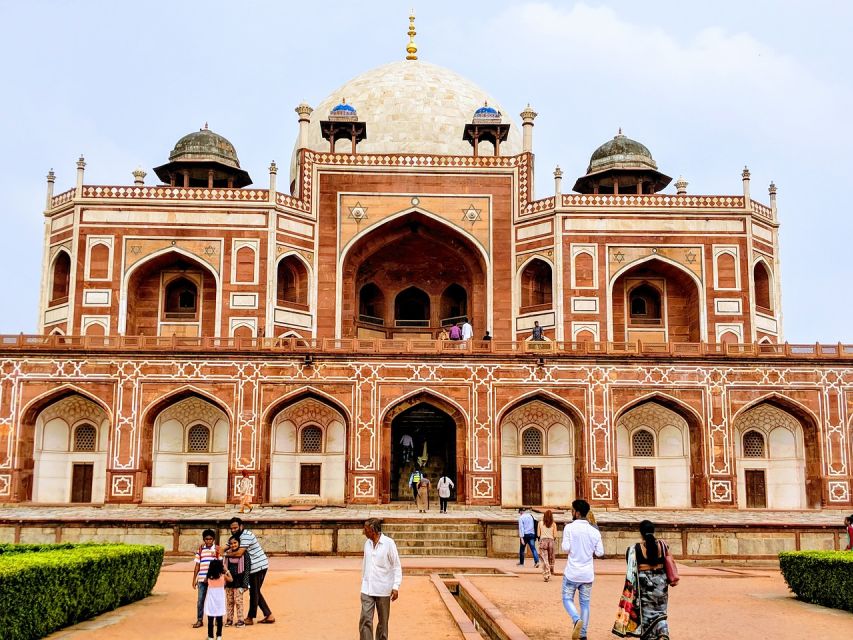
Your itinerary flows like a guided loop, with quick stops for perspective and longer stops where it matters.
Parliament House: fast pass, big symbolism
The Parliament House stop is more about getting the visual and historical sense than lingering. You’ll typically pass by for a short guided moment. It’s designed by British architects Edwin Lutyens and Herbert Baker, and it houses both Lok Sabha and Rajya Sabha, plus a library hall. If you’re wondering what a working democracy feels like, this is the kind of place that makes the abstract idea real.
Drawback to note: since it’s brief, you won’t get the same depth you’d get at sites where you’re inside for longer. If you love architecture and want to spend extra time, you’ll have to be selective with your photo schedule so you don’t feel rushed.
Lodi Gardens: a calm pocket with tombs and trees
Next comes Lodi Gardens, one of Delhi’s nicer breathing spaces. You’ll get a guided visit and some time to wander, usually around 20 minutes. What makes this stop special is the mix: lush, shaded garden life alongside older monuments from the 15th century.
The gardens have a name rooted in Lady Willingdon, the British Resident’s wife. In 1936, two villages were cleared to create the landscaped park area that included Lodi-era tombs. Today, it’s a favored escape—good for local jogging and casual dating strolls—and it also plays a role in protecting local wildlife, including many tree and bird species.
Practical tip: bring your patience for photo moments. Lodi Gardens is where you’ll probably want to slow down, but the tour’s half-day format still keeps you moving.
You can also read our reviews of more private tours in New Delhi






India Gate: war memorial scale and photo power
India Gate is the stop that most people plan for, and it delivers. You’ll have a guided visit and time for photos. It’s an arc-de-triumph-like gateway about 140 feet high, built as a war memorial for 70,000 soldiers of the British Indian Army who lost their lives during the First World War.
This is one of those Delhi sights where your photos will look dramatic from nearly any angle. The monument’s scale also helps you get a sense of how city planning and national remembrance live side-by-side here.
What to watch for: the guided explanation matters. Without that context, it’s easy to see India Gate as only a photo stop. With the context, it becomes a place where you can read the city’s layered history in a single glance.
Rashtrapati Bhavan from the car: the power-house photo stop
You’ll also do a drive-by photo stop at Rashtrapati Bhavan, the Viceroy’s House before independence. The tour description emphasizes the mansion-like size and the architecture’s grandeur, and that matches what you’ll feel when you see it from the road.
This isn’t a long visit where you go in and tour rooms. It’s a quick look and a set of photos—useful if you want the big picture of Delhi’s official landscape without sacrificing time for the heritage sites where you’ll spend more guided moments.
Agrasen ki Baoli: the stepwell that turns a walk into a story
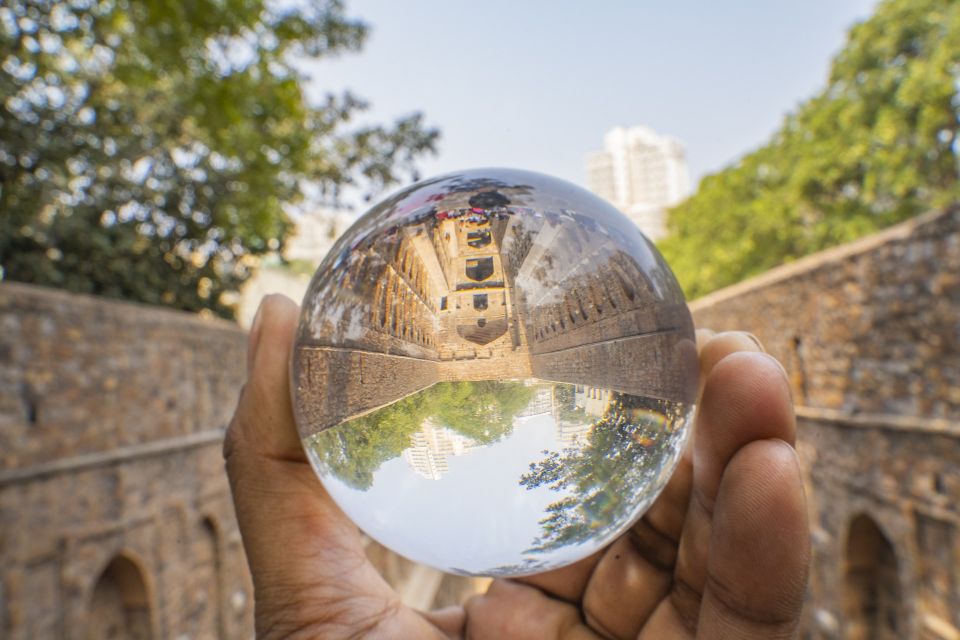
Agrasen ki Baoli is one of the most interesting stops on this route because it feels different from the grand monuments. It’s an ancient stepwell, about 60 meters long and 15 meters wide, with 108 steps and ornate stone details. You’ll have guided time here (around 20 minutes), which is just enough to appreciate the structure without feeling like you’re being rushed out.
The space is described as having soaring arched walls and alcoves. Even if you’re not a deep architecture person, stepwells like this give you a window into how earlier cities managed water, community space, and design.
Why it’s a highlight: stepwells tend to be overlooked compared to tombs and gates, but they’re practical and spiritual in their own way—part engineering, part urban gathering space, part layered heritage.
Consideration: it’s still a monument, so expect some uneven footing and stairs. Wear comfortable shoes, and take your time with the steps. If you’re sensitive to back issues, you’ll want to move carefully.
Humayun’s Tomb: one hour that teaches you how Mughal gardens work
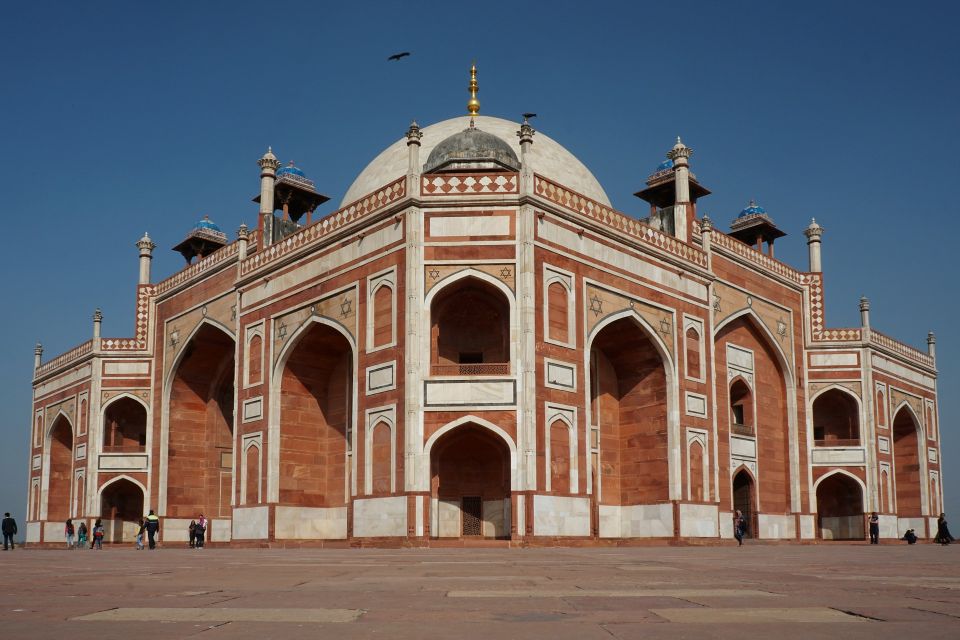
Humayun’s Tomb is where the tour slows down a bit. You’ll have about an hour here, with guided time and enough room to see the overall layout rather than only the exterior.
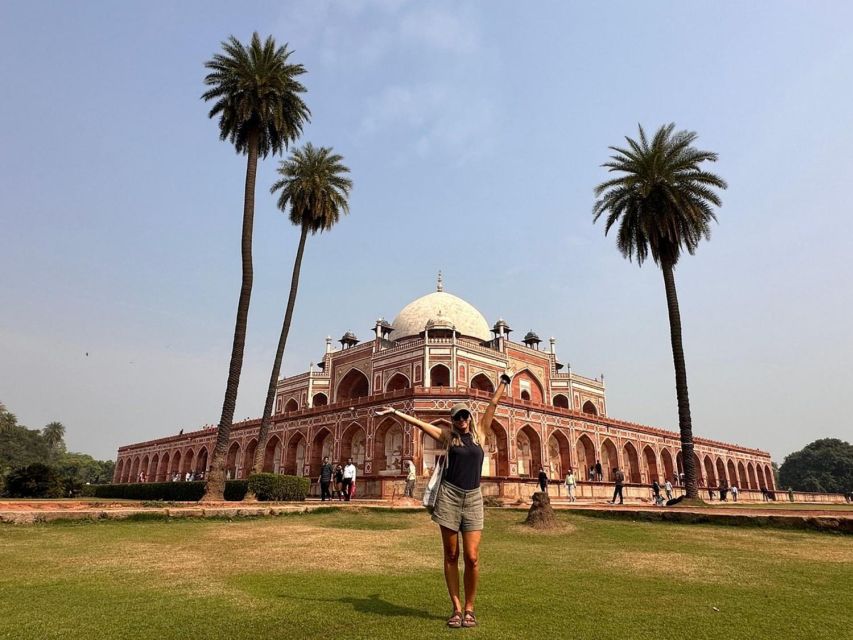
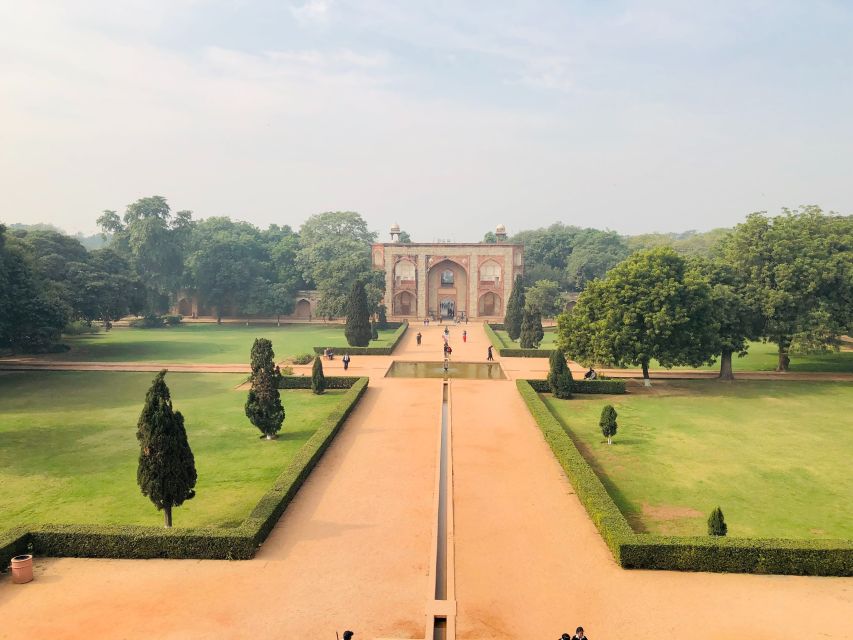
It’s a UNESCO World Heritage Site, commissioned in 1562 CE by Humayun’s wife Hamida Banu Begum, and designed by Persian architect Mirak Mirza Ghiyath. This site is often described as the first garden-tomb on the Indian subcontinent, and you can feel that idea in the way the tomb sits within a planned garden setting rather than feeling purely like a building.
It’s located in Nizamuddin East, close to the Dina-panah citadel Humayun founded in 1533. That connection helps you understand why this area is so full of Mughal-era layers and why it matters beyond one landmark.
What I’d do if you care about details: use your guide’s explanation before you start photographing a lot. When you understand the layout concept—how gardens and tombs relate—you’ll get more from your time inside the site.
Lodi Gardens again: the best way to end a monument-heavy morning
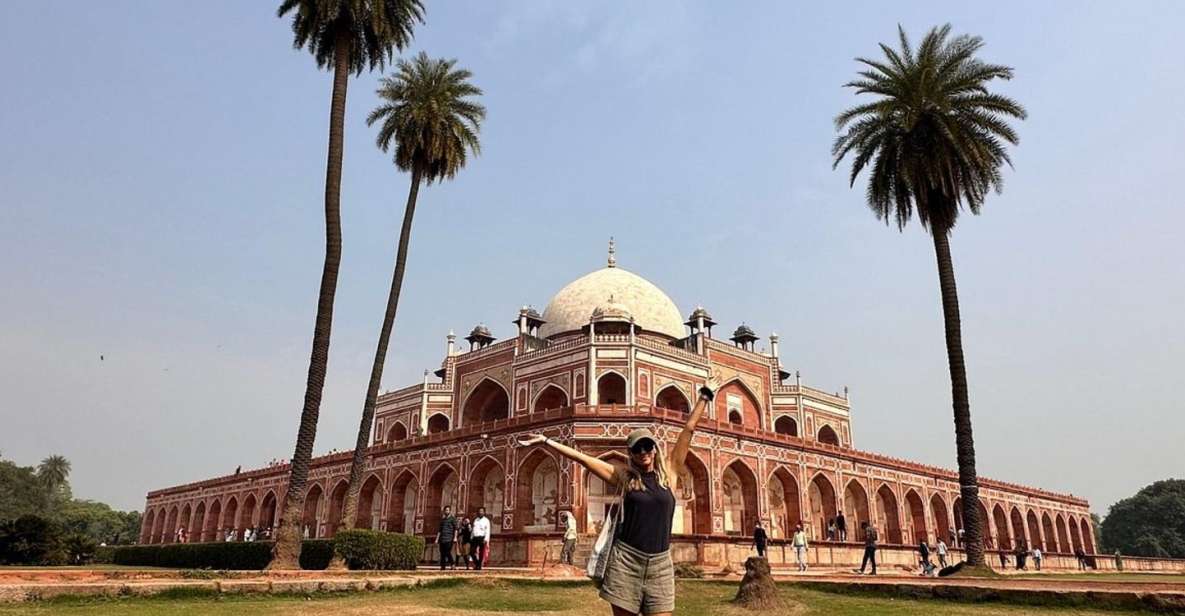
After Humayun’s Tomb, the tour returns you toward a final calmer stop at Lodi Gardens. This is a smart rhythm choice: you get epic-scale history, then you shift to shade, trees, and slower movement.
You’ll have time for a guided visit and sightseeing, and the place is described as a favorite getaway for Delhi’s elite, local joggers, and couples. That matters because you’re not only seeing heritage—you’re seeing how Delhi lives now around that heritage.
Also, the gardens protect more than 100 species of trees and over 50 species of birds and butterflies (plus multiple 15th-century Mughal monuments). If you’re thinking about conservation and urban ecology, this stop gives you something to notice beyond stone.
The spirituality and culture angle: how your guide connects Hinduism and Sikhism
One of the strongest points in this experience is the cultural layer. You’ll learn about spirituality, culture, and dharmic religions such as Hinduism and Sikhism. That kind of context is what keeps Delhi from feeling like a museum of disconnected facts.
In practical terms, a good guide will point out:
- how sacred meaning can show up in spaces meant for worship or reflection
- how religious communities share and shape public life
- how monuments can be understood as part of a bigger social story
This is also why a private or small group setup works so well. If your questions come up—about why a site looks the way it does, or what something symbolically represents—you can ask in real time.
Timing and pacing: what 3–4 hours really means
This tour is designed for a tight window. You’ll pass by or do short guided moments at several major landmarks (Parliament House is brief), then spend more time at places where you need time to absorb layout and structure (Humayun’s Tomb is about an hour, and Agrasen ki Baoli and Lodi Gardens get guided time too).
The trade-off is depth. This isn’t a slow, linger-all-day tour. But for a first visit or a short stop in Delhi, it’s a very effective way to:
- see the famous landmarks you already know
- add a couple of “less obvious” stops like Agrasen ki Baoli
- understand the story behind the stones instead of only photographing them
Cost and value: why $10 per person can make sense
At around $10 per person, the value comes from what’s bundled: private air-conditioned transport with a driver, a private guide, and entry fees when your chosen option includes them. You also get all parking fees, tolls, taxes, and related allowances and fuel covered.
If you were to price this yourself, the “hidden cost” is time and coordination. Delhi taxi + guide + entry fees + waiting around can quickly exceed a simple ticket price. Here, the structure does the work for you: pickup, route flow, guided time on key sites, and drop-off.
One caution about value: entrance fees are listed as included only if you select the option that covers them. So if you’re comparing deals, make sure you know whether you’ll pay any tickets separately.
What to bring (and what to wear)
This tour is straightforward, but the details matter.
Bring:
- Passport or ID card
- Comfortable shoes (you’ll be walking and climbing steps at times)
Dress code:
- smart casual
- shorts aren’t allowed
These rules are not about being fussy. They help keep your day moving smoothly at heritage sites that can be strict at entry points.
Who this tour is best for
This is a strong fit if you:
- have limited time in Delhi and want a top-sights plan that still feels guided
- prefer private transport over figuring out traffic and navigation
- want cultural and spiritual context, not just monument photos
- like the idea of a short list of stops that are all meaningful
It may be less suitable if you:
- can’t manage stairs or are dealing with back problems (the tour isn’t recommended for that)
- are pregnant (the tour is listed as not suitable)
Should you book this half-day Delhi city tour?
I’d book it if you want the highest concentration of famous Delhi sights with minimal logistics headaches. The private car + guide combo is the real engine here, and the route hits both big-name landmarks like India Gate and more unusual texture like Agrasen ki Baoli.
I’d skip or adjust expectations if you’re hoping for long, slow museum-style visits. This is a well-paced half day, but it’s still a fast day. If you’re the type who wants to soak up every monument for an hour or two, you’ll likely need a second tour or a longer stay.
If you’re arriving in Delhi for the first time and want to get oriented quickly, this is an efficient and genuinely informative way to do it—especially if you like understanding how culture, faith, and public space overlap in the city.
FAQ
How long is the Delhi private half-day city tour?
The tour duration is about 3 to 4 hours.
What time does pickup start?
Pickup is available at 09:00 AM or at your chosen time.
Where can pickup happen?
Pickup is offered from Delhi, Gurugram, or Noida, depending on the selected option.
What does the tour include for transportation?
You get a private air-conditioned car with a professional driver, plus hotel pickup and drop-off.
Do I get a guide?
Yes. The tour includes a live private tour guide service.
Are entrance fees included?
Entrance fees are included only if you select the option that includes them.
What sights are covered in the itinerary?
The tour includes stops such as Parliament House (pass by), Lodi Gardens, India Gate, Agrasen ki Baoli, Humayun’s Tomb, plus photo drives at places like Rashtrapati Bhavan.
What language is the guide available in?
The guide is available in English, Spanish, and French.
What should I wear or bring?
Wear smart casual clothing; shorts are not allowed. Bring a passport or ID card and comfortable shoes.
Is the tour suitable for everyone?
It is wheelchair accessible. It is not recommended for travelers with back problems and it is not suitable for pregnant women.