REVIEW · NEW DELHI
Delhi Agra Jaipur 4 Days Tour – Golden Triangle India
Book on Viator →Operated by Roame Roots · Bookable on Viator
Golden Triangle in four days, minus the stress. This tour strings together the big three cities in a tight loop: sunrise Taj Mahal, Delhi’s famous landmarks, and Jaipur’s royal sights—then finishes in Agra with the Mughal highlights. You get a private setup with transport and a live guide, so you spend less time figuring things out and more time actually seeing the places.
I especially like that the route mixes “everyone’s heard of it” with a couple of calmer, off-main stops like Chand Baori. I also like the practical comfort perks: a private air-conditioned car, a licensed driver, and unlimited water during travel and sightseeing. The main drawback to consider is that the plan can feel fast (some stops are short), and you’ll likely still handle extra costs like entrance tickets and tipping.
In This Review
- Key Highlights You’ll Care About
- What the Golden Triangle Does in 4 Days
- Day 1 in Delhi: Rashtrapati Bhavan, India Gate, Humayun’s Tomb, Qutub Minar
- Day 2 in Jaipur: Amber Fort, Hawa Mahal, Jantar Mantar, City Palace
- Day 3 Off the Usual Path: Chand Baori and Fatehpur Sikri
- Day 4 in Agra: Taj Mahal at Sunrise, Agra Fort, and Itmad-ud-Daula
- Transport, Guides, and What Comfort You Actually Get
- Money Notes: What You’re Paying For (and What You’ll Add)
- Where This Tour Fits Best (and Where It Doesn’t)
- Final Verdict: Should You Book This Delhi–Agra–Jaipur 4-Day Tour?
- FAQ
- FAQ
- How long is the Delhi Agra Jaipur tour?
- What does the tour cost?
- Is pickup offered?
- What kind of transportation do you use?
- Are meals included?
- Are hotel stays included?
- Are entrance tickets included?
- Is the tour private or shared?
- Do you get water during the sightseeing?
- What’s the cancellation policy?
Key Highlights You’ll Care About

- Sunrise Taj Mahal: One of the few chances to see it when the city is still waking up.
- Private air-conditioned car + licensed driver: You’re not crowd-surfing buses between cities.
- Mix of landmarks and curveballs: Delhi’s major monuments plus stepwell time and Akbar-era sights.
- Live guides with real personality: Guides like Amir Khan, Amet, and Ahmed are praised for being caring and fun, not robotic.
- Short stops where they make sense: Quick photo windows like Hawa Mahal, balanced with longer blocks like Amber Fort.
- Value depends on your travel style: It’s great if you want structure; less ideal if you hate early starts or tight timing.
What the Golden Triangle Does in 4 Days

The Golden Triangle—Delhi, Agra, Jaipur—can easily eat your whole trip if you don’t plan. This format tries to solve that with a hard-working four-day loop, where each day is built around a cluster of sites that match the city’s main “must see” energy.
I like the way the schedule turns big, far-apart distances into a simple flow. You start each day with guided momentum, then move city-to-city by private car instead of train-hopping or playing taxi roulette. If you’re short on time but want to hit the classics, this is a sensible compromise.
The tradeoff is that you won’t have weeks of breathing room. Some places are timed tightly, so you’ll want a basic travel mindset: listen to your guide, get your photos, then move on.
You can also read our reviews of more tours and experiences in New Delhi


Day 1 in Delhi: Rashtrapati Bhavan, India Gate, Humayun’s Tomb, Qutub Minar
Delhi day one gives you a clean historical sampler that moves from modern-state symbols back into Mughal-era architecture.
First up is Rashtrapati Bhavan (Viceroy’s House, finished in 1929), which now serves as the President of India’s residence. Even if you’re just passing by, it’s a useful “scale-setting” moment. The building anchors the area’s grand, formal layout that you’ll keep noticing across New Delhi.
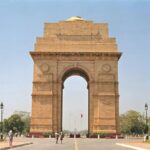
Then you’ll hit India Gate, a war memorial built in 1931. It’s designed by Sir Edwin Lutyens, and the big appeal here is how the monument works as a visual landmark in the city—especially for photos and orientation.
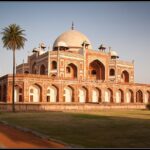
Next comes Humayun’s Tomb, built in 1570 and a UNESCO site. It’s usually the kind of place that makes you slow down a bit because the design is all about balance and symmetry. Admission is marked as included in the plan, and the time block (about an hour) is enough to see the main parts without feeling rushed.
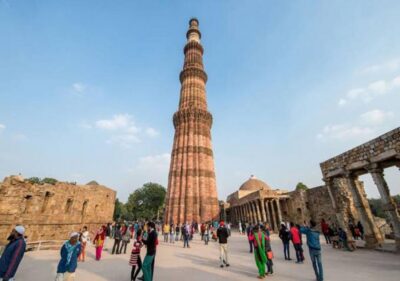
You finish with Qutub Minar, a 73-meter minaret tied to the late 12th/early 13th century. The plan marks Qutub Minar for about an hour and includes the ticket time. It’s one of those sights where even if you know little about the era, your brain starts connecting the dots because the structure is so iconic.
Practical tip: Delhi can change your walking pace fast. Wear shoes you trust and bring sunglasses—this day is short on downtime, even though the monuments are staggered.
Day 2 in Jaipur: Amber Fort, Hawa Mahal, Jantar Mantar, City Palace

Jaipur day two is the royal hits package. You’ll go from fort walls and courtyards to a skyline landmark to a science-in-stone stop, all in one day.
Start with Amber Fort, a major Rajput stronghold built in the 16th century by Maharaja Man Singh, with connections to Emperor Akbar through alliance. The plan allows about two hours here, which is the right amount for a place like this—enough time to take in the ramparts, courtyards, and the overall fortress feel without rushing every corner.
Then it’s Hawa Mahal (Palace of Wind). It was built in 1799 and has five stories with many carved windows. The visit window is short (about 15 minutes), and that’s okay because the main job is to see the façade and get your landmark photos. Just don’t expect a long, slow wander here unless your guide gives extra time on the spot.
After that, you’ll visit Jantar Mantar, an astronomical observatory built in 1734 by Maharaja Jai Singh II. The big draw is that it’s not “old buildings for looking.” It’s instrument architecture: massive scale tools for measuring time and sky patterns. Admission is marked as included, and the plan gives you about 30 minutes, which is enough to grasp what you’re looking at even if your math skills are asleep.
You end at the City Palace of Jaipur, built by Maharaja Sawai Jai Singh II in the 18th century, mixing Rajput, Mughal, and European influences. The plan gives about 45 minutes, which helps because this is where you need a little patience. This is also a spot where a guide matters; you’ll understand more when someone explains what you’re seeing.
Small caution: You can feel the day compress. Amber Fort is a “stay with it” stop, while Hawa Mahal is a quick hit. If you know you get restless when you feel rushed, this is the day where you’ll benefit most from keeping your energy steady from the start.
Day 3 Off the Usual Path: Chand Baori and Fatehpur Sikri

This is the day that makes the tour feel more than a greatest-hits list. It shifts from palace-and-minaret mode into stepwell and Akbar-era city ruins.
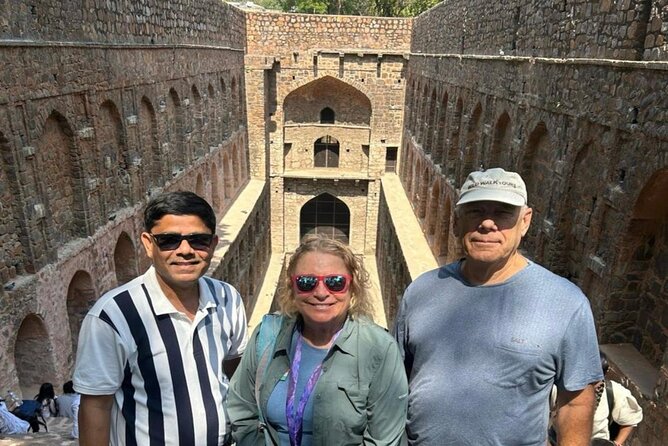
First, you’ll go to Chand Baori in Abhaneri, known for being one of the deepest and largest stepwells in India. The structure is said to have around 3,500 narrow steps arranged in a pattern, built around the 9th century. The experience here is visual and physical: you look down, then realize how big and deliberate the design is. The plan schedules about 30 minutes and includes admission time.
If you like architecture that’s not just decorative, Chand Baori delivers. It’s also a great contrast day because it’s calmer than the main-city monuments. You’ll likely feel more time with your own thoughts here, and fewer crowds in the moments you’re standing still.
Next is Panch Mahal at Fatehpur Sikri. Fatehpur Sikri is tied to Emperor Akbar in the 16th century and was once a vibrant capital city. The plan highlights architectural landmarks like Buland Darwaza and Jama Masjid as part of the larger Fatehpur Sikri experience, and it gives you about an hour and 9 minutes for this stop. Admission is marked as included.
The key value of this day is perspective. You’re not just seeing what the emperors built—you’re seeing how an entire planned city functioned, at least in its ruins and remaining structures.
Practical caution: Fatehpur Sikri can feel like a lot of walking in one block. The plan gives one longer visit, so you’ll want to pace yourself and drink water when you can. The tour does include unlimited water bottles during sightseeing, which helps.
Day 4 in Agra: Taj Mahal at Sunrise, Agra Fort, and Itmad-ud-Daula

Agra day is the emotional center of the trip. It’s also the day with the most pressure to do it right, because Taj Mahal timing matters.
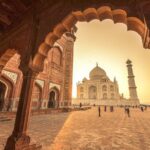
The plan leads with the Taj Mahal, built in the 17th century by Emperor Shah Jahan in memory of Mumtaz Mahal. The overview notes a sunrise experience, and the schedule gives about two hours at the site. That time is useful: you can see the shift in light and take photos without sprinting through.
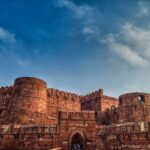
Then you’ll move to Agra Fort, built by Akbar in 1565. It’s a red sandstone fortress about 2.5 km from the Taj Mahal and was the center of Mughal power. The plan gives about an hour, which is enough to understand why it mattered strategically and visually.
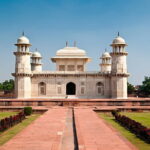
Last is Itmad-ud-Daula, built in the 1620s by Empress Noor Jahan for her father, Mirza Ghiyas Beg. It’s often called the Baby Taj, and it’s scheduled for about 39 minutes. This is a great closer because it’s less overwhelming than the main icon, yet it still delivers the marble-and-detail Mughal look.
If you’ve ever heard people call Taj Mahal magical, it’s usually because of timing and atmosphere. Sunrise tends to make it feel more personal and less like a checklist item. Still, remember it’s one of the most famous places on Earth, so you’ll want to manage your expectations: arrive ready to be patient, then enjoy the awe when your moment hits.




Transport, Guides, and What Comfort You Actually Get
This tour’s comfort comes mostly from the logistics being handled for you. You travel by private air-conditioned car with an experienced licensed driver, which is a big deal on a route where cities are far apart.
You also get a professional live tour guide. That matters because these sites can feel like disconnected postcards if you don’t have someone connecting the story. In the feedback, guides like Amir Khan, Amet, and Ahmed are praised for being caring, friendly, fun, and attentive—one person even notes the guide helped solve problems and stayed upbeat throughout.
The tour also includes unlimited water bottles during traveling and sightseeing. That sounds small, but on hot-weather walking days and long driving legs, it’s the kind of comfort you feel immediately.
If you choose hotels, the plan offers accommodation in 3/4/5-star hotels depending on the option you select. That lets you control your comfort level without having to research lodging city-by-city during limited time.
One more practical point: the tour is described as private, meaning it’s only your group. At the same time, it also mentions group discounts, which usually just means you’ll get pricing advantages depending on how many people are booking.
Money Notes: What You’re Paying For (and What You’ll Add)
The listed price is $170.21 per person for the four-day Golden Triangle experience. At this price level, the big value is how much is bundled: private transport, a licensed driver, a live guide, and water during travel and sightseeing.
But the tour data also flags several costs not included:
- Lunch & dinner
- Drinks served with lunch/dinner/breakfast
- Entrance ticket of all mentioned monuments
- Tips to guide/driver
Here’s the balanced way to think about it: the sightseeing lineup includes some stops marked as free (like India Gate and Rashtrapati Bhavan), and others marked as ticket included or included admission time in the schedule. Still, the overall “not included” note says monument entrance tickets aren’t part of the package price. So plan your budget with some extra money for entrances, and don’t plan on skipping tipping either.
Also, meals matter because they influence your pace. Since lunch and dinner aren’t included, you’ll want to eat efficiently when you get the chance. If you’re the type who hates hunting for food while everyone waits, eat early and keep snacks in mind for long stretches.
Mobile ticket is included. That’s a minor detail, but it’s useful when you’re moving quickly and don’t want to carry printed paperwork everywhere.
Where This Tour Fits Best (and Where It Doesn’t)
This tour is ideal if you’re:
- Visiting India for the first time and want a structured plan
- Short on time but still want the core classics in Delhi, Jaipur, and Agra
- The kind of person who likes a guide to add meaning to architecture
- Traveling with your own group and want private car comfort
It’s not a great match if you:
- Want total freedom to linger forever in one place (the schedule is compact)
- Hate early starts, since sunrise Taj Mahal is part of the experience design
- Prefer fully unguided exploring where you control every minute
One more “fit check”: if you’re picky about pacing, day two and day four are the ones to watch. Day two includes a short “photo hit” at Hawa Mahal, while day four includes a high-stakes sunrise site plus two follow-up monuments.
Final Verdict: Should You Book This Delhi–Agra–Jaipur 4-Day Tour?
I’d book this tour if you want to make the Golden Triangle count without turning your trip into logistics homework. The combination of private transport, a live guide, and timed visits to major sites is exactly what saves time and reduces hassle when you’re covering three cities quickly.
I’d think twice if you hate paying extra for entrances and want meals included in the same price. Also, if you’re the type who wants to wander slowly, some of the shorter stops may feel like a taste instead of a full meal.
If you’re okay with that tradeoff, you’ll likely come away with a satisfying mix: Delhi’s major monuments, Jaipur’s fort-and-palace shapes, and Agra’s Mughal icons—especially the Taj Mahal experience.
FAQ
FAQ
How long is the Delhi Agra Jaipur tour?
It’s an approx. 4 days tour.
What does the tour cost?
The price is listed as $170.21 per person.
Is pickup offered?
Yes, pickup is offered.
What kind of transportation do you use?
You travel by private air-conditioned car with an experienced licensed driver.
Are meals included?
No. Lunch & dinner are not included, and the tour also notes that drinks aren’t served with lunch/dinner/breakfast.
Are hotel stays included?
Accommodation in 3/4/5-star hotels is included if you select the option.
Are entrance tickets included?
Entrance tickets are listed under not included overall. Some stops are marked free in the plan, and others are marked as admission ticket included, but you should still budget for entrances.
Is the tour private or shared?
It’s described as a private tour/activity, meaning only your group will participate.
Do you get water during the sightseeing?
Yes. The tour includes unlimited water bottles during traveling & sightseeing.
What’s the cancellation policy?
Free cancellation is available if you cancel up to 24 hours in advance for a full refund.