REVIEW · NEW DELHI
Delhi Agra Jaipur & Varanasi Tour – Taj Mahal & Ganga Aarti
Book on Viator →Operated by vwitours · Bookable on Viator
Delhi to Varanasi is a big swing. What makes this tour work is the private setup plus guided time in each stop, so you’re not trying to figure out everything on the fly. You cover the Golden Triangle highlights and then land in Varanasi for the Ganga ritual, with an added layer of comfort thanks to hotel pickup and overnight trains.
I like the way the day-to-day pace is planned around practical travel time: drivers handle the long stretches, and you get local guides for the landmarks. I also like that the itinerary mixes the big-ticket sites (Taj Mahal, Red Fort) with extras that add context (like Jantar Mantar in Jaipur and Sarnath near Varanasi). One thing to keep in mind: monument entry fees are not included, and the days can feel full, especially when you’re doing sightseeing and then getting back on the road.
If you’re visiting during the weekly Taj Mahal closure window, plan carefully. The tour description says Taj Mahal is on the schedule, but the ticket/entry part is extra, and closures can shift what you actually see—so confirm dates before you book.
In This Review
- Key things I’d focus on before you go
- The value: what your $366-ish price really buys
- Day 1 in Delhi: getting your bearings with Mughal landmarks
- Day 2: Delhi to Jaipur, plus Amber Fort and Jal Mahal
- Day 3: Jaipur in full mode—Hawa Mahal to Birla Mandir to Galta
- Day 4: Agra—Taj Mahal and the Mughal side quests
- Day 5: Sarnath arrival and an included sunset Ganga Aarti
- Day 6: sunrise on the Ganges and Dashashwamedh Ghat
- Day 7: back to Delhi for Humayun’s Tomb, India Gate, and Lotus Temple
- Comfort, guides, and the real day-to-day experience
- The one drawback you should plan around: dates and the Taj closure issue
- Who this tour suits (and who should look elsewhere)
- Should you book this tour?
- FAQ
- How long is the Delhi Agra Jaipur & Varanasi Tour?
- How many nights of accommodation are included?
- Are monument entry fees included in the tour price?
- Is Taj Mahal included?
- Is Ganga Aarti included?
- What transport is included between cities?
- Does the tour offer hotel pickup and drop-off?
Key things I’d focus on before you go
- Private guides at each major stop so you get meaning, not just photos
- Hotel pickup and private car for the drives between Delhi, Jaipur, Agra, and the return
- 6 nights with breakfast in 4-star hotels (and train travel included)
- Ganga Aarti is included with a sunset cruise-style viewing setup
- Admissions are extra for most monuments, so budget for tickets
- A tight rhythm that can be tiring if you dislike long sightseeing blocks
The value: what your $366-ish price really buys
This tour is priced at about $366 per person, and for that you’re not just getting transport. You’re paying for a package that includes private transportation, private local tour guides, and AC first or second class train tickets. That combination matters in North India, where timing and local navigation can eat up a lot of your energy.
You also get 6 breakfasts and a total of 7 days (with multiple overnight stays and at least one overnight-train segment). Hotels are listed as 3-, 4-, or 5-star options depending on what you choose, and the tour is designed for you to arrive, check in, and keep moving without having to organize the pieces.
The drawback is simple: entry fees are not included. That means your final total depends on what you choose to enter and pay for at each site. If you’re the type who hates surprise costs, ask for a clear estimate of expected admissions before you go.
You can also read our reviews of more tours and experiences in New Delhi.



Day 1 in Delhi: getting your bearings with Mughal landmarks
Day 1 is built to throw you straight into Old Delhi and Delhi’s famous Islamic and Mughal-era sights. You start with Raj Ghat, then move through Red Fort, Jama Masjid, and finish at Qutub Minar.
Here’s how that sequencing helps you:
- You get a quick historical arc from major Mughal power (Red Fort) to the daily-scale religious geography of the city (Jama Masjid).
- Qutub Minar works well as a visual finale because it’s tall, iconic, and gives you that sense of scale.
Practical note: most stops list admission fees as not included, so bring cash or be ready to purchase tickets separately. Also, this is an early “see a lot” day. Comfortable shoes beat stylish shoes.
Day 2: Delhi to Jaipur, plus Amber Fort and Jal Mahal
Day 2 includes the drive from Delhi to Jaipur. The timing is set: you check out in the morning at 8:30 a.m., and you reach Jaipur around 2:00 p.m. That’s useful because it avoids a half-day of wandering. After lunch, you head toward Amber Fort, one of the big reasons Jaipur exists for travelers.
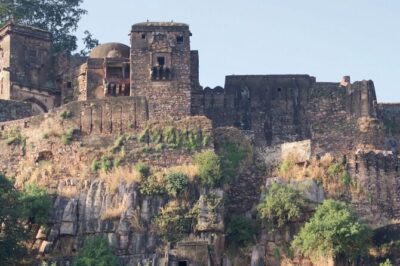
Amber Fort is one of those places where your guide can change the whole experience. Even if you’ve seen palace forts in photos, you’ll get a better sense of how it operated as a royal capital and why it’s so carefully preserved. The layout and views make it feel bigger than you expect.
Then you add Jal Mahal, the palace in the middle of the lake. The visit is short, but that’s often the right call—Jal Mahal is best as a visual break between heavier stops.
Day 3: Jaipur in full mode—Hawa Mahal to Birla Mandir to Galta
Day 3 is a dense, full-day Jaipur circuit. After breakfast around 8:00 a.m., you move through:
- Hawa Mahal (Palace of Wind)
- City Palace of Jaipur
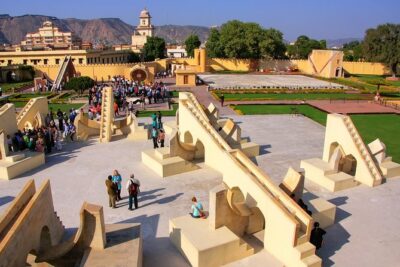
- Jantar Mantar
- Albert Hall Museum
- Birla Mandir Temple
- Monkey Temple (Galta)
This day is a great example of what you’re paying for. Without a guide, Jaipur can feel like a list of pretty buildings. With guided explanations, the pieces connect:
- Hawa Mahal is not just a facade. You’ll understand why it has that distinctive design and what the building is for.
- Jantar Mantar is the surprise stop for many people. It turns astronomy into something you can walk around and actually see in scale.
- Albert Hall Museum gives you a break from outdoor sun and a way to place architecture and culture in time.
Then you end with Birla Mandir and Galta. Those are different vibes—white marble temple calm, then the Galta temple complex with views toward the Aravalli hills. It’s the kind of variety that keeps Jaipur from feeling repetitive.
If you’re energy-sensitive, pace yourself at Jantar Mantar and the museum. They’re not hard, but they can be mentally busy.
Day 4: Agra—Taj Mahal and the Mughal side quests
Day 4 is the day most people book for, and it’s scheduled after breakfast at 9:30 a.m.: the Taj Mahal. Even if you’ve already studied it in guidebooks, it hits differently in person because of the symmetry, the scale, and the way light changes across the marble.
Your tour also pairs the Taj Mahal with smart “context” stops:
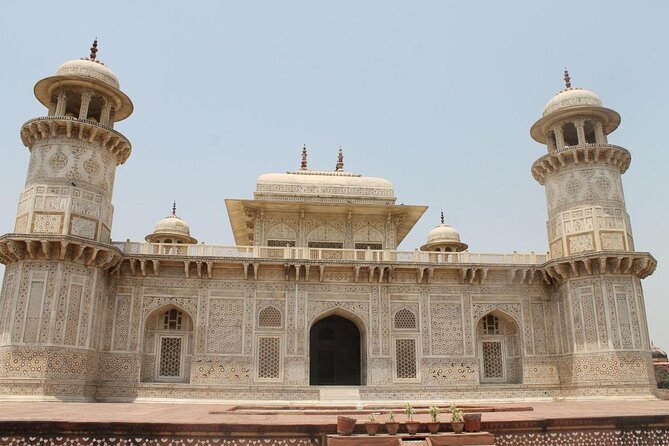
- Itmad-ud-Daula (often called the Baby Taj)
- Agra Fort
- Mehtab Bagh (the garden across the river)
What I like about this trio is that it prevents the Taj from being a one-stop photo mission. Itmad-ud-Daula gives you a sense of Mughal mausoleum design before you reach the biggest statement. Agra Fort brings you back to power—who lived where, and how the fort controlled the city. Mehtab Bagh is a calmer, scenic wrap-up that makes the Taj’s location feel intentional rather than accidental.
Admissions aren’t included, so expect ticket costs here. Also, build in time to slow down. If you rush, Taj Mahal becomes just a checklist.





Day 5: Sarnath arrival and an included sunset Ganga Aarti
After Agra, the itinerary shifts gears toward Varanasi’s spiritual geography. Day 5 starts with Sarnath. You arrive in the morning, and a representative meets you at the Varanasi railway station, then helps you check in at the hotel and proceeds to sightseeing.
Sarnath is a meaningful contrast to the Taj and forts: it’s quieter, more reflective, and it anchors Varanasi’s wider “holy city” feeling. Even if you don’t know all the religious details, you’ll feel the difference in atmosphere fast.
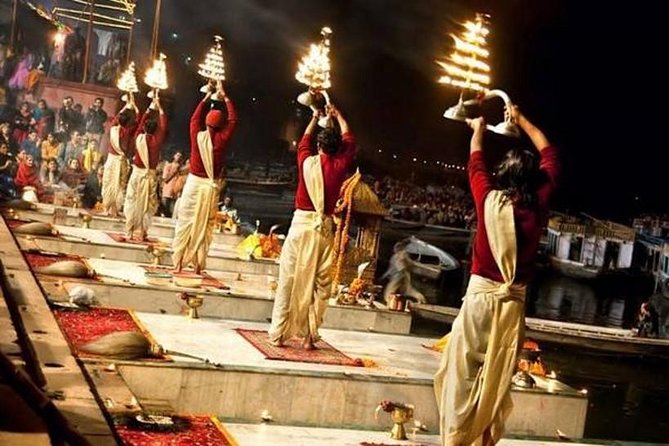
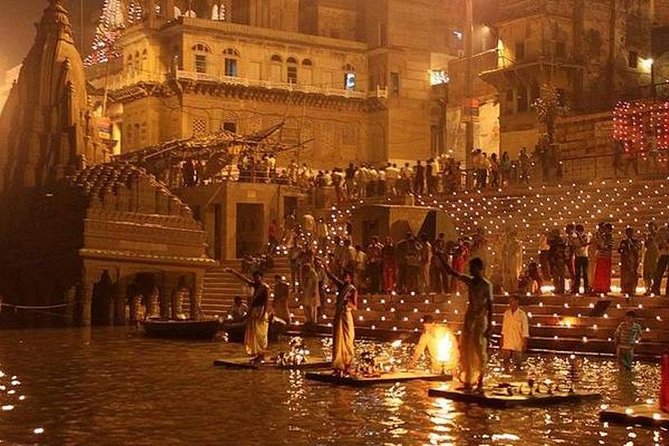
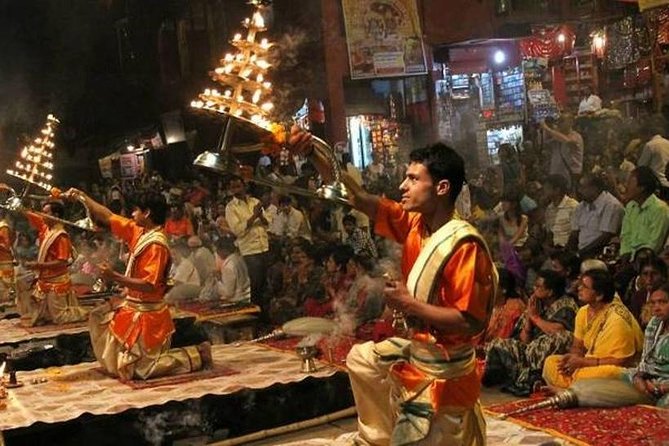
Then comes the tour’s signature evening: Ganga Aarti. This is included, and the format is a sunset Ganga cruise-style viewing with a grandstand view for the oil lamp ceremony. That’s a huge value point in the package because it reduces the planning hassle. It also helps you see the ritual in a set, timed environment rather than hunting down a good spot in crowds.
Bring layers. Even in warm months, evenings near water can feel cooler than you expect.
Day 6: sunrise on the Ganges and Dashashwamedh Ghat
Day 6 is early. You meet your guide in the morning at the hotel for a Ganges boat cruise aimed at sunrise and views of the historical ghats. The itinerary doesn’t say the boat admission is included here, so treat this as a “possible extra” depending on how your package is labeled at checkout.
After the cruise, you head to Dashashwamedh Ghat, one of the most well-known ghats in Varanasi. This stop is included as part of the experience, which is good because Dashashwamedh is busy, and having a planned visit helps you avoid getting overwhelmed.
You then visit Bharat Kala Bhavan, an art and architecture museum with paintings and Hindu and Buddhist sculptures, plus archaeological materials. That museum stop matters because it gives your brain something different to absorb after morning sights and night vibes.
One key thing I recommend: don’t treat Varanasi like another monument day. Leave time for small moments—watching rituals, noticing the way ghats function as a whole system, not just a backdrop.
Day 7: back to Delhi for Humayun’s Tomb, India Gate, and Lotus Temple
You finish in Delhi with a structured sightseeing loop.
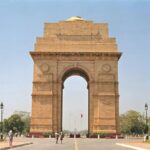
You start at Humayun’s Tomb, then move to India Gate, and end at Lotus Temple. Humayun’s Tomb is a natural closing act for the Mughal theme, and it helps you connect Delhi’s architecture across eras. India Gate gives you a different kind of meaning—war memorial scale rather than royal power. Lotus Temple is a strong final note because the design feels modern and calm, like a palate cleanser after crowded old streets.
This last day is shorter on the “ticket heavy” side, but admissions still aren’t included for those stops. Keep some flexibility in your budget.
Comfort, guides, and the real day-to-day experience
This is where the tour’s reputation makes sense. The set-up relies on good drivers and guides to keep the days from collapsing under their own weight.
In past experiences with this kind of route, the difference is often the person behind the wheel and the person explaining what you’re seeing. One guide named Siri was described as calm, patient, and safe, and that kind of steady professionalism is exactly what you want when you’re doing long drives through cities.
Also note the style: you get private local tour guides for sightseeing, and private transportation in a sedan or SUV. That means you’re not stuck waiting for a large group to consolidate after every photo stop. On a route like this, fewer delays make the whole week feel less exhausting.
The one drawback you should plan around: dates and the Taj closure issue
One important caution: Taj Mahal can be closed on a weekly day for prayer, and if your travel date lands on the closure window, the experience can shift. The tour generally includes Taj Mahal as a scheduled stop, but closures can mess with timing and expectations.
So here’s your smart move:
- Confirm the exact day you’re planning to visit the Taj Mahal.
- Ask the provider whether your itinerary adjusts if the closure happens.
- Don’t wait until you’re already in India to sort this out.
It’s also wise to expect some days to feel packed. One review-style issue that comes up with itineraries like this is the “see all day, drive for hours” rhythm. If you’re sensitive to fatigue, build in recovery time where you can—water, snacks, and fewer impulse shopping breaks.
Who this tour suits (and who should look elsewhere)
This tour fits best if you:
- Want big North India highlights without handling logistics yourself.
- Like guided explanations at major landmarks.
- Are okay with an active pace and long drives between cities.
- Want an included evening for Ganga Aarti rather than planning it from scratch.
You might want a different format if you:
- Hate heavy schedules and prefer slow travel.
- Know you strongly dislike boats or sunrise schedules and don’t want optional additions.
- Are extremely budget-tight, since monument admissions are not included.
If you want authentic “see the places” travel with less friction, this private plan is a solid fit.
Should you book this tour?
I’d book it if you want a structured week that hits Delhi, Jaipur, Agra, and Varanasi with private guides, comfortable transfers, and an included Ganga Aarti moment. The price feels reasonable when you add up private guiding plus transport plus train tickets, and the itinerary is designed to give context, not just sightseeing stops.
Before you lock it in, verify two things:
1) your Taj Mahal day and whether it could fall on the weekly closure,
2) your expected monument budget since entry fees aren’t included.
If those checks look good for you, this is a practical way to experience the Golden Triangle plus Varanasi without turning your trip into a puzzle.
FAQ
How long is the Delhi Agra Jaipur & Varanasi Tour?
It’s listed as 7 days (approx.).
How many nights of accommodation are included?
The tour includes 6 nights’ accommodation with breakfast.
Are monument entry fees included in the tour price?
No. Entry/admission fees for monuments are not included.
Is Taj Mahal included?
Yes, Taj Mahal is on the itinerary, but admission fees are not included.
Is Ganga Aarti included?
Yes. Ganga Aarti is included as part of the experience with a sunset cruise-style viewing setup.
What transport is included between cities?
You’ll have private transportation (sedan/SUV) and AC first class or second class train tickets where the itinerary calls for train travel.
Does the tour offer hotel pickup and drop-off?
Yes. The tour includes hotel or airport pick-up and drop-off.