REVIEW · NEW DELHI
Delhi: Explore Old Delhi on Tuk Tuk with Shopping and Street Food
Book on Viator →Operated by Shadow Trips · Bookable on Viator
Old Delhi works best with a guide. This tuk-tuk route threads you through the tight lanes near Red Fort, then out to Chandni Chowk for spices, food, and religious sights.
I love the value: a 4-hour private-style walk-and-ride day for about $5 per person. I also like that you can move at your group’s pace, not some fast assembly line. One catch: you’re spending time in markets and at major landmarks, so expect a street-level day with plenty of people and quick transitions between stops.
In This Review
- Key things that make this Old Delhi day work
- Old Delhi by tuk-tuk: why this route feels smarter than DIY
- Starting at Sunehri Masjid and setting a pace your group can handle
- Chandni Chowk and Khari Baoli: spices, stories, and that first sensory hit
- What you should watch for here
- Jama Masjid: the religious centerpiece with a guided perspective
- A smart reason to include this stop
- Gurudwara stop in Old Delhi: a calm contrast in the middle of the day
- Red Fort (Lal Qila): UNESCO-level monument, explained in plain language
- Time matters here
- Ugrasen ki Baoli step well: a short stop with a big sense of place
- Why this stop is worth it
- India Gate and Rashtrapati Bhavan pass-by: the day pivots toward modern memory
- Bikaner Sweets and the street-food plan that keeps you from guessing
- Food safety and comfort, kept practical
- Price and value: what $5 gets you, and where options change
- How to choose the right ticket option for your group
- What kind of guide style helps on this specific day
- Who this Old Delhi tuk-tuk tour suits best
- Should you book this Old Delhi tuk-tuk tour?
- FAQ
- Where does the tour start?
- Is pickup offered?
- How long is the tour?
- Is this tour private?
- Is the tuk-tuk ride included?
- Are snacks included?
- Are entrance fees included?
- Where does the tour end?
- FAQ
- Can I cancel for a full refund?
- What kind of ticket do I get?
Key things that make this Old Delhi day work
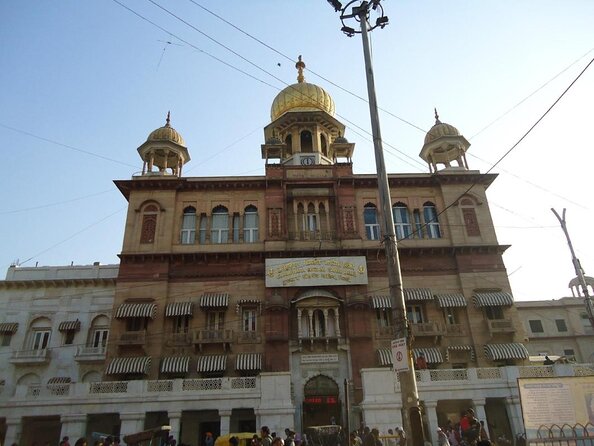
- Meet at Sunehri Masjid: easy start point near Red Fort parking, so you’re not hunting for the group.
- Tuk-tuk for narrow lanes: the ride helps you get into the Old Delhi rhythm without wasting hours on the wider roads.
- Chandni Chowk + Khari Baoli spice education: you get hands-on context about spices and why they’ve mattered since the 1600s.
- Major landmarks without the stress: stops include Jama Masjid, Red Fort, and passes toward India Gate and Rashtrapati Bhavan.
- Street snacks built into the experience: you can include local bites with the ticket option.
- Private just-for-your-group feel: only your group participates, which makes the pace feel more human.
Old Delhi by tuk-tuk: why this route feels smarter than DIY

Old Delhi is a place where directions don’t just mean street names. They mean noise, lanes that turn unexpectedly, and sights that are half-famous and half-everyday life. A tuk-tuk tour is a practical way to get close to what you actually came for, then let the guide handle the flow.
This kind of loop also helps you avoid the common DIY trap: spending too long figuring out where to go next, instead of looking, asking, and tasting. The plan is built around big anchors (Red Fort, Jama Masjid) plus the everyday stuff (Chandni Chowk and Khari Baoli), so you don’t end up with only one side of Delhi.
You can also read our reviews of more food & drink experiences in New Delhi



Starting at Sunehri Masjid and setting a pace your group can handle
You begin at Sunehri Masjid (Nishad Raj Marg, Lal Qila area), which sits near Red Fort parking. That location is useful because it’s right where Old Delhi sightseeing starts, without forcing you into complicated transfers.
The schedule is about 4 hours total, with shorter timed stops that keep things moving. Still, it’s labeled private for your group, and the day is designed to let you go at your own pace rather than getting rushed every few minutes.
If you’re booking for a mixed group (friends with different interests), this format usually lands well: history people can stick close to the major monuments, and snack-and-shopping folks can spend the time they want in the markets.
Chandni Chowk and Khari Baoli: spices, stories, and that first sensory hit

Your first major market stop is Chandni Chowk, with a ride through Khari Baoli. Khari Baoli is famous for spices, and the tour frames it as Asia’s largest spice market since the 17th century. That matters because you’re not just looking at containers and hanging garlands—you’re hearing why these products became so central to trade and daily life.
You get “hands-on” information about spices and their medicinal and health benefits. Even if you’re not turning everything into a science project, it changes how you look. You start noticing how spices are used, how they’re grouped, and how sellers talk about quality.
This is also a good time to include the snack option if you want the full street experience. Old Delhi is the kind of place where food is easier with a plan than with guessing.
What you should watch for here
Spice markets can be intense. Expect strong smells, lots of sightlines, and quick changes from one alley to the next. If you’re sensitive to heavy scents, go slow in the first stretch and pause when you need a breather.
Jama Masjid: the religious centerpiece with a guided perspective
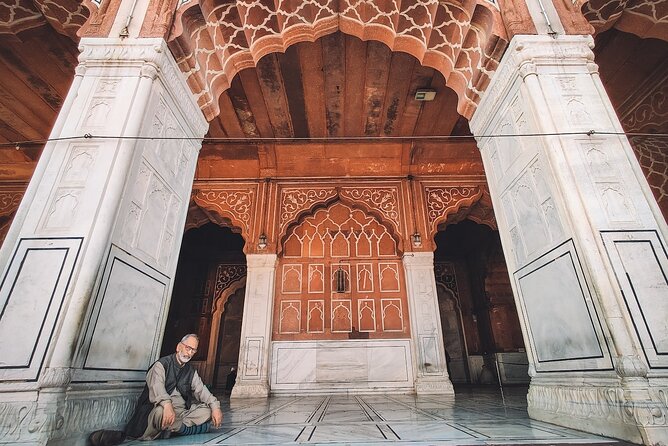
Next is Jama Masjid, with an included admission option in the tour plan. This stop is longer than the quick photo stops, giving time for you to actually take in the scale and the place’s role as a major mosque.
On a tuk-tuk tour, you don’t just arrive—you also connect it to the wider Old Delhi story. The guide style here tends to mix practical orientation with cultural context, which helps you understand what you’re looking at beyond the obvious architecture.
You can also read our reviews of more tours and experiences in New Delhi





A smart reason to include this stop
Jama Masjid is not a “check it off” monument. It’s a living religious site, and the surrounding area is full of everyday movement. With a guide, you’re better prepared to see how the monument fits into the neighborhood rhythm.
Gurudwara stop in Old Delhi: a calm contrast in the middle of the day

Midway through the tour, you visit a Sikh gurdwara stop. The itinerary names Gurudwara Bangla Sahib, and it also references Gurudwara Sis Ganj, describing it as one of the most prominent Sikh shrines in Delhi.
That overlap isn’t a drawback so much as a reminder: Old Delhi religious landmarks often cluster in meaningful ways. The guide’s job is to connect those dots so you’re not wandering around with a map and guessing which shrine you’re seeing.
This is the kind of stop that gives your day balance. After spices and market streets, a place of worship can feel like a reset—still busy in its own way, but calmer and more reflective.
Red Fort (Lal Qila): UNESCO-level monument, explained in plain language
You pass by or visit Red Fort (Lal Qila), a UNESCO World Heritage Site and an iconic symbol of India’s history. The tour highlights its impressive red sandstone walls and focuses on historical significance in a way that’s meant to be understandable, not academic.
In practical terms, Red Fort is a big payoff stop. You get a clear “wow” moment, and you also get a framework for what you’re seeing. Without context, it can be just another grand fort. With context, you can connect it to Delhi’s layers of power, culture, and change.
Time matters here
The stop time is about 30 minutes. That’s enough for first impressions, a few photos, and the guided explanation. If you want to go much deeper on your own, plan to return later, but as part of a 4-hour Old Delhi sampler, this duration is realistic.
Ugrasen ki Baoli step well: a short stop with a big sense of place

Then you head to Khari Baoli again in the itinerary, and you also get a side stop at Ugrasen ki Baoli. The tour describes it as a step well, around 60 meters deep and 15 meters wide, built in the 14th century by the king Agarsen.
This is one of those Delhi details that many first-time visitors miss. A step well isn’t just an odd attraction. It shows how people managed water in a dense city long before modern infrastructure. It also changes the way you think about the fort-and-mosque story of Old Delhi. It adds the daily-life engineering layer.
Why this stop is worth it
It’s short (about 15 minutes), so it doesn’t steal time from the main monuments. Still, it gives you a different kind of photo and a different kind of lesson. It’s a good reminder that Delhi’s history isn’t only about rulers and battles.
India Gate and Rashtrapati Bhavan pass-by: the day pivots toward modern memory
Later, you move toward the city’s larger landmarks, including India Gate and a pass by Rashtrapati Bhavan (President’s House) and the Parliament House.
India Gate is described here as a World War One memory. That detail is important because it reframes the monument from just a photo spot into a place of remembrance.
The pass-by sections are about perspective and orientation. You get to see how the day shifts from Old Delhi’s lanes and markets to New Delhi’s monumental layout. That contrast is part of what makes this tour feel like a real “first look” at the city.
Bikaner Sweets and the street-food plan that keeps you from guessing
One of the tour’s specific food notes is a stop for sugary goodies at Bikaner Sweets. The value is that you’re not relying on luck. With a guide, you’re guided toward a known option while you’re already in the market flow.
If you choose the ticket option that includes local bites/snacks, you’ll get market snacks along the way. You also get bottled water, which is genuinely helpful during a day with multiple stops.
Food safety and comfort, kept practical
This is street food territory. So I’d keep a simple rule: pace yourself, and don’t overload early. If you’re sensitive to spice, start with something sweet or mild rather than going full throttle on your first snack.
Price and value: what $5 gets you, and where options change
The listed price is around $5 per person, with a private-group style experience. That’s low enough that you should think of it as a guided “high-value orientation” day rather than a full museum marathon.
What makes the cost feel fair is that you’re getting:
- a personalized live guide
- a local tuk-tuk ride tour (included only in the tickets option)
- local bites/snacks (included only in the tickets option)
- bottled water
- parking fees, tolls, fuel, and taxes
Where you need to pay attention is entrances and extras. Some monument admissions are noted as free in the itinerary items, but the tour also states that entrance fees are included if the option is selected. So when you’re booking, look for whether the ticket includes entrance coverage, and match that to the monuments you care about most.
Tips aren’t included. In a tour like this, tipping is usually your way of saying thanks for the guide handling the crowded streets and logistics.
How to choose the right ticket option for your group
This tour has a mix of included items and “only in the tickets option” items. Here’s how I’d choose based on what you want most:
- If you want the full street-and-food experience, pick the option that includes tuk-tuk ride plus local snacks.
- If your group already plans to ride local transit and you mainly want a guide for the sights, you might not need the ride/snack inclusion.
- If you’re serious about monuments and want fewer surprises, choose the entrance-fee option when available.
Also consider group size and flexibility. The private format means the guide can respond to what your group actually wants to slow down for.
What kind of guide style helps on this specific day
Good Delhi guides do two things at once: they translate what you’re seeing and they smooth the logistics of getting through tight areas. The tour’s guide spotlight shows up in the details—people like Faizan, Harsh, and Isha are described as friendly and detailed, with historical and cultural context that makes stops easier to understand.
You’ll probably get the most out of this day if you ask questions. This route rewards curiosity. If you stay quiet the whole time, you’ll still see the sights, but you’ll miss the meaning that makes the tour worth it.
Who this Old Delhi tuk-tuk tour suits best
This experience fits best if you want:
- a first-time Delhi overview that mixes Old Delhi markets and major landmarks
- an easy way to handle narrow lanes without constantly figuring out directions
- a guided explanation that turns big monuments into understandable stories
- time for street life, not only monuments
It’s less ideal if you want long, quiet museum-style visits or slow wandering with no structure. This is built around multiple stops in about four hours.
Should you book this Old Delhi tuk-tuk tour?
If you’re optimizing for value, convenience, and a meaningful first day in Delhi, I think you should book it. The price is hard to beat for a guided route that covers Chandni Chowk spices, a major mosque stop, a Sikh gurdwara stop, Red Fort, and then pivots to India Gate and the President’s House area.
Before you go, check your ticket option carefully. You’ll want to decide whether you’re including the tuk-tuk ride and snacks, and whether entrance fees are covered for what you care about.
If you’re the type who likes to taste first impressions and learn as you go, this is a strong match.
FAQ
Where does the tour start?
The tour starts at Sunehri Masjid (Nishad Raj Marg, Lal Qila, Old Delhi, New Delhi, Delhi 110006, India).
Is pickup offered?
Pickup is listed as offered, and the guide also meets you at the Sunehri Masjid departure point near Red Fort parking.
How long is the tour?
The duration is about 4 hours (approx.).
Is this tour private?
Yes. It’s a private tour/activity, and only your group participates.
Is the tuk-tuk ride included?
A local tuk-tuk ride tour is included only in the tickets option.
Are snacks included?
Local bites/snacks in the market are included only in the tickets option.
Are entrance fees included?
Entrance fees for monuments are included if the option is selected. Some stops note admission tickets as free.
Where does the tour end?
The activity ends back at the meeting point.
FAQ
Can I cancel for a full refund?
Yes. You can cancel up to 24 hours in advance for a full refund.
What kind of ticket do I get?
You receive a mobile ticket, and confirmation is received at the time of booking.