REVIEW · NEW DELHI
Delhi: Private Guided Full-Day Tour of New Delhi And Old Delhi
Book on Viator →Operated by Shadow Trips · Bookable on Viator
Tuk-tuk and a guide make Delhi make sense. I like the private pickup you can schedule between 8 AM and 12 PM, and I like having an English-speaking local expert explaining what you’re seeing at each stop. You also get photo-friendly help when you’re solo, which matters in a city where you’ll be taking a lot of pictures.
The only real catch is pacing: you’ll hit a lot of sights in about 6 to 7 hours, and several are quick stops for photos or short looks. That can feel like a sprint in hot weather or heavy crowds, even with a car waiting between areas.
In This Review
- Key things I’d plan around
- Private pickup and a smooth start across Delhi
- Riding a tuk-tuk through Old Delhi without the hassle
- Jama Masjid: the stop with real architectural weight
- Khari Baoli spice market: quick, colorful, and very on purpose
- Red Fort and the Mughal-era photo stops you’ll actually use
- From Lakshmi Narayan Temple to Bangla Sahib: faith stops that feel local
- Laxmi Narayan Temple
- Gurudwara Bangla Sahib
- India Gate, Rashtrapati Bhavan, and the photo-friendly government zone
- Agrasen Ki Baoli: the steps-well break that’s made for pictures
- Gandhi Smriti: a short, direct stop with heavy meaning
- Lotus Temple and Lodhi Garden: calm, controlled sightseeing
- Lotus Temple
- Lodhi Garden
- Time, heat, and pacing: the real thing to manage
- Price and value: how this day trip can feel like a steal
- Who should book this tour (and who might want something else)
- Should you book this Old and New Delhi day trip?
- FAQ
- How long is the Delhi private guided tour?
- Where does the tour start, and can I choose my pickup time?
- Do I ride a tuk-tuk during the whole tour?
- Is the guide available in English?
- Are entrance fees included?
- What if weather changes or I need to cancel?
Key things I’d plan around
- Tuk-tuk time in Old Delhi: the Old Delhi portion is done by tuk-tuk, then you switch to a private car.
- Jama Masjid is the anchor stop: the program gives you about an hour there, including entry.
- Khari Baoli is mainly a pass-by: a short stop to see the spice market rhythm, then you move on.
- New Delhi stops include photo moments: India Gate and Rashtrapati Bhavan/Parliament are built into the flow.
- Umbrellas are provided in rainy/summer season: you don’t have to guess about weather.
Private pickup and a smooth start across Delhi
This is a true private setup, not a seat on a big bus. You can arrange pickup from anywhere in Delhi, Noida, Gurugram, Ghaziabad, or Faridabad, and you choose a pickup time between 8 AM and 12 PM. That flexibility is a big deal. It lets you match the day to your energy level and your other plans (jet lag, meetings, or just avoiding the worst midday heat).
Once you’re picked up, you’re in a private air-conditioned car with a chauffeur for the New Delhi portion and transit between areas. I appreciate that the tour also includes practical costs like parking fees, tolls, fuel, and taxes. It means you’re not doing surprise calculations on the fly.
You also get a water bottle, which sounds small until you’re standing in the sun for a walk-through stop. If it’s rainy or very hot, the operator says they provide umbrellas. That’s the kind of detail that saves your day when Delhi weather changes fast.
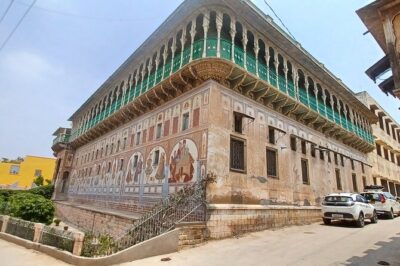
One more practical point: the starting meet point is listed near Sunehri Masjid in Old Delhi. So even with pickup, expect the morning to naturally funnel you into the Old Delhi area where the tuk-tuk portion begins.
You can also read our reviews of more guided tours in New Delhi



Riding a tuk-tuk through Old Delhi without the hassle

Old Delhi can be a lot. Roads are chaotic, people are everywhere, and asking for directions can turn into a whole project. The smart move here is letting a local guide manage the flow while you focus on experiencing the streets.
You start at Sunehri Masjid and then head out by tuk-tuk. The route is designed around the Old Delhi bazaars—your guide explains their role for locals as you ride past storefronts and street commerce. This is one of the best ways to understand Old Delhi quickly: you don’t just see shops, you learn why the place works the way it does.
And you avoid the common hassle of haggling with drivers for each leg. Even if you love the chaos of Delhi street life, you don’t want to spend your first hours negotiating. The tuk-tuk ride here is time-boxed and purposeful, so you get the flavor without losing the day.
Jama Masjid: the stop with real architectural weight
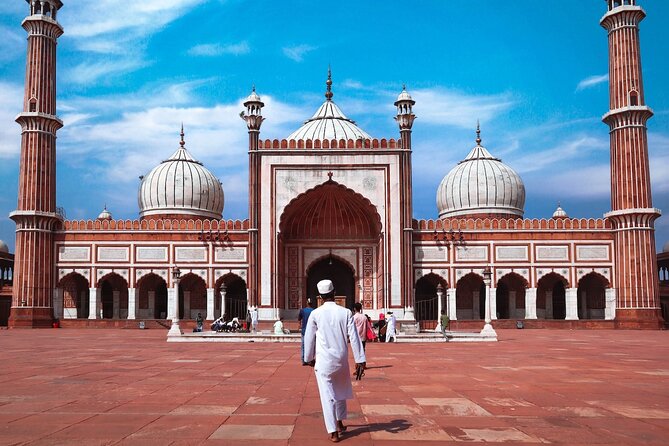
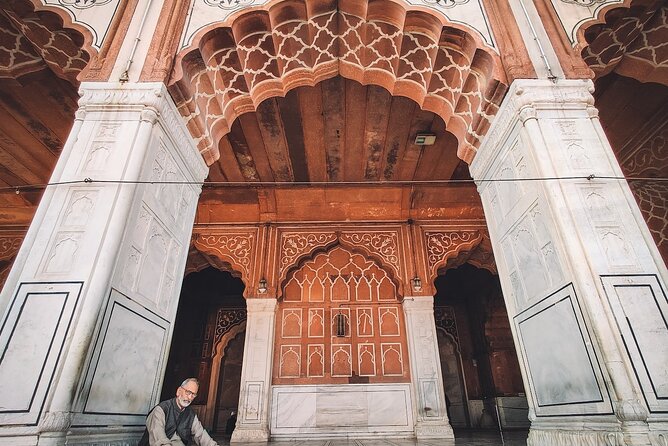
Jama Masjid is your first true anchor. The tour gives you about one hour here, and entry is included on the program. The mosque is described as the largest in India, with construction beginning in 1650 and finishing in 1656—a six-year build window.
That timing detail matters, because it helps you frame the scale. You’re not looking at a random old building; you’re looking at a major project completed in a relatively short span. With a guided explanation in the background, your visit feels like it has a thread instead of just being photo time.
Even if you’re not a architecture buff, you’ll likely notice two things: the mosque’s strong presence in the surrounding area, and how it sits within the rhythm of Old Delhi life. The guide’s commentary helps connect that feeling to history and function, instead of leaving you to guess.
Practical note: this is a long-ish sit-and-walk stop inside one of the most active neighborhoods of the city. You’ll want to go in mentally ready to share space and move at a local pace.
Khari Baoli spice market: quick, colorful, and very on purpose
After Jama Masjid, the tour passes by Khari Baoli, the spice market. The plan describes it as Asia’s biggest spices market, with fixed prices. Even if you don’t buy anything, this stop is worth it for the sensory overload: the thickness of the market air, the organized chaos, and the way sellers work the crowds.
The time here is short—around 15 minutes—so this isn’t about shopping for hours. It’s about seeing the market’s energy and getting your bearings for Old Delhi’s trade lanes. If you want to shop deeply, you’ll likely want to come back later on your own.
Still, the value is the context your guide brings. You’re not just watching people buy spices—you’re learning what kind of market this is and how it functions.
Red Fort and the Mughal-era photo stops you’ll actually use
The program includes Red Fort as part of the day’s Old Delhi-to-New Delhi story. The tour describes it as a massive structure built by Shah Jahan between 1639 and 1648, and it frames it as a residence for the Mughal empire.
In a route like this, you should expect Red Fort to be more of a photo-and-overview moment than a slow, in-depth visit. The schedule has to cover a lot: you’ll also move into New Delhi’s major landmarks the same day. If you want a deep visit inside Red Fort itself, you may need a separate plan.
That said, having it placed in the flow is useful. It helps you link what you saw in Old Delhi’s markets and mosques to the political power that once centered here.
You can also read our reviews of more private tours in New Delhi





From Lakshmi Narayan Temple to Bangla Sahib: faith stops that feel local
Once you’re into the New Delhi side, the tour shifts from monuments to places of worship that many locals treat as everyday spaces.
Laxmi Narayan Temple
You get about one hour at Laxmi Narayan Temple, dedicated to Vishnu and Laxmi, according to the tour notes. This stop is a good reset after the density of Old Delhi. It’s calmer in pacing, and it gives you a different angle on Delhi beyond forts and government buildings.
Gurudwara Bangla Sahib
Next is Gurudwara Bangla Sahib, described as Delhi’s biggest Gurudwara and dedicated to Guru Har Krishan Ji, the tour calls out as the eighth Guru. The plan also says the interior is made by gold and dates the structure to the 17th century.
You’ll get about an hour here as well, and the overall experience tends to feel respectful and grounded. I like this kind of stop on a highlights tour because it doesn’t just show you a landmark—it shows you how Delhi expresses faith day to day.
If you’re traveling solo, this is also one of the easiest stops to enjoy without needing to “keep up” with a group. You can take your time at your own pace, then step back into the car when you’re ready.
India Gate, Rashtrapati Bhavan, and the photo-friendly government zone
The tour then heads to India Gate. You have about 30 minutes there. India Gate is framed as a war memorial built in 1921 for the First World War conflict involving Indo-British army forces against Germany. The tour notes that soldiers’ names appear on the walls.
Even if you don’t linger long, this stop works well because you get a clear visual anchor. It’s one of those places where Delhi feels planned and monumental, compared with the tightly packed Old Delhi streets.
After India Gate, you pass by Rashtrapati Bhavan and Parliament building, with a short photography stop of around 15 minutes. The tour is clear that this is mainly for photos, not for a long visit. If you’re the type who likes to read plaques for 40 minutes, you may feel slightly rushed here—but on a day that covers Old and New Delhi, short photo windows are often the only way to keep the plan realistic.
Agrasen Ki Baoli: the steps-well break that’s made for pictures
Agrasen Ki Baoli is one of the best quick stops on this route because it gives you something visually unusual. The tour describes it as a steps well made by King Agrasen in the 14th century, around 60 meters deep and 15 meters wide.
You’ll have about 15 minutes here, which again signals “quick look and photos.” But with a place like this, you don’t need a long time to appreciate the shape and scale. It’s also a nice change from marble-and-monument sightseeing—more texture, more geometry, more “you’ll remember this” energy.
Bring a camera mindset for this one. You’ll likely want multiple angles.
Gandhi Smriti: a short, direct stop with heavy meaning
Then comes Gandhi Smriti. The tour frames it as the place where Gandhi spent his last 144 days and notes he was killed by Nathuram Godse on 30 January 1948.
You get about 30 minutes. That time window is enough to get a sense of the place without turning the stop into a long museum-style session. Still, because the subject matter is intense, the stop can also feel emotionally heavy compared to the more scenic landmarks.
If you’re visiting for a quick highlights day, I’d treat Gandhi Smriti as a “read and reflect” stop rather than a “run through and photograph everything” stop. You’ll get more from it.
Lotus Temple and Lodhi Garden: calm, controlled sightseeing
Lotus Temple
Next is Lotus Temple, described in the tour notes as a Bahai house of worship built in 1869. The description is very specific: it looks like an opera house in Sydney, with 27 petals outside and 9 inside. The tour also frames it as a meditation center where people can meditate.
You get about 30 minutes. This stop is a good counterbalance after Gandhi Smriti and the government zone. It’s more about quiet observation than intensity.
Even if you don’t sit for meditation, you’ll likely appreciate the design logic and the calm atmosphere around the architecture.
Lodhi Garden
Finally, you wrap with Lodhi Garden, described as Delhi’s largest garden and part of a heritage walk. You get about 30 minutes here.
It’s a smart ending. After a long day of structured stops, you want a place where the pace slows down naturally. Lodhi Garden offers that without needing a separate long transport plan.
Time, heat, and pacing: the real thing to manage
This tour is built for people who want a lot of landmarks in one day—Old Delhi and New Delhi together. That’s convenient. It’s also why you feel the pressure of time.
Old Delhi especially can be hot and crowded. The tour includes a water bottle and says umbrellas are provided in rainy and summer season. Still, I’d plan your comfort around walking and standing at multiple stops.
Here’s the practical pacing mindset I recommend:
- Use the guide time to understand what you’re looking at.
- Treat the short stops as photo + overview, not deep study.
- Save deep museum time for another day if you want it.
Price and value: how this day trip can feel like a steal
The listed price is $5.00 per person. That number is so low that you should look carefully at what’s included. The value story here is the mix of services that typically cost extra when booked separately.
Included items cover:
- a private air-conditioned car with chauffeur
- the local tuk-tuk ride portion in Old Delhi (listed as included in the ticket option)
- a professional English-speaking local expert
- water bottle and umbrellas in rainy/summer season
- parking fees, tolls, fuel, and taxes
Also, it’s private. That means you’re paying for your own schedule, your own guide attention, and not sharing your day with strangers.
What’s not included is the basics you’d normally budget for anyway: tips/gratuities and meals. Entrance fees are also conditional: the operator says monument entrance fees are included if you select the option that includes them. The plan also shows Jama Masjid entry included on the route, so you may find at least the biggest-ticket stop is covered depending on your chosen option.
Bottom line: if you want a day that’s organized, guided, and efficient, this can feel like strong value—especially for solo travelers, where having someone manage logistics saves time and stress.
Who should book this tour (and who might want something else)
This tour fits best if you:
- want Old Delhi + New Delhi in one day
- like getting explanations in English while you move
- travel solo and appreciate someone who helps with photos and navigation
- prefer a planned route over guessing your way through neighborhoods
You might consider another option if you:
- want to spend long hours inside major sites
- dislike “short stop” itineraries where you see the highlights but not deep details
- plan to shop a lot at Khari Baoli and want a longer market session
Because this is private, it also makes sense for couples or small groups who want control over timing. The flexible itinerary note is helpful—if you’re less interested in one stop, you may be able to adjust within the day structure.
Should you book this Old and New Delhi day trip?
If your goal is to get your bearings fast and still understand what you’re seeing, I’d lean yes. The combo of tuk-tuk in Old Delhi plus guided stops in New Delhi is a smart way to cover the city’s two faces without doing heavy planning yourself.
Book it if you value smooth logistics, strong English guidance, and a solo-friendly day flow. Skip it (or add another day) if your travel style is slow, museum-deep, and you need lots of time inside each major monument.
In a city where distances and crowds can overwhelm a first-timer, this kind of structured private day can turn confusion into a clear, memorable route.
FAQ
How long is the Delhi private guided tour?
It runs about 6 to 7 hours.
Where does the tour start, and can I choose my pickup time?
You can arrange pickup from anywhere in Delhi, Noida, Gurugram, Ghaziabad, or Faridabad. Pickup time can be chosen between 8 AM and 12 PM, and the tour starts near Sunehri Masjid in Old Delhi.
Do I ride a tuk-tuk during the whole tour?
No. The tour includes a tuk-tuk ride in Old Delhi, while the rest of the day is handled by a private car.
Is the guide available in English?
Yes. The tour includes a professional English-speaking local expert.
Are entrance fees included?
Entrance fees are included if you select the option that includes them. The route notes Jama Masjid entry as included, while other stops may depend on the selected option.
What if weather changes or I need to cancel?
The cancellation policy offers free cancellation. You can cancel up to 24 hours in advance for a full refund. If you cancel less than 24 hours before the start time, the amount paid is not refunded.