REVIEW · NEW DELHI
Golden Triangle Tour 3 Nights and 4 Days
Book on Viator →Operated by Dt Golden Triangle · Bookable on Viator
Three cities in four days can work. This Golden Triangle tour is interesting because it strings together the top sights of Delhi, Agra, and Jaipur without making you plan every connection yourself. I especially like that you get both sunrise and sunset Taj Mahal moments, not just one photo-window. I also like the support on the ground, with guides such as Kapil and drivers like Raza helping the long days feel manageable. One possible drawback: you’ll be up early and riding in the car for stretches, so it helps to pack light and be ready for crowd energy at the big-name monuments.
What makes this route feel smoother than a DIY sprint is the human factor. In guides and drivers like Kapil (in Agra), Raza (in Delhi/Agra), and Deebak (Agra), you get people who handle timing and safety well, including practical stops for restroom breaks and drinks. And when weather throws a curveball (like fog), they still aim to get you to the moment.
Before you book, pay attention to entrance fees. The tour price lists monument entrance fees as included, but the stop notes also say Admission Ticket Not Included for several sites. Translation: confirm what’s actually covered for your date so there are no surprises when you arrive at a gate.
In This Review
- Key things I’d watch before you go
- The Golden Triangle flow: why this route works in 4 days
- Day 1 in Delhi: Qutub Minar, Humayun’s Tomb, Raj Ghat, and India Gate
- Qutub Minar (about 45 minutes)
- Humayun’s Tomb (about 45 minutes)
- Raj Ghat (about 30 minutes, free)
- India Gate (about 45 minutes, free)
- Day 2 in Agra: Agra Fort, Itmad-ud-Daula, and Taj Mahal at sunset
- Agra Fort (about 2 hours)
- Itmad-ud-Daula (about 45 minutes)
- Taj Mahal at sunset (about 45 minutes)
- Day 3: Taj Mahal at sunrise, Fatehpur Sikri, and Jaipur’s Jantar Mantar plus Jal Mahal
- Taj Mahal at sunrise (about 2 hours)
- Fatehpur Sikri (about 45 minutes, free)
- Jantar Mantar, Jaipur (about 45 minutes)
- Jal Mahal (about 45 minutes)
- Day 4: Amber Fort and City Palace museum time back toward Delhi
- Amber Fort (about 45 minutes)
- City Palace of Jaipur (about 30 minutes)
- Taj Mahal timing: sunrise versus sunset (and how to enjoy both)
- Price and what you’re really paying for at $335
- Transport and timing: the air-conditioned car is your real itinerary
- Guides and drivers: Kapil, Raza, and Deebak made the days click
- Who should book this Golden Triangle tour
- Final call: should you book this tour?
- FAQ
- What is the duration of the Golden Triangle tour?
- What time does the tour start?
- Is pickup offered?
- Is this a private tour?
- What’s included in the price?
- Are monument tickets included?
- Are gratuities included?
- Is cancellation free?
- Should you book this Golden Triangle tour?
Key things I’d watch before you go
- Sunrise and sunset Taj Mahal: you’ll see different light, not just one fixed view.
- Delhi highlights in one morning: Qutub Minar, Humayun’s Tomb, Raj Ghat, and India Gate are packed in thoughtfully.
- Agra Fort plus Itmad-ud-Daula: you get context before the main event.
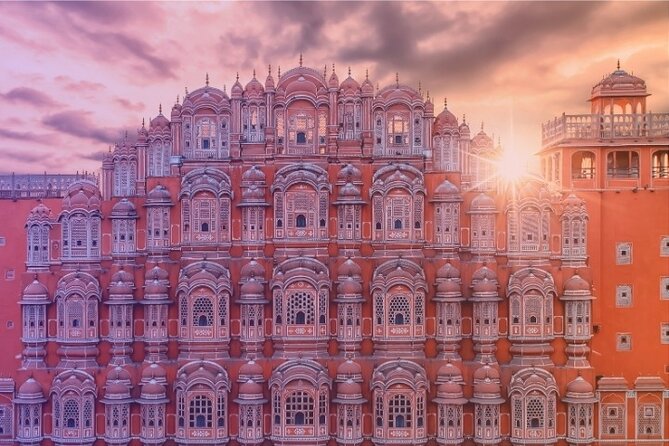
- Jaipur mix of royal and observatory sights: Amber Fort, City Palace museum time, Jantar Mantar, and Jal Mahal photos.
- Entrance coverage may need a quick confirmation: the notes are mixed, even if the price lists entrances as included.
The Golden Triangle flow: why this route works in 4 days
This tour is built for the classic north India route: Delhi → Agra → Jaipur. The smart part is sequencing. You start in Delhi with the older monuments, then move to Agra for Mughal-era icons, and finish in Jaipur with forts, palaces, and an observatory. It’s not slow travel. It’s more like a guided highlight reel that still makes room for meaning.
The pace matters because you’re juggling two types of time:
- Monument time (walking, photos, a bit of learning)
- Transit time (time in the air-conditioned vehicle between cities and sites)
If you like big sights and don’t want to spend your vacation doing ticket math and transport juggling, this format is a good match.
You can also read our reviews of more tours and experiences in New Delhi



Day 1 in Delhi: Qutub Minar, Humayun’s Tomb, Raj Ghat, and India Gate
Day 1 starts early (meeting time is 7:30 am) and keeps you moving through four very different parts of Delhi’s past and present.
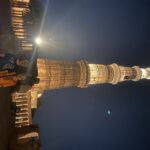
Qutub Minar (about 45 minutes)
Qutub Minar is a victory tower linked to Delhi’s earliest fortified city area (Lal Kot). Even if you’re not a history nerd, you’ll likely notice the structure immediately—tall, dramatic, and clearly meant to dominate the skyline. Plan for a short, focused visit here. This is the kind of stop where you get your bearings fast and then move on to the next scene.
Admission note: the stop duration is listed, but it also says the admission ticket is not included for this stop.
Humayun’s Tomb (about 45 minutes)
Humayun’s Tomb is a 16th-century Mughal tomb for Mirza Nasir al-Din. It’s one of those monuments where the architecture rewards even a quick visit, because the setting and symmetry make it feel bigger than its time slot. This stop is ideal if you want a calmer contrast after the more vertical drama of Qutub Minar.
Admission note: also listed as Admission Ticket Not Included.
Raj Ghat (about 30 minutes, free)
Raj Ghat is a memorial complex dedicated to Mahatma Gandhi. It’s shorter here, which works because it’s a reflective space, not a “see-every-corner” attraction. If you like learning through stillness, you’ll probably appreciate this pause.
Admission note: free.





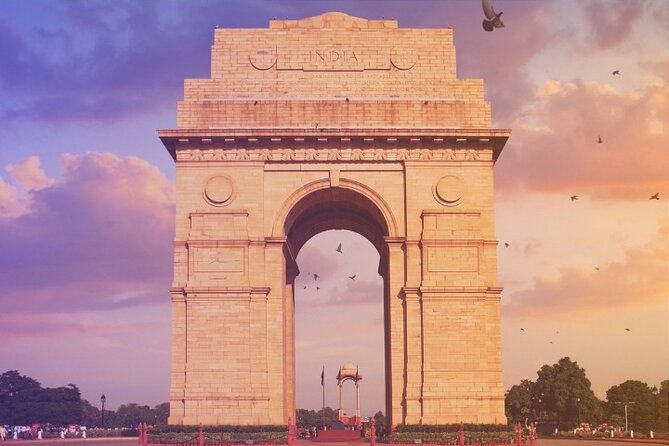
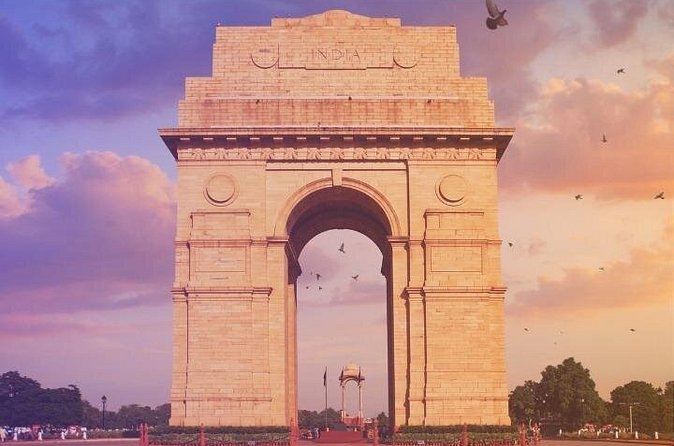
India Gate (about 45 minutes, free)
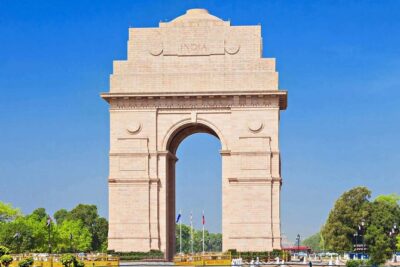
India Gate was built in British-era times as a tribute to soldiers who died in World War. It’s not just a monument; it’s a classic Delhi walking-and-people-watching stop. If your day has been early and busy, this is a good place to slow down slightly and take in the city’s rhythm.
Admission note: free.
Day 1 takeaway: You cover four major Delhi landmarks in one go, with two paid-entry stops, one memorial, and one open-air monument. It’s an efficient introduction to the city.
Day 2 in Agra: Agra Fort, Itmad-ud-Daula, and Taj Mahal at sunset
Day 2 is where the tour leans hard into Mughal Agra. You’ll get a fort first, then a “warm-up” tomb (often called the Baby Taj), and finally the main event at sunset.
Agra Fort (about 2 hours)
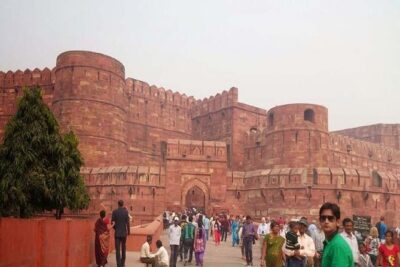
Agra Fort is described as a Mughal inheritance site, with high bastions and palaces inside. Two hours is a serious chunk of time, so this isn’t a quick photo stop. You’ll likely spend that time walking and viewing sections that help explain why this place mattered politically and architecturally.
Admission note: Admission Ticket Not Included.
Itmad-ud-Daula (about 45 minutes)
Itmad-ud-Daula, also called the Baby Taj, is the tomb of Noorjahan’s father and mother. It’s known for exquisite inlaywork and is a nice bridge between “big monument” and “fine detail.” If you’re the type who enjoys the smaller patterns, this is one of the stops that can steal the show.
Admission note: Admission Ticket Not Included.
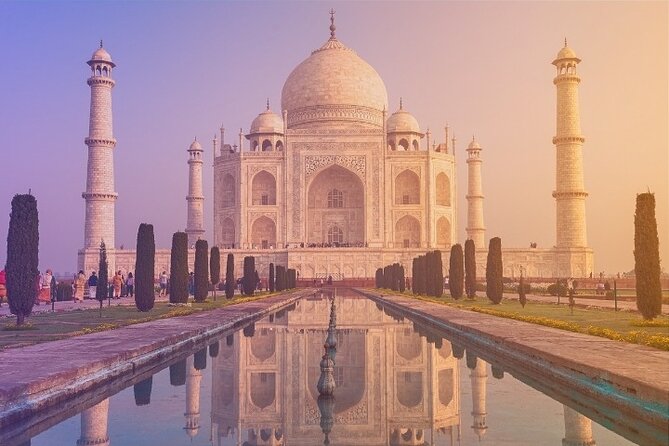
Taj Mahal at sunset (about 45 minutes)
Then comes the payoff: Taj Mahal at sunset. The marble’s color shift is what everyone talks about for a reason. Sunset gives you softer light and a strong “wow” factor, even if you’ve seen photos before.
Admission note: Admission Ticket Not Included.
Day 2 takeaway: You’re not just rushing to the Taj. You’re building up to it with a fort and a detailed tomb that make the final sight feel more earned.
Day 3: Taj Mahal at sunrise, Fatehpur Sikri, and Jaipur’s Jantar Mantar plus Jal Mahal
Day 3 is a packed day, but it has a clever emotional arc. You start with sunrise Taj Mahal (calm and quiet light), then you go to Fatehpur Sikri (Mughal city history), and end in Jaipur with observatory architecture and a photo-friendly palace scene.
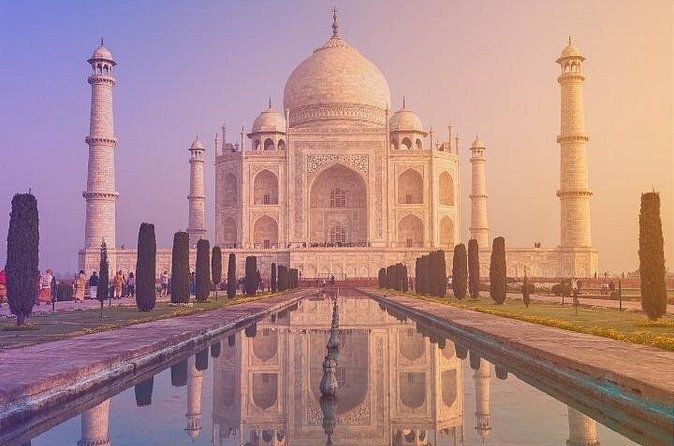
Taj Mahal at sunrise (about 2 hours)
Sunrise is a different beast than sunset. The light is cooler and more gentle, and the crowds can feel less intense early in the day (though you still need to expect other visitors). Two hours gives you time to slow down, not just rush through.
For photos, sunrise can help you capture the marble’s tonal changes without the harsher late-day glare. It’s also the best time to stand back and actually look at the scale.
Admission note: Admission Ticket Not Included.
Fatehpur Sikri (about 45 minutes, free)
Fatehpur Sikri was once a Mughal capital used for about 13 years. That short burst of time is part of why the site feels so fascinating: it’s a whole city with an unfinished feeling, like history moved on before everything could fully settle. You get a free stop here, which is a nice bonus value.
Admission note: free.
Jantar Mantar, Jaipur (about 45 minutes)
Jantar Mantar is an ancient observatory with instruments used to observe the stars. It’s one of those places where it’s easy to think, I’m just looking at old stuff—until you understand that these were tools, not decorations. Even with limited time, you can still get the “this was serious science” feeling.
Admission note: Admission Ticket Not Included.
Jal Mahal (about 45 minutes)
Jal Mahal is the palace you often see framed over water. The stop is great for quick photos for social media, and it also helps break the day up with something that feels more scenic than scholarly.
Admission note: Admission Ticket Not Included.
Day 3 takeaway: You get sunrise calm, Mughal city history at Fatehpur Sikri (free), and then a Jaipur visual payoff with observatory + water views.
Day 4: Amber Fort and City Palace museum time back toward Delhi
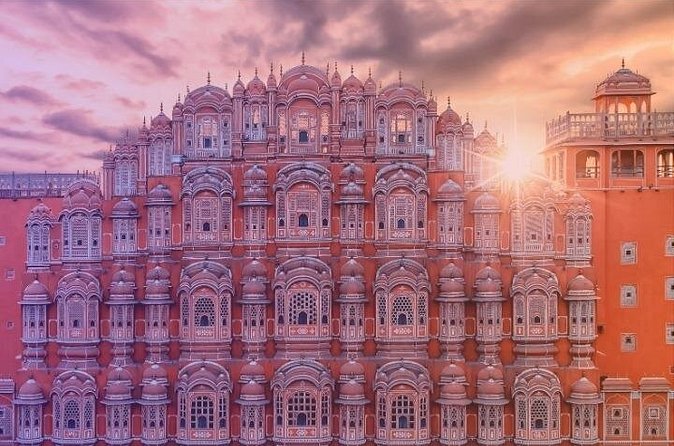
Day 4 starts after breakfast and ends with the drive back toward Delhi. It’s the “finish strong” day: one big fort, then a palace museum experience, then you’re on the road again.
Amber Fort (about 45 minutes)
Amber Fort sits on a hilltop and is known for its design and architecture. The stop here is listed as 45 minutes, which means you’ll need to see it smartly: pick a few key vantage points and focus on the main architecture rather than trying to cover every corner. This is a classic “big site, shorter time” situation, so go in with a plan for what you want photos of.
Admission note: Admission Ticket Not Included.
City Palace of Jaipur (about 30 minutes)
City Palace is more museum-like, and the idea is to see royal life in detail. Even in 30 minutes, you can catch the idea of power, taste, and everyday royal display. If you want a deeper museum visit, you might wish you had longer here, but as a tour finish it works.
Admission note: Admission Ticket Not Included.
Then it’s the drive back to Delhi.
Taj Mahal timing: sunrise versus sunset (and how to enjoy both)
This tour is rare in one respect: it doesn’t treat the Taj Mahal as a one-shot stop. You get it at sunrise and again at sunset. That choice affects your experience more than you’d think.
- Sunrise makes the Taj feel quieter and more atmospheric. You can spend time just looking at scale and marble texture without the day’s full heat.
- Sunset adds drama and warmth. The marble seems to glow, and the “photo moment” is usually easier to nail here.
Practical note: both times can mean early morning effort. Bring something for comfort (warm layers early, sun protection later) and plan to be patient. The Taj is famous for a reason, and that means lines, rules, and other visitors.
Price and what you’re really paying for at $335
At $335 per person for about 4 days, this is positioned as a value-friendly way to see Delhi, Agra, and Jaipur without stitching everything together yourself. The included parts listed are:
- Air-conditioned vehicle
- Fuel surcharge
- Entrance fee – Monument entrances
- Breakfast (4)
So you’re paying for organization and transport, plus time with a guide/driver setup that aims to keep you on schedule. In a tour like this, the biggest “hidden” value is not the vehicle—it’s the fact that you don’t have to negotiate your way between sites, or figure out where you’re supposed to be next.
That said, entrance fees are where I’d be extra careful. The overall price notes entrance fees as included, but the stop notes say Admission Ticket Not Included for many monuments. Before you go, confirm which sites are actually covered in your package and which ones you may need to pay separately on the day.
Gratuities are optional and not included.
Transport and timing: the air-conditioned car is your real itinerary
You’ll spend a lot of your day in transit between major sights and across cities. The good news is the tour includes an air-conditioned vehicle, which matters in north India when the weather is warm.
The best part of having a dedicated driver is that they can handle practical needs. In the guide/driver experiences shared, people praised:
- punctual starts
- safe driving
- English communication
- flexibility for restroom breaks and drinks
- calm decision-making even when fog rolled in
That flexibility is what keeps a tight schedule from becoming stressful. Still, you should expect long days. If you hate being in a car for hours, this style of trip may feel like “fast and furious sightseeing,” even with the AC and good driving.
Guides and drivers: Kapil, Raza, and Deebak made the days click
One of the clearest themes is that the quality of the human guide/driver setup can make or break a highlight tour. Names that came up with consistently positive feedback include:
- Kapil: praised for making Taj Mahal history clear and engaging, with a friendly, capable vibe during major Agra stops.
- Raza: praised for safe driving, good English communication, and being flexible with real-life needs like restroom stops.
- Deebak: praised for helping visitors feel comfortable, and even for pointing people toward a good restaurant in Agra.
Even if you don’t get the exact same guide/driver, this tells you what to prioritize when you book: a team that can explain what you’re seeing, communicate in a way you understand, and handle the practical side of the day without rushing you through.
Who should book this Golden Triangle tour
This is a strong fit if you:
- want the headline sights of Delhi, Agra, and Jaipur in a single trip
- like the idea of seeing Taj Mahal twice rather than once
- prefer a guided plan over figuring out transit and tickets day by day
- can handle early starts and long travel days
It’s less ideal if you:
- want slow, in-depth museum time at every stop
- hate being in a vehicle for extended stretches
- want zero chance of extra ticket payments (because entrance-fee coverage wording is mixed, so confirmation matters)
Final call: should you book this tour?
If your goal is to get the Golden Triangle done efficiently—and you like the idea of sunrise and sunset Taj Mahal—you’ll probably love the value here. The included breakfasts, air-conditioned transport, and the strong track record of helpful guides and safe drivers add real comfort to an intense schedule.
Just do one simple thing before you commit: ask the operator to confirm which monument entrances are included for your exact dates. If entrance coverage lines up cleanly, this is a solid way to see the big North India hits without turning your trip into a logistics project.
FAQ
What is the duration of the Golden Triangle tour?
The tour is listed as 4 days (approx.).
What time does the tour start?
The start time is 7:30 am.
Is pickup offered?
Yes, pickup is offered.
Is this a private tour?
Yes. It’s described as a private tour/activity, meaning only your group participates.
What’s included in the price?
The listed inclusions are an air-conditioned vehicle, fuel surcharge, entrance fee – Monument entrances, and breakfast (4).
Are monument tickets included?
The overall information lists entrance fees as included, but the stop details also label some sites as Admission Ticket Not Included and others as Free. It’s smart to confirm what’s covered for each stop on your booking.
Are gratuities included?
No. Gratuities are optional.
Is cancellation free?
Yes, free cancellation is offered up to 24 hours in advance of the experience start time for a full refund.
Should you book this Golden Triangle tour?
Book it if you want the major highlights of Delhi, Agra, and Jaipur with guided support, especially since you’ll see Taj Mahal at both sunrise and sunset. I’d only hesitate if you strongly dislike early mornings or you want guaranteed clarity on which entrances you’ll pay on-site—so confirm that entrance coverage before you go.