REVIEW · NEW DELHI
Four-Day Luxury Golden Triangle Tour to Agra & Jaipur From Delhi
Book on Viator →Operated by Hello India Tour · Bookable on Viator
Golden Triangle with a lot less fuss. This private 4-day route mixes big-name monuments with day-by-day guidance, and I like the air-conditioned private car plus the sunrise Taj Mahal timing that sets the tone early. One thing to plan for: the itinerary is packed, and not all monument entries are included in the base price.
You’ll start with pickup anywhere in Delhi and nearby NCR cities, then bounce between Old Delhi markets, Mughal-era sites, and Rajasthan’s Jaipur landmarks. The guide sets your pace and keeps the day moving, which helps when you’re tired of negotiating, re-routing, and waiting around.
It’s also been consistently popular: a 4.9 rating from 307 reviews and 98% recommended. Still, remember that this is a “see a lot” tour—great if you want structure, less great if you hate tight timing.
In This Review
- Key things that make this Golden Triangle tour work
- Price and logistics: what $167.38 per person actually buys
- The private car and guided flow: your stress level stays low
- Day 1 in Delhi: from Jama Masjid to Qutub Minar, then the ride to Agra
- Sunrise Taj Mahal and Agra Fort: the “big moments” on Day 2
- The Fatehpur Sikri stop: a needed break before Jaipur
- Jaipur’s Day 3: Amber Fort, Jal Mahal exterior photos, City Palace, Jantar Mantar, Hawa Mahal
- The hotel and meal reality: what to expect day-to-day
- Guides make the difference: Harsh, Abbas, and Miki-style touring
- Who should book this 4-day luxury Golden Triangle tour
- Should you book it?
- FAQ
- How long is the tour?
- Is this tour private?
- Where do pickups happen?
- What’s included in the hotel portion?
- Do I ride in an air-conditioned vehicle?
- Is lunch or dinner included?
- Are entrance tickets included?
- Do you go to the Taj Mahal early?
- Can I cancel for a full refund?
- Is Jal Mahal interior access included?
Key things that make this Golden Triangle tour work
- Hotel pickup and drop-off across Delhi NCR makes day one easier than most DIY plans
- Private A/C vehicle for the full 4 days means you’re not stuck in overcrowded transport
- A real sunrise Taj Mahal morning gets you there before the day gets too hot and too chaotic
- Old Delhi + New Delhi pairing gives you context, not just photo stops
- Jaipur sights in a focused sweep: Amber Fort, City Palace, Jantar Mantar, Hawa Mahal
- Some interior restrictions (like Jal Mahal) mean you’ll see exteriors more than “whole building” time
Price and logistics: what $167.38 per person actually buys
At $167.38 per person for a 4-day private Golden Triangle, you’re paying for four big things: transport, guidance, hotel nights (if you choose the hotel-included option), and the structure that keeps you from losing hours between stops.
Here’s the practical breakdown. The tour includes a private local tour guide for sightseeing, plus a private A/C car for the whole trip (sedan for 1–2 people, 6-seater SUV for 3–4, or a 10-seater van for 5–10). If you select the package that includes hotels, you also get 3 nights with breakfast.
What you still need to budget for:
- Meals and drinks (lunch, dinner, drinks are not included)
- Tips/gratuities (not included)
- Monument entrance fees: the listing specifies Old & New Delhi monuments at $60.00 per person
- Any optional extras at your hotel (it notes Gala Nights, if applicable, are ₹6,000 per person)
If you like the idea of “pay once, get a plan,” this is usually good value. If you prefer to roam freely and pick your own ticket lines, you may end up spending similar money on entrances anyway—then the added cost becomes mostly for the guide and driving.
You can also read our reviews of more tours and experiences in New Delhi



The private car and guided flow: your stress level stays low
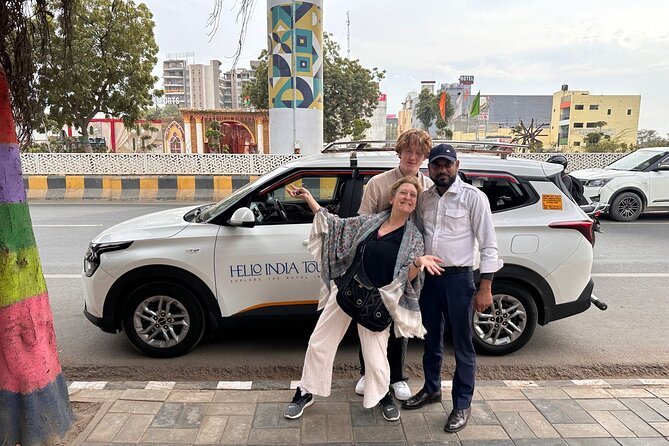
The biggest quality-of-life win here is the constant rhythm: pickup, then a guide at each stop, then driving to the next anchor point. You’re not trying to figure out routes across Delhi traffic with a bag of tickets and no local help.
Pickup is broad: you can be picked up from any location in Delhi, Gurugram, Noida, Ghaziabad, and Faridabad, plus airport or railway stations. There’s even an option to arrange pickup from private residences on request. That matters because Delhi planning often breaks when you start late or start far from the center.
In the car, you’ll also get air-conditioning between cities and within them. Agra to Jaipur days can feel long if you’re in a shared vehicle. Here, you’re in your own group’s space, which makes stops easier and the day less exhausting.
Day 1 in Delhi: from Jama Masjid to Qutub Minar, then the ride to Agra
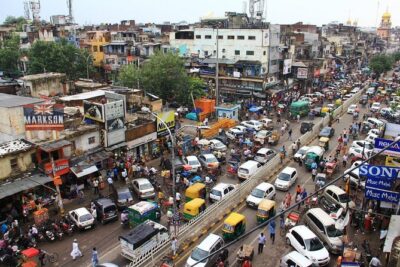
Day one is built like an orientation to the whole city. You start with pickup (or meet at your location), then head straight into Old Delhi and the monuments people come to see.
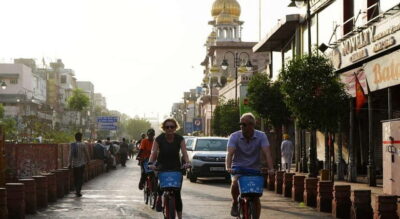
Jama Masjid is the first major stop: it’s described as India’s largest mosque, built in 1656 by 5,000 workers. You’ll stroll through the red sandstone courtyard. This is a good opening because you get scale right away.
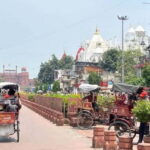
After that, your guide helps you explore Chandni Chowk. The plan includes hiring a rickshaw with the guide’s help. I like this approach because it turns an overwhelming market into a guided loop where you don’t just wander into the wrong lanes.
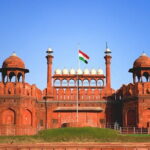
The next exterior photo stop is the Red Fort, with your guide explaining its history while you grab pictures from outside. It’s a smart move for time management. If you want inside access, that’s something to confirm based on the separate entrance fees.
Then you move to Gurudwara Bangla Sahib, known here for the belief that in 1664 the eighth Sikh Guru met the king and distributed water from the tank to help people during smallpox and cholera epidemics. It’s one of those stops where you feel like you’re learning daily life history, not only royal stories.
You also pass major landmarks like:
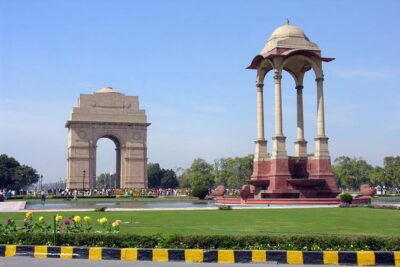
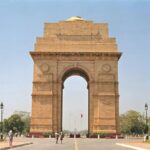
- India Gate, a First World War memorial
- Rashtrapati Bhavan, designed by Sir Edwin Lutyens and Herbert Baker
- Humayun’s Tomb, a mid-16th-century Mughal monument
- Qutub Minar, a UNESCO World Heritage Site, 73 meters high, described as the tallest brick minaret in the world
- Lotus Temple, completed in 1986, lotus-flower-inspired
- Swaminarayan Akshardham, opened in 2005, a large temple complex dedicated to Lord Swaminarayan
This is a lot for one day. The tradeoff is that by the time you’re done, you’ll understand what parts of Delhi people mean when they say Old vs. New. The drawback is simple: if you hate early starts and tight sequencing, day one may feel like a sprint.
At the end of the day you travel to Agra via the Yamuna Expressway, check into your hotel, and get some real rest.
Sunrise Taj Mahal and Agra Fort: the “big moments” on Day 2
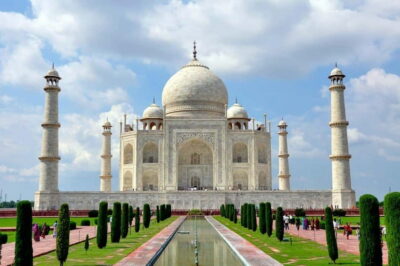
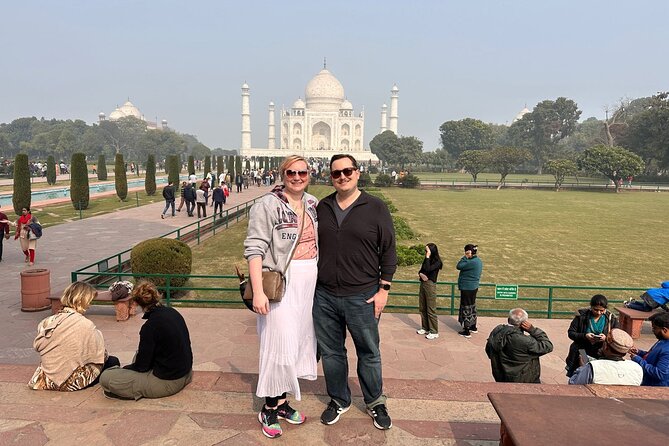
Day two begins early, and that early start is the whole point. You meet your driver and guide in the hotel lobby, then head to the Taj Mahal for a sunrise view, which the tour describes as the best time to see it.
Sunrise matters for more than photos. The Taj Mahal is a monument that can feel almost abstract when crowds hit full speed. Early arrival is usually when you can actually see the building’s shape and light changes without constantly dodging people.
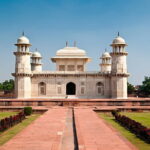
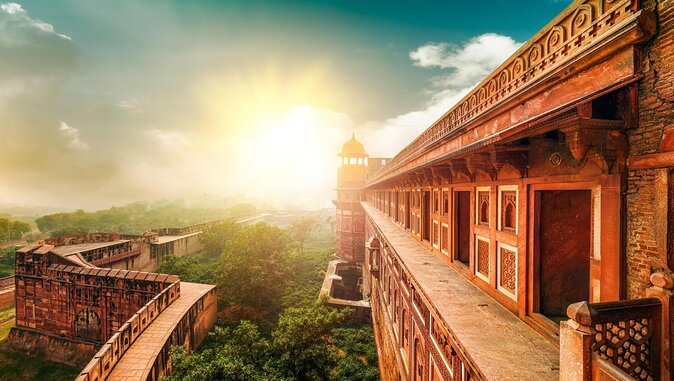
After the Taj Mahal, you visit Agra Fort, described as the historic Mughal residence and still well-preserved. Then you stop at Itmad-ud-Daula, presented as a shorter, quieter Mughal architectural stop that fits well between the biggest names.
From there you start the journey toward Jaipur and make time for a key stop en route: Fatehpur Sikri (including the Panch Mahal).
The Fatehpur Sikri stop: a needed break before Jaipur
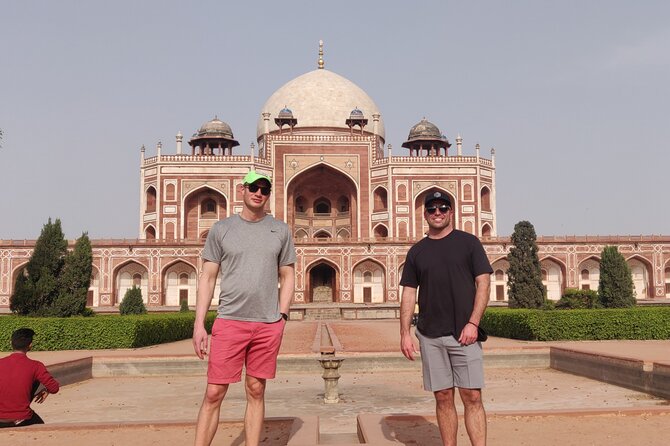
Between Agra and Jaipur, the tour pauses at Fatehpur Sikri for a guided look at the 16th-century monument. This is valuable because it breaks up a long travel day with a site that feels different from the Taj and the forts.
Think of it as context-building. Jaipur will be about Rajput power, city planning, and fort architecture. Fatehpur Sikri keeps you in the Mughal thread long enough that the story makes sense as you keep traveling.
If you dislike guided time windows, note that this is still a “schedule-based” stop (about an hour). It’s enough to get oriented and take in the main sights, not enough to settle into slow wandering.




Jaipur’s Day 3: Amber Fort, Jal Mahal exterior photos, City Palace, Jantar Mantar, Hawa Mahal
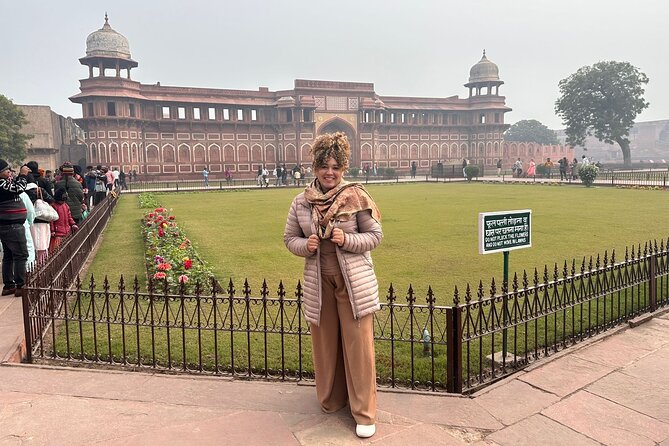
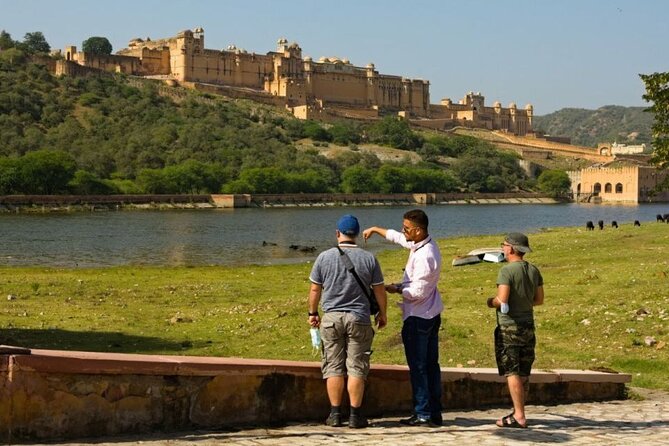
Day three is where the Golden Triangle starts feeling like Rajasthan. After breakfast, you go to Amber Fort first (about a 2-hour visit). This is one of those stops where the size and details do the work. Even if you’re not into fort architecture, you’ll likely enjoy how the complex reads like power made physical.
Next is Jal Mahal, described as a floating water palace on Man Sagar Lake. The itinerary notes interior access isn’t available at present due to disputes, so you get the experience as an exterior view with a short stop.
That’s important to know upfront. If you were hoping for a lot of time inside, plan for photos and a quick look instead.
After Jal Mahal, you shift to central Jaipur highlights:
- City Palace: founded in 1727 with Maharaja Sawai Jai Singh II, who moved his court from Amber to Jaipur; the palace complex served the court until 1949
- Jantar Mantar: an astronomical instrument complex with nineteen instruments, designed by Sawai Jai Singh, finalized in 1734
- Hawa Mahal: the Palace of Wind, known for its windows, with time for photos
The day ends with additional time in Jaipur (about 5 hours), and the tour includes an extra evening in the city. This is a nice buffer because Jaipur is one of those places where you might want to slow down for dinner, shopping, or a relaxed walk after a day of forts and courtyards.
The hotel and meal reality: what to expect day-to-day
If you choose the hotel-included option, you get 3 nights with breakfast. That’s a practical advantage because Delhi mornings and the Agra/Jaipur travel rhythm can make it hard to find decent breakfast quickly on your own.
Meals are not included. You’ll likely want to eat near where your guide drops you, since waiting time can stretch when you’re moving between sites. The upside is you can choose what fits your pace—street food if you’re comfortable with it, or sit-down meals if you prefer a calmer experience.
Also, entrances are partly separate. The listing explicitly calls out Old & New Delhi monument entrance fees as an extra cost. Your guide can help you navigate what’s already covered vs. what isn’t, but you’ll want to check your final confirmation details so you don’t get surprised mid-route.
Guides make the difference: Harsh, Abbas, and Miki-style touring
The human side matters on this kind of tour, and the feedback you have here points to strong guide quality.
In Delhi, people specifically praised Harsh for being very informative and for adding memorable extras like taking the group to a spice shop in Old Delhi—the kind of stop that gives you more than a postcard. Another guide mentioned by name is Miki, also called out for a great Delhi day.
In Jaipur, Abbas is mentioned for being welcoming and for explaining sights clearly, while still keeping the pace efficient enough to see many major landmarks in a short time.
You don’t need a guide to be your personal historian. But on a route like Delhi–Agra–Jaipur, a good guide helps you understand why each place matters, not just where to stand for a picture.
Who should book this 4-day luxury Golden Triangle tour
This is a good fit if you:
- Want private structure but still like seeing a lot
- Prefer A/C driving and pre-planned sightseeing over DIY route planning
- Like having a guide to explain monuments like Jama Masjid, Qutub Minar, the Taj Mahal, Amber Fort, and the Jaipur observatories
It’s also a decent match for first-time Golden Triangle visitors who want an introduction without spending days researching where to start each day.
You might think twice if you:
- Hate tight schedules and frequent transitions
- Want long free time inside major monuments rather than set visits
- Expect every interior attraction to be included (Jal Mahal interior is noted as currently not available, and some entrances are separate)
Should you book it?
I’d book this tour if your goal is a smooth, guided Golden Triangle that gets you to the right places in the right order—especially the sunrise Taj Mahal morning and the big Delhi orientation day.
Hold off if you’re the type who loves slow, independent exploration, because day one and day three move fast. Also, make sure you’re comfortable with extra spending for meals, tips, and the listed monument entrance fees.
One smart approach: treat it as the “guided backbone” of your trip. After it ends, you’ll still have plenty of travel time left to slow down on your own in the places you liked most.
FAQ
How long is the tour?
It runs for 4 days (approx.).
Is this tour private?
Yes. It’s described as a private tour/activity, and only your group will participate.
Where do pickups happen?
Pickup is offered from any location in Delhi, Gurugram, Noida, Ghaziabad, and Faridabad, plus from the airport or railway station. Pickup from private residences can also be arranged on request.
What’s included in the hotel portion?
The package includes 3 nights of hotel accommodation with breakfast if you book the option that includes hotels.
Do I ride in an air-conditioned vehicle?
Yes. A private air-conditioned car is provided for 4 days.
Is lunch or dinner included?
No. Lunch, dinner, and drinks are not included.
Are entrance tickets included?
Entrance fees are not included. The listing specifically notes entrance fees for all monuments of Old & New Delhi at $60.00 per person.
Do you go to the Taj Mahal early?
Yes. You’ll go early in the morning for the Taj Mahal sunrise view.
Can I cancel for a full refund?
Free cancellation is allowed up to 24 hours in advance of the experience start time for a full refund.
Is Jal Mahal interior access included?
The itinerary notes interior tours are not possible at present, so your visit is limited to what you can see there.