REVIEW · NEW DELHI
Four-Day Private Luxury Golden Triangle Tour to Agra and Jaipur From New Delhi
Book on Viator →Operated by Crystal India Holidays · Bookable on Viator
Four days in India can feel like a sprint—this one doesn’t. You get a private driver plus local guides in each city, timed around the sights that matter most, especially the sunrise Taj Mahal.
What I really like is how the trip is built for comfort: a private, air-conditioned car, door-to-door pickup in Delhi (including Noida and Gurugram), and hotel nights so you’re not juggling logistics. I also love the way the guides add context at every stop, and the little extras that make it easier—like the battery bus ride for the Taj Mahal approach.
One drawback to plan for: monument entrance fees aren’t included (expect around $60 per person), and if you’re traveling on a Friday start you’ll need the route shift because the Taj Mahal is closed on Fridays.
In This Review
- Key things I’d plan around before you go
- Golden Triangle in four days: why this route works
- Day 1 Delhi sights from Qutub Minar to Rashtrapati Bhavan
- The long drive to Agra: comfort is part of the sightseeing
- Sunrise Taj Mahal plus Agra Fort and Itimad-ud-Daulah
- Night in Agra and rolling into Jaipur
- Jaipur stops you’ll actually remember: City Palace, Jantar Mantar, Hawa Mahal
- Entrance tickets, shopping choices, and how to avoid time sinks
- Price and logistics: what $160.70 per person really buys
- The human factor: why the drivers and guides keep getting praised
- Who should book this tour (and who might rethink it)
- Should you book this Golden Triangle private tour?
- FAQ
- What is included in the tour price?
- How much are the entrance fees?
- Are pickups and drop-offs included?
- Is the Taj Mahal visit at sunrise?
- How long is the drive from Delhi to Agra?
- What Jaipur sights are included?
- Is the Lotus Temple always open?
- Is this a private tour?
- What language are the guides?
- Is free cancellation available?
Key things I’d plan around before you go
- Sunrise Taj Mahal timing: that early start is the whole point—go before crowds grow.
- Private, air-conditioned transport: it turns long drives into manageable travel days.
- Battery bus to Taj Mahal area: saves time and energy right when it’s busiest.
- Local guides in each city: you won’t just walk around—you’ll understand what you’re seeing.
- Entrance fees add up: budget extra for monuments, even with a tour included.
- Drivers who handle real-world issues: multiple drivers in past trips were praised for going the extra mile, like help finding the right place quickly.
Golden Triangle in four days: why this route works
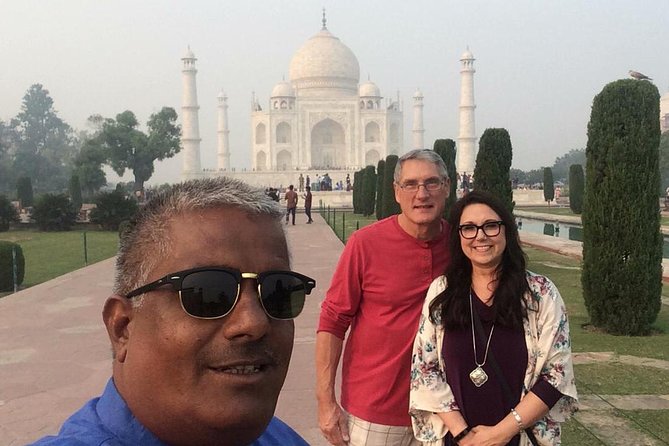
The Golden Triangle is popular for a reason: you hit three iconic cities—Delhi, Agra, and Jaipur—without wasting time on planning. In four days, you get the core landmarks, but also enough structure that you’re not constantly asking where to go next.
I like that the schedule has a rhythm. Day 1 is your Delhi orientation (big monuments, major photo stops). Day 2 is built around the Taj Mahal at sunrise, then Agra’s top sites. Day 3 concentrates on Jaipur’s best-known buildings and viewpoints. Day 4 is the wrap-up drive back to Delhi.
This kind of “guided speed with breathing room” is ideal if you’re short on time, want comfort for the road, or you’d rather spend energy looking than negotiating.
You can also read our reviews of more private tours in New Delhi


Day 1 Delhi sights from Qutub Minar to Rashtrapati Bhavan
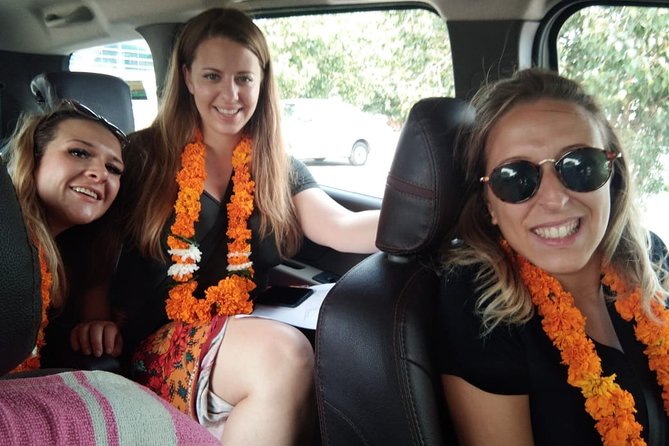
Delhi can be overwhelming on your own, so I like that this day starts with landmarks that give you quick orientation. You begin at Qutub Minar, a 73-meter, UNESCO-listed tower with a 12th-century origin linked to the Delhi Sultanate. It’s the kind of place where a short, guided walk helps you understand why it’s considered important.
Next is the Lotus Temple, famous for its flower-like shape and for being open to everyone regardless of religion (it’s free to visit). One practical note: the Lotus Temple remains closed on Mondays, so your timing matters.
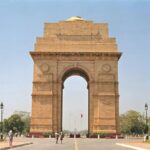
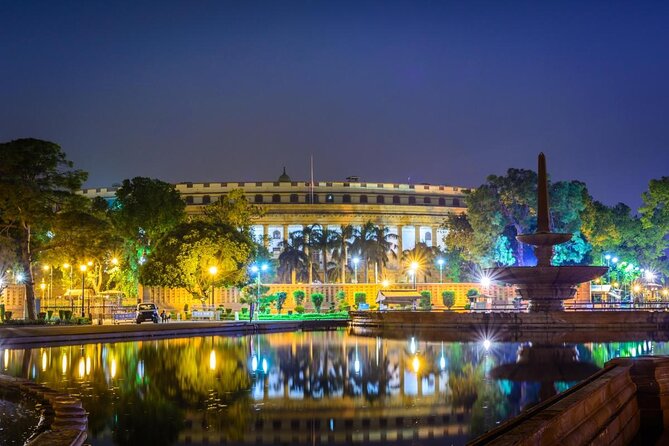
From there you roll through classic city symbols: India Gate (a war memorial near Rajpath), then brief exterior time for Parliament House and Rashtrapati Bhavan. This is the right kind of pacing for day one—enough to feel like you’ve seen Delhi, without burning the day out.
Then there’s lunch at a local restaurant, followed by a drive to Agra. The transfer is described as about three hours on the Yamuna Expressway, which helps you reset for the early start the next day.
The long drive to Agra: comfort is part of the sightseeing
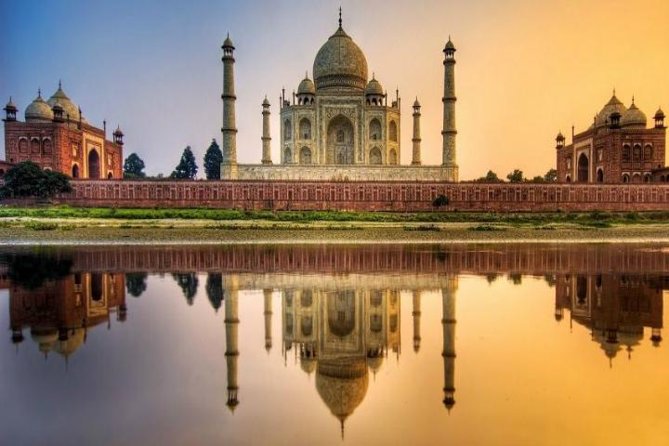
Between Delhi and Agra, traffic and road noise can turn a “short hop” into a tiring day. The biggest value here is that you travel in a private, air-conditioned car, and you don’t have to think about navigation, toll stops, or timing.
You’re also set up with hotel time that actually helps. After Delhi’s big introductions, you check into a 4- or 5-star hotel in Agra (options listed include places like Fern Residency in the 4-star category, or Intercontinental/Hilton options for the higher tier). That means you’re not trying to cram dinner plans, shopping, and transit into the same evening.
If you’re traveling as a couple, solo, or a small group, this is where the private format pays off: you control the pace for restroom stops, photos, and short breaks without turning the day into a group bottleneck.
Sunrise Taj Mahal plus Agra Fort and Itimad-ud-Daulah
Day 2 is the star of the show: sunrise at the Taj Mahal. Arriving early isn’t just romantic marketing—it’s practical. The white marble looks best when the light is soft, and you’re more likely to enjoy the monument without peak crowds.
Inside the Taj Mahal, the tour includes about two hours with a guide, with commentary on its creation by Mughal Emperor Shah Jahan in the 1600s (the tour description references 1630). You’ll see the tomb complex as more than a photo backdrop—guides typically tie the architectural choices to the story.
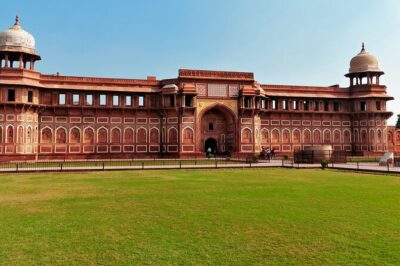
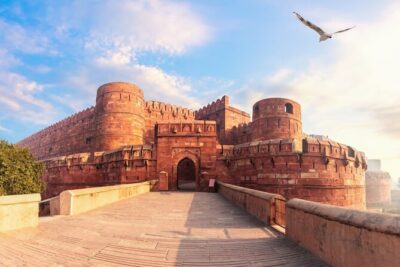
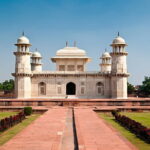
After that, you move to Agra Fort, another UNESCO site. You’ll spend about an hour there, focusing on its palaces, balconies, and gardens. Then there’s Itimad-ud-Daulah—often called the Baby Taj—where you get about 30 minutes. This stop is valuable because it gives you a different architectural mood than the massive scale of the Taj.
A small detail with real impact: the tour includes a battery bus ride to and from the Taj Mahal parking lot up to the monument area. That saves steps when you’re already awake early and walking through the approach zones.
Night in Agra and rolling into Jaipur
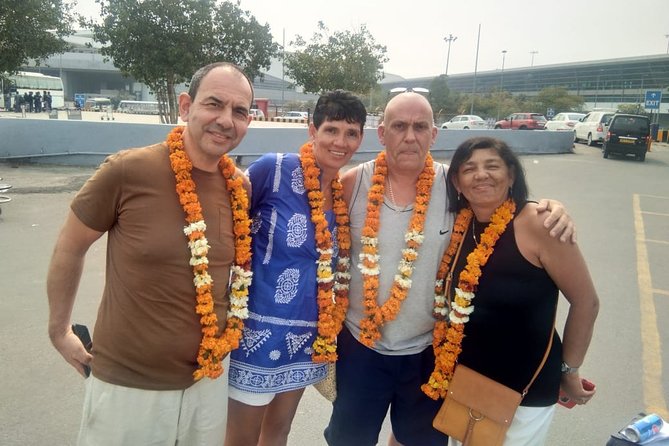
After Agra, you head west to Jaipur and check in to your hotel. The tour description offers either a 4-star hotel option like Fern Residency / similar, or higher-tier properties like Intercontinental/Hilton options (depending on what you select). Either way, the key is that you’re sleeping in a proper hotel between major sightseeing days.
This is also the day where you get to cool down. Jaipur is busy visually, but you don’t start strong with it on day one—you start with Agra’s big anchors and then transition. That means you can arrive in Jaipur, check in, and rest without feeling like you’re missing half the city.
If you’re the kind of traveler who likes to photograph buildings in better light, this layover night helps. You’re not trying to do the best photos and manage the day’s tiredness all at once.
You can also read our reviews of more tours and experiences in New Delhi






Jaipur stops you’ll actually remember: City Palace, Jantar Mantar, Hawa Mahal
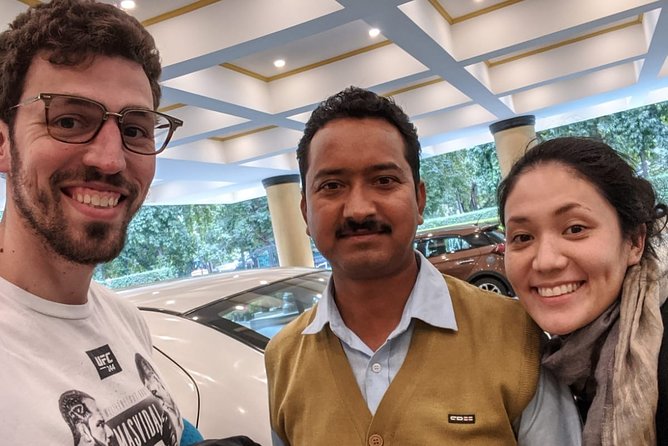
Day 3 is Jaipur in a tight, high-value order. You begin at Panna Meena ka Kund, a step well, then head to Jal Mahal for a photo stop by the lake. The palace itself sits in the water, so the best use here is time for photos and quick orientation.
Next is City Palace, with about one hour to explore Maharaja’s City Palace. It’s more than a set of walls—guides typically connect it to Jaipur’s role as a royal administrative and ceremonial center (the tour description references construction in 1721). Even if you only take in part of it, the guide helps you make sense of what you’re seeing.
Then comes Jantar Mantar, a UNESCO-listed astronomical observatory built in 1734. You’ll have about an hour here. This stop is one of the best “wow, that’s clever” moments in Jaipur because it shows how science and architecture were linked in the Rajput world under Sawai Jai Singh II.
Finally, you get Hawa Mahal, the Palace of Winds. The tour includes a short stop (about 15 minutes) for photos and a quick look. I’d treat this as a viewpoint stop, not a long museum moment. You’ll want to prioritize good angles and then move on.
Entrance tickets, shopping choices, and how to avoid time sinks
A small operational detail that matters on tours like this: entrance fees aren’t included, but the tour says your guide can help you buy them so you don’t waste time queuing.
That means your sightseeing time is more predictable. You also avoid the mental load of figuring out which ticket to buy and where, especially if you’re tired from road travel.
The tour also mentions optional shopping, with a note that you can choose to skip or add it. My advice: if shopping isn’t your thing, keep it simple. The Jaipur day is already packed, and the best memories here come from the monuments—not from forced detours.
If you care about photos, it’s worth noting that drivers and guides on past trips were praised for actively helping with pictures (including one mention of a guide being a strong photographer). So if you want group shots or steady framing, ask early in the day and don’t wait until the last stop.
Price and logistics: what $160.70 per person really buys
At about $160.70 per person, the headline price looks low for a private, 4-day Golden Triangle trip. The trick is understanding what’s included versus what’s extra.
Included in the experience value:
- Private, air-conditioned vehicle between Delhi, Agra, and Jaipur
- Hotel nights (when you choose the hotel option), plus breakfast at each included morning
- Local guides at sightseeing stops
- Pickup and drop-off in Delhi (including hotel/airport/railway area)
- Water during journeys
- Taj Mahal area battery bus ride
Not included:
- Entrance fees for monuments (listed as around $60 per person)
- Optional gratuities
So the real value isn’t only the car or only the hotels. It’s the fact that the schedule is compact and guided, with the hardest timing piece handled for you: sunrise Taj Mahal and the day-by-day flow between cities.
If you’re traveling solo, as many people do on this route, this setup can also be cost-efficient in a different way. A private driver and guides often prevent the expensive “one-off guides everywhere” problem and reduce risk and stress in places where language and routing can slow you down.
The human factor: why the drivers and guides keep getting praised
The biggest pattern in past feedback is simple: the people made the difference. Drivers were repeatedly described as calm, punctual, and safety-focused—names that came up include Sohan, Sojan, Surinder, Rajesh, Ashok, Subhash, Davendra, and Shyam.
Some specific “this is why you’re paying for private” moments showed up too. One driver was praised for helping with a Sunday visit to a Catholic church. Another was praised for quickly taking someone to a pharmacy when there was a health issue. Those are not guaranteed service promises, but they show how responsive the team can be when normal travel turns messy.
On the guide side, English communication and storytelling came up often. Names that were mentioned include Divi (Delhi), Rajiv (Agra), Manoj and Anil (various stops), and Yogesh (Jaipur). If clear explanations and photo help matter to you, this is the kind of tour setup that tends to deliver.
Who should book this tour (and who might rethink it)
This tour is a great fit if you:
- Want the Golden Triangle highlights without spending your entire trip on planning
- Prefer private transport for comfort on long road days
- Care about sunrise timing and guided context at the major monuments
- Are traveling solo or with someone who wants a steady, low-stress structure
You might rethink it if you:
- Want a lot of optional add-ons and don’t like fixed stop patterns (the schedule is efficient, not flexible every hour)
- Don’t want to pay extra for monument entrance fees
- Are extremely sensitive to early starts (sunrise Taj Mahal is non-negotiable here)
Also check the day-of-week reality. The tour notes the Taj Mahal is closed on Fridays, and if your start day affects that closure, your route may shift. That’s normal for this monument, but it’s good to align your expectations early.
Should you book this Golden Triangle private tour?
If you want a smooth first-time Golden Triangle and you value comfort plus guided context, I’d say it’s an easy yes. The sunrise Taj Mahal, the Agra add-ons (Agra Fort and Itmad-ud-Daulah), and the Jaipur mix (City Palace, Jantar Mantar, and Hawa Mahal) hit the right “most meaningful sights” list without dragging you through every possible side street.
Before you book, do two things:
- Budget for the monument entrance fees (about $60 per person), not just the tour price.
- Decide your hotel tier carefully, because the hotel is a big part of how refreshed you feel for early starts and long drives.
If you line those up, this is the kind of trip where you’ll spend most of the time looking at India, not managing logistics.
FAQ
What is included in the tour price?
The tour includes private air-conditioned transport, private pickup and drop-off in Delhi areas, local guides at sightseeing stops, hotel nights and breakfast (if you select the hotel option), bottled water during journeys, and a battery bus ride to and from the Taj Mahal parking area. Entrance fees for monuments are not included.
How much are the entrance fees?
Entrance fee for monuments is listed as about $60.00 per person, and the guide can help you purchase tickets so you don’t have to queue.
Are pickups and drop-offs included?
Yes. You can be picked up from your hotel or other locations in Delhi, Noida, or Gurugram, and you’ll be dropped off at your hotel, airport, or railway/bus station in Delhi at the end.
Is the Taj Mahal visit at sunrise?
Yes. The tour is designed for an early start so you can see the Taj Mahal at sunrise, with a guided visit inside.
How long is the drive from Delhi to Agra?
The Delhi-to-Agra transfer is described as about a three-hour drive (later followed by check-in at your Agra hotel).
What Jaipur sights are included?
In Jaipur, you’ll visit Panna Meena ka Kund, Jal Mahal (photo stop), Maharaja’s City Palace, Jantar Mantar, and Hawa Mahal.
Is the Lotus Temple always open?
The Lotus Temple remains closed on Monday, so your day-of-week matters.
Is this a private tour?
Yes. It’s a private tour/activity, and only your group participates.
What language are the guides?
The tour states you’ll get an English-speaking guide. If you need another language, you’re asked to request it in special requirements at booking.
Is free cancellation available?
Yes. Free cancellation is available up to 24 hours in advance for a full refund.