REVIEW · NEW DELHI
3 Days Golden Triangle Tour Delhi Agra Jaipur by Private AC Car
Book on Viator →Operated by Luxigo Tours · Bookable on Viator
A Golden Triangle trip that still feels organized. What makes this one work is the private AC car setup plus built-in guides, so you spend less time figuring things out and more time seeing the big hitters. I especially like the way the schedule strings together Delhi’s power-hits (Qutub Minar, Lotus Temple, Old Delhi markets) and then switches gears to Agra and Jaipur without you bouncing between people or buses. The guide experience can be top-notch too—names like Mr. Vicky come up for Agra, with that same steady professionalism you want when you’ve only got a few days.
You’ll also appreciate the pace control: you start with a morning pickup window (7 a.m. to 11 a.m.), and you get short, focused time blocks at major sights like the Taj Mahal at dawn. Still, there’s one real drawback to weigh: entrance fees are not included (listed as $70 per person), and the route is fast. If you like slow museum time or long stays in one place, this won’t be your style.
In This Review
- Key Points That Matter Before You Go
- Why This Golden Triangle Plan Works So Well in Only 3 Days
- Private AC Car, Real Pickup Flexibility, and What That Means for Your Day
- Delhi Day 1: Qutub Minar to Old Delhi Markets (With a Stepwell for the Spooky Mood)
- Qutub Minar and the fast UNESCO hit
- Lotus Temple: calm, airy, and surprisingly photogenic
- Red Fort views without the long commitment
- Agrasen ki Baoli: a short visit with an atmosphere
- Humayun’s Tomb: the garden-mausoleum lesson
- Connaught Place for a food break
- Chandni Chowk, Jama Masjid, and Khari Baoli spice market
- Late-day transfer to Agra
- Agra Day 2: Dawn at the Taj Mahal, Plus Agra Fort and the Baby Taj
- Agra Fort: where power and architecture meet
- Itmad-ud-Daula: the Baby Taj stop that rewards attention
- Food stop in Agra
- Transfer to Jaipur overnight
- Jaipur Day 3: Jaigarh Fort Views, Hawa Mahal Windows, Jal Mahal Calm, and Jantar Mantar
- Jaigarh Fort: start higher for bigger views
- Hawa Mahal: 953 windows, and a quick stop done right
- City Palace: where the center of Jaipur still lives
- Jal Mahal: the lake-lens break
- Food pause in Jaipur
- Jantar Mantar: a UNESCO stop that feels like science
- Back to Delhi, or a drop at Jaipur Airport
- Price and Value: What $250 Covers, What It Doesn’t, and Why That’s Typical Here
- Who This Tour Fits Best (And Who Might Find It Too Tight)
- Should You Book This 3-Day Golden Triangle Tour?
- FAQ
- What is the duration of the tour?
- Where does the pickup happen?
- What time can I choose for pickup?
- Are monument entrance fees included?
- Do I get a hotel included?
- Is this a private tour?
- Does the tour include guides and transportation?
- Can I be dropped off at Jaipur Airport instead of returning to Delhi?
- What if I need to cancel or change dates?
Key Points That Matter Before You Go
- Private door-to-door pickup within Delhi and nearby cities, with a morning selection window
- Government-approved local guides on sightseeing days (and you can get more than facts—you get context)
- Taj Mahal at dawn timing for that early-light experience, plus Agra Fort and Baby Taj stops
- Old Delhi essentials in one sweep: Chandni Chowk, Jama Masjid, and Khari Baoli spice market
- Jaipur classics in a tight loop: Jaigarh Fort, Hawa Mahal, City Palace, Jal Mahal, Jantar Mantar
- Two nights hotel option available if you book the hotel component
Why This Golden Triangle Plan Works So Well in Only 3 Days
The Golden Triangle is famous for packing a lot into little time, but not all 3-day plans feel smooth. This one aims for the sweet spot: enough structure that you don’t waste your precious hours, but not so rigid that you’re stuck at one queue forever.
A big win is the private car with a professional driver. You’re not trying to coordinate taxis, you’re not sprinting between group meeting points, and you’re not doing that tired thing where everyone pretends they’ll find each other again in a chaotic market. You also get hotel/airport pickup and drop-off across Delhi, Agra, and Jaipur, which makes the whole loop easier to run.
And the guide layer matters more than people think. When a guide is solid—again, Mr. Vicky comes up specifically for Agra—you get clear explanations that make the monuments easier to read. It’s not just seeing marble and stone. It’s understanding why it’s shaped the way it is, and what to look for as you walk.
You can also read our reviews of more private tours in New Delhi



Private AC Car, Real Pickup Flexibility, and What That Means for Your Day
This trip is built around comfort and control. You choose a pickup time between 7 a.m. and 11 a.m. and you can start from places in Delhi, plus Noida, Gurugram, Ghaziabad, and Faridabad. For a 3-day plan, that matters because timing is everything: Delhi traffic can turn a simple half-day into a long one fast.
The car stays with you throughout the sightseeing flow, and that changes how you experience the city. You can show up, see, and move on without losing time to transit juggling. It also helps that parking, tolls, fuel, and taxes are included—so your day-to-day costs don’t randomly spike while you’re between stops.
One practical note: you’ll still be walking at most monuments and through marketplaces, so plan for comfortable shoes. The tour uses short blocks (often 30–60 minutes), so your ability to move steadily is part of making this schedule feel good instead of rushed.
Delhi Day 1: Qutub Minar to Old Delhi Markets (With a Stepwell for the Spooky Mood)
Day 1 is a mix of landmark architecture and real-city energy. You’ll start with a classic UNESCO-listed skyline moment, then drift into a quieter spiritual stop, and end with bazaar chaos.
Qutub Minar and the fast UNESCO hit
Qutub Minar is the kind of place where you instantly get why it’s famous. It rises from the Qutub complex area and connects you to a long timeline of Delhi’s early Sultanate era. The stop is listed as about 1 hour, and the entrance fee is not included. Plan for a bit of climbing around viewpoint areas and expect crowds, especially if you’re later in the day.
Lotus Temple: calm, airy, and surprisingly photogenic
The Lotus Temple is short and sweet here—about 30 minutes—and it’s free to enter. It’s a Baháʼí House of Worship with flower-like architecture and a message of peace that feels more modern than the rest of the day. This stop is a nice reset after the big, vertical drama of Qutub Minar.
You can also read our reviews of more tours and experiences in New Delhi





Red Fort views without the long commitment
You don’t enter the Red Fort on this day. Instead, you’ll pass by it. That’s a smart choice for a 3-day trip: you get the recognition of the Mughal fortress—built by Shah Jahan in the 1600s—without burning time on a longer visit that might force you to cut something else.
Agrasen ki Baoli: a short visit with an atmosphere
This is one of my favorite inclusions because it’s different. Agrasen ki Baoli is a stepwell, known for its architecture and that tense, urban-legend vibe people talk about. Your time here is listed as about 30 minutes, and it’s free. You won’t need a huge commitment, but it adds character to an otherwise monument-heavy day.
Humayun’s Tomb: the garden-mausoleum lesson
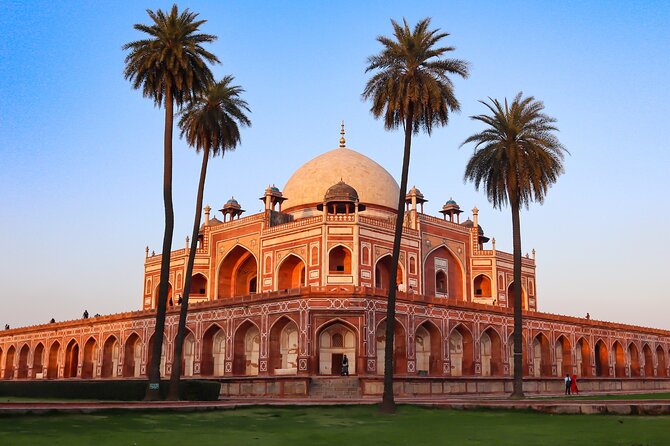
Humayun’s Tomb is another UNESCO World Heritage stop and is also about 1 hour, though entrance fees are not included. It’s described as India’s first garden mausoleum and a prime example of Mughal architecture. If you’re interested in how Mughal designs evolved toward later masterpieces, this stop gives you a useful architectural bridge.
Connaught Place for a food break
You get a lunch/dinner-style pause around Connaught Place, with the guide recommending places for food. The listed time is 45 minutes, and admission isn’t involved. This isn’t a museum stop—it’s where you grab something local before you plunge into Old Delhi.
Chandni Chowk, Jama Masjid, and Khari Baoli spice market
Then Old Delhi goes full steam:
- Chandni Chowk is listed for about 1 hour and is free to enter. It’s a working bazaar where you’ll see stalls selling spices, dried fruits, jewelry, and saris.
- Jama Masjid is about 1 hour, not included for admission. It’s described as India’s biggest mosque and sits opposite the Red Fort area.
- Khari Baoli is short—about 30 minutes—and free. This is Asia’s biggest wholesale spice market, with dried goods everywhere.
This trio is a good way to experience Delhi beyond monuments. You’re seeing how people shop, what they buy, and what the city smells like. Just keep your pace steady, and don’t plan to do heavy shopping unless you have time on your last day too.
Late-day transfer to Agra
By the end of Day 1, you drive to Agra (listed as about 3 hours) and are dropped at your hotel. This structure is practical. It prevents you from trying to fit Agra sights into the first day, then burning out before the dawn Taj Mahal.
Agra Day 2: Dawn at the Taj Mahal, Plus Agra Fort and the Baby Taj
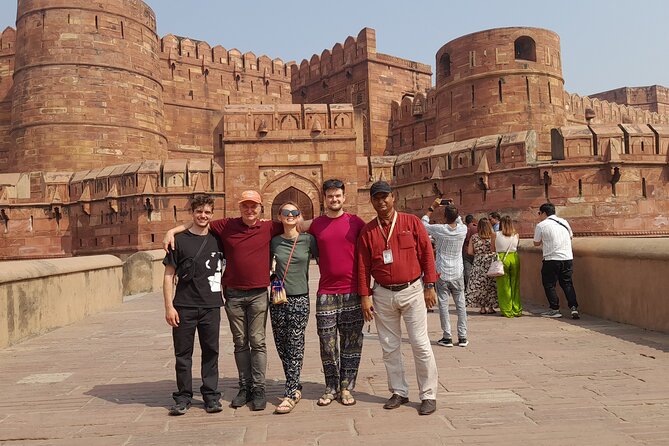
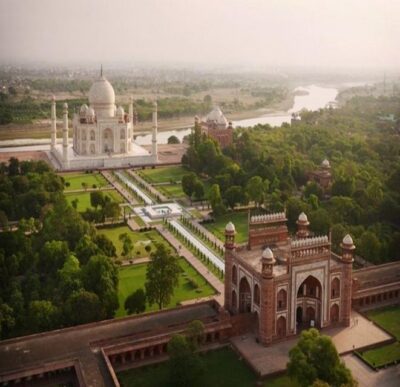
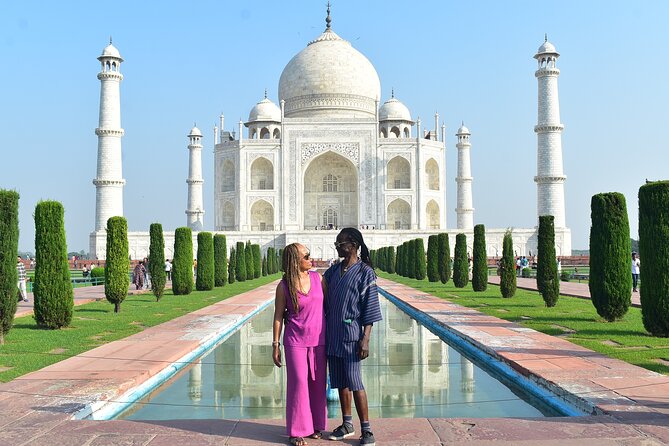
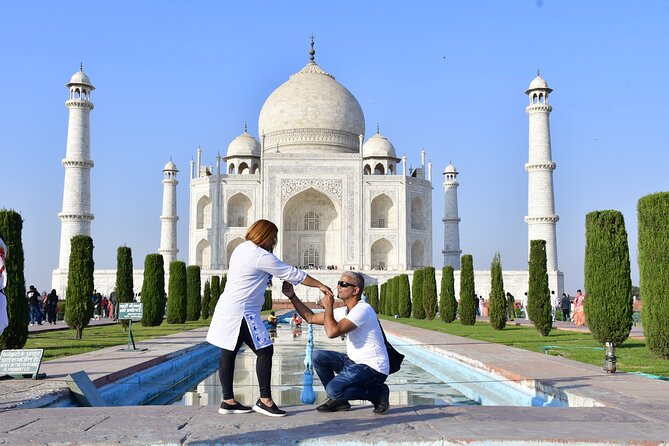
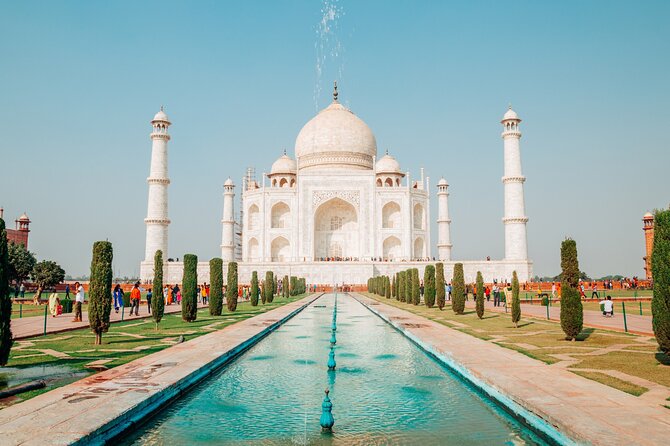
If you only care about one place, it’s the Taj Mahal. This plan gives it the early timing: Taj Mahal is scheduled early in the morning for a dawn view. The stop is listed as about 3 hours, and admission fees are not included.
That early start is exactly what you want. The Taj Mahal experience is more than the photo. It’s the way light hits white marble at a time when the day still feels cooler and quieter. You also get time to move through different viewpoints and slow down a bit.
Agra Fort: where power and architecture meet
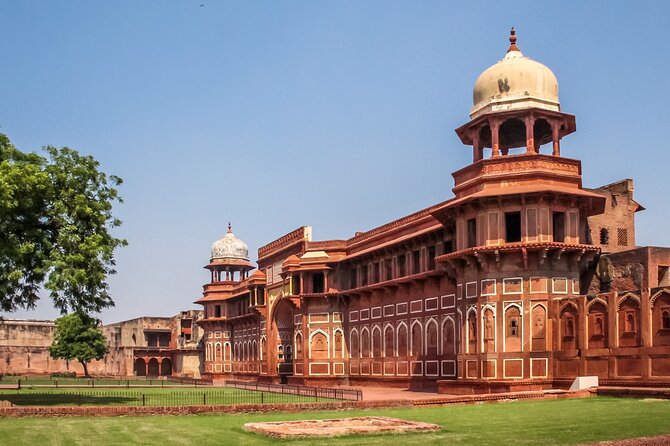
Next is Agra Fort (about 1 hour, entrance not included). You’ll see pavilions, palaces, and courtyards, described as a striking fusion of Islamic and Mughal styles. Forts can be intimidating when you’re rushing, but with a local guide and a fixed time block, you can follow what’s where and why it matters.
Itmad-ud-Daula: the Baby Taj stop that rewards attention
The “Baby Taj” is Itmad-ud-Daula, listed for about 30 minutes and also not included for admission. The standout detail here is the inlay work—pietra dura—and the fact it’s made completely of white marble, as described. Even in a short slot, it’s worth paying attention, because the smaller scale often makes it easier to spot craftsmanship.
Food stop in Agra
After sightseeing, you get a 45-minute food break in Agra with guide recommendations (admission not included). It’s a smart inclusion, because the route is busy. You need a moment where you’re not thinking about tickets or transport—just eating and resetting.
Transfer to Jaipur overnight
Then comes the about 4-hour drive to Jaipur, ending with drop-off at your booked hotel for the night. The transfer time is significant, but it’s also what allows the next day to focus on Jaipur’s iconic sights instead of trying to squeeze them in at night.
Jaipur Day 3: Jaigarh Fort Views, Hawa Mahal Windows, Jal Mahal Calm, and Jantar Mantar
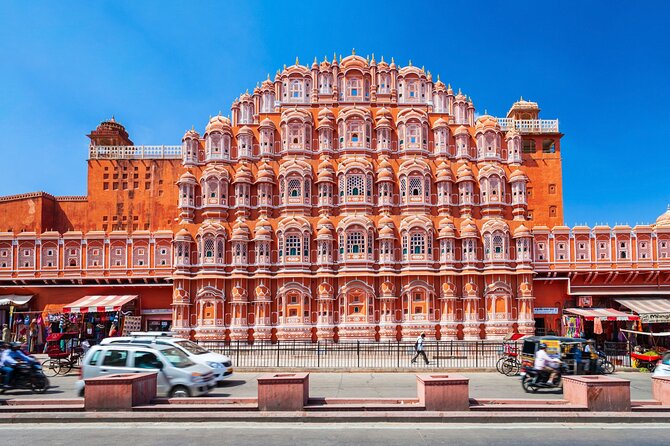
Jaipur is often the most fun day because the architecture feels theatrical. You get a mix of fort views, palace drama, lake-side serenity, and a UNESCO observatory that’s surprisingly practical.
Jaigarh Fort: start higher for bigger views
Day 3 begins at Jaigarh Fort (listed as about 2 hours). It was built by Maharaja Sawai Jai Singh II in 1726 atop the Aravalli hills. Entrance isn’t included. Forts in Jaipur can feel long if you don’t know what you’re looking at, but the payoff is the panoramic feel and the sense of scale. This is a good opener because it sets the geography in your head early.
Hawa Mahal: 953 windows, and a quick stop done right
Then you visit Hawa Mahal (Palace of the Winds) (about 30 minutes, free admission). The highlight is the 953 tiny windows, called jharokhas, with elaborate latticework. This stop is perfect for a short schedule because you can take it in quickly: look up, spot the lattice patterns, and connect it to the idea of cooling and observation described.
City Palace: where the center of Jaipur still lives
Next is City Palace of Jaipur (about 1 hour, entrance not included). It’s in the center and includes buildings, gardens, and courtyards. The palace is described as a former home of the royal family, and even a limited time here helps you understand why Jaipur feels designed rather than random.
Jal Mahal: the lake-lens break
You stop at Jal Mahal, a 17th-century palace-like structure in the middle of Man Sagar Lake (about 30 minutes, free). The viewpoint is about the contrast: a calm water setting paired with built architecture. It’s not necessarily a long stay type of stop, but it gives you a breathing moment between forts and observatories.
Food pause in Jaipur
There’s another 45-minute dining break with guide recommendations for a Rajasthani meal. It’s a nice pattern throughout the tour: a set time to eat before the next walking-heavy segment.
Jantar Mantar: a UNESCO stop that feels like science
Finally, you visit Jantar Mantar (listed as about 30 minutes, entrance not included). It’s described as one of India’s best-preserved historic observatories and a UNESCO World Heritage Site. If you thought the Golden Triangle was only about palaces and tombs, this one adds a different angle: the city’s rulers weren’t just building to impress—they were measuring the sky too.
Back to Delhi, or a drop at Jaipur Airport
After Jaipur, you head back to Delhi (about 4 hours). If it fits your schedule better, you can also get drop-off at Jaipur Airport instead.
Price and Value: What $250 Covers, What It Doesn’t, and Why That’s Typical Here
At $250 per person, the value depends on what you’re comparing it to. The big included piece is transport plus guided sightseeing: private air-conditioned car, professional driver, pickup/drop-off in Delhi, Agra, and Jaipur, and government-approved local guides. You also get all parking fees, tolls, fuel, and taxes, which often add up when you arrange things yourself.
Also note the hotel angle. The price statement includes two nights accommodation if you book with the hotel option. That can shift the value a lot, because lodging is usually the largest cost after transport and entrance fees.
The main extra cost you must plan for is entrances: $70 per person listed for monument entrance fees. Gratuities/tips are also not included.
If you like the idea of a compact “see the big things, get explanations, and avoid the hassle” trip, this pricing usually makes sense. If you’re hoping for a low-cost do-it-yourself vibe, the entrance fees plus the fast pacing might feel less budget-friendly.
Who This Tour Fits Best (And Who Might Find It Too Tight)
This is a smart fit if you:
- Have only 3 days for the Golden Triangle
- Prefer a private car over public transit and constant meeting points
- Want guided context at major landmarks like Qutub Minar, Humayun’s Tomb, Agra Fort, and Jantar Mantar
- Travel as a couple or family who benefits from one group staying together
It may feel too tight if you:
- Hate short time blocks (often 30–60 minutes)
- Want long, slow visits inside multiple museums
- Plan to shop heavily in Old Delhi without extra time
One encouraging detail: guide service quality seems to be a strong point. The names and comments around Mr. Vicky and drivers like Manoj and Anil signal that professionalism and kindness are part of the experience here, not just the monuments.
Should You Book This 3-Day Golden Triangle Tour?
I’d book this if you want a high-hit, low-stress Golden Triangle: Delhi’s landmark blend, Agra’s Taj Mahal focus at dawn, and Jaipur’s key architectural stops in a clean loop. The private AC car plus hotel pickup/drop-off makes it feel like the itinerary is running the logistics for you, not the other way around.
I’d skip or adjust if you’re entrance-fee sensitive or you’re the type who needs long decompression time between sights. Also, budget the $70 per person entrances up front so there are no surprises.
If your priority is seeing the essentials with a guide who can explain what you’re looking at—and doing it without planning headaches—this is a solid bet.
FAQ
What is the duration of the tour?
The tour runs for about 3 days.
Where does the pickup happen?
Pickup is offered from Delhi, Noida, Gurugram, Ghaziabad, or Faridabad.
What time can I choose for pickup?
You can choose any pickup time between 7 a.m. and 11 a.m.
Are monument entrance fees included?
No. Entrance fees are listed as $70 per person and are not included.
Do I get a hotel included?
Two nights accommodation is included only if you book with the hotel option.
Is this a private tour?
Yes. It’s a private tour/activity, and only your group participates.
Does the tour include guides and transportation?
Yes. It includes sightseeing with government-approved local guides and a private air-conditioned car with a professional driver.
Can I be dropped off at Jaipur Airport instead of returning to Delhi?
Yes. The tour notes that you may choose a convenient drop-off at Jaipur Airport if it fits your travel schedule.
What if I need to cancel or change dates?
The experience is non-refundable and cannot be changed for any reason; the amount paid won’t be refunded.