REVIEW · NEW DELHI
From Delhi: Overnight Taj Mahal & Agra City Tour by Car
Book on GetYourGuide →Operated by Keeper Landwey · Bookable on GetYourGuide
Sunrise at the Taj hits different. This Delhi-to-Agra overnight trip lines up the Taj Mahal for both sunrise and sunset, then adds Agra Fort, the Baby Taj, and the red-stone ghost town of Fatehpur Sikri.
I love the focus on private, air-conditioned transport with a driver, so you’re not juggling schedules in a packed city. I also love the way the day is timed for strong viewpoints, including the Mahtab Garden sunset angle and the Taj from the less-fussy side.
One drawback to plan for: the Taj Mahal is closed on Fridays, and fog can affect sunrise visibility, so it helps to be flexible with timing.
In This Review
- Key highlights to lock in
- Private Delhi-to-Agra transport that keeps the day on your side
- Day one: Baby Taj for details, Agra Fort for power, then Mahtab Garden sunset
- Baby Taj (Itmad ud Daulah): the “practice round” for the Taj
- Agra Fort: where Shah Jahan’s prison story becomes real
- Mahtab Garden sunset: the view you’ll remember after the photos fade
- Day two: Taj Mahal at sunrise, then Fatehpur Sikri’s red-stone ghost town
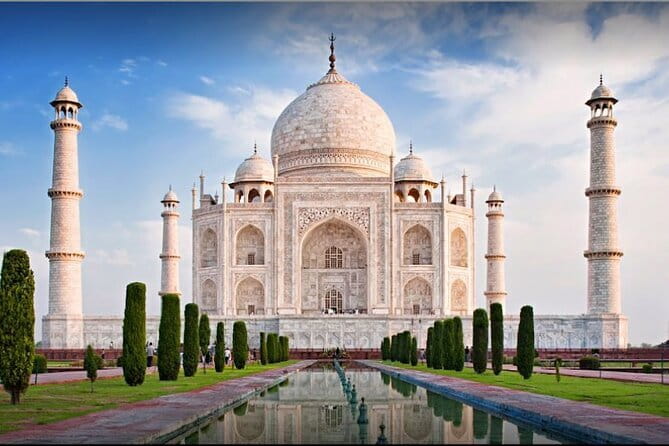
- Sunrise at the Taj Mahal: better light, different mood
- Breakfast and checkout: keep the morning simple
- Fatehpur Sikri: Akbar’s ghost town and the water story
- What Agra’s “two Taj” strategy really gives you
- Price and value: what $79 buys you for 2 days
- Practical tips that make this tour smoother
- Bring what the Taj day needs
- Plan around Friday closure
- Expect fog sometimes and stay flexible
- Lunch is on you
- Languages: choose based on comfort
- Safety and comfort
- Who should book this and who should skip it
- Should you book the Delhi to Agra overnight car tour?
- FAQ
- What’s the duration of this Delhi to Agra overnight tour?
- Where does pickup happen?
- Does the tour help you avoid ticket lines?
- Are entrance fees included?
- Are meals included in the price?
- What languages are available for the live guide?
Key highlights to lock in

- Taj Mahal twice: once at sunrise, again at sunset for different light and photo angles
- Mahtab Garden sunset timing: a classic viewing approach before you head to the Taj area
- Agra Fort inside the story: Shah Jahan’s imprisonment setting gives context you’ll feel while walking
- Baby Taj (Itmad ud Daulah): smaller, intricate, and a favorite for close-up details
- Fatehpur Sikri ghost town: Akbar’s 16th-century capital, abandoned after water troubles
- Smooth logistics: private car, parking/tolls handled, water and umbrellas provided
Private Delhi-to-Agra transport that keeps the day on your side

The biggest win here is how little time you spend coordinating. You’re picked up from anywhere in Delhi NCR or the airport, then driven in a private air-conditioned car with all the road stress shaved off. Even before you reach Agra, you’re set up for a calmer trip than the usual DIY scramble.
This kind of route also matters for Taj Mahal mornings. You need to be there early, and you need to move through entrances without wasting hours. The tour includes skip the ticket line, which helps a lot when you’re arriving in pre-dawn crowds.
Guides can make or break monument time. Based on the guide names and feedback tied to this experience—people like Aman, Kaif, Faizal, Shuaib, and Owais—the consistent theme is clear communication and practical guidance. Some guides are also praised for finding good photo angles, which is exactly what you want when you’re juggling big sights, bright light, and your own limited time.
You can also read our reviews of more city tours in New Delhi

Day one: Baby Taj for details, Agra Fort for power, then Mahtab Garden sunset

Day one has a smart rhythm: start with a monument that rewards slow looking, then move into Agra’s imperial drama, then finish with sunset planning.
Baby Taj (Itmad ud Daulah): the “practice round” for the Taj
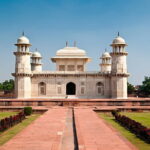
Your afternoon begins with the Baby Taj, the tomb of Itmad ud Daulah. This is one of those stops where the name can fool you. Yes, it’s smaller than the Taj Mahal, but it’s packed with fine detail, and it’s a great way to learn how the architecture “talks” before you see the main headline later.
If you like photographing texture—carving, symmetry, marble surfaces—this is where you’ll train your eye. It also gives you background for what you’re about to see, so the Taj Mahal doesn’t feel like a random landmark. It feels like the result of a long style and a long obsession.
Agra Fort: where Shah Jahan’s prison story becomes real
Next comes Agra Fort, tied to Shah Jahan’s imprisonment. This stop hits differently than standalone sightseeing because the fort is basically a physical timeline. You’re walking through spaces that once held political power, control, and confinement. The guide’s job here is huge: they turn what looks like stone walls into a sequence of decisions and consequences.
One thing I appreciate about putting Agra Fort on the first day is energy. You’re not waking up and racing through the Taj yet. You can absorb the fort and its meaning, then let the sunset do its job without feeling rushed.
Mahtab Garden sunset: the view you’ll remember after the photos fade
Then you head to Mahtab Garden, a key approach point for sunset viewing. The schedule has you taking in sunset around this time window, leading into the Taj Mahal experience from the sunset side viewpoint.
The practical value of this timing is simple: you get softer light and a slower build toward the Taj’s glow. Even if you’re not chasing perfect shots, the light changes how surfaces look—especially marble. And if you’re the type who likes seeing a monument from different angles, Mahtab Garden sets you up well for the later Taj perspective described as a sunset point view, including the rear-side angle.






Day two: Taj Mahal at sunrise, then Fatehpur Sikri’s red-stone ghost town
Day two starts early again, because the Taj Mahal at sunrise is the main event. If you’re hoping to beat the busiest hours and see the building under cooler light, this is the moment. The schedule includes a guide-led Taj visit with sunrise timing.
Sunrise at the Taj Mahal: better light, different mood
Arriving early is about more than the photo. It’s also about atmosphere. Sunrise brings a quieter feel, and you’ll likely have more space to move compared with later crowds.
Fog can be a factor. In some situations, visibility can be poor enough that a good guide adapts the plan. The idea to carry with you: don’t treat sunrise as a guaranteed show, treat it as the best chance. If visibility is limited, you’ll still have the sunset visit later, which is built for exactly that kind of variability.
One more logistics detail that matters: with skip the ticket line, you spend more time inside the experience and less time stuck waiting.
Breakfast and checkout: keep the morning simple
After sunrise, the schedule includes breakfast and then hotel checkout around late morning. This breaks the day into two clean halves: Taj Mahal first, then the bigger “what happened here” trip to Fatehpur Sikri.
Fatehpur Sikri: Akbar’s ghost town and the water story
Then you head to Fatehpur Sikri, described as a perfectly preserved red stone ghost town. It was Emperor Akbar’s capital built in 1569, and it was abandoned when the water supply failed. That last detail is important. It turns Fatehpur Sikri from a pretty ruin into a lesson in how fragile big projects can be when nature and infrastructure don’t cooperate.
Walking through a deserted capital is a different feeling than visiting a working city. You tend to notice scale. You notice planning. You start asking how people lived here day to day, and then the absence makes the answer feel haunting.
In hot weather, keep pace comfortable. Fatehpur Sikri is outdoors, and you’re there for a set window of time before heading back to Delhi.
What Agra’s “two Taj” strategy really gives you
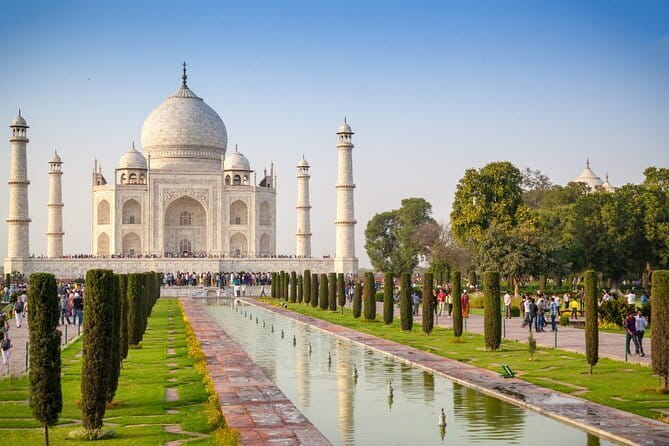
Seeing the Taj Mahal twice sounds like a marketing line, but it has a real payoff. Sunrise and sunset don’t just change the temperature of the air. They change how your brain reads the monument.
- Sunrise gives you the cool, early tone where the marble looks almost softer.
- Sunset gives you warmer light, and it helps to notice edges, depth, and reflections differently.
The tour also emphasizes viewing from a rear side sunset point and a sunset-focused approach through places like Mahtab Garden. That matters if you’re trying to understand the full building, not only its most famous front view.
You’ll also like this if you’re the type who cares about photos but doesn’t want to play photo-detective all day. A good guide can point out where your time is best spent, and the included timing keeps you from running between viewpoints like a frantic tourist.
Price and value: what $79 buys you for 2 days
Let’s talk money in a practical way. At $79 per person for a 2-day overnight experience, you’re paying for several things that add up fast if you arrange them yourself:
- Private air-conditioned car with driver (Delhi to Agra and back)
- Private guide time for the monument-heavy schedule
- Entrance fee coverage for Taj Mahal and Agra Fort when you choose the hotel option
- Parking/toll fees, plus water and umbrellas
The value here isn’t just the monuments. It’s the “friction removal.” In India’s North India travel corridors, time and stress can be as expensive as money. Paying for a driver and guide lets you spend your energy where it matters: standing in front of the sights and actually learning them.
One thing to keep in mind: meals (especially lunch) aren’t included. The schedule includes lunch stops at multi-cuisine restaurants, but those are explicitly not part of the tour price. So budget for lunch separately, and you’ll feel the price/value balance make more sense.
Practical tips that make this tour smoother
A few things will help you enjoy this trip instead of just survive it.
Bring what the Taj day needs
- Passport or ID card (carry it)
- Comfortable shoes (you’ll walk)
- Dress for sun and dust even if you’re doing sunrise (Agra mornings can still feel gritty)
Plan around Friday closure
The Taj Mahal is not open on Fridays, so that’s a hard stop. If your dates land on a Friday, you’ll need an alternative plan. If you can adjust days, aim for one of the other days so you don’t lose the core experience.
Expect fog sometimes and stay flexible
Fog is real in some seasons. If early visibility is poor, your guide can adjust what’s possible—because you still have a sunset visit later. Keep your mindset on day two’s bigger photo window too.
Lunch is on you
Lunch is scheduled at multi-cuisine restaurants but isn’t included. You’ll likely get recommendations from your guide, but still plan for extra spending. Carrying a little buffer money is just smart here.
Languages: choose based on comfort
Guides can be English, German, Spanish, Chinese, French, Russian, or Japanese. If you’re booking for language comfort, pick the one you’ll enjoy the most—because this tour gets its best moments from explanations, not just viewing.
Safety and comfort
You’re in a private car with a driver, and many people mention feeling safe with professional driving. For solo travelers, that matters. It also helps you stay hydrated with the tour’s water provision and shade-ready with umbrellas.
Who should book this and who should skip it

This experience is a strong fit if:
- you want maximum Agra highlights in a short window
- you care about sunrise Taj Mahal and aren’t willing to gamble your day on public transport timing
- you like having a guide handle logistics while you focus on walking, photos, and questions
- you’re traveling solo and appreciate a driver/guide set-up that reduces hassle
You might consider a different format if:
- you hate early starts and early mornings
- you’re very budget-sensitive and don’t want to add lunch costs on top
- you’re traveling on a Friday and can’t shift dates
Should you book the Delhi to Agra overnight car tour?

Yes—if your top priority is the Taj Mahal under both sunrise and sunset conditions, this is one of the most efficient ways to do it with a guide and private transport. The pair of Taj visits plus Agra Fort, Baby Taj, and Fatehpur Sikri gives you a complete “Agra story,” not just a photo stop.
If you’re flexible with timing and you’re okay paying a bit for guide-led flow (instead of DIY), the value makes sense. Just plan for lunch being separate, and keep an eye on Friday closure.
FAQ

What’s the duration of this Delhi to Agra overnight tour?
It runs for 2 days. The schedule starts with a pickup in Delhi on day one, and exact starting times can depend on availability.
Where does pickup happen?
Pickup is included from anywhere in Delhi NCR or from the airport.
Does the tour help you avoid ticket lines?
Yes. It includes skip the ticket line.
Are entrance fees included?
Entrance fees for the Taj Mahal and Agra Fort are included in the hotel option.
Are meals included in the price?
Lunch is not included. Water and umbrellas are provided during the tour.
What languages are available for the live guide?
The live guide is available in English, German, Spanish, Chinese, French, Russian, and Japanese.