REVIEW · NEW DELHI
Full Day Delhi Temple Tour
Book on Viator →Operated by Deejohn Holidays India Tours · Bookable on Viator
Temple hopping in one day works. This full-day route strings together major sights with hotel pickup and a dedicated local guide in a private vehicle, so you’re not stuck guessing where to go next. You’ll spend time at big-name spiritual stops like Swaminarayan Akshardham and Gurudwara Bangla Sahib, then aim for an evening ritual at ISKCON.
What I like most is the setup: you get lunch included and monument/entrance fees are covered, which usually means fewer money surprises and less queue-waiting for paperwork. The second big win is the private guide format—your schedule moves to your group’s pace, not a one-size-fits-all herd plan.
One thing to consider: the day is packed. If you’re the type who wants slow, linger-on-every-courtyard browsing, you may feel the timing is tight—especially if temple opening hours or your stop order compresses the time you have inside.
In This Review
- Key Highlights You’ll Feel Right Away
- Price and Logistics: What $57 Actually Buys You
- The Day’s Route: Hindu, Sikh, and Bhakti in One Arc
- Swaminarayan Akshardham: The Big-Scale Temple That Sets the Tone
- What makes Akshardham special in real life
- Know the camera and phone rule before you go
- Dress and shoe etiquette
- Gurudwara Bangla Sahib: Where Practical Etiquette Matters
- The sacred pond and the rhythm of devotion
- What you should do (and what you should expect)
- Bahai Lotus Temple: Beautiful Architecture, but Check the Timing
- What can go wrong
- ISKCON Temple and Evening Aarti: Ending With a Living Ritual
- Possible limitation: timing and access
- Comfort Tips That Make or Break the Experience
- How the Guide Changes Everything
- Schedule Reality Check: When “Private” Still Feels Tight
- Who This Tour Fits Best (and Who Might Be Happier Elsewhere)
- Should You Book This Full-Day Delhi Temple Tour?
- FAQ
- How long is the full-day Delhi temple tour?
- Does the tour include hotel pickup and drop-off?
- Is lunch included?
- Are entrance fees covered?
- What should I wear to visit the temples?
- Are shoes allowed inside the temples?
- Can I bring my phone or camera into Akshardham Temple?
- Is Akshardham Temple open every day?
Key Highlights You’ll Feel Right Away
- Hotel pickup and drop-off saves real time in Delhi traffic
- Lunch included, and it’s tied to the day’s main Hindu temple stop
- Private guide for just your group, so questions actually get answered
- Entrance fees and monument fees included, reducing add-on costs
- Modesty and camera rules are specific, especially at Akshardham
- Evening aarti at ISKCON adds a lived, sensory close to the day
Price and Logistics: What $57 Actually Buys You
At $57 per person for a roughly 11-hour outing, this is best judged as an all-in day rather than a “cheap sightseeing bus.” You’re paying for three things that matter in Delhi: transport, a guide, and entry costs.
Here’s what’s included that typically costs extra if you DIY:
- hotel pickup and drop-off
- A/C private vehicle
- professional local tour guide
- lunch
- monument fee / entrance fees to the temples you visit
That bundle is the value play. Delhi isn’t hard to visit, but it’s hard to visit efficiently—especially when you want religious sites handled with the right etiquette. This tour tackles that head-on with a guide and built-in entry.
What’s not included is also clear: you’ll cover food/drinks beyond lunch, and you’ll likely pay if you want souvenir photos. If you’re planning on snacks all day, budget a bit more.
One more practical note: the tour is listed as a private tour for your group, yet it also mentions group discounts. In plain terms, if you’re traveling as a small group, it’s still designed to stay private—just don’t expect the price to feel like a solo bargain if your group size is tiny.
You can also read our reviews of more tours and experiences in New Delhi



The Day’s Route: Hindu, Sikh, and Bhakti in One Arc
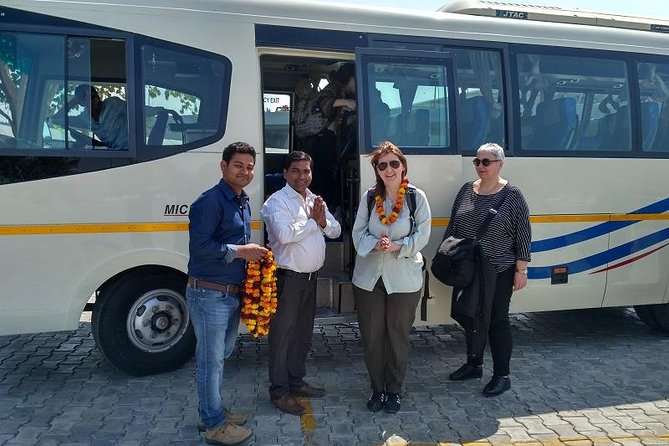
This tour is structured around major faith landmarks in and around New Delhi. You’re not just checking buildings—you’re watching how worship works across traditions.
You’ll get stops that represent:
- large Hindu temple architecture, including Swaminarayan Akshardham
- a major Sikh gurdwara, Gurudwara Bangla Sahib
- ISKCON for an evening worship moment (the aarti ceremony)
Depending on the day, there may also be a stop for the Bahai Lotus Temple; it’s called out as closed on Mondays, which tells you it’s part of the plan in the typical flow.
The best way to think about the route is this: it gives you a “high and low” balance. You’ll see grand, photo-friendly shapes (Akshardham), then move into places where you experience faith through space rules, routine, and community practice (Bangla Sahib and the ISKCON ritual).
Swaminarayan Akshardham: The Big-Scale Temple That Sets the Tone
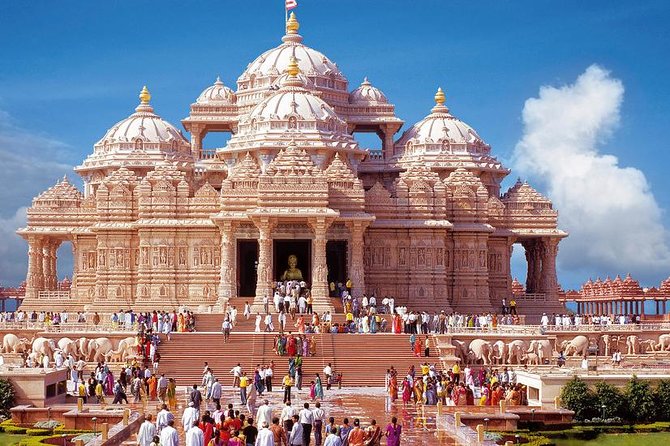
Akshardham is the headline stop for many people for a reason: it’s designed to impress, and the numbers back it up. The complex was recognized by Guinness World Records as the World’s Largest Comprehensive Hindu Temple in 2005.
When you visit around 10am, you’re arriving relatively early in the day, which usually helps with energy levels and crowd flow. And this stop anchors the lunch too—one of the standout moments is that the included meal here can be a highlight of the day, not an afterthought.
What makes Akshardham special in real life
Even without slowing down to every detail, Akshardham feels like a full “world” rather than a single courtyard. That’s exactly why time can become tricky: if you want extra activities inside the complex (like longer add-on experiences), you might wish you had more than the scheduled window.
Know the camera and phone rule before you go
This is a big one. Cameras and mobile phones are not allowed inside Akshardham Temple. You can hold them for you at a cloakroom before entry. Plan for that so you’re not scrambling at the entrance.
If you rely on your phone as a map or to translate, set those apps up before you reach the temple area. Once you’re inside, you’ll be looking and listening more than photographing.





Dress and shoe etiquette
You should dress modestly—arms and legs covered. Expect shoes removed at most worship areas. Comfortable walking shoes help because you’ll be on your feet for a long day anyway.
Gurudwara Bangla Sahib: Where Practical Etiquette Matters
Around 12:30pm, you’ll head to Gurudwara Bangla Sahib, one of the most prominent Sikh gurdwaras in Delhi.
This place stands out because it’s open to people of all castes, creeds, and faiths. That matters for visitors—it means you’re allowed to be there without needing to “belong” to a religion to participate respectfully.
The sacred pond and the rhythm of devotion
Inside the complex there’s a sacred pond, and devotees take baths there. It’s one of the moments that makes the site feel real rather than staged.
You’ll also get the chance to understand the religious significance from your guide’s commentary. In a city where you can sometimes get overwhelmed by names and dates, a guide helps you connect what you’re seeing with why people come here.
What you should do (and what you should expect)
- Follow modest dress rules and cover arms and legs.
- Be ready for shoes-off areas.
- Move calmly. Gurdwaras are active places with routines, not a museum maze.
This is also where the “private guide” format pays off. Instead of watching instructions bounce from person to person, you’ll get told what to do before you step into each area.
Bahai Lotus Temple: Beautiful Architecture, but Check the Timing
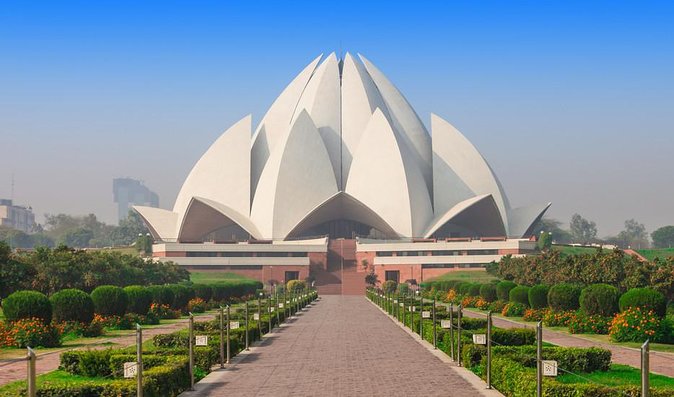
The Bahai Lotus Temple is called out as closed on Mondays, which tells you it’s part of the typical route. If your dates land on a day it’s open, you’ll likely get a stop for its distinctive lotus-like form.
What can go wrong
A Lotus Temple stop can get slowed by lines. If you’re visiting on a busy day, you might find yourself spending more time waiting than walking around with intention. That’s not a “tour problem” so much as the reality of a major, popular site.
If you’re the type who wants lots of photos, take your time—but also remember that this is a worship site in action, so keep your behavior respectful and your movement orderly.
ISKCON Temple and Evening Aarti: Ending With a Living Ritual
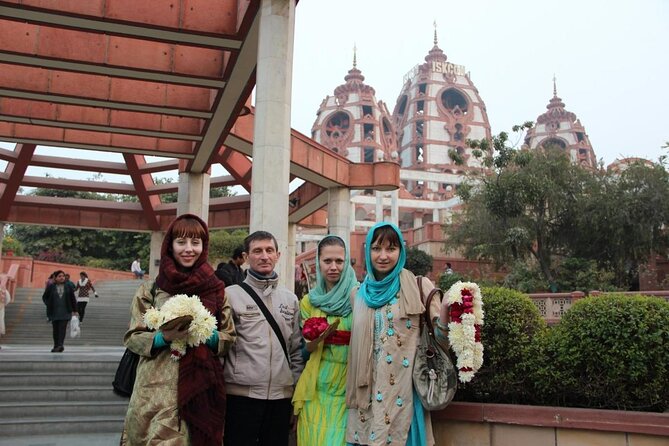
As evening falls, the plan includes an aarti ceremony at the ISKCON temple. This is one of the most memorable ways to close the day because it shifts you from sightseeing mode into ritual mode.
An aarti is not just a performance—it’s a shared moment of devotion. You’ll be observing something that’s happening right then, in front of you, with people participating as part of their faith practice.
Possible limitation: timing and access
One practical consideration: your schedule can affect how much you get to do inside. In at least one similar experience, the ISKCON timing left less access than expected because it was closed in the afternoon.
To protect your experience, go with an open mindset: you’re there for the ceremony, and you may or may not have the same inside access depending on the day’s hours and how the afternoon unfolds.
Comfort Tips That Make or Break the Experience
A tour this long (about 11 hours) lives or dies on small choices. Here’s how to set yourself up:
- Wear modest clothing: arms and legs covered at places of worship.
- Plan for shoes-off: you’ll remove them at most worship locations.
- Bring a light layer: Delhi weather can swing, and lines/queues can stretch your waiting time.
- Use comfortable walking shoes: you’re moving between sites all day.
- Expect photo limits at Akshardham: know the phone/camera rule in advance and use the cloakroom option.
- If you want a vegetarian meal, request it when booking. A vegetarian option is available.
Also, mentally set your expectations. The tour is designed to cover multiple major locations, so it won’t feel like one calm, slow temple day. If you want slow, plan to return to your favorite site on another day.
How the Guide Changes Everything
This isn’t a self-guided day. A professional local guide is part of the package, and that matters in Delhi for three reasons:
- Religious context: you’ll get history and religious significance explained as you move between sites, which helps you avoid the trap of thinking you’re only looking at “pretty buildings.”
- Etiquette guidance: modest dress, shoes-off areas, and behavior expectations land easier when someone tells you what’s required before you reach a threshold.
- Route pacing: your guide can help you steer the order and timing so you spend less time stuck in confusion and more time actually seeing.
One of the best parts of the experience—based on the comments I saw from the tour outcome—was the quality of the guide and driver. That combination helps everything feel smoother, especially when Delhi traffic and site rules can turn an ordinary day into a stressful one.
Schedule Reality Check: When “Private” Still Feels Tight
Even with a private vehicle and a guide, the day is still structured around set stops. If you’re hoping for a lot of free roaming inside each complex, you may feel a pinch.
The most common mismatch comes at Akshardham. The complex has multiple layers, and some parts may not be covered in a way that satisfies people who want every option inside. If you’re the type who wants to do the longer activities, know that your time may be limited by the broader schedule.
Still, there’s a smart way to work with it:
- Decide what matters most to you at Akshardham before you arrive.
- Ask your guide what you should prioritize inside.
- Don’t assume you can spontaneously add major activities at the last minute.
A rushed feeling often isn’t about effort—it’s about expectations. This tour is built to hit multiple faith sites in one day. If you want depth at one site, you’ll likely need a follow-up half-day or full-day later.
Who This Tour Fits Best (and Who Might Be Happier Elsewhere)
This is a good fit if you:
- want an organized day with pickup, guide, and lunch included
- prefer a private guide who can explain significance, not just point at buildings
- like the idea of seeing Hindu and Sikh sites, then ending with ISKCON’s evening ritual
- don’t want to wrestle with timing, transport planning, and entry logistics alone
It may be less ideal if you:
- dislike tight schedules and want hours of free exploring in one place
- strongly want to maximize every single in-complex activity at Akshardham within the same day
- are traveling on a Monday when Akshardham is closed (and Lotus Temple is also closed on Mondays)
Should You Book This Full-Day Delhi Temple Tour?
If your priority is a smooth, respectful, high-efficiency tour that covers the big Delhi temple highlights with a guide and lunch included, this is a solid pick for the price. You’ll get a strong “greatest hits” arc across major traditions, plus the practical comfort of pickup/drop-off and private transport.
But book it with eyes open. Plan for a full day, expect specific rules (especially at Akshardham), and understand that time inside the largest complexes may not match your ideal “slow travel” pace. If you’re okay with that trade, you’ll likely come away feeling you got your bearings fast and saw worship sites that are central to Delhi life.
FAQ
How long is the full-day Delhi temple tour?
It runs about 11 hours (approx.).
Does the tour include hotel pickup and drop-off?
Yes. Pickup from your hotel and drop-off at the end are included.
Is lunch included?
Yes, lunch is included.
Are entrance fees covered?
Yes. Entrance fees/monument fees for the temples you visit are included.
What should I wear to visit the temples?
Dress modestly, with arms and legs covered at places of worship.
Are shoes allowed inside the temples?
Shoes must be removed at most places of worship.
Can I bring my phone or camera into Akshardham Temple?
No. Cameras and mobile phones are not allowed inside Akshardham Temple. They can be held for you at the cloakroom before entry.
Is Akshardham Temple open every day?
No. The Swaminarayan Akshardham Temple is closed on Mondays.