REVIEW · NEW DELHI
3-4 Hour Old Delhi Heritage Walk Tour with Tuk Tuk Ride Wherever Required
Book on Viator →Operated by TravExcel India Tours & Travel · Bookable on Viator
Old Delhi turns corners into stories. A 3–4 hour heritage walk through Mughal-era Old Delhi, with an air-conditioned ride and tuk tuk/rickshaw hops where needed, puts major sights like Jama Masjid and Chandni Chowk right on your route.
I like two things a lot: the small-group cap of 15, which keeps the pace human, and the door-to-door A/C car transfers between stops so you’re not stuck in traffic heat. You also get bottled water during the tour, which sounds basic until you’re walking alleys in Old Delhi.
One thing to weigh: Jama Masjid admission isn’t included, and camera fees may apply. This tour also runs best with good weather, since it’s part walking through tight lanes.
In This Review
- Key highlights at a glance
- Old Delhi in 3–4 hours: A/C car, walking, and tuk tuk when it counts
- Entering Jama Masjid: Mughal-era scale you can feel
- Chandni Chowk and the paratha lane: markets as a living map
- Khari Baoli: the wholesale spice market that makes the city make sense
- Naughara: a name with a story, and a reminder that trade includes water
- Dariba Kalan: gold and silver lanes with Persian roots
- Guides and crowd control: what the best guides do differently
- Price and real value: where $24 actually goes
- Who should book this and who should think twice
- Should you book this Old Delhi heritage walk?
- FAQ
- How long is the Old Delhi heritage walk tour?
- What’s the price per person?
- Do I get hotel pickup and transfers?
- Is there air-conditioning during the tour?
- Is bottled water included?
- Is lunch included?
- Do I need to pay admission at Jama Masjid?
- Are camera fees included at Jama Masjid?
- What happens if weather is poor?
- Can I cancel for a full refund?
Key highlights at a glance
- Small-group limit (15) keeps the tour from feeling rushed
- A/C vehicle + rickshaw/tuk tuk hops help you cover ground without fighting every bottleneck
- Old Delhi markets in a smart loop, not a random scatter of stops
- Khari Baoli spice wholesale street gives you the real “how the city eats” view
- Dariba Kalan gold and silver lanes add a shopping-tradition contrast to the spice blocks
- Guides like Tariq, Adeel, and Rahis Kahn get repeated praise for English and crowd handling
Old Delhi in 3–4 hours: A/C car, walking, and tuk tuk when it counts
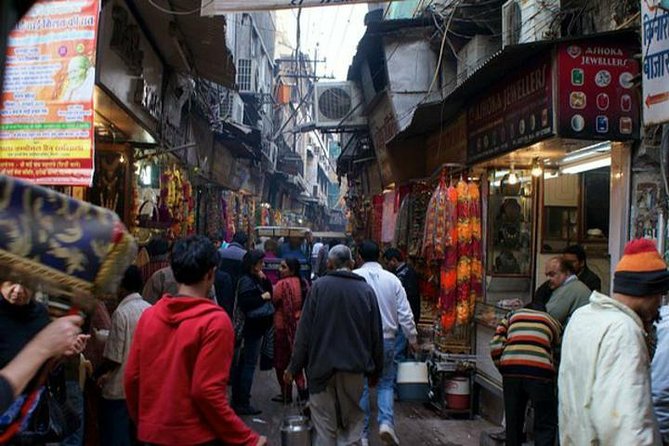
This is a half-day format built for Old Delhi’s reality: narrow streets, dense crowds, and constant turning. You’ll start with pickup (door-to-door transfers are part of the package), then travel between key zones in an air-conditioned car. When the lanes get too tight, the plan uses tuk tuk or rickshaws to bridge the gaps. The point isn’t to “speed through.” It’s to move efficiently while still spending time on the sights that matter.
You’re not stuck joining a huge group, either. The tour caps at 15 people, which makes a big difference when you’re trying to hear explanations in busy market corridors. It also helps with navigation. Old Delhi doesn’t reward wandering aimlessly—your guide’s job is to keep you oriented and moving safely.
Duration is about 3 to 4 hours. That’s long enough to feel like you got inside the city’s rhythm, but short enough that you’re unlikely to feel cooked by the end—especially with the A/C breaks between walking stretches.
One practical tip: because it’s a market-heavy route, plan for sensory overload. Spices, textiles, metalwork, and street-side shops hit all at once. If you’re the type who gets overwhelmed, stick close to the guide’s pacing and use the vehicle transfers as your reset moments.
You can also read our reviews of more walking tours in New Delhi



Entering Jama Masjid: Mughal-era scale you can feel
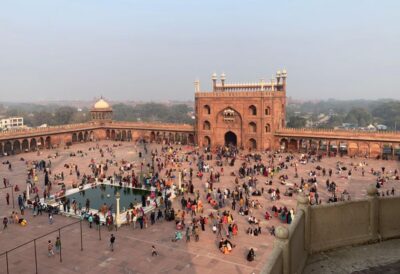
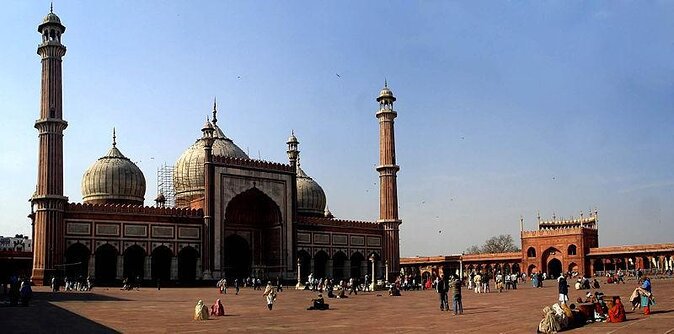
The tour first anchors you at Jama Masjid, one of India’s largest mosques. It was built by Mughal Emperor Shah Jahan between 1644 and 1656, and the sheer scale is the first thing you’ll notice. You’ll have about 45 minutes here, which is enough time to take in the building from multiple angles and still keep your attention on what makes it historically significant.
Important money note: admission is not included, and camera fees are not included either. If you want photos, build that cost into your day. If you’re traveling with a phone camera only, still be ready for on-site rules around filming—mosques often have specific expectations for visitors.
What I’d watch for (even if you’re not a architecture nerd): how the space is organized for crowds, how the monumental design frames movement, and how the surrounding area shapes the mosque’s role as a city center, not a detached landmark. Jama Masjid isn’t just something you look at. It’s something the neighborhood lives around.
Chandni Chowk and the paratha lane: markets as a living map
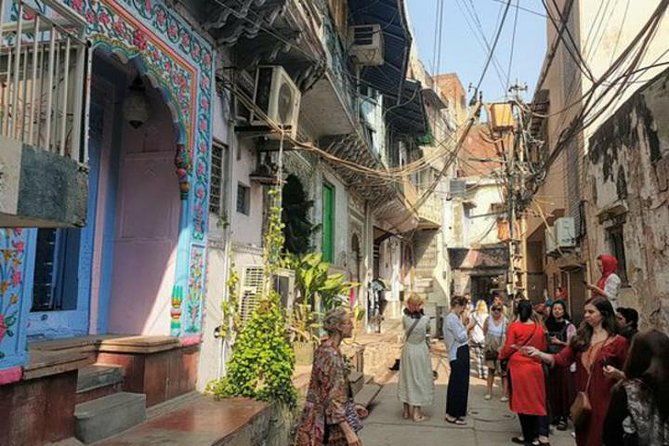
From the mosque area, the tour heads into the heart of Chandni Chowk, the famous shopping district in Old Delhi. You’ll get around 30 minutes here, which is tight enough to see variety fast without turning into a shopping marathon.
Chandni Chowk is known for everything from spices and dried fruit to silver jewelry and saris. There are also lots of small stalls selling everyday items, like essential oils and narrow-shop specialties. The value of the guided timing is that you’re not just walking past storefronts—you’re learning what the clusters of shops historically connect to what people actually buy.
Next comes Gali Paranthe Wali, the narrow paratha-focused lane in the Chandni Chowk area, with about 15 minutes set aside. This is short, but it’s exactly the kind of street that helps you understand Old Delhi beyond monuments. Even if you don’t stop for food, the street’s reputation tells you something about how the city organizes taste and routine in one concentrated corridor.
If you are hungry, this is one of the places you might consider buying a small snack—just remember the tour doesn’t include lunch, so you’re steering your own meal choices after the tour.
Khari Baoli: the wholesale spice market that makes the city make sense
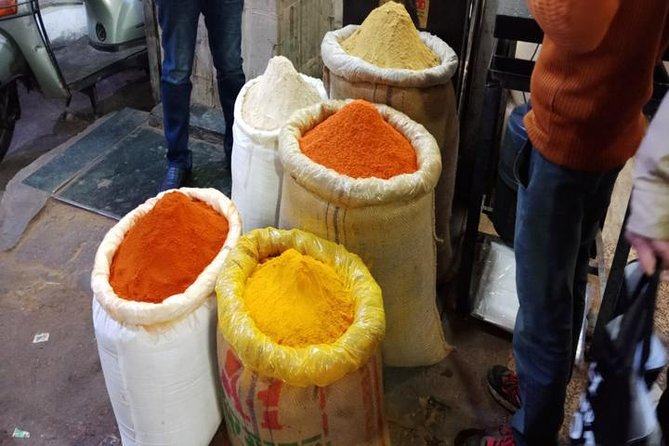
Then it gets real. You’ll visit Khari Baoli, a street famous for wholesale goods and known as Asia’s largest wholesale spice market. You’ll have about 30 minutes, and this is where the tour’s market focus pays off.
You’ll see the kind of trading that explains why Old Delhi has always been a food and commerce hub: lots of spices, nuts, herbs, and other ingredients people use daily. Even if you don’t buy anything, just watching how the trade operates helps you connect the dots between today’s storefronts and the city’s older role as a crossroads for goods.
This stop is also a good place to slow down your photos and look at labels and containers. If you like cooking—or even if you only like trying small things while traveling—you can often find ideas for spices to take home. The tour doesn’t include shopping time as a separate block, but you’ll be in the right neighborhood for it.
One practical note: spice markets are crowded and can be dusty. If you’re sensitive to smells or dust, keep tissues or a small mask handy.
Naughara: a name with a story, and a reminder that trade includes water
After Khari Baoli, the route includes Naughara for about 25 minutes. The name points to a local historical explanation: “nau” relates to nine, and one interpretation is nine homes. Another version ties the name to nine pots of water kept out for travelers.
Even if you don’t get lost in the etymology, this stop is useful because it changes the vibe. Markets can make a city feel purely transactional. A place like Naughara brings in the practical side of life—travel, hospitality, and the infrastructure that lets people move and trade.
In a half-day tour, this kind of stop is smart. It keeps the story from being only about big buildings and expensive goods. It adds texture: the everyday logistics that support the famous streets.
You can also read our reviews of more historical tours in New Delhi



Dariba Kalan: gold and silver lanes with Persian roots
Next is Dariba Kalan, a street area associated with gold and silver stalls. It’s about 30 minutes, and it works as a contrast to the spice and food zones. If you’ve spent time in markets before, you know Old Delhi often groups goods by trade tradition, and Dariba Kalan is one of those lanes where the identity shows in what’s sold.
The name has Persian roots: it derives from Dur-e be-baha, which refers to pearl imagery, and “kalan” is tied to meaning big or larger. You may also hear references to nearby smaller variants of the name, like Dariba Khurd or Chhota Dariba.
The big takeaway for you: this area helps you see that Old Delhi’s commerce wasn’t one-size-fits-all. People traded for different tastes and different classes of buyers, and the streets became the map.
If you like browsing, Dariba Kalan is the kind of place where window-shopping feels like reading. You’ll often see how craftsmanship and materials are sold side-by-side, with shop owners guiding you on what to look for.
Guides and crowd control: what the best guides do differently
Old Delhi can be intimidating if you’re doing it on your own. The strongest part of this tour, based on guide feedback and repeat praise, is how the guide handles the human side of the city: pace, safety, and explanations that make sense in the chaos.
Names that came up often include Tariq, Adeel, and Rahis Kahn. The common theme: good English, clear historical context, and logistics management in crowded areas. One review highlights a sense of safety and that the group never felt rushed. Another mentions that the guide helped with temples beyond the main route and managed the flow through tight streets without losing people.
For you, that matters because Old Delhi isn’t just about seeing famous stops. It’s about understanding what you’re seeing while you’re squeezed through it. A guide who can translate what’s happening in each neighborhood turns the day from random looking into actual recognition.
If you want to get the most out of your tour, ask questions during the car segments and at the walking transitions. Those A/C rides are more than a break. They’re when you can ask what to watch for next.
Price and real value: where $24 actually goes
At $24 per person, this half-day tour is priced like a budget-friendly way to get expert guidance plus transportation inside one of India’s toughest neighborhoods to navigate.
Here’s what’s included: bottled water, an air-conditioned vehicle, private transportation, and GST. What’s not included: lunch, and camera fees at Jama Masjid. Jama Masjid admission is also not included.
So your spending reality is simple: you’ll likely budget for the mosque entry and any camera-related charges, then handle meals yourself. Since lunch isn’t included, plan either a quick snack around Chandni Chowk or a proper meal after the tour ends.
Value-wise, you’re getting three things that are hard to combine on your own in Old Delhi:
- A guide who helps you understand the order and meaning of stops
- Transportation breaks to reduce time lost to traffic and crowd friction
- A route that balances monuments with working markets
If you’re only in Delhi for a short time, this kind of “best-of + working-streets” mix can save you time and stress.
Who should book this and who should think twice
This tour fits best if you want a guided Old Delhi experience in a half-day time window. It’s also a good choice for first-timers who like markets and want context, not just photos. The small-group size (15) makes it easier to ask questions and stay together.
You might think twice if you’re very sensitive to crowds or you hate walking through narrow lanes. The schedule is built around visiting multiple street areas, so comfortable walking shoes matter. If weather turns rough, expect the tour to adjust or cancel because the experience requires good weather.
If you’re the type who enjoys history but also wants to feel the city’s daily economy—spices, silver stalls, food streets—this route should land well.
Should you book this Old Delhi heritage walk?
I’d book it if you want a smart, time-efficient way to experience Old Delhi without getting stuck in endless maze-mode. The combination of A/C transport, a small group, and market stops that actually connect to what people buy every day is a strong match for most visitors.
Skip or delay booking only if you know you can’t handle the mosque entry fees and possible camera charges, or if your trip window is likely to have rough weather. Otherwise, this tour is a practical way to get inside Old Delhi’s story—mosque to markets to spice trade—without burning your whole day.
FAQ
How long is the Old Delhi heritage walk tour?
It runs about 3 to 4 hours.
What’s the price per person?
The tour is $24.00 per person.
Do I get hotel pickup and transfers?
Yes. Pickup is offered, and door-to-door hotel transfers are included.
Is there air-conditioning during the tour?
Yes. You travel in an air-conditioned vehicle between stops, with private transportation included.
Is bottled water included?
Yes. Bottled water is included.
Is lunch included?
No. Lunch is not included.
Do I need to pay admission at Jama Masjid?
Yes. Jama Masjid admission is not included.
Are camera fees included at Jama Masjid?
No. Camera fees are not included.
What happens if weather is poor?
This experience requires good weather. If it’s canceled due to poor weather, you’ll be offered a different date or a full refund.
Can I cancel for a full refund?
Yes. You can cancel up to 24 hours in advance for a full refund. If you cancel less than 24 hours before the start time, the amount you paid won’t be refunded.