REVIEW · NEW DELHI
Golden Triangle: Private Delhi Agra Jaipur Tour 3 Nights 4 Days
Book on Viator →Operated by Chaman Duggal Private Tours · Bookable on Viator
Delhi to Jaipur in four days can sound intense. But this private Golden Triangle tour packs the classics in a way that feels organized, not chaotic. You get a tight route through Delhi, Agra, and Jaipur, with English-speaking help on sightseeing days and a driver taking care of the road part.
I especially like the mix of big-name monuments and well-chosen city stops. Day 1 pairs political landmarks and Mughal-era sites with the Lotus Temple, and Day 2 centers on the Taj Mahal area with time for Agra Fort. One thing to keep in mind: several of the top monuments are not included in the listed price (entrance fees apply), so you’ll want to budget for tickets and plan around closures.
In This Review
- Quick hits from this private Golden Triangle tour
- Why the Golden Triangle works (and why 4 days is the right hit)
- Day 1 in Delhi: India Gate, Humayun’s Tomb, Qutub Minar, then Lotus Temple
- A simple downside to flag for Day 1
- Day 2 in Agra: Taj Mahal focus, Agra Fort, then Fatehpur Sikri territory
- The practical rhythm of Day 2
- Day 3 in Jaipur: Hawa Mahal quick stop, Jal Mahal views, City Palace, and Jantar Mantar
- What private transport and guided sightseeing really buy you
- Price and what you still need to budget (entrances, meals, hotel)
- What’s included
- What’s not included
- Timing and closures: Taj Mahal Fridays and Monday temple surprises
- Who this tour suits best (and who might want a slower plan)
- Should you book this Golden Triangle tour?
- FAQ
- How long is the Golden Triangle: Private Delhi Agra Jaipur Tour
- What’s included in the tour price
- Are hotel and meals included
- Do I need to pay entrance fees
- What attractions are free on the schedule
- Are any key sites closed on certain days
Quick hits from this private Golden Triangle tour
- Private transport, not shared chaos: you move as one group with airport and hotel transfers.
- English-speaking guidance on sightseeing days: you get explanations while you’re actually looking at the sights.
- A classic Golden Triangle route in 3 nights: Delhi sights, Agra’s Taj area, then Jaipur’s palaces and observatory.
- Free admission for a few major stops: India Gate and the Lotus Temple are listed as free.
- You’ll still pay for core tickets: Taj Mahal, Humayun’s Tomb, Qutub Minar, City Palace, and Jantar Mantar are marked not included.
- Real-world driver support shows up in reviews: praise for drivers like Mantun and guides like Chaman and Vijay highlights smooth, safety-minded days.
Why the Golden Triangle works (and why 4 days is the right hit)
The Golden Triangle is popular for a reason: it compresses three very different styles of India into one route. Delhi gives you monuments tied to empires and modern power. Agra is where Mughal architecture hits full power at the Taj Mahal. Jaipur adds royal city planning and design, from palace facades to an astronomical observatory.
This tour’s biggest value is how it keeps you from wasting time figuring out transport, tickets, and logistics between cities. You’re also not stuck with a vague day-by-day plan. The days are laid out with specific stops and time windows, so you can realistically choose what matters most to you.
I also like the practical touch points that matter on the ground. You get water bottles, and you’re covered for core costs like fuel, tolls, and state tax, plus airport and hotel transfer. That means fewer money surprises once you’re already in motion.
You can also read our reviews of more private tours in New Delhi



Day 1 in Delhi: India Gate, Humayun’s Tomb, Qutub Minar, then Lotus Temple
Delhi can feel big and slightly overwhelming. The smart part of this day is that it stacks landmarks in a way that gives you variety without making you guess what to do next.
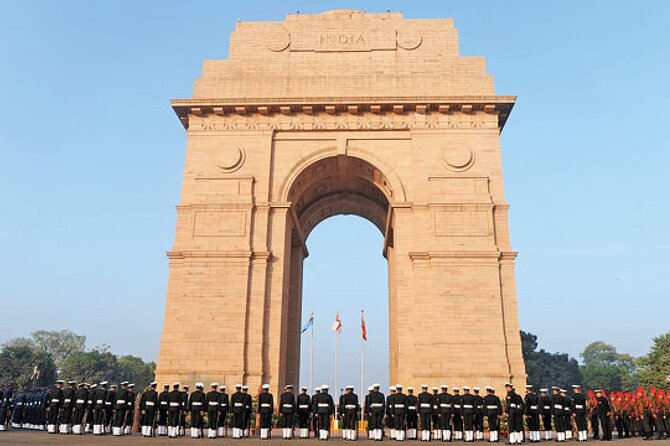
India Gate is your starting point. It’s free and quick, and it’s a clean introduction to the city’s scale: a monumental arch tied to a specific historical purpose. If you want an early “get your bearings fast” moment, this is a good one.
Next come Parliament House and Rashtrapati Bhavan. Both are free stops with short time slots. These aren’t about wandering; they’re about context. Seeing them close up helps you understand how modern India sits on top of older layers, and how the city’s center is built for authority and ceremony.
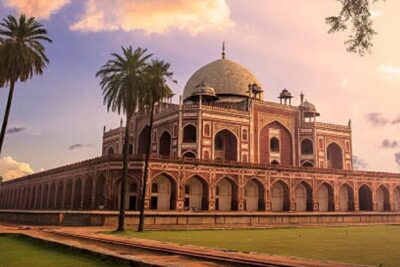
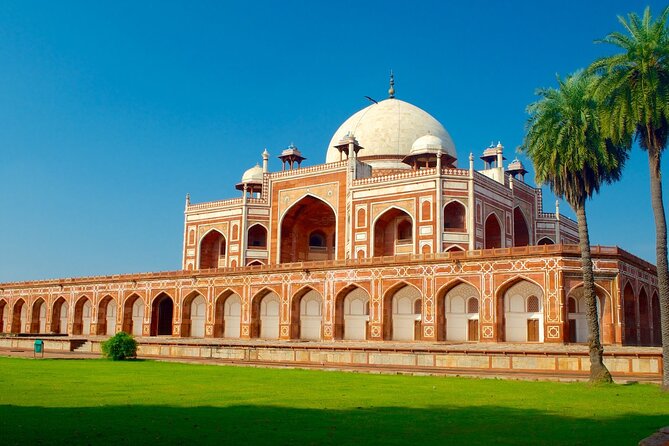
Then you shift into Mughal history with Humayun’s Tomb. The tour gives you about an hour here, and this is one of the big-ticket-style stops since admission is marked not included. It’s also a meaningful site historically because it’s described as the first garden-tomb on the Indian subcontinent. That idea matters when you look at the layout: it’s not just a tomb, it’s a planned landscape.
After that, Qutub Minar takes over. You get another hour, and it’s also not included for tickets. This is a must for architecture nerds and casual sightseers alike because of the basics: it’s a towering 73-meter-high minaret built in 1193. When you’re standing near it, the height stops being abstract.
Finally, you end with the Lotus Temple, free and listed for about 30 minutes. The Lotus Temple is a Bahá’í House of Worship dedicated in December 1986, and its flowerlike shape makes it feel like a breather after older stone monuments. If you’ve had your fill of arches and fort walls by afternoon, this is a nice reset.
A simple downside to flag for Day 1
Some of the day’s most iconic sights require tickets, even though a few stops are free. Also, the tour’s timing for Lotus Temple can matter because it’s listed as closed every Monday (more on closures later).
Day 2 in Agra: Taj Mahal focus, Agra Fort, then Fatehpur Sikri territory
Agra is the day you came for. Not to be dramatic, but if you want one place that justifies a Golden Triangle trip, it’s the Taj Mahal.
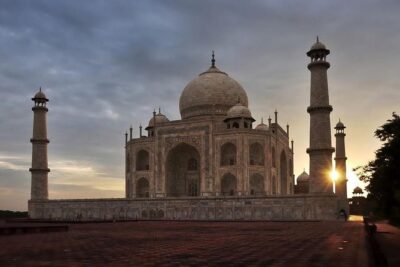
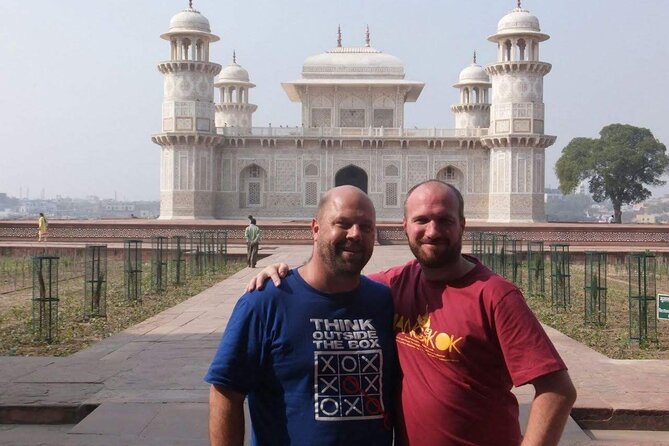
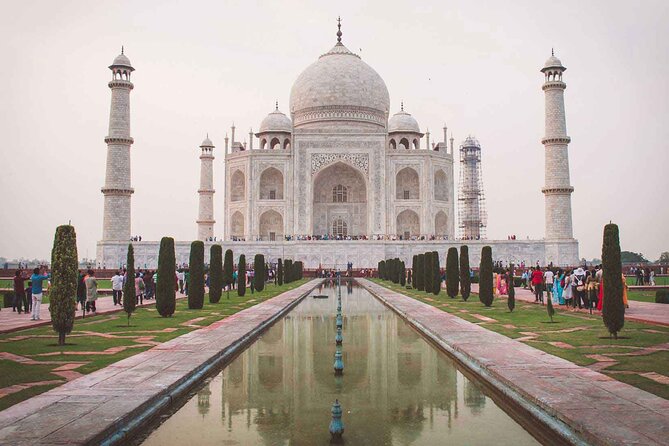
You get about 3 hours at the Taj Mahal. Admission is marked not included, so plan your ticket budget ahead. What helps is the time allotment. This isn’t a rushed drive-by. You have enough time to get viewpoints, take in the proportions, and still have room to step back when you need a breather.
Then you head to Agra Fort for about 45 minutes. This is another not included ticket stop, and it’s described as the main residence of the Mughal emperors until 1638, when the capital shifted to Delhi. That background helps you see Agra Fort differently: it’s not just walls, it’s a seat of power that influenced what you’re seeing in Agra overall.
The third stop blends in a historical bonus: Panch Mahal – Fatehpur Sikri. You get about 1 hour, and again tickets are marked not included. Even with limited time, you’ll get a sense of Fatehpur Sikri as a planned, ceremonial space built on sloping levels of outcrops. The mention of an artificial lake in the description gives you a clue to the site’s engineering choices: it wasn’t slapped together, it was designed.
The practical rhythm of Day 2
This is a “heavy sights” day. The upside is that your eyes move from one kind of masterpiece to another: marble monument to fort complex to Fatehpur Sikri’s monumental structures. The potential drawback is fatigue—especially if you’re also planning meals and rest on the fly. The tour doesn’t include meals, so you’ll want to handle food planning yourself or ask your guide for practical recommendations.
You can also read our reviews of more tours and experiences in New Delhi





Day 3 in Jaipur: Hawa Mahal quick stop, Jal Mahal views, City Palace, and Jantar Mantar
Jaipur is where the Golden Triangle gets playful. The city is known as the Pink City, and the tour hits several of the most recognizable names without turning your day into a sprint.
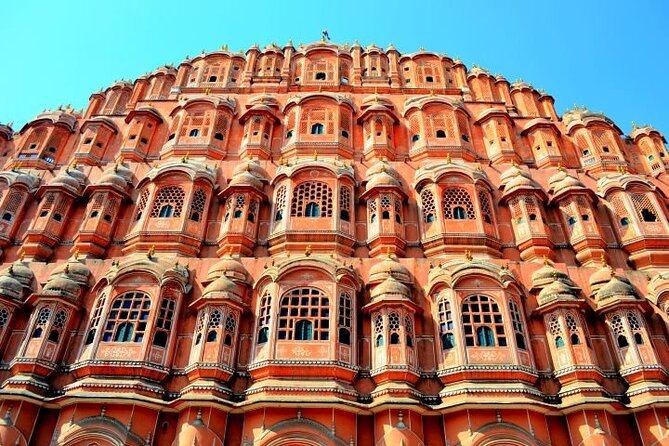
You start with Hawa Mahal – The Palace of Breeze. It’s listed as a quick 15-minute stop and marked free. The description you get is specific: it’s five storeys, described as the tallest building built without a foundation, with curved architecture at an 87-degree angle and a pyramidal shape. Even in short time, that level of detail helps. You’ll look longer when you know what to notice.
Next is Jal Mahal, also listed as free and about 15 minutes. It’s a palace in the middle of Man Sagar Lake, with construction described as 1699, then later renovation and enlargement in the 18th century. Since it’s a short stop, treat it as a viewpoint moment: snap photos, take in the lake setting, then move on.
Then you go inside the royal heart of the city with the City Palace for about 1 hour. Tickets are marked not included. The description flags a key idea: it’s a fusion of Mughal and Rajput architecture, and it’s deep within the walled city. Even if you don’t consider yourself an architecture person, this tends to click because palace complexes tell a story about power and lifestyle, not just decoration.
Finally, Jantar Mantar gives you something different. You get about 1 hour, and tickets are not included. It’s an astronomical observation site built in the early 18th century with about twenty main fixed instruments. When you walk among those masonry tools, it stops being “just a sight.” It becomes science made visible. That’s a great change of pace from palaces.
What private transport and guided sightseeing really buy you
It’s easy to think a tour is just a list of monuments. The difference here is how it handles the in-between parts: getting to each stop, staying on schedule, and translating what you’re seeing into something you can actually use.
You’re traveling with private transportation, which means you’re not constantly reacting to other groups’ pace. That matters on a route like Delhi–Agra–Jaipur, where even one delay can ripple into everything else. You also get airport and hotel transfer, so you’re not left scrambling when you land or when you’re ready to go back.
Your sightseeing days include an English-speaking guide. That’s huge for questions like what matters, what’s symbolic, and what you should pay attention to. In the positive feedback tied to this operator, guides and drivers are praised for their knowledge and for keeping the day smooth. Names that come up include Chaman (noted for knowledge and personal stories) and Vijay (noted for safety-minded support). Drivers praised for reliability and flexibility include Mantun, Bobby, and Aravind, with one account also highlighting coordination during unexpected rain.
You don’t need a nonstop lecture to enjoy a monument. You need a guide who can point out the details that turn a photo into a real memory.
Price and what you still need to budget (entrances, meals, hotel)
The price is listed at $195 per person for this 3 nights / 4 days private Golden Triangle tour. On its face, that can sound like a bargain or a warning, depending on what’s included. Here’s the practical breakdown:
What’s included
- Private transportation
- Water bottles
- English speaking guide for sightseeing day
- Fuel, toll plaza, state tax
- Airport and hotel transfer
- Breakfast (3)
That’s already a lot of day-to-day hassle taken off your plate. Breakfast included is especially helpful on a multi-city schedule.
What’s not included
- Entrance fees: $50 per person
- Meals
- Accommodation
- Tip
The entrance fee line is the one you must think about. Some sights are explicitly listed as free in the stop times (like India Gate and Lotus Temple), but several are not included (like Taj Mahal, Humayun’s Tomb, Qutub Minar, City Palace, and Jantar Mantar). The $50 per person may cover the ticket set your day schedule targets, but the main point is: expect to pay at least some monument tickets.
So the real value question is this: you’re paying for logistics and guidance, and you’re paying extra for entry and meals. If that matches your style, this is a strong deal for a private, time-efficient Golden Triangle experience.
Timing and closures: Taj Mahal Fridays and Monday temple surprises
In India, closures follow a pattern, and this tour calls out the big ones you should care about.
- Taj Mahal is closed every Friday.
- Delhi Red Fort, Lotus Temple, and Akshardham temple close every Monday.
That matters because your itinerary includes both Taj Mahal (Agra day) and Lotus Temple (Delhi day). If your trip dates land on those closure days, the schedule could shift in practice. You don’t need to panic, but you should plan your travel days to avoid those conflicts, or be ready for alternate sightseeing depending on what the operator arranges.
If you’re the type who wants the Taj Mahal no matter what, pick dates that are not Fridays.
Who this tour suits best (and who might want a slower plan)

This private Golden Triangle route makes sense if:
- You want classic sights across Delhi, Agra, and Jaipur with minimal planning.
- You prefer having English-speaking guidance while you’re looking at monuments.
- You’re traveling in a group (group discounts are listed), and you’d rather move as one unit.
It might be less ideal if:
- You want long, unhurried museum-style time at fewer places. This itinerary is packed by design.
- You’re on a tight budget that can’t flex for ticket costs and meals.
- You’re traveling on Fridays (Taj Mahal closure) or Mondays (Lotus Temple closure).
Should you book this Golden Triangle tour?
If your goal is a well-run Golden Triangle with private transport, hotel/airport transfers, and guided sightseeing for the major monuments, I’d say this is worth a serious look. The price-to-structure ratio is strong because you’re paying for the hard parts: moving between cities and keeping each day coherent.
I’d only hesitate if you’re aiming to avoid any entrance fees at all, or if your dates land on the Friday Taj Mahal closure or Monday closures that affect Delhi stops. If you can match your travel days to those realities, this tour delivers a lot of India in a short, practical package.
FAQ
How long is the Golden Triangle: Private Delhi Agra Jaipur Tour
The tour runs for 4 days (about 3 nights), covering Delhi, Agra, and Jaipur.
What’s included in the tour price
Private transportation, water bottles, an English-speaking guide for sightseeing days, fuel and toll plaza costs, state tax, airport and hotel transfers, and 3 breakfasts are included.
Are hotel and meals included
No. Accommodation (hotel) is not included, and meals are not included.
Do I need to pay entrance fees
Yes. Entrance fees are listed as $50 per person, and some major sites are marked as admission not included.
What attractions are free on the schedule
India Gate and Lotus Temple are listed as free, and Parliament House and Rashtrapati Bhavan are also listed as free stops. Other sites like Humayun’s Tomb, Qutub Minar, Taj Mahal, Agra Fort, City Palace, and Jantar Mantar are marked as admission not included.
Are any key sites closed on certain days
Yes. The Taj Mahal is closed every Friday. Red Fort, Lotus Temple, and Akshardham temple are closed every Monday.