REVIEW · NEW DELHI
Golden Triangle Tour India
Book on Viator →Operated by Indiancircle Tours · Bookable on Viator
Six days, three cities, nonstop landmarks. This Golden Triangle tour strings together Delhi, Agra, and Jaipur with private air-conditioned transport and 3-star hotel nights, so you spend less time juggling logistics. I also like the arrival flow: Indiancircle Tours sends a representative, you get a traditional garland welcome, and you’re transferred straight to your Delhi hotel for check-in.
I like the way the route balances the famous icons with stops that add context. You get the Taj Mahal, Agra’s Mughal sites (including the Agra Fort and Itmad-ud-Daula, the Baby Taj), then you shift to Jaipur with Amber Fort and Jantar Mantar in the same stretch. The main drawback is cost creep: monument entrance fees are not included, so budget extra for ticketed sites like the Taj Mahal and Qutub Minar.
Key points at a glance
- Private AC transport between cities, with driver allowance included
- Airport garland welcome plus transfers to your hotel on arrival
- Jaipur’s packed heritage day, from Amber Fort to Hawa Mahal (953 windows)
- Ticketed monuments cost extra, including major stops across Delhi and Agra
- Breakfast + bottled water daily to keep mornings moving
In This Review
- The Golden Triangle loop: what you’re really buying
- Arrival in Delhi: welcome, check-in, then a first hit of landmarks
- Day 2 in Agra: Taj Mahal, Agra Fort, and the Baby Taj
- Jaipur’s heritage day: Amber Fort, Jantar Mantar, City Palace, Hawa Mahal
- Back to Delhi: Raj Ghat, Jama Masjid, Chandni Chowk, Red Fort, and more
- Price and value: $275 plus the entrance-fee reality
- Your time on the ground: hotel comfort and how to handle a full schedule
- Should you book Golden Triangle Tour India?
- FAQ
- What is included in the Golden Triangle Tour India price?
- Are monument entrance fees included?
- How long is the tour and where does it start?
- What type of hotel is included?
- Is this tour private, and how many people can join?
- Is free cancellation available?
The Golden Triangle loop: what you’re really buying
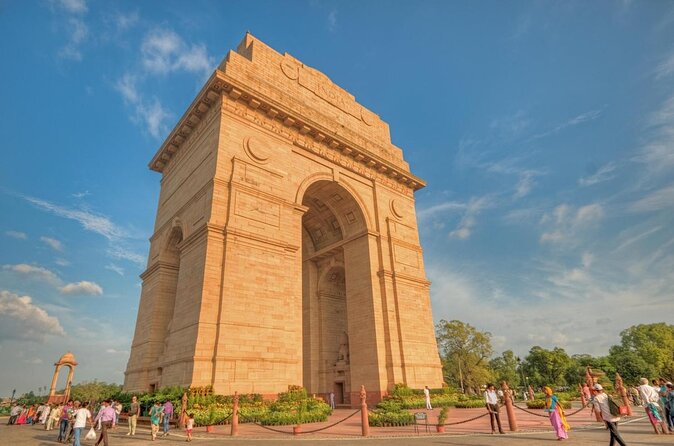
This is a classic Delhi–Agra–Jaipur circuit. In 6 days (about 5 nights in 3-star hotels), you’re not just seeing the postcard highlights—you’re also getting a sequence that makes the architecture feel connected. Delhi sets the stage with imperial-era power and major religious landmarks. Agra zooms in on Mughal big hitters, and Jaipur adds the Rajput layer with fort-palaces and royal memorials.
The big practical value here is the private transportation. You’re traveling by car in an air-conditioned vehicle with all driver time handled for you, including city-to-city transfers. That matters because India’s roads and traffic don’t cooperate with “self-guided” plans the way they might at home.
Pacing is the other reality check. This tour is designed to fit a lot in, and some days feel like a march through history. If you love structured days and don’t mind walking, you’ll likely enjoy it. If you prefer slow travel, you’ll want to use the “day free” time in Delhi to reset.
Arrival in Delhi: welcome, check-in, then a first hit of landmarks
Day 1 is built for a smooth start. You land at Indira Gandhi International Airport, meet Indiancircle Tours’s representative, and get a garland welcome before the transfer to your hotel. That check-in window is what keeps Day 1 from turning into a scramble.
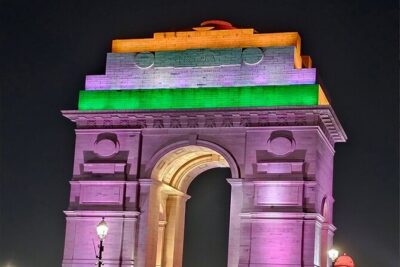
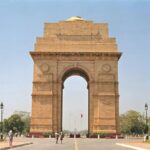
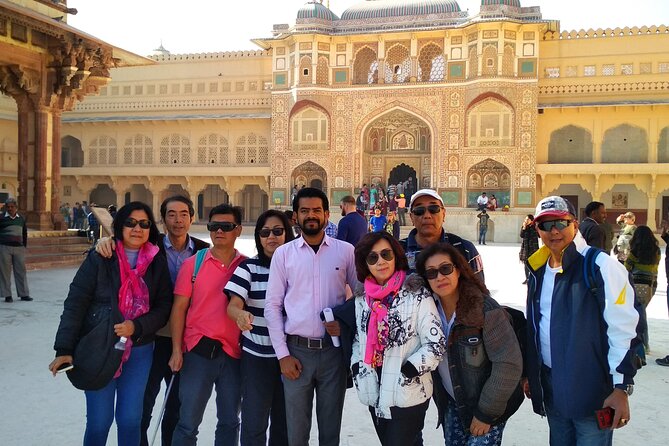
Once you’re settled, the tour points you to early sights around the city center. You’ll stop at India Gate, a war memorial with a park area where you can breathe for a moment. It’s a simple stop on paper, but it’s a useful first grounding point: you get a feel for the scale of the capital and how people use open space there.
Then you pass by Rashtrapati Bhavan (Presidential Residence) and Parliament House. You don’t linger there in the way you do at the memorial or the major monuments later, but the pass-by gives you immediate context: this part of Delhi is about governance, power, and national identity.
Practical note: you’ll move through a mix of viewpoints and city streets. Wear shoes you can handle on uneven pavement and keep your hydration in mind—even though bottled water is included daily, Delhi air and sun can still tire you fast.
You can also read our reviews of more tours and experiences in New Delhi.



Day 2 in Agra: Taj Mahal, Agra Fort, and the Baby Taj
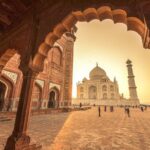
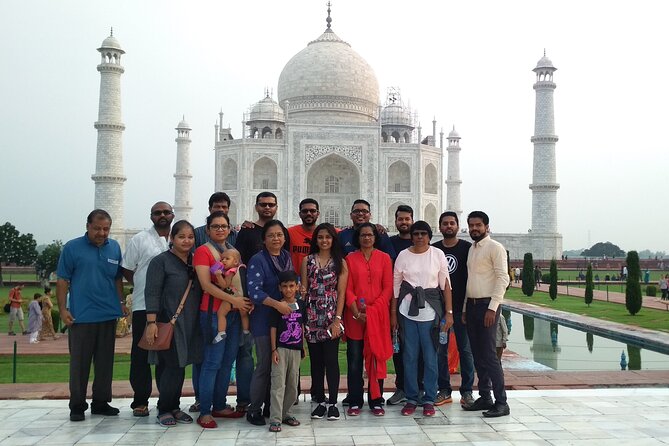
Day 2 is where the Golden Triangle payoff starts. You go straight to the Taj Mahal, an ivory-white marble mausoleum and a UNESCO World Heritage Site. It’s the kind of place where your eyes keep moving even when your brain wants to rest. The guided framing (based on the way the tour sets up multiple UNESCO stops) helps you notice details you might otherwise miss: symmetrical garden layout, marble inlays, and that signature reflection effect.
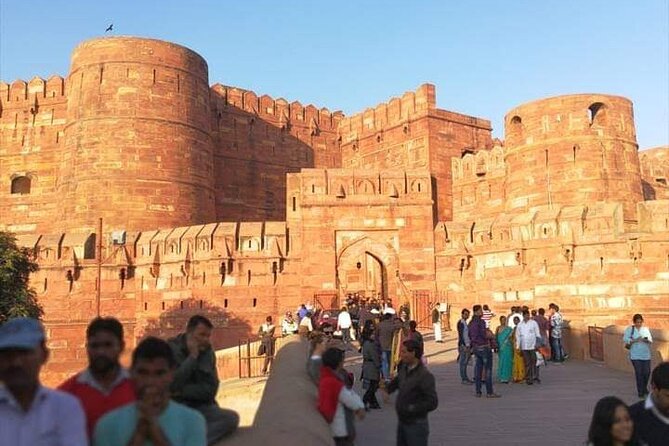
Then you move to Agra Fort, another UNESCO site. This one is more about power and protection than romance. The red sandstone fort gives you a sense of Mughal royal life, with palaces inside and viewpoints where you can see the Taj Mahal from certain angles.
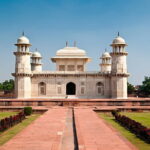
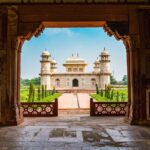
The third stop is Itmad-ud-Daula (Baby Taj). If you’ve ever wished the Taj Mahal wasn’t the only Mughal show in town, this is your fix. It’s less crowded (and generally easier to experience at a slower tempo), and it gives you the “how did they build all this?” feeling—especially through the careful mausoleum design.
Entrance fees here are a major cost driver. The tour lists a separate Taj Mahal ticket fee and other Agra monument costs, and those add up if you want to enter every paid site.
Jaipur’s heritage day: Amber Fort, Jantar Mantar, City Palace, Hawa Mahal
Jaipur is the longest-feeling day on this program. The route strings together a mix of fortifications, royal spaces, and science-and-culture stops, plus a couple of scenic pauses.
You start with Amber Fort, a hilltop fortress with palaces, courtyards, and panoramic views. You get about a 2-hour window, which is enough time to see why Amber is one of the most visited sites in Rajasthan. It also means you should go in prepared to walk up and around—no shortcuts.
Next is Panna Meena ka Kund, a stepwell known for its geometric design. This is one of those stops that feels small on paper, but it’s memorable because it’s practical architecture with a visual rhythm.
After that, you visit Royal Gaitor Tumbas, marble cenotaphs for Jaipur’s rulers, set in garden surroundings. It’s quiet compared to the big-ticket crowd zones, and it helps the day feel less like a checklist.
Then comes Jal Mahal, the palace that looks like it’s floating on Man Sagar Lake. You don’t need a long visit to enjoy it, but the stop is valuable for a different reason: it breaks up the “hard architecture” day with a more scenic, softer moment.
You’ll also explore City Palace, a blend of Rajput and Mughal architecture with museums and royal chambers. If you want the stories behind the buildings, this is where you start getting it.
A UNESCO highlight follows: Jantar Mantar. This is an astronomical observatory with monumental instruments. It’s not just “old stuff”—it’s a reminder that scientific thinking was part of royal planning. If you’re into clocks, measurements, and how old people tracked the sky without phones, you’ll love this.
Next is the icon outside the math: Hawa Mahal, the Palace of Breeze with 953 windows. Even if you don’t go deep inside, the façade is the kind of thing you recognize instantly from photos. The best part is that it’s a face of the city, not just an object.
Later you stop at Albert Hall Museum, which adds a cultural layer through artifacts and art collections, and then you wrap up near Patrika Gate, a decorative gateway tied to Rajasthan’s cultural heritage. There’s also a shopping stop at Rajasthan Cottage Industries, where you can browse gemstones, textiles, and crafts.
This day is full. The main consideration is stamina: Jaipur’s heat and the sheer number of stops can make you rush unless you plan your energy. I’d suggest pacing yourself at each stop—one or two areas to focus on, then move on.
Back to Delhi: Raj Ghat, Jama Masjid, Chandni Chowk, Red Fort, and more
After breakfast on Day 5, you check out and drive back to Delhi. You transfer to your booked hotel and get time to rest, with the rest of the day set aside for your own plans. That downtime is important. Delhi can feel intense, and you’ll be happier if you use that buffer instead of trying to add more sights immediately.
Day 6 is another classic Delhi sampler, mixing memorials, mosques, markets, and UNESCO-era monuments.
You begin at Raj Ghat, where you pay respects to Mahatma Gandhi. This is a simple, reflective stop, and it changes the tone of the day. From there, you go to Jama Masjid, one of India’s largest mosques, with towering minarets and Mughal-era design. You’ll have limited time here, so dress respectfully and expect a very active atmosphere around prayer and visitors.
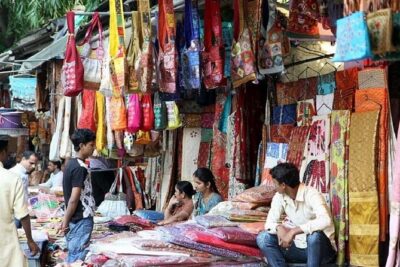
Next is Chandni Chowk (Pasar Chandni Chowk). This is the sensory overload moment: narrow lanes, crowds, and street food vibes (even when you’re not eating, you’re still part of the scene). The tour gives you a short window, which is enough to get your bearings and try a snack if you want.
Then you visit Red Fort, a UNESCO site and former seat of Mughal power. The time you get is structured, which helps because it’s big. Look for how the fort’s architecture signals authority—this is “state building” made visible.
After that, there’s a contrast stop: Lotus Temple, a Bahá’í House of Worship shaped like a lotus. It’s about quiet reflection. Even if you’re not religious, the space works as a reset.
You’ll also visit Humayun’s Tomb, a UNESCO site with gardens. It’s a key Mughal-era stop because its architectural influence is often discussed in connection with later monuments.
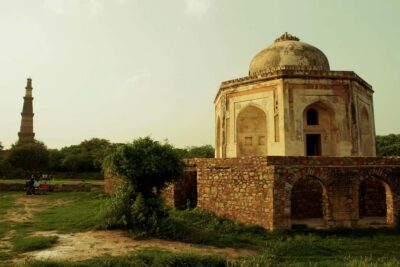
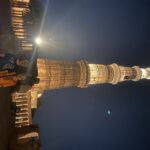
Next is Qutub Minar and the complex area, including other historical structures like Alai Darwaza and Quwwat-ul-Islam Mosque. This is a great end-of-day monument because it’s visually powerful and the surrounding complex adds depth without needing a huge amount of time.
Finally, the tour includes Dilli Haat and a general window for Delhi markets. This is where you can shop at a slower pace, or just pick a few neighborhoods to explore on your own rather than trying to cram everything into scheduled stops.
Price and value: $275 plus the entrance-fee reality
The base price is $275 per person, and this tour is often booked about 33 days in advance. On value, I look at what’s being handled versus what you’ll still need to handle yourself.
Included in the price are the big logistical pieces:
- 5 nights in 3-star hotels
- Private transportation in an air-conditioned vehicle
- Breakfast (5)
- Daily drinking water (2 bottles of 500 ml per person per day)
- Parking fees and airport/departure tax
- A language guide as per guest requirement
- Welcome with garland at the airport on arrival
- Driver allowance included
In plain terms: you’re paying for comfort, movement, and a guided structure across three cities. That’s what you’re buying.
Now the cost that can catch people off guard: monument entry. The tour specifically says monument entrance fees are not included, and it lists separate fees for many of the key sites, including:
- Taj Mahal
- Agra Fort
- Itmad-ud-Daula (Baby Taj)
- Amber (Amer) Fort
- City Palace (Jaipur)
- Jantar Mantar
- Albert Hall Museum
- Qutub Minar
- Red Fort
- Humayun’s Tomb
If you total the listed ticket prices for those named monuments, you’re looking at roughly the high-$60s to low-$70s per person range before any additional fee surprises. The tour also notes separate costs for camera fees at monuments (listed as 50 USD) and tips to guide or driver are not included.
My practical advice: treat $275 as the “transport + hotels + guides” portion, then plan a second budget for entrances and camera/tips. Bring extra cash for ticket lines and small purchases, especially if you’re aiming to buy crafts or textiles in Jaipur.



Your time on the ground: hotel comfort and how to handle a full schedule
Hotels are 3-star, which usually means clean, basic comfort rather than luxury. You’re in them to sleep and reset, not to lounge all day. Since this is a structured sight-and-drive plan, the hotel’s main job is good beds, working showers, and a lobby area where you can wait out heat or crowds for the next transfer.
Because private transport is included, you should expect smoother timing between stops than you’d get on public transport. Still, you’ll want to remember that major monuments have their own rhythms: lines, security checks, and crowd surges.
What helps here is that the tour includes bottled water daily and breakfast, so you’re not stuck hunting for food at the wrong moment. Lunch and dinner aren’t included, so you’ll make your own meal choices. If you’re picky about food timing, this is a good moment to plan a simple strategy: eat early after breakfast, then snack mid-day when needed, and save bigger meals for the evening.
Also note: the tour includes language support based on your requirement. If you know you’ll want English (or another language), mention it early so the guide setup matches your needs.
Should you book Golden Triangle Tour India?
Book it if:
- You want a structured Delhi–Agra–Jaipur route with private AC transport and hotel nights handled.
- You like seeing the big icons—Taj Mahal, Amber Fort, Qutub Minar, Red Fort—without spending your vacation time planning routes.
- You’re okay paying extra for monument entrances, or you plan your budget with that in mind.
Skip it (or choose a lighter version) if:
- You want a slow pace with long stays in fewer places. This tour fits a lot of stops into tight windows.
- You hate surprise costs. The base price doesn’t include most monument tickets, and those fees add up quickly.
My “smart booking” tip: if you book, make a small list of which paid monuments you care about most. That way, you’re not stuck deciding at the ticket booth when time or crowds are pressing you.
If you’re aiming for classic Golden Triangle highlights with minimal stress and clear guidance, this one can work very well—especially if you come ready for a packed, history-heavy week.
FAQ
What is included in the Golden Triangle Tour India price?
The price includes GST, parking fees, airport/departure tax, traditionally welcome with garland on arrival, language guide as per guest requirement, daily drinking water (2 bottles of 500 ml per person), all driver allowance, and private air-conditioned transportation. It also includes 5 nights in 3-star hotels and breakfast for 5 days.
Are monument entrance fees included?
No. Monument entrance fees are not included, and the tour lists separate entrance fees for sites like Taj Mahal, Agra Fort, Itmad-ud-Daula, Amber Fort, City Palace, Jantar Mantar, Albert Hall Museum, Qutub Minar, Red Fort, and Humayun’s Tomb. There is also a listed camera fee at monuments.
How long is the tour and where does it start?
It’s about 6 days. It starts at Indira Gandhi International Airport Metro Station in Delhi, and the activity ends back at the meeting point.
What type of hotel is included?
You get 5 nights of accommodation in 3-star hotels.
Is this tour private, and how many people can join?
It’s a private tour/activity, and only your group participates. The minimum is 02 adults traveling together.
Is free cancellation available?
Yes. You can cancel up to 24 hours in advance for a full refund. If you cancel less than 24 hours before the start time, no refund is provided.