REVIEW · NEW DELHI
7 Night & 8 Days Private Luxury Golden Triangle with Mumbai Tour
Book on Viator →Operated by Golden Triangle Tours India · Bookable on Viator
A packed route, with real depth, in eight days. This private luxury Golden Triangle with Mumbai tour strings together Delhi, Agra, Jaipur, and Mumbai with private local guides and door-to-door AC transport. I like the balance of big landmarks (Taj Mahal, Qutub Minar) plus quick culture stops like Chandni Chowk and Dhobi Ghat.
What I’d especially like is the hands-on feel: you get personal care, bottled water during drives, and guides who can answer questions in context. One possible drawback to plan around: entrance fees and meals aren’t included, so your daily spending can creep up once you add monuments.
In This Review
- Key points before you go
- Price and logistics: what $413.48 really buys
- Day-by-day: Delhi to Agra to Jaipur to Mumbai in a smart rhythm
- Day 1 in Delhi: Bangla Sahib and Agrasen Ki Baoli
- Day 2 in Delhi: Qutub Minar, Lotus Temple, Old Delhi classics
- Day 3: The drive to Agra plus sunset-focused Taj viewing
- Day 4: Sunrise Taj Mahal and the day trip to Fatehpur Sikri and Chand Baori
- Day 5 in Jaipur: forts, palaces, and the full Big Five of Pink City
- Day 6: Birla Mandir, Galtaji Monkey Temple, and a flight to Mumbai
- Day 7 in Mumbai: Gateway of India to Dhobi Ghat
- Day 8: one last airport transfer day
- Guides and drivers: the human value you actually feel
- What to budget: entrances and meals add up fast
- Who this tour fits best (and who should rethink it)
- Should you book this private Golden Triangle with Mumbai tour?
- FAQ
- FAQ
- How long is the Golden Triangle with Mumbai tour?
- Is this a private tour?
- What’s included for transfers and daily comfort?
- Are hotel stays and breakfast included?
- Do I need to pay for monument entrance fees?
- Is the Taj Mahal battery bus included?
- Does the tour include lunch and dinner?
Key points before you go

- Private guides every day means less guessing and more context as you move between cities.
- Taj Mahal battery bus ride included cuts the walk from the parking area to the monument.
- 7 nights with daily breakfast makes the schedule feel less stressful and more comfortable.
- A tight, sensible route: Delhi early sights, then Agra at golden hour, then Jaipur, then Mumbai.
- Flexible vehicle size (sedan to minivan) keeps transfers aligned with your group.
- Free monument entries on many stops help offset the parts where ticket fees apply.
Price and logistics: what $413.48 really buys
At $413.48 per person, this tour can be a strong value if you want everything handled: transport, guides, and a multi-city itinerary that doesn’t waste time. The big cost drivers in India add up fast when you’re self-planning—private cars, guides, and intercity transfers. Here, you’re paying for a private setup with an air-conditioned vehicle and hotel or airport pickup and drop-off.
That said, the price isn’t all-inclusive. Monument entrance fees and meals (lunch and dinner) are not included, and Travel insurance and flight or train tickets aren’t listed either. So I suggest you budget a daily amount for tickets and food. Think of this as a tour that covers the machine, not your daily shopping spree.
The logistics are built for comfort. You’ll move in a 4-seater sedan (for 1–2 people), a 6-seater wagon (for 3–4), or a 10-seater minivan (for 5–10). That matters because Golden Triangle routes often feel like a constant shuffling of taxis. Here, the car stays part of your rhythm.
Also, it’s private—only your group participates—so your timing is more realistic than group bus tours. Just remember the itinerary is still a full plate. Eight days can feel like a sprint when you combine early monument starts with long drives.
You can also read our reviews of more private tours in New Delhi

Day-by-day: Delhi to Agra to Jaipur to Mumbai in a smart rhythm
Day 1 in Delhi: Bangla Sahib and Agrasen Ki Baoli
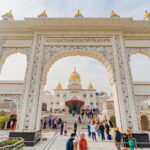
Your first day starts in a softer, spiritual Delhi mood with Gurudwara Bangla Sahib. It’s free to enter, and the stop is around 30 minutes—enough time to see the space and feel the atmosphere without turning it into a marathon. The tour notes the story of the tank used during historical epidemics, and that gives you a reason to look beyond the architecture.
Next up: Agrasen Ki Baoli, one of those stepwell spots that makes you think, how did people build this and keep it alive for centuries. It’s also free and timed at about 30 minutes. This is a great pairing because it transitions from a place of worship to a piece of dramatic everyday heritage.
Why it works: this is a low-pressure Day 1. You’re not thrown into the busiest Old Delhi lanes right away. You’re easing into the city and saving the heavier sightseeing energy for the next day.
Consideration: wear comfortable shoes. Even short stops can include uneven areas, steps, and narrow walkways around heritage sites.
Day 2 in Delhi: Qutub Minar, Lotus Temple, Old Delhi classics
Day 2 is where Delhi turns into a highlights reel.
- Qutub Minar (UNESCO): a tall 73-meter tower with a 1193 origin, built by Qutub-ud-din Aibak. It’s about 1 hour and entrance fees are not included. This one is worth the money. The height alone is impressive, and the guide time helps you understand why the details matter.
- Lotus Temple: a free, open-to-everyone architectural landmark shaped like a flower. Expect about 30 minutes.
- India Gate: a quick photo and walk-through stop (about 15 minutes). It’s free and a good break point mid-day.
- Parliament House: the tour lists it as Sansad Bhavan and notes the circular Ashoka Chakra-inspired design. Even if you’re mostly viewing externally, it gives a modern layer to your day.
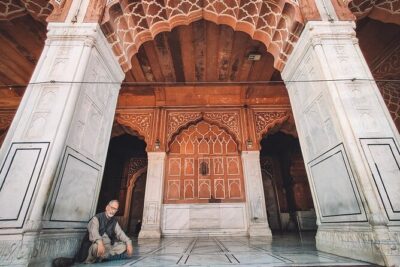
- Jama Masjid: one of the largest mosques in India, built between 1650 and 1656. Free and around 30 minutes.
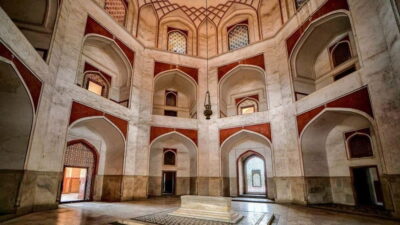
- Humayun’s Tomb: a Mughal tomb commissioned in 1558. About 1 hour, with fees not included.
- Chandni Chowk: about 1 hour in Old Delhi shopping lanes—spices, dried fruit, silver jewelry, saris, and side streets that feel like an instant sensory overload. It’s free.
Why it works: this day covers Delhi from Sultanate to Mughal to modern civic life. When a local guide is in your ear, it stops being just postcard time and becomes a readable city.
Possible drawback: it’s a lot of moving. Even when sites are short (30–60 minutes), the travel time adds up. If you hate crowds, plan to slow down in Chandni Chowk and take your time rather than rushing the lanes.
Day 3: The drive to Agra plus sunset-focused Taj viewing
You start with breakfast, then head from Delhi to Agra. The drive is about 222 km and roughly 4 hours. That’s a manageable day-trip distance, and it helps you arrive with enough time to see more than just one monument.
After check-in, you hit Agra in an order that builds toward the Taj moment.
- Agra Fort: around 1 hour. UNESCO, Mughal connections, and yes, it’s another site where guide context changes everything. Entrance fee is not included.
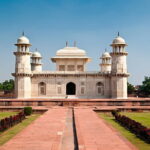
- Itmad-ud-Daula (Baby Taj): a Mughal mausoleum often called a jewel box. About 1 hour, fees not included.
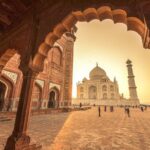
- Taj Mahal Sunset View Point: 2 hours. Entrance fee is not included. The tour specifically flags a sunset viewpoint across the river away from the biggest crowd. That’s smart because it changes your Taj experience from rushed and crowded to calm and photographic.
- Mehtab Bagh: about 30 minutes. It’s a garden built by Babur’s line and restored later, designed to offer a view toward the Taj across the river.
Why it works: sunset framing is a real strategy here. Taj Mahal changes with light, and giving yourself multiple angles is better than only doing the main approach.
Consideration: sunset plans can be temperature-sensitive. Bring a layer and keep your schedule flexible if weather shifts.
You can also read our reviews of more tours and experiences in New Delhi






Day 4: Sunrise Taj Mahal and the day trip to Fatehpur Sikri and Chand Baori
This day starts early with Taj Mahal sunrise (about 2 hours). The tour lists sunrise specifically, and the sunrise focus is not just romantic. Morning light helps with crowds, and the temperature is often easier for walking.
After Taj, you continue to:
- Fatehpur Sikri (City of Victory): about 1 hour. Entrance is listed as free on the tour schedule.
- Chand Baori: a famous stepwell near Abhaneri, described as one of the largest and deepest in India. About 1 hour, fees not included.
Then you move to Jaipur. The tour notes arrival and check-in at the hotel, with about 5 hours allocated for the transition.
Why it works: you’re not just rushing from one city to the next. You get Taj twice in two different ways—sunset viewpoint one day, sunrise the next—plus a serious Mughal complex and a stepwell that feels almost engineered for patterns.
Possible drawback: this is a long day with early hours. If you get tired easily, it’s worth going easy on the last stop before Jaipur so you can enjoy your evening rather than collapsing.
Day 5 in Jaipur: forts, palaces, and the full Big Five of Pink City
Jaipur is classic Golden Triangle territory, and this itinerary covers the big icons without turning them into a single photo stop.
After breakfast you start with:
- Panna Meena ka Kund: a stepwell near the palace area. About 15 minutes, free.
- Jaipur fort stop: the schedule calls it the most famous fort, with a 2-hour guided look at palaces, squares, and monuments. Free on the itinerary list.
- Jal Mahal: a photo-stop for the palace on Man Sagar Lake. About 15 minutes, free.
- City Palace: about 1 hour. Entrance is not included.
- Jantar Mantar (UNESCO): a set of nineteen architectural astronomical instruments built in 1734. About 1 hour, fees not included.
- Hawa Mahal: Palace of Breeze, a five-storey pyramid-shaped sandstone façade. About 30 minutes, fees not included.
Why it works: each stop gives you a different angle on Jaipur. You’re seeing water structures, fort life, royal administration, science tools, and façade design. With a guide, you can connect the dots between why this city looks the way it does.
Consideration: you’ll likely do a lot of short walks and stairs. Comfortable footwear is non-negotiable, even if each stop is only 30–60 minutes.
Day 6: Birla Mandir, Galtaji Monkey Temple, and a flight to Mumbai
This day is partly sightseeing and partly logistics.
- Birla Mandir Temple: about 30 minutes. Free on the itinerary list.
- Monkey Temple (Galtaji Temple): around 30 minutes, free. It’s described as a buzzing tourist area with three sacred pools of water and a complex temple structure.
Then the day turns practical:
- Patrika Gate: the tour lists it as a landmark in Pink City with a photo stop feel.
- Jaipur International Airport transfer: around 3 hours.
- Then you fly to Mumbai, where you’re met by the next driver and transferred to the hotel.
Why it works: the itinerary keeps the day from dragging. Instead of forcing one more long Jaipur monument circuit, it switches gears and gets you into Mumbai with a full evening potential (depending on your flight timing).
Consideration: you might be traveling while you’re still in sightseeing mode. Keep small essentials handy—water, a light layer, and a snack—because airports can disrupt your appetite plans.
Day 7 in Mumbai: Gateway of India to Dhobi Ghat
Mumbai is different in pace and mood, and this day keeps it varied.
- Gateway of India: about 30 minutes, free.
- Oval Maidan: around 45 minutes, with sights like Mumbai University, Rajabai Clock tower, and Bombay High Court noted. Entrance is listed as not included.
- Chhatrapati Shivaji Maharaj Vastu Sangrahalaya (CSMVS): about 30 minutes. Entrance not included.
- Marine Drive: the tour lists it as a scenic boulevard stretch in South Mumbai.
- Mani Bhavan Gandhi Museum: about 15 minutes, entrance not included.
- Dhobi Ghat: about 30 minutes, free. This is the open-air laundromat where dhobis work in the open to clean hotel and hospital linens. It’s a strong contrast stop—everyday work, not just monuments.
- Jain Temple: about 15 minutes, free.
Why it works: you get the skyline landmarks plus Mumbai’s working life. Dhobi Ghat is the kind of stop that makes the city feel real fast.
Possible drawback: museums and indoor places can be limited by opening hours and your fatigue level. If you’re not museum people, treat the CSMVS and Mani Bhavan stops as optional energy breaks rather than mandatory marathons.
Day 8: one last airport transfer day
After breakfast, you check out and get transferred to Mumbai airport for your flight. That’s it. No last-minute panic shopping unless you build it in at the right time.
Guides and drivers: the human value you actually feel
This tour’s best feedback isn’t about monuments. It’s about people.
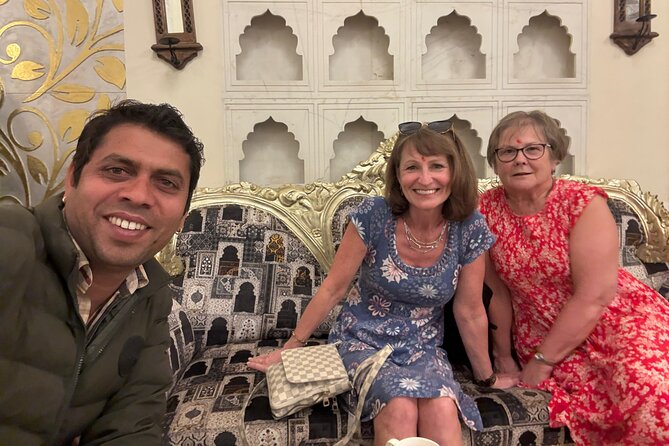
In the notes you shared, Gopal comes up repeatedly as the owner/organizer credited with smooth planning and solid accommodations. Drivers like Surendra and Maan Singh are praised for being polite, attentive, and helpful—exactly what you want when traffic and timing can make or break a day. There’s also mention of meeting Vikas, which signals a team approach rather than handing you off and forgetting you.
That matters because Golden Triangle days are timed. When the guide can answer questions and keep the group on schedule, the day feels lighter. And when the driver is steady, you waste less time searching for the next pickup point.
What to budget: entrances and meals add up fast
Here’s the simple way to think about it: the tour includes transport, guides, daily breakfast, bottled water, and the Taj Mahal battery bus ride. But it doesn’t include monument entry fees, and it also doesn’t include lunch and dinner.
So I’d plan for two categories of extra spending:
- Monument entrance fees for stops listed as not included (examples from the schedule: Qutub Minar, Humayun’s Tomb, Agra Fort, Itmad-ud-Daula, Taj Mahal sunrise/sunset, City Palace, Jantar Mantar, Hawa Mahal, CSMVS, Mani Bhavan).
- Lunch and dinner, since those are not included in the package.
If you want better control, look up each major fee in advance once you confirm which monuments you’ll definitely enter. Then you can choose where to spend and where to keep walking-only.
Who this tour fits best (and who should rethink it)
This is a great match if you want:
- First-time India travel where having private guides reduces stress.
- An efficient route: Delhi, Agra, Jaipur, and Mumbai in one sweep.
- The comfort of AC transfers, breakfast, and hotel/airport pickup.
It may not be ideal if you:
- Hate early mornings, because sunrise Taj is a key experience here.
- Prefer slow travel with lots of downtime, because the schedule is packed.
- Want fully all-inclusive pricing, because entrances and meals aren’t included.
Should you book this private Golden Triangle with Mumbai tour?
I’d recommend booking if you want a handled itinerary with private local guides, comfortable transfers, and a schedule that actually covers the core sights without leaving you to coordinate every step. The inclusion of the Taj Mahal battery bus ride is a small thing that feels big when you’re carrying camera bags and walking can get tiring.
I wouldn’t book if you’re looking for low-spend, no-extra-fees travel, because monument tickets and meals will be your main add-ons. Also, check your fitness for stairs and early starts—especially on Day 3–4 around Agra and Day 4 with the sunrise focus.
If you’re flexible and you want a guided, luxury-feel experience that still lets you see real parts of the cities—Old Delhi lanes, Jaipur’s landmark circuit, and Mumbai’s everyday Dhobi Ghat—this is the kind of plan that can make your first India trip feel surprisingly manageable.
FAQ
FAQ
How long is the Golden Triangle with Mumbai tour?
The tour runs for about 8 days.
Is this a private tour?
Yes. It’s a private tour/activity, and only your group participates.
What’s included for transfers and daily comfort?
You get transport in a private air-conditioned vehicle with a driver, plus hotel or airport pickup and drop-off, and bottled mineral water during journeys.
Are hotel stays and breakfast included?
Hotel accommodations for 7 nights and daily hotel breakfast are included if you book with the option that includes hotels.
Do I need to pay for monument entrance fees?
Monument entrance fees are not included, based on the tour details.
Is the Taj Mahal battery bus included?
Yes. A battery bus ride to and from the Taj Mahal parking lot up to the Taj Mahal monument is included.
Does the tour include lunch and dinner?
No. Lunch and dinner are not included in the package.