REVIEW · NEW DELHI
Golden Triangle with Wildlife and Royal Castle Stay
Book on Viator →Operated by Swastik India Journeys Pvt. Ltd. · Bookable on Viator
A tiger might be on your morning horizon, and Mughal masterpieces are on your afternoon one. This 6-day Golden Triangle route mixes classic sights in Delhi, Agra, and Jaipur with one of India’s best wildlife bases at Ranthambore, plus a heritage-style night at Talabgaon Castle. I like how this tour pairs big-name monuments with nature time, instead of treating wildlife like a side quest. You’ll also get daily breakfast and a dinner, plus door-to-door, air-conditioned driving that keeps the stressful bits out of your day.
Two things I really like: first, the day plan is built around guided sightseeing, so you’re not stuck figuring out what’s important at each stop. Second, the safari is scheduled as an actual experience, with a nature guide and a shared-gypsy approach that’s designed for real park viewing. One thing to consider upfront: monument entrance and camera fees are not included, and since you’re hitting major sites back-to-back, those extra costs can add up.
In This Review
- Key highlights at a glance
- Golden Triangle plus Ranthambore: how the 6-day mix really feels
- Entering Delhi with Mughal monuments and Gandhi’s memorial
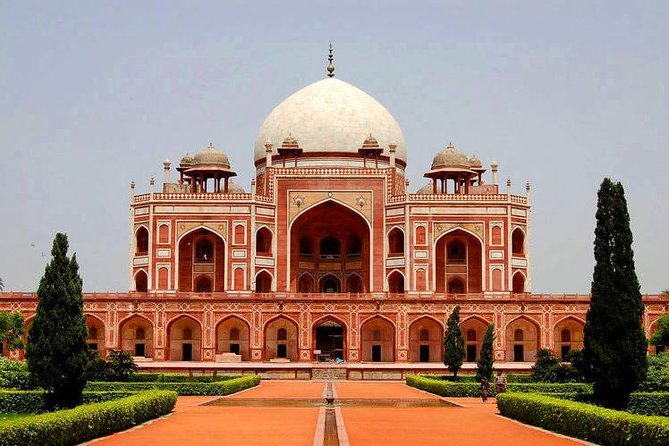
- Humayun’s Tomb
- Raj Ghat
- Red Fort and Jama Masjid area
- Qutub Minar
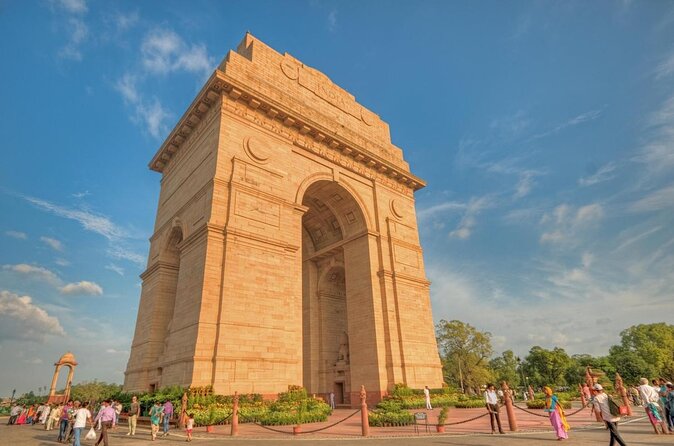
- India Gate
- Agra’s Taj Mahal day: classic sights with guide-led context
- Taj Mahal
- Agra Fort
- Itmad-ud-Daula
- Mehtab Bagh
- Ranthambore National Park safari plus Talabgaon Castle: the heart of the trip
- Morning safari in Ranthambore
- Talabgaon Castle: 200-year-old fort turned heritage resort
- Jaipur temple and museum day: a calmer pace between big forts
- Birla Mandir Temple
- Albert Hall Museum
- Amber Fort by jeep, then City Palace, Hawa Mahal, and Jantar Mantar
- Amber Palace (Amber Fort) with jeep ride
- City Palace
- Hawa Mahal
- Jantar Mantar
- Your final day in Delhi: wrap-up and a clean landing
- Price and value: what $415 is really buying
- What stood out in real-world service: drivers, safety, and solo comfort
- Who this tour suits (and who should rethink it)
- Should you book this Golden Triangle with wildlife and a royal castle stay?
- FAQ
- What time does the tour start?
- How long is the tour?
- What’s included with meals?
- Does the price include hotel stays?
- Do I get airport or hotel drop-off on the last day?
- Is transportation included between cities?
- Is Ranthambore safari included, and what type is it?
- Is there any safari or activity during the Talabgaon Castle stay?
- Does the tour include Amber Fort access by vehicle?
- Are monument entrances included for the sights?
- Is the tour suitable if I’m traveling alone?
Key highlights at a glance
- Ranthambore safari with nature guide: a morning jungle run with a chance to spot tigers and other wildlife
- Talabgaon Castle stay: a 200-year-old fort-turned-heritage resort night, plus a village safari
- Golden Triangle classics, guided: Humayun’s Tomb, Taj Mahal, Amber Fort, Hawa Mahal, and more
- Air-conditioned chauffeur transfers: fewer logistics headaches between cities
- Meals included: breakfast (5) and dinner (1) help you pace your spending
Golden Triangle plus Ranthambore: how the 6-day mix really feels
This itinerary gives you the Golden Triangle headline loop—Delhi to Agra to Jaipur—but it refuses to be only a monument marathon. One full morning is devoted to Ranthambore National Park, and the Talabgaon Castle night adds a change of pace that feels more like staying inside a story than checking a hotel box.
You’ll start each day at 9:00 am, which is great because it keeps you from losing daylight to late starts. The driving is real (this is India’s city-to-city rhythm), but the trade-off is you get a coherent route without bouncing around on your own. It’s also framed as a private tour/activity for your group, even though there can be a solo version in practice. If you’re the type who hates negotiating taxis, this setup helps.
The big picture: you’re paying for a plan that includes transport, guides, and at least one meaningful wildlife block. And because most major attractions are not entrance-ticket included, you should budget time and money for tickets once you’re there.
You can also read our reviews of more tours and experiences in New Delhi



Entering Delhi with Mughal monuments and Gandhi’s memorial
Day 1 is a strong “greatest hits” introduction to Delhi that moves across very different eras.
Humayun’s Tomb
This is an early Mughal landmark, built by Humayun’s wife Haji Begum in the 16th century, and it’s often treated as a predecessor to the Taj Mahal. Even if you’ve seen photos, it’s the kind of place where the symmetry hits you in person. Your guided stop is only about 30 minutes, so if you’re a slow photographer, you may need to decide fast: wide-angle views first, then details.
Raj Ghat
On the river Yamuna’s banks, Raj Ghat is Mahatma Gandhi’s memorial at the site of his cremation after his assassination in January 1948. This is a quieter, reflective stop compared with the big forts and towers nearby. In a busy schedule, that contrast is a plus—it helps you reset your brain for what comes next.
Red Fort and Jama Masjid area
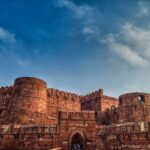
The Red Fort is a massive 17th-century fortress of red sandstone, surrounded by a huge 108-foot boundary wall. The stop length keeps it as an overview rather than a deep visit, but it’s still worth it because you get the scale in person and a sense of how a fortress complex works.


Qutub Minar
Qutub Minar is the landmark here, soaring to 237 feet. It’s one of those monuments that instantly clarifies why Delhi is so important historically: empires built vertically, and the skyline still remembers them.
India Gate
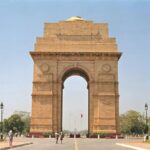
India Gate commemorates the 70,000 Indian soldiers who died in the First World War. It’s more than a photo stop; the memorial context changes how you see the structure. Expect this to be a brief, “get the meaning and move on” visit, since the itinerary time is tight.
Practical note for Delhi: monument entrances and camera fees aren’t included, and many stops are listed around 30 minutes. If you care about getting interior views at every site, treat this day as a guided route, not a museum crawl.
Agra’s Taj Mahal day: classic sights with guide-led context
Day 2 is built around Taj Mahal morning timing, then it flows into other Mughal-era sites near the Yamuna.
Taj Mahal
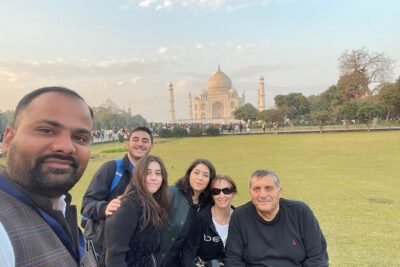
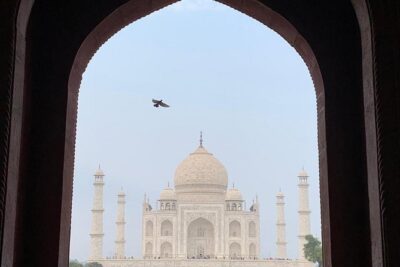
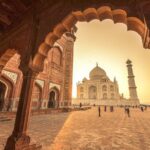
Your guide meets you at the Taj Mahal and shows you around. The tour framing is clear: admire the Taj Mahal as the symbol of love it’s known for, and take the time to look at the details you can’t fully catch from a distance. You get about an hour, which is enough for the main views and a practical understanding of the building’s layout.
Agra Fort
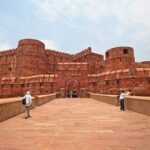
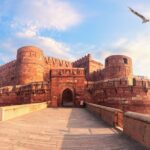
Agra Fort is a major Mughal fortress built by Akbar in 1565 along the Yamuna River. It’s massive and more fortress than palace, so think of this as the “power” side of Mughal architecture. The guide explains the history, which helps the stonework make sense instead of feeling like random walls.
Itmad-ud-Daula
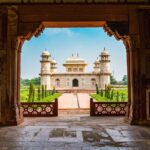
This tomb (a mausoleum overlooking the Yamuna) often gets overlooked compared with the Taj, but it’s a good break because it’s more intimate. You’ll spend around an hour here, which feels more humane after the big-ticket excitement of the Taj.
Mehtab Bagh
Mehtab Bagh is described as a series of 11 parks on the east bank of the Yamuna. Even with a shorter stop, it gives you a different angle for thinking about the Taj’s placement in the landscape and the way gardens were used as planned viewpoints. It’s less about climbing inside something and more about seeing the setting.
One useful tip: since camera fees are listed as not included, plan for how you want to shoot. If you’re doing a lot of interior photography, you’ll want cash/alternate payment ready.
Ranthambore National Park safari plus Talabgaon Castle: the heart of the trip
This is the day that changes the whole tone. It starts with wildlife, then it ends with a heritage stay.
Morning safari in Ranthambore
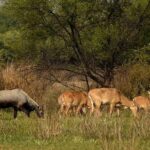
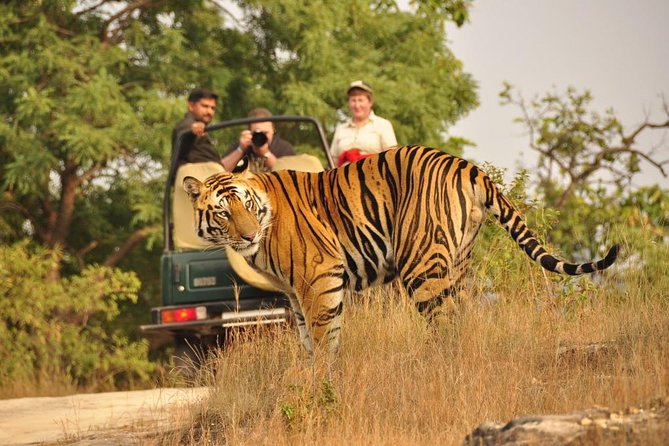
You get a morning safari by shared gypsy with a nature guide. The listing specifically calls out the chance to see hyenas, chittas, jungle cats, panthers, and an Indian tiger if you’re lucky. That last bit matters: you’re not guaranteed a tiger sighting, but you are in one of India’s most serious tiger-watching zones.
Three hours total is a realistic allotment: enough time to get your bearings in the park, adjust your attention as sightings happen, and still return for breakfast without feeling rushed.
Talabgaon Castle: 200-year-old fort turned heritage resort
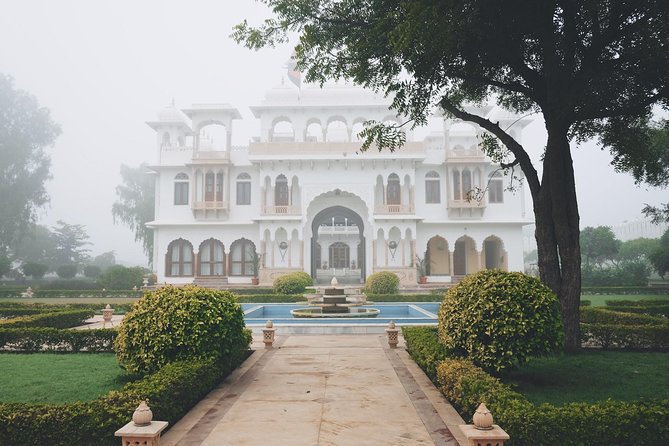
After breakfast, you drive to Castle Talabgaon, described as a 200-year-old Indian fort and family home now operated as a heritage home and luxurious boutique hotel. What I like here is the switch from open wilderness to a property built around old walls and long stories.
Check-in happens when you arrive, and the day includes a village safari at Talabgaon. That combo matters: it’s not just “tigers then hotel.” You get local life and then the comfort of a place designed to slow you down a little.
If you’re trying to judge value: this day is where your money starts to feel more than just transport. The safari + the specific night at Talabgaon is the differentiator.
Jaipur temple and museum day: a calmer pace between big forts
Day 4 keeps Jaipur from becoming nonstop palace photography.
Birla Mandir Temple
You’ll visit Birla Mandir, a Hindu temple located in Jaipur. It’s on elevated ground at the base of Moti Dungar. Even if you’re not deep into temple architecture, this stop is useful because it gives you a sense of Jaipur’s religious geography, not just its royal-era buildings.
You’ll have about an hour, which is enough to see the setting without turning it into an all-day commitment.
Albert Hall Museum
Albert Hall Museum is the oldest museum of Rajasthan and functions as the state museum. The stop is about an hour, so this is best treated as a focused “what matters most” look rather than a full museum afternoon.
Why this fits the itinerary: after three highly visual, high-demand stops (Delhi’s monuments, Agra’s Taj area, then Ranthambore), a museum break lets your brain cool down.
Amber Fort by jeep, then City Palace, Hawa Mahal, and Jantar Mantar
Day 5 is the royal Jaipur day, but it’s structured so you still get variety.
Amber Palace (Amber Fort) with jeep ride
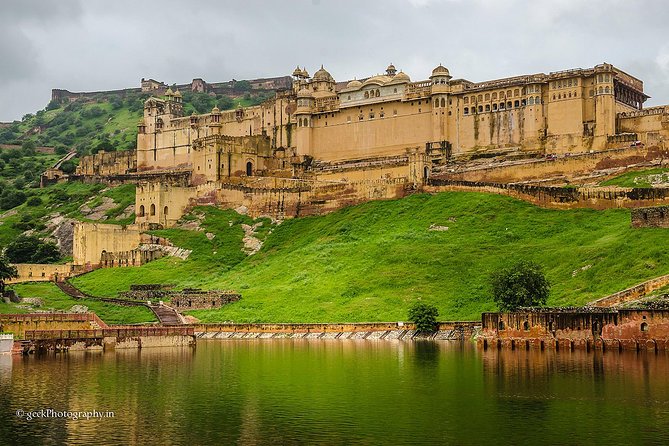
The itinerary includes a jeep ride to and from the top of the hill where the fort sits. That’s a genuine comfort win if you’re visiting in heat or if stairs would be a struggle. The guide explains the fort’s rich history, and you’ll spend about two hours total. This is long enough to take in the fort’s layout and the reasons it became the kind of power base that gets mythologized.
City Palace
City Palace is in the heart of Jaipur and known for a blend of Rajasthani and Mughal architecture. You can enjoy a fine collection of textiles, costumes, and armour at the City Palace. That’s a big plus for anyone who likes material culture—how clothing and gear show status, skills, and the everyday face of royalty.
Hawa Mahal
Hawa Mahal, the Palace of Wind, was constructed for royal ladies to watch processions without being seen. The stop is around 30 minutes, which is short, but the concept is so clear and visually distinctive that even a quick visit works.
Jantar Mantar
Jantar Mantar is a stargazing observatory built by Maharaja Jai Singh. You’ll spend about an hour. This stop is a nice “think like a scientist” moment inside a royal itinerary, and it’s also a great way to understand that royal courts weren’t only about war and buildings—they were about measurement and time.
Time-saver advice: Day 5 is packed. If you’re going to prioritize, pick Amber Fort and City Palace as your top two. Then you can enjoy Hawa Mahal and Jantar Mantar as the supporting cast without feeling like you missed the main plot.
Your final day in Delhi: wrap-up and a clean landing
Day 6 is straightforward: you’re driven back to Delhi and dropped at either the airport or your hotel. This is helpful because it avoids that last-day scramble where you’re stuck negotiating transport while still tired from the circuit.
If you have extra time in Delhi on your last day, you’ll be best served doing something low-effort near where you land—just to let your body recover after the driving days. The itinerary doesn’t promise free time, so plan on a simple close.
Price and value: what $415 is really buying
At $415 per person for a 6-day run, you’re not just paying for hotel beds and a checklist of monuments. You’re paying for a bundle:
- 3-star accommodation for the main nights, plus one night at Castle Talabgaon
- Door-to-door, air-conditioned vehicle transfers with an experienced chauffeur
- Guided sightseeing across Delhi, Agra, and Jaipur
- Ranthambore safari using a shared gypsy with a nature guide
- Meals included: breakfast (5) and dinner (1)
- Taxes/permits/parking/tolls/fuel included, which reduces the annoying parts of paying as you go
The missing piece is just as important: monument entrance and camera fees are not included, and those can change your total trip cost. Also, many stops are intentionally short. That’s efficient, but it means you won’t linger at everything unless you choose what matters most to you.
So the value is best for you if you:
- want less friction between cities
- value guided context at major sites
- care about wildlife as a real highlight, not an optional detour
What stood out in real-world service: drivers, safety, and solo comfort
A repeated theme is the role of the driver. Names that come up include Prem, Kapil, Mayur, and Narendra Singh. In practice, that matters because your driver isn’t just a taxi. They’re the person who handles timing, gets you from point to point, and makes the day feel organized—even when the itinerary includes late visits.
I also like that some solo travelers have reported the tour running smoothly as a single-person group. That’s reassuring if you don’t want to sit around waiting for strangers to arrive. Still, if you’re traveling alone, it’s smart to confirm what the operator will do if group size is small.
Finally, there’s a consistent praise pattern around local guides in each city: people felt the guides were helpful and quick to answer questions. In short, this tour doesn’t just move you; it tries to explain what you’re seeing.
Who this tour suits (and who should rethink it)
This works well for you if:
- you want one guided plan covering Delhi, Agra, and Jaipur without making your own route
- you care about seeing wildlife on a schedule that’s actually built in
- you like comfort upgrades like air-conditioned transfers and a jeep ride up Amber Fort
- you want a heritage resort night at Talabgaon Castle, not just another hotel
You might want to rethink if:
- you expect all monument entrances and camera fees to be included
- you prefer slower travel with lots of unstructured time
- you get worn down by a day full of city sights plus longer drives between cities
The itinerary also notes moderate physical fitness. That’s mainly because you’re moving through forts and temple areas, sometimes on uneven ground. It’s not extreme, but it’s not a “sit the whole time” plan either.
Should you book this Golden Triangle with wildlife and a royal castle stay?
If your priority is the Golden Triangle highlights plus one serious wildlife experience, I think this booking makes sense. The biggest reason is the balance: Delhi and Agra deliver the headline monuments, Jaipur adds royal architecture and a science stop at Jantar Mantar, and Ranthambore gives you the chance of real animal sightings instead of only human-made sights. The Talabgaon Castle night is the cherry on top, especially if you like a change of mood.
Before you pay, do two things:
1) budget for monument entrance and camera fees so the final total doesn’t surprise you, and
2) be honest about whether you want an efficient route with short guided stops. If you do, you’ll likely enjoy how much ground you cover without losing the plot.
If you want a trip where the logistics are handled and the wildlife moment is truly part of the schedule, this one is a strong candidate.
FAQ
What time does the tour start?
The tour start time is listed as 9:00 am.
How long is the tour?
The duration is listed as 6 days (approx.).
What’s included with meals?
Breakfast is included for 5 days, and dinner is included. Monument entrance and camera fees are not included.
Does the price include hotel stays?
Yes. Accommodation is provided in 3-star hotels for the other nights, plus 1 night at Castle Talabgaon.
Do I get airport or hotel drop-off on the last day?
Yes. On the final day, you’re driven back to Delhi where you’re dropped either at the airport or at your hotel in Delhi.
Is transportation included between cities?
Yes. You get door-to-door surface transportation by an air-conditioned vehicle with an experienced chauffeur.
Is Ranthambore safari included, and what type is it?
Yes. Jungle safari is included using a shared gypsy at Ranthambore with a nature guide (one round).
Is there any safari or activity during the Talabgaon Castle stay?
Yes. The itinerary includes a village safari at Castle Talabgaon.
Does the tour include Amber Fort access by vehicle?
Yes. The itinerary includes a jeep ride to and from the top of the hill where Amber Fort is located.
Are monument entrances included for the sights?
No. Monument entrance and camera fees are listed as not included.
Is the tour suitable if I’m traveling alone?
The tour is described as private, meaning only your group participates. In at least one solo case, the tour still operated with the traveler as a single-person group. You should still confirm how your exact departure will be handled before you go.