REVIEW · NEW DELHI
From Delhi : 3 Day Private Luxury Golden Triangle Tour By Car
Book on Viator →Operated by Amsah Tours · Bookable on Viator
Golden Triangle in three days can feel like a sprint. This private car tour keeps you moving with local guides, included entrances for major sights, and a very doable route across Delhi, Agra, and Jaipur.
I especially like how you start with Delhi’s big icons (Qutub Minar, Humayun’s Tomb, Jama Masjid) and then step into Old Delhi by Chandni Chowk and a rickshaw ride. The other standout is the early start for the sunrise Taj Mahal, paired with time for Agra Fort and the lesser-famous Mughal mausoleum known as the Baby Taj.
The main drawback is simple: it’s a packed schedule, with lots of time in the car and a few stops that involve stairs (think Qutub Minar and stepwells). If you’re sensitive to long drives or uneven stone steps, plan your energy carefully.
In This Review
- Key Points I’d Put on Your Decision List
- Golden Triangle, But With Private Door-to-Door Comfort
- Price and What Actually Makes It Feel Like a Deal
- Day 1 in Delhi: Qutub Minar to Old Delhi by Rickshaw
- Qutub Minar and the UNESCO Start
- Lotus Temple for a Breather
- India Gate and the Ceremonial Stops
- Agrasen Ki Baoli: The Step Well Worth Your Time
- Humayun’s Tomb for Mughal Grandeur
- Old Delhi: Chandni Chowk, Jama Masjid, and a Rickshaw Ride
- Red Fort as the Closing Icon
- A practical note
- Late-Day Drive to Agra: Using the Yamuna Expressway
- Sunrise Taj Mahal and Agra Fort on Day 2
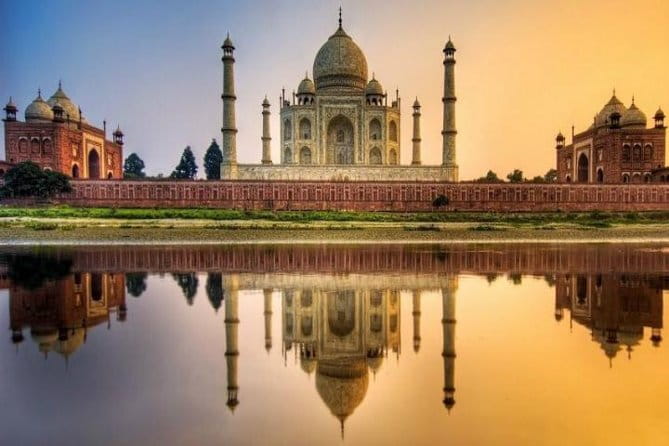
- Taj Mahal at Sunrise: Why the Early Start Matters
- Agra Fort: The Fortress Side of the Mughal Story
- Itmad-ud-Daula: Baby Taj Without the Main-Event Rush
- Chand Baori, Abhaneri: Stepwell Power
- Jaipur Highlights Without the Guesswork
- Panna Meena ka Kund: A Stepwell With Character
- Jal Mahal: Palace on Man Sagar Lake
- City Palace: Jaipur’s Administrative and Ceremonial Core
- Jantar Mantar: UNESCO and Astronomical Instruments
- Hawa Mahal: The Palace of Winds in Short Form
- Guides and Drivers: The Difference Between Seeing and Enjoying
- Shopping and Food Stops You Can Use, Not Just Pass By
- Weather, Timing, and Photo Tips That Actually Help
- Who This Tour Fits Best (and Who Should Rethink It)
- Should You Book This 3-Day Luxury Golden Triangle Tour by Car?
- FAQ
- How long is the Golden Triangle tour?
- Is this tour private or shared?
- Do I get picked up?
- Is transportation provided between Delhi, Agra, and Jaipur?
- Are entrance fees included?
- Is breakfast included?
- Is lunch included?
- Are hotels included?
- What is not included in the tour price?
- What if I need to cancel?
Key Points I’d Put on Your Decision List
- Private vehicle with AC and onboard WiFi makes the long transfers easier
- Sunrise Taj Mahal is built into the plan, with about 2 hours inside
- UNESCO sites covered in every city: Delhi, Agra, Jaipur
- Old Delhi is practical and fun thanks to the rickshaw ride and guided market time
- Stepwell stops (Agrasen Ki Baoli, Panna Meena ka Kund, Chand Baori) add wow-factor but require mobility
- Two nights of hotel are optional depending on the package you choose
Golden Triangle, But With Private Door-to-Door Comfort
This is the kind of Golden Triangle tour that reduces decision-fatigue. You’re not mapping bus routes or negotiating taxis every time you change cities. Instead, you get an air-conditioned vehicle and a private setup so your group can keep a steady pace across Delhi, Agra, and Jaipur.
Another practical win is how your day is organized around guides. The stops listed are big-name sights, but what makes them easier is having someone who can explain what you’re looking at while you’re still there. On this kind of route, that matters because you’ll see a lot of stone, domes, and inscriptions fast. Having a guide to connect the dots keeps it from turning into a blur of photos.
One more comfort detail: the vehicle includes WiFi on board, which sounds small until you’re staring at the clock during a multi-hour drive.
You can also read our reviews of more private tours in New Delhi



Price and What Actually Makes It Feel Like a Deal

The price shows as $20.00 per person for this 3-day private tour by car. That’s the kind of number that makes you double-check what’s included, and in this case, the inclusions are where the value comes from.
Here’s what you get as part of the package:
- All sightseeing with private local guides
- Entrance fees to monuments (and several scheduled sites are shown as free)
- Breakfast at the hotel
- Buffet lunch at the hotel
- Two nights accommodation if you book the option that includes hotels
- Air-conditioned vehicle, WiFi on board, and all fees and taxes
What’s not included is also clearly stated: tipping/gratuities are optional.
My take on value: this feels like a good deal if (1) you want a private car with a guide, and (2) you’re pairing it with the hotel option so breakfast and the included meals do the heavy lifting. If you’re already paying for separate lodging and you don’t need guided entry at the key monuments, you’d compare options more carefully.
Day 1 in Delhi: Qutub Minar to Old Delhi by Rickshaw
Delhi is a full-on day, and that’s not a bad thing here. The route mixes UNESCO-level architecture with the energy of Old Delhi, so you get variety without wasting time on guesswork.
Qutub Minar and the UNESCO Start
You begin at Qutub Minar, a UNESCO World Heritage site tied to Qutub-ud-din Aibak, founder of the Delhi Sultanate. It’s known for its tall spiral staircase, and the design is thought to echo the Minaret of Jam. Even if you don’t climb far, it’s worth seeing in person because it’s one of those structures where the scale hits you immediately.
Lotus Temple for a Breather
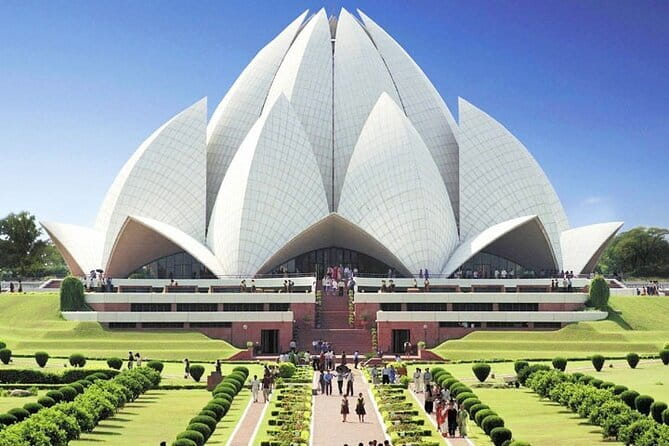
Next comes the Lotus Temple, built in 1986. Its flower-like shape makes it one of the easiest places to appreciate quickly—bright lines, clean geometry, and a calmer vibe than the road-you-just-arrived-from feeling you can get at bigger monuments.
You can also read our reviews of more tours and experiences in New Delhi






India Gate and the Ceremonial Stops
You then stop at India Gate, a war memorial near the Rajpath. It’s dedicated to soldiers of British India who died in wars, and the architecture blends serious purpose with classic symmetry. The schedule also includes a look at major government buildings such as Parliament House (Sansad Bhavan) and Rashtrapati Bhavan, which share strong circular and Ashoka Chakra inspiration in design.
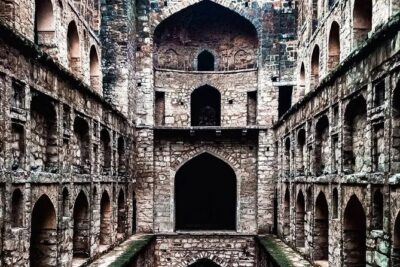
Agrasen Ki Baoli: The Step Well Worth Your Time
One of my favorite picks on the day is Agrasen Ki Baoli. It’s a protected monument and famous for its long step-well structure. This is the kind of stop that gives you a different angle on Delhi’s historic layers—less about grand palaces, more about how people used space and water. Just remember: stepwells are stair-heavy. If you’re traveling with limited mobility, you’ll want to move slowly and hold onto handrails.
Humayun’s Tomb for Mughal Grandeur
In the afternoon you reach Humayun’s Tomb, commissioned in 1558 by Humayun’s chief consort, Empress Bega Begum. The visit is about an hour with admission included. This is a great counterpoint to Qutub Minar: it’s another UNESCO anchor, but with a more Mughal, garden-tomb style feeling.
Old Delhi: Chandni Chowk, Jama Masjid, and a Rickshaw Ride
Then you hit the sensory overload in the best possible way.
- Chandni Chowk is where the shopping energy lives: spices, dried fruit, silver jewelry, saris, and those tight side streets where you can feel the city’s rhythm.
- Jama Masjid is one of the largest mosques in India, built by Shah Jahan between 1650 and 1656. Admission is included on the schedule.
After that, you do a rickshaw ride in Old Delhi. The ride is tied to the history of how the capital shifted and how a market grew around a square established in the 1600s. It’s short, but it helps you get oriented fast in a dense area.
Red Fort as the Closing Icon
You finish the day at Red Fort, a Mughal main residence for nearly 200 years until 1856. The schedule gives about an hour. Even if you keep your focus on the outside first, it’s a good way to cap a Delhi day that covered both imperial architecture and daily life.
A practical note
This is a long day with many stops. I’d treat it like a marathon: comfy shoes, water, and a realistic mindset that you’re seeing highlights, not lingering forever at each place.
Late-Day Drive to Agra: Using the Yamuna Expressway
Lunch happens in Delhi at a local restaurant or as a buffet at the hotel (the package states buffet lunch at the hotel). Then you drive toward Agra using the Yamuna Expressway.
The drive time is listed at about 3 hours, which is a key part of why this itinerary works. You’re not spending your day stuck in slow traffic for hours without a plan. Once you arrive, you check into your hotel and get the rest of the evening free.
If you want to make your Agra night count, ask your driver or guide for a simple plan: where to walk, where to eat, and what time to aim for the next morning’s Taj timing.
Sunrise Taj Mahal and Agra Fort on Day 2
Day 2 is where the tour earns its name.
Taj Mahal at Sunrise: Why the Early Start Matters
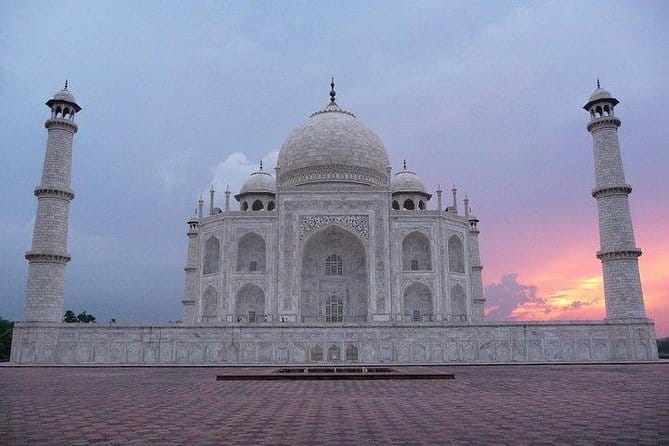
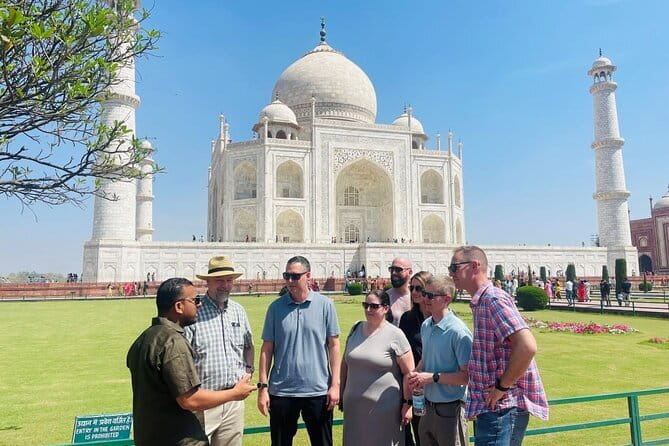
You wake up early for the sunrise Taj Mahal. The schedule builds in a guided tour inside for about 2 hours, with admission included. The big point here isn’t just romance—it’s timing.
One of the best tips tied to this trip is going early around 5:30 am, which helps you avoid the worst crowd crush and keeps the experience feeling calmer. Plus, sunrise light just makes the Taj look like the Taj, not like a photo backdrop.
Agra Fort: The Fortress Side of the Mughal Story
After the Taj, you visit Agra Fort, about 1 hour with admission included. It’s a UNESCO World Heritage site and a historical fort in the city of Agra. If the Taj is all grace and symmetry, Agra Fort is the power-and-defense side of the same era. It’s the kind of stop where a guide helps you notice how different sections relate to daily court life.
Itmad-ud-Daula: Baby Taj Without the Main-Event Rush
Next is Itmad-ud-Daula, often called Baby Taj. It’s a Mughal mausoleum with gardens and outbuildings. The schedule gives about 30 minutes, and admission is included.
This is a smart inclusion for the tour: it adds variety without eating your whole day. If you love fine marble details, it can also feel more relaxed than the main Taj experience.
Chand Baori, Abhaneri: Stepwell Power
Then you head toward Chand Baori in Abhaneri, a stepwell reached by 3,500 steps. The visit is about 1 hour with admission included.
This is the “how is this even real?” stop. It’s old (the water structure dates to the 8th and 9th centuries), and its stepped geometry creates depth you can’t get from a quick look. The only drawback is physical: stepwells demand comfort with stairs and uneven surfaces.
Finally, you continue on to Jaipur, check into your hotel, and get the night at leisure.
Jaipur Highlights Without the Guesswork
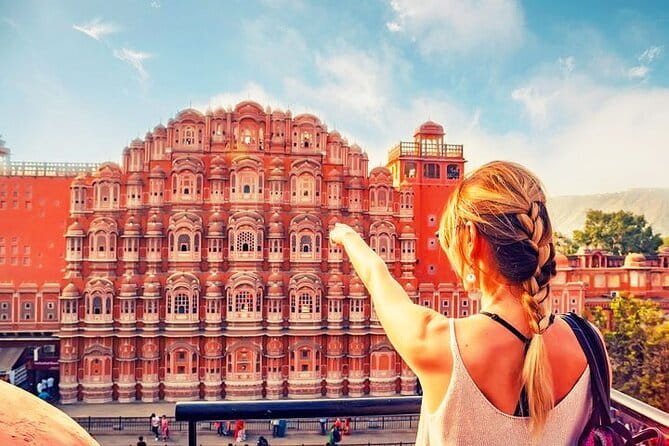
Jaipur’s schedule keeps moving, but it’s balanced: you get palace power, astronomical engineering, and scenic lake views.
Panna Meena ka Kund: A Stepwell With Character
You start with Panna Meena ka Kund, with admission included. It’s a quick stop (about 15 minutes), which is good because it prevents you from getting stepwell fatigue after Agra’s Chand Baori. Still, it’s the same idea: Jaipur’s historic water architecture in a compact format.
Jal Mahal: Palace on Man Sagar Lake
Next is Jal Mahal, a palace in the middle of Man Sagar Lake. It was renovated and enlarged by Maharaja Jai Singh II in the 18th century. Admission is included and the stop is about 30 minutes.
The value here is the visual pause. After fortifications and mausoleums, you get a scenic, almost postcard moment—especially useful if you’re traveling with people who like photos but also appreciate a bit of calm.
City Palace: Jaipur’s Administrative and Ceremonial Core
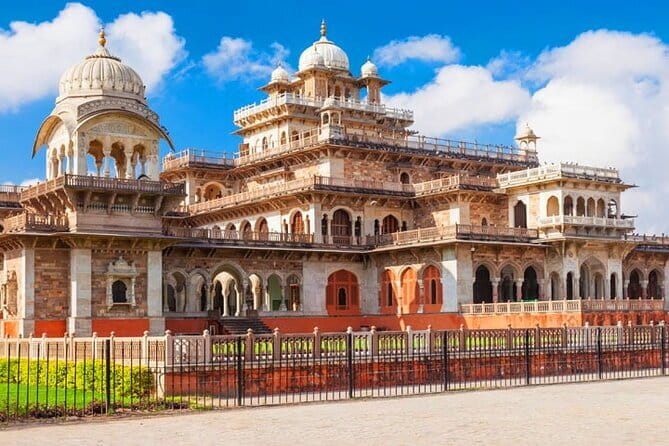
Then you visit the City Palace of Jaipur, constructed in 1721. The schedule allows about 1 hour with admission included. This is where you’ll get a sense of how the palace functioned as both administrative and ceremonial center, with religious and cultural events happening there historically.
Jantar Mantar: UNESCO and Astronomical Instruments
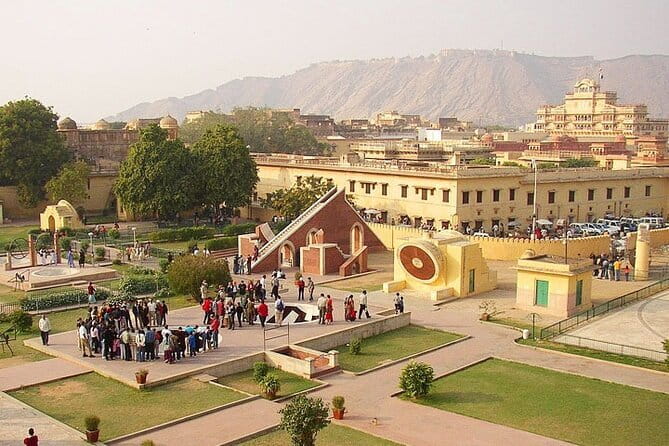
You also visit Jantar Mantar, a UNESCO World Heritage site built in 1734. It’s a set of nineteen architectural astronomical instruments built by Sawai Jai Singh II, the founder of Jaipur. The stop is about 1 hour.
If you like science-meets-stone, this is a standout. It’s not just monuments; it’s measurement and observation turned into public architecture.
Hawa Mahal: The Palace of Winds in Short Form
You end with Hawa Mahal, the Palace of Winds, made with red and pink sandstone. The stop is short (about 15 minutes) with admission included.
This brevity is on purpose. Hawa Mahal looks best when you can see it quickly and from the right angle. I’d treat it like a photo-and-fact stop rather than a deep linger.
Guides and Drivers: The Difference Between Seeing and Enjoying

On a tour like this, your guide and driver can make the whole thing smoother.
From past experiences shared on this route, guides such as Shamin and Nikhil are praised for strong English and patience. Others like Siddhi, plus guides working under names such as Imran Khan and Imran Bey, show up with comments about being helpful, arranging things, and keeping things stress-free.
Drivers like Rahul and Jeetu are also mentioned as calm and careful, with the added detail that the car stayed clean.
How to use that info: don’t just look at the itinerary. If you have preferences—more time for photos, slower market browsing, fewer museum facts—send them ahead. A good guide can shape the day within the schedule you’re given.
Shopping and Food Stops You Can Use, Not Just Pass By
Delhi’s Old Delhi section is where shopping becomes real instead of optional.
At Chandni Chowk, you’ll see markets built around spices, dried fruit, silver jewelry, and saris. If your group enjoys bargaining, it helps to have a guide who can point you toward good stalls and avoid aimless wandering. One of the best practical benefits is that this tour doesn’t pretend shopping is only for hobbyists—it actually builds time for it.
On the food side, you’re not guessing where to eat. You get breakfast at the hotel and a buffet lunch at the hotel. That’s a quiet luxury in a multi-city schedule, because it keeps your energy steady for the next monument-heavy leg.
Weather, Timing, and Photo Tips That Actually Help
Two timing tips matter a lot on this Golden Triangle path.
First: for the Taj, aim for that early start. The schedule is set around sunrise, and one strong tip linked to this trip is getting there around 5:30 am for softer light and fewer headaches.
Second: plan for heat if you travel in summer. A direct caution tied to this kind of itinerary is that the weather can be very hot, and the step-heavy sites add extra strain. If you’re flexible, cooler seasons are simply more comfortable.
Photo tip that saves time: wear shoes you can walk in for stepwells. Qutub Minar involves a spiral staircase. Stepwells like Agrasen Ki Baoli, Panna Meena ka Kund, and Chand Baori are stair-heavy, with uneven stone steps. Bring water and pace yourself.
Who This Tour Fits Best (and Who Should Rethink It)
This tour is a strong match if you:
- want a short, structured route across Delhi, Agra, and Jaipur
- prefer private local guides over self-guided wandering
- care about hitting top sights like Qutub Minar, Humayun’s Tomb, Jama Masjid, Taj Mahal, and Jantar Mantar
- like Old Delhi and don’t mind a full day of walking and photos
It may be less ideal if you:
- hate long driving days (the Delhi to Agra transfer is about 3 hours, plus other city legs)
- have limited mobility or don’t want stairs (stepwells and the Qutub Minar staircase are part of the plan)
- want lots of free time to explore each city at your own pace (this itinerary keeps you moving and prioritizes highlights)
Should You Book This 3-Day Luxury Golden Triangle Tour by Car?
I’d book it if your goal is a well-organized, private Golden Triangle with guides and the major UNESCO hits, including the big-ticket moment of sunrise Taj Mahal. The value comes from bundling private transport, guidance, and key entrances, plus hotel breakfast and buffet lunch if you select the hotel-included option.
Before you book, decide two things:
- Are you okay with a busy schedule and early wake-ups for sunrise?
- Are you comfortable with stair-heavy sights like stepwells and a minaret staircase?
If you said yes, this is the kind of tour that helps you get the essentials done without the hassle of piecing everything together yourself.
FAQ
How long is the Golden Triangle tour?
The tour runs for about 3 days.
Is this tour private or shared?
It’s a private tour/activity, so only your group participates.
Do I get picked up?
Pickup is offered.
Is transportation provided between Delhi, Agra, and Jaipur?
Yes. You travel in an air-conditioned private vehicle.
Are entrance fees included?
Entrance fees to monuments are included, and several listed stops show as free admission.
Is breakfast included?
Yes. Breakfast at the hotel is included.
Is lunch included?
Yes. There is a buffet lunch at the hotel.
Are hotels included?
Two nights accommodation are included only if you book the option that includes hotels.
What is not included in the tour price?
Tipping/gratuities are not included.
What if I need to cancel?
You can cancel for a full refund up to 24 hours in advance of the experience start time.