REVIEW · NEW DELHI
Guided 3‑hour rickshaw ride through Old Delhi with transfers
Book on Viator →Operated by Go City Adventures · Bookable on Viator
Old Delhi moves fast, and this tour helps. You get hotel pickup and drop-off and a guided rickshaw ride through the old lanes and markets, so you’re not just wandering blindly. I also like that the route is built around two major landmarks of different faiths, not random stops. One key consideration: Jama Masjid has an extra entrance fee and the dress-code shoe rules can slow you down.
In a small group (max 12), you’ll follow a local guide who knows how to handle the crowds. Guides I’ve seen associated with this experience include Akansha, Kanika, and Mona, and they’re praised for being friendly, organized, and good at making the route feel less chaotic. You’ll also have time for snacks and spice shopping, which is where the tour earns its keep.
In This Review
- Key things to know before you go
- Old Delhi by rickshaw: why this 3-hour loop works
- Price and logistics: what you’re paying for (and what costs extra)
- Chawri Bazaar: starting in an old wholesale market
- Jama Masjid: the main monument and the minaret choice
- Kinari Bazaar: wedding accessories, color, and quick shopping energy
- Naughara and the old-lane feeling of Old Delhi
- Gurudwara Sis Ganj Sahib: a major Sikh temple and the langar possibility
- Chandni Chowk: street-level life, shopping, and snack time
- Khari Baoli spice market: the finale and the take-home souvenirs
- Guides and coordination: how the “less chaos” part actually happens
- Rickshaw rules, dress code, and your comfort checklist
- Who should book this Old Delhi rickshaw tour?
- Should you book this tour?
- FAQ
- FAQ
- How long is the rickshaw tour through Old Delhi?
- What does the tour price include?
- What costs extra during the tour?
- Where does the tour start and end?
- What are the main stops during the ride?
- Are there dress code rules at places of worship?
- Do I have to remove my shoes?
- Is there a limit on group size?
- What is the cancellation rule?
Key things to know before you go
- Hotel transfers included so you don’t waste time figuring out pickup points in Old Delhi.
- Bicycle-driven rickshaw time gets you close to the street-level sights without nonstop walking.
- Two big religious stops: Gurudwara Sis Ganj Sahib and Jama Masjid, with clear dress-code expectations.
- Market stops built into the route: Chawri Bazaar, Kinari Bazaar, Chandni Chowk, and Khari Baoli spice market.
- Snack and spice shopping windows so you’re not rushed or stuck with only sightseeing photos.
- Small group size (up to 12) helps your guide keep things organized.
Old Delhi by rickshaw: why this 3-hour loop works
Old Delhi isn’t the place you casually stroll with no plan. Streets are narrow, traffic is loud, and the best scenes happen right where maps struggle. This tour solves that with a guided rickshaw ride plus transfers, then strings together the places that shape the neighborhood.
The time box is important. At about 3 hours, you get enough variety—markets, two major religious sites, and a spice market—without turning the day into a foot marathon. I also like that the itinerary flows from well-known commercial streets into quieter, older lanes, so the pace changes instead of repeating one kind of scene.
One more practical win: when the guide and driver move together, you spend less time stuck at the wrong corner. In crowded Old Delhi, that matters more than you’d think.
You can also read our reviews of more guided tours in New Delhi



Price and logistics: what you’re paying for (and what costs extra)
The price is $26.74 per person for a guided 3-hour rickshaw experience with hotel pickup and drop-off. For the area, that’s good value because you’re paying for three things at once: a local guide, transportation through the densest parts of Old Delhi, and a planned route that saves time.
What’s not included is the Jama Masjid entrance fee: ₹450 per person. Plan for that so you’re not scrambling at the last stop. Everything else in the route is listed as free at the stops where admission is typically not required.
A couple more notes that affect your day:
- You’ll likely want to book ahead. The average booking window is about 29 days in advance, which signals these slots can fill.
- You’ll receive a mobile ticket, which is usually easier than juggling paper in a market crowd.
Chawri Bazaar: starting in an old wholesale market
You begin at Chawri Bazaar, one of the older markets in Delhi. It’s known for wholesale trade in brass, copper, and paper goods, and that sets the tone for the whole morning.
What I like about starting here is that it’s not the big headline site first. You warm up with narrow lanes and older architecture, then the tour ramps up toward Jama Masjid. Even if you’re not shopping, this stop helps you understand the neighborhood’s practical side: commerce here isn’t a souvenir pit. It’s how people actually buy and sell.
Practical tip: take a slow look when you can. The lanes are built for foot traffic and short turns, so your best photos come from stepping into the flow, not from standing back.
Jama Masjid: the main monument and the minaret choice
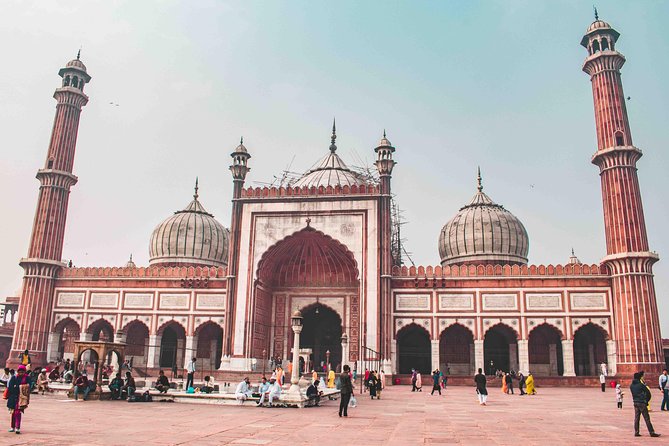
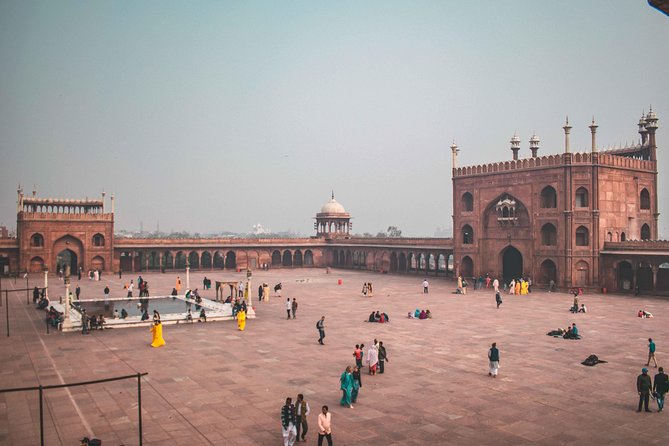
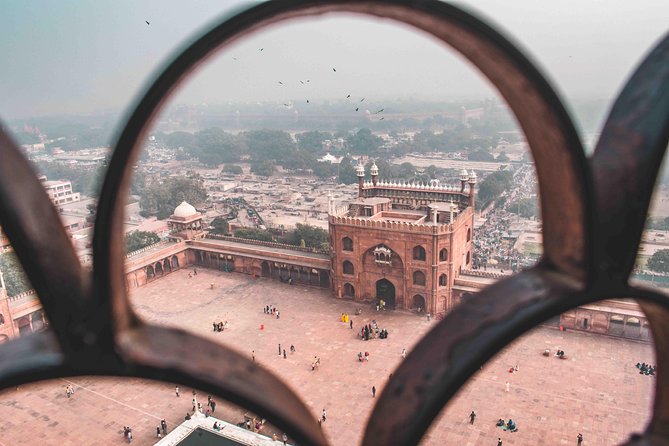
Next you head to Jama Masjid, one of India’s largest mosques. This is the big architectural moment on the route, with Mughal-style grandeur that makes the scale of Old Delhi feel even more dramatic.
You get about 30 minutes there. That’s enough time to see the main areas and orient yourself, but it’s also short enough that you need to decide what matters to you. There’s an optional minaret climb for panoramic views, but it’s not included as part of the tour’s admissions.
Important practical detail: dress rules apply at places of worship.
- Knees and shoulders must be covered
- Shoes and slippers must be removed, and they’ll be stored for you
If you like skyline views and don’t mind extra steps, the minaret is worth considering. If you prefer a calmer visit, spend your time on the main mosque spaces and use the extra minutes to reset before you return to markets.
Kinari Bazaar: wedding accessories, color, and quick shopping energy
After the mosque, the route shifts to Kinari Bazaar, known for colorful wedding accessories. This is the kind of market where the colors hit you first, and then you notice the details: trims, decorative pieces, and all those small items that become part of celebrations.
This stop is about 10 minutes, so treat it like a quick taste. You’re not supposed to fully shop here for hours. Instead, you browse, spot what you like, and keep moving.
If you’re shopping for gifts, this is a good place to handle the first impulse buys. You’ll have another major shopping stretch later, so don’t feel like you must commit immediately.






Naughara and the old-lane feeling of Old Delhi
You then drive through Naughara, an area known for old havelis (traditional Indian mansions). Even though this is a shorter stop and more of a visual pass, it changes the mood. Markets are loud and crowded; havelis give you a different kind of detail—architecture, doorway rhythm, and the sense that some buildings have survived by blending into the street.
This is the moment where the rickshaw helps. You’re seeing the neighborhood without getting jostled into traffic and trying to squeeze a walk into narrow gaps.
If you’re the kind of traveler who loves small details, keep an eye out for carvings, balconies, and old street layout choices that still influence where people walk today.
Gurudwara Sis Ganj Sahib: a major Sikh temple and the langar possibility
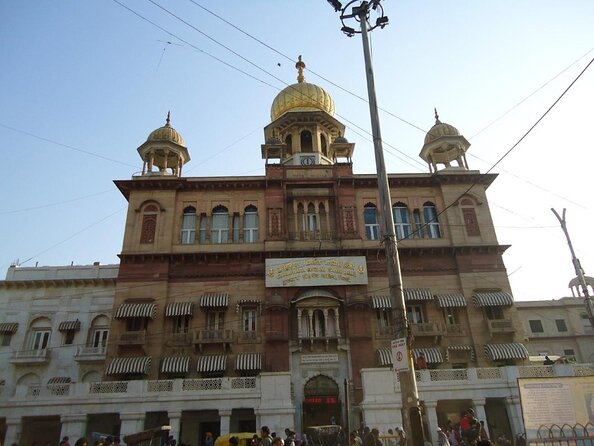
Next is Gurudwara Sis Ganj Sahib, a significant Sikh temple. You’ll have about 30 minutes.
This stop is great for two reasons:
- You get a second major place of worship in the same tour window, which gives Old Delhi more depth than one faith landmark alone.
- You might be able to join langar, the community meal. The tour notes it as possible, not guaranteed, so keep your expectations flexible.
The dress and shoe rules still apply. Plan to move smoothly here: cover up early, and don’t wait until you reach the doorway to realize what you’re wearing.
One small travel sanity tip: bring a basic level of patience. Places of worship can be busy, and you’ll want to follow your guide’s timing rather than trying to force photos from the wrong spot.
Chandni Chowk: street-level life, shopping, and snack time
From the temple, you roll into Chandni Chowk, one of Delhi’s oldest and busiest market areas. You’ll have about 30 minutes, which is a good sweet spot for this kind of place.
Here you can expect three things:
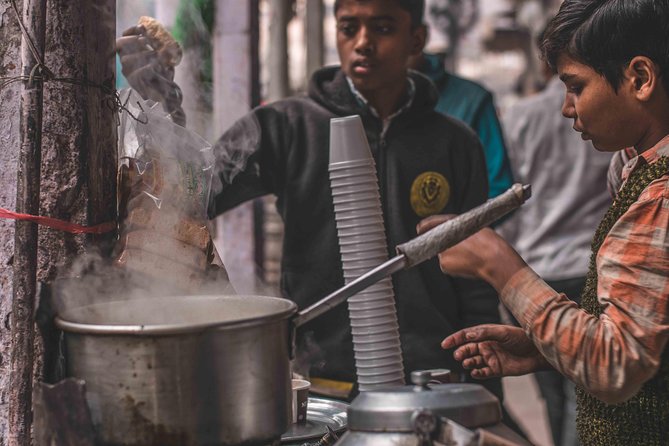
- Street food options (snacks are part of the experience)
- Shopping for souvenirs, clothes, and spices
- Constant movement, so your guide’s route matters
If you like trying one or two foods rather than turning it into a full meal, this is a solid moment to do it. The tour keeps you moving, so you’re not stuck making big decisions under pressure.
Shopping tip: set a simple rule for yourself. For example, decide how much you want to spend before you enter the busiest blocks, then stick to it. Chandni Chowk can tempt you fast.
Khari Baoli spice market: the finale and the take-home souvenirs
The tour ends at Khari Baoli, described as Asia’s largest spice market. This last stop is about 30 minutes, and it’s the right way to close a rickshaw route through markets: spices are the easiest thing to bring home and the most fun to compare.
The experience encourages a simple option: walk around, see how spice stalls work, and if you’re interested, purchase some spices to take home. Even if you’re not buying, it’s worth going for the sensory overload—colors, scents, and the sheer variety.
Practical note: if you buy spices, keep in mind where you’ll store them after the tour. You’ll likely want a safe bag and a plan for liquids or strong-smelling items.
Guides and coordination: how the “less chaos” part actually happens
One of the most praised elements of this experience is how the guide and rickshaw driver work together. That matters in Old Delhi, where crowds and traffic can create bottlenecks.
Guides such as Akansha, Kanika, and Mona are specifically highlighted for friendly, organized guidance and for knowing the area closely. In practice, what that means for you is fewer wrong turns, quicker orientation, and less time standing around waiting for everyone to catch up.
This is also why the tour includes a local guide in a language setup that works for most visitors. The guide is listed as English-speaking or linguistically supportive, which is helpful when you’re negotiating dress rules at temples or trying to decide what to buy in a shop that looks like it sells everything.
Rickshaw rules, dress code, and your comfort checklist
This tour has a few straightforward rules you should respect because they affect how smooth your visit will feel.
Dress code
- Knees and shoulders must be covered at all places of worship.
Shoes
- Shoes and slippers need to be removed at places of worship.
- They’ll be stored safely for you.
Footwear
- Wear comfortable walking shoes or slippers you can remove easily.
Physical demand
- You should have moderate physical fitness. You’re not doing a long hike, but there’s walking between stops, time inside markets, and quick transitions.
Group size
- Maximum is 12 travelers. That’s still a crowd, so your guide will likely keep you moving in a tight rhythm.
If it’s hot or humid when you go, dress for comfort too. Covering shoulders and knees doesn’t mean you can’t wear breathable fabric—just plan ahead.
Who should book this Old Delhi rickshaw tour?
You’ll enjoy this tour most if you want:
- A structured way to see the big Old Delhi highlights in about half a day
- A rickshaw ride plus meaningful stops (not just shopping)
- A guide to handle crowd navigation, especially around Jama Masjid and busy market blocks
You might skip it if:
- You dislike market noise and constant foot traffic
- You want a slow, flexible day with long individual exploration time
- You’re strongly against entrance fees at major sites (Jama Masjid adds ₹450)
This is a smart choice for first-timers to Delhi who want an efficient introduction without trying to manage every turn alone.
Should you book this tour?
Yes, if you want a quick, guided path through Old Delhi that includes major sights and a practical shopping finale. The value is in the combination: hotel transfers + guide + rickshaw + multiple market stops + temple visits in one organized run.
Book it if you’re okay with the one extra cost at Jama Masjid and you’re prepared for the dress code and shoe removal rules. Book it even more if you like markets but want someone else to handle the route in the busiest parts of town.
FAQ
FAQ
How long is the rickshaw tour through Old Delhi?
The tour is about 3 hours.
What does the tour price include?
It includes hotel pickup and drop-off, an English-speaking local guide, and the rickshaw ride in Old Delhi. It also includes a mobile ticket.
What costs extra during the tour?
The entrance fee for Jama Masjid is not included and is listed as ₹450 per person.
Where does the tour start and end?
It starts at Chawri Bazaar and ends at Khari Baoli.
What are the main stops during the ride?
You’ll visit Chawri Bazaar, Jama Masjid, Kinari Bazaar, Naughara, Gurudwara Sis Ganj Sahib, Chandni Chowk, and Khari Baoli.
Are there dress code rules at places of worship?
Yes. Knees and shoulders must be covered at all places of worship.
Do I have to remove my shoes?
Yes. Shoes and slippers need to be removed at places of worship, and they’ll be safely stored for you.
Is there a limit on group size?
Yes. The tour has a maximum of 12 travelers.
What is the cancellation rule?
Free cancellation is available up to 24 hours in advance of the experience start time for a full refund. If you cancel less than 24 hours before, the amount paid is not refunded.