REVIEW · NEW DELHI
New Delhi Private City Day Tour with Guide Including Pick & Drop
Book on Viator →Operated by Go City Adventures · Bookable on Viator
Delhi can feel like a maze, so I like the private guide and air-conditioned vehicle that turn a long day into a clear route through Delhi’s big sights. You get flexible start times and can shape the pace around what you care about, from the Lotus Temple to the Mughal and UNESCO highlights.
One drawback to budget for: entry fees for Humayun’s Tomb and Qutub Minar are not included in the price.
In This Review
- Key points before you go
- How this private Delhi city day really works (pickup, timing, comfort)
- Lotus Temple: the flowerlike Bahá’í House of Worship (and a calm start)
- Gurudwara Bangla Sahib: Sikh worship with a pool at the center
- India Gate and Rashtrapati Bhavan: Rajpath’s ceremonial axis in fast bites
- Agrasen Ki Baoli: the protected monument you might not expect
- Humayun’s Tomb: Mughal grandeur, and the one ticket you must plan for
- Lodhi Garden and Qutub Minar: included entry vs. the last-ticket finish
- Lodhi Garden
- Qutub Minar
- Price and value: what $20 covers, and what you should budget extra
- The guide is the headline: accommodating, experienced help
- What to bring and how to pace yourself for a 6–8 hour day
- Who should book this Delhi private city day tour
- Should you book it?
- FAQ
- How long is the New Delhi private city day tour?
- Is pickup and drop-off included?
- What does the tour cost?
- Is the tour private or shared?
- Which attractions have admission included?
- Are Humayun’s Tomb and Qutub Minar tickets included?
- Does the tour include meals?
- What happens if weather is poor?
Key points before you go
- Private guide focus: You’re not crammed into a mass-group script; your guide helps you move efficiently between major landmarks.
- Air-con comfort with hotel pickup: Round-trip pickup and drop-off make the biggest difference in a city where traffic can be unpredictable.
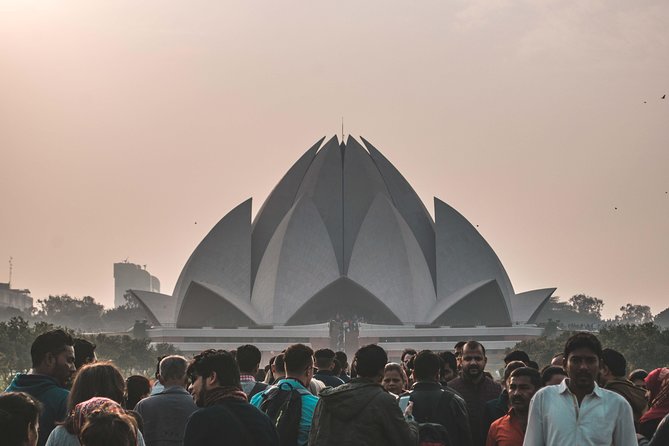
- Lotus Temple included: Admission for the Lotus Temple is included, and it’s a Bahá’í House of Worship dedicated in December 1986 with a flowerlike shape.
- Two entry-paid stops to plan: Humayun’s Tomb and Qutub Minar require tickets you’ll pay separately.
- A strong mix of Delhi eras: Sikh worship at Gurudwara Bangla Sahib, imperial Delhi along Rajpath, and Mughal/UNESCO highlights later in the day.
- Comfort adds up: Water bottles are provided in the car, and the tour is designed for a 6 to 8 hour sightseeing block.
How this private Delhi city day really works (pickup, timing, comfort)

This is a classic “see the core sights without the headaches” setup. You start with hotel pickup and end with drop-off, all in an air-conditioned vehicle with a driver. In Delhi, that matters more than you’d think, because travel time can snowball fast when you’re moving between neighborhoods.
The tour runs about 6 to 8 hours, and you can usually choose a start time that fits your day. That flexibility is great if you’re trying to dodge the hottest hours, meet another activity after sightseeing, or simply keep your rhythm. It’s also a private tour, meaning it’s just your group.
I also like that the day includes water bottles in the car. It’s a small line in the details, but it saves you from adding extra stops you don’t want. The tour also uses a mobile ticket, which keeps things simple once you’re on the move.
One more practical note: the itinerary has multiple stops, some with included entry and some without. If you hate surprise costs, review the ticket inclusions carefully before you go.
You can also read our reviews of more guided tours in New Delhi



Lotus Temple: the flowerlike Bahá’í House of Worship (and a calm start)
You begin at the Lotus Temple, one of Delhi’s most recognizable buildings. It’s a Bahá’í House of Worship, dedicated in December 1986, and known for its flowerlike shape. Starting here works because it gives you a visual anchor early in the day. Even if your knowledge of Delhi is light, you’ll quickly understand why people treat this temple as a must-see.
The schedule keeps the stop fairly focused, with about 30 minutes. That’s enough time to take in the architecture, get photos, and still move on before the rest of the day gets long. Admission for this stop is included, so you won’t need to manage the ticket desk here.
Practical tip: because this is an active place of worship, keep your pace respectful and avoid rushing your photos. The building deserves a little patience.
Gurudwara Bangla Sahib: Sikh worship with a pool at the center
Next up is Gurudwara Bangla Sahib, one of Delhi’s prominent Sikh gurdwaras. It’s especially known for its association with Guru Har Krishan, the eighth Sikh Guru, and for the pool inside the complex. Even if you’re not a worshipper, this stop gives you something different from the more formal government-and-monument vibe.
You’ll spend around 40 minutes. Admission is included, so you can focus on the experience rather than the logistics. The value here is not just seeing the building, but seeing how daily religious life works in the middle of a major city.
A guide helps a lot at places like this, because you’ll often get clearer on what you’re looking at and why the layout matters. And based on the strongest feedback from the tour experience, the guide element is one of the best parts of the day—people liked how accommodating and experienced the guide was.
India Gate and Rashtrapati Bhavan: Rajpath’s ceremonial axis in fast bites
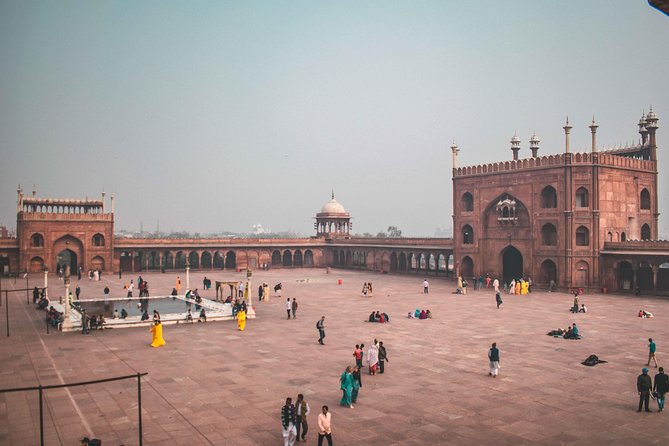
After the temple-and-gurdwara start, the tour shifts to the iconic government corridor of Delhi: Rajpath.
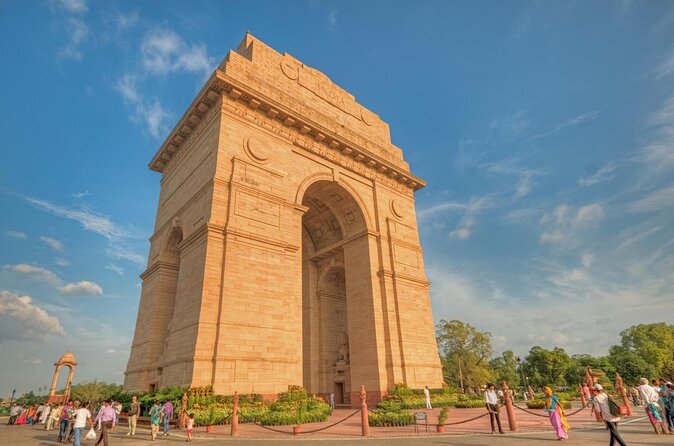
At India Gate, you get a short, easy stop (about 15 minutes). India Gate is a war memorial located astride Rajpath, on the eastern edge of what’s described as the ceremonial axis of New Delhi. It’s fast, but it’s an efficient way to understand Delhi’s layout. With a guide, you also get better context than you’d get from a quick walk-by.
Then you move to Rashtrapati Bhavan, the official home of India’s President, at the western end of Rajpath. The stop is brief (around 10 minutes), and entry is free. Think of it as a photo-and-overview moment. You’re there to get oriented to what the ceremonial axis looks like and how Delhi’s power symbols sit right in the city’s centerline.
Why this section is valuable: it bridges the spiritual sites earlier in the day with the imperial and Mughal stories you’ll tackle later. You’ll start seeing Delhi as a set of intentional corridors and planned spaces.
Agrasen Ki Baoli: the protected monument you might not expect
The tour includes Agrasen Ki Baoli, a protected monument designated by the Archaeological Survey of India under the Ancient Monuments and Archaeological Sites and Remains Act of 1958. The structure is described as 60 meters long and 15 meters wide, which gives you a sense of scale even if you’re only there for about 30 minutes.
Admission here is free. That’s a nice little win, because it helps keep the day’s costs under control while still adding a stop that feels less like a typical postcard photo.
What makes this stop worthwhile is the contrast. After the big, showy monuments, Agrasen Ki Baoli feels quieter and more grounded. It’s the kind of place where your guide’s explanations can turn a quick visit into something more meaningful, because the site isn’t always top-of-mind for first-time visitors.
You can also read our reviews of more city tours in New Delhi





Humayun’s Tomb: Mughal grandeur, and the one ticket you must plan for
Next is Humayun’s Tomb, the tomb of Mughal Emperor Humayun. The tomb was commissioned by his first wife and chief consort, Empress Bega Begum, in 1569–70. Designed by Mirak M… (the details are cut off in the source description), the monument is one of the key stops on any Delhi route focused on Mughal architecture.
You’ll spend around 40 minutes here. Admission is not included, so you’ll need to budget for tickets separately. This is the biggest potential surprise cost on the day, so I recommend you assume you’ll pay for this stop unless you’re able to arrange tickets in advance on your own.
Why this stop matters: it’s the bridge into Delhi’s Mughal-era stories, and it gives you a sense of the scale and design principles behind the later UNESCO-level sites that come after. If you’re trying to keep the day manageable, Humayun’s Tomb is a good point to slow down for a moment and actually look at details instead of just taking photos while moving.
Lodhi Garden and Qutub Minar: included entry vs. the last-ticket finish
The late stretch is where the tour really rewards you, especially if you like architecture and gardens with a purpose.
Lodhi Garden
At Lodhi Garden, you’ll visit the tomb of Mohammed Shah, described as the second last of the Sayyid dynasty rulers. The early tomb in the garden was built in 1444 as a tribute to Mohammed Shah. Admission for Lodhi Garden is included, and the stop runs about 40 minutes.
This is another good choice late in the day because the garden setting adds breathing room. It also gives variety: you’re not only hitting monuments; you’re getting a planned green space connected to historical structures.
Qutub Minar
Then comes Qutub Minar, part of the Qutb complex, which is a UNESCO World Heritage Site. Qutub Minar is described as a 73-metre tall tapering minaret. Admission is not included, and the stop is about 40 minutes.
This is the other ticket you’ll plan for. If you’re trying to predict your total spend, this is the second entry fee to keep in mind. But it’s also one of the best “big structure” payoffs of the whole itinerary. You’ll leave with at least one major landmark photo that feels truly iconic.
Price and value: what $20 covers, and what you should budget extra
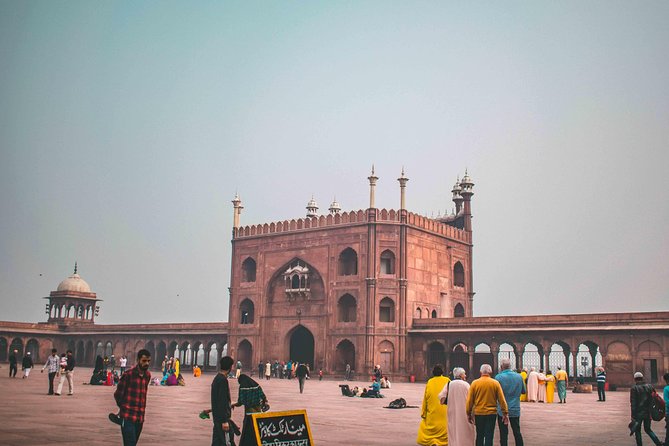
At $20 per person, this tour is priced in the budget-friendly range for a private guide plus air-conditioned transport plus hotel pickup/drop-off. That combination is often where value appears, because you’re not just paying for a lecture—you’re paying for someone to help you navigate and to handle the movement between sites.
Here’s the practical value breakdown based on what’s included:
- Guide (English speaking / linguistic speaking professional guide)
- Air-con private vehicle with driver
- Hotel pickup and drop-off
- Water bottles in the car
- Government taxes/fees included
Then there’s the cost you may add yourself:
- Humayun’s Tomb entry fee
- Qutub Minar entry fee
- Any meals (lunch/snacks are not included)
So the real budgeting idea is simple: this price covers the structure of the day, and you add tickets only for the two specified stops. If you’re comfortable paying those entries, the overall value is strong—especially because the guide and transport remove the biggest day-wreckers: confusion and wasted time.
Also, this tour has a half-day version, but the half-day option excludes Lodhi Garden & Qutub Minar. If you want the UNESCO minaret and the garden tombs, go for the full route.
The guide is the headline: accommodating, experienced help
The strongest praise for this experience comes down to one thing: the guide. The feedback highlights that the tour guide was very accommodating and experienced, and that people would recommend the tour to friends.
That’s not a small detail. In Delhi, it can be hard to stitch together several major sights in the right order without losing time or missing context. A good guide keeps the day efficient and also helps you get more meaning from each stop, not just a checklist.
If you’re the kind of traveler who wants to understand what you’re seeing while keeping stress low, this is exactly the setup you want.
What to bring and how to pace yourself for a 6–8 hour day
Because the itinerary stacks multiple stops, plan your body like you’re doing real sightseeing, not just short photo breaks. You’ll be out for roughly 6 to 8 hours, with several 30–40 minute visits.
Bring:
- A refillable bottle (you’ll also get bottles in the car)
- A light layer, especially if you’re going toward the cooler hours later in the day
- Some kind of snack for later, since meals are not included
Pacing tip: don’t try to over-capture every stop. Choose a couple of details you care about—architecture at Qutub Minar, the structure and shape at the Lotus Temple, or the pool area at Gurudwara Bangla Sahib—and let the other moments be more about absorbing the atmosphere.
Who should book this Delhi private city day tour
This tour is a great fit if:
- You want a structured route with a guide and car
- You’re seeing Delhi for the first time and want the main sights in one day
- You value pickup/drop-off more than wandering at your own pace
- You like a mix of spiritual, ceremonial, and historic architecture
It may be a less perfect fit if:
- You’re determined to avoid paying for any additional entry tickets, because Humayun’s Tomb and Qutub Minar are not included
- You want a long unstructured day with minimal driving
If you’re somewhere in the middle—short on time but willing to do a couple of ticketed stops—this works nicely.
Should you book it?
I’d book this if you want Delhi without friction. The private guide, air-conditioned vehicle, and hotel pickup/drop-off are the core reasons it feels worth it, and the route hits a smart mix of Lotus Temple, Gurudwara Bangla Sahib, Rajpath landmarks, and the Mughal/UNESCO finish.
I’d hesitate only if you strongly prefer to keep costs fixed and avoid separate ticket payments, since Humayun’s Tomb and Qutub Minar require entries you’ll pay separately. If you’re okay with that and you plan for no meals included, this is a solid way to get bearings fast and still see meaningful sights.
FAQ
How long is the New Delhi private city day tour?
It runs about 6 to 8 hours.
Is pickup and drop-off included?
Yes. The tour includes hotel pickup and drop-off.
What does the tour cost?
The price is $20.00 per person.
Is the tour private or shared?
It’s private, and only your group participates.
Which attractions have admission included?
Admission is included for the Lotus Temple, Gurudwara Bangla Sahib, Agrasen Ki Baoli, Lodhi Garden, and India Gate is free and Rashtrapati Bhavan is free.
Are Humayun’s Tomb and Qutub Minar tickets included?
No. Entry fees for Humayun’s Tomb and Qutub Minar are not included.
Does the tour include meals?
No. Meals like lunch or snacks are not included.
What happens if weather is poor?
The experience requires good weather. If it’s canceled due to poor weather, you’ll be offered a different date or a full refund.