REVIEW · NEW DELHI
Private 4 Days Golden Triangle Tour From Delhi
Book on Viator →Operated by Epic India Tour · Bookable on Viator
Four days, three icons, one smooth route. You get a private AC vehicle and a live guide, and the big win is a sunrise Taj Mahal visit timed for softer light. I also like how the route strings together Old Delhi’s monumental Mughal-era landmarks with Agra’s garden tomb views, and then finishes in Jaipur with the kind of architecture that makes you stop and stare.
The tradeoff: it’s a fast, full circuit, so you’ll trade leisure time for “see a lot” pacing and some early mornings. Also, entrance fees can depend on the option you choose, so check what’s included before you assume every site ticket is covered.
In This Review
- Key highlights to know before you go
- Why this Golden Triangle route feels smarter than “just a checklist”
- Day one in Delhi: Old Delhi power, Mughal tombs, and a food-and-sight break
- Jama Masjid: a Mughal-scale statement of power
- Chandni Chowk: where you’ll taste the city’s daily life
- Red Fort: Mughal creativity at full throttle
- Humayun’s Tomb: garden-tomb design that foreshadows the Taj
- India Gate and Qutub Minar: two edges of the ceremonial axis
- Lotus Temple: modern design, calm atmosphere
- Transfer to Agra and hotel check-in
- Agra day: Itmad-ud-Daula and Mehtab Bagh for the Taj story before sunrise
- Agra drive: a “breeze” ride in an AC vehicle
- Itmad-ud-Daula: the underrated masterpiece
- Mehtab Bagh: the river-side framing you’ll remember
- Sunrise at the Taj Mahal: the timing is the whole point
- Taj Mahal: ivory-white marble and a worked-out design
- Fatehpur Sikri: one of the most interesting “off-Taj” stops
- Jaipur day: wind-palace views, an observatory, and the City Palace mix
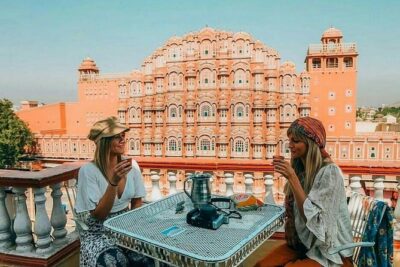
- Hawa Mahal: the Palace of Wind is built for looking sideways
- Jal Mahal: a palace sitting in water
- Jantar Mantar: when architecture acts like a science tool
- City Palace of Jaipur: Mughal-meets-Rajput design you can still see in use
- Patrika Gate and lunch break: energy management matters
- The real value question: does this $150 price make sense?
- Guide quality: why the names Malik and Zeeshan matter
- Practical tips so you don’t waste your energy
- Should you book this private Golden Triangle tour?
- FAQ
- What cities are included in this Golden Triangle tour?
- Where do you get picked up in Delhi and what time?
- How long is the tour?
- Is the Taj Mahal visit done at sunrise?
- Are monument entrance tickets included?
- Are hotels included?
- Do I get a live tour guide and private vehicle?
- What’s included besides transport and guiding?
- What is not included in the tour price?
- Is there free cancellation?
Key highlights to know before you go
- Pickup at 9:00 a.m. in Delhi keeps your first day moving fast.
- Private, live guide means you get explanations while you walk, not just photos.
- Early Taj Mahal timing (around 6:30 a.m.) helps you catch the monument in its best mood.
- Mughal garden tombs and forts show up again and again, linking the story across cities.
- Jaipur monuments in one day (Hawa Mahal, Jantar Mantar, City Palace) are packed but doable.
- Water bottles and umbrellas are included, useful in Delhi heat.
Why this Golden Triangle route feels smarter than “just a checklist”
The Golden Triangle idea is simple: link Delhi, Agra, and Jaipur, and you get a quick overview of India’s major architectural chapters. What makes this tour work better than a self-guided sprint is that you’re not driving, mapping, and negotiating while you’re trying to enjoy the sights. Instead, you roll from one landmark cluster to the next with an AC car and a chauffeur.
You’ll also keep the trip grounded in monuments that actually connect to each other. Delhi covers Mughal power and urban planning. Agra leans into imperial art and mausoleum design. Jaipur then shifts into Rajput rule and astronomy-era ingenuity. That story flow is what makes the days feel less random.
The private setup matters here. It’s only your group, so you’re not stuck waiting for other people’s pace or sitting through explanations that don’t fit your interests.
You can also read our reviews of more private tours in New Delhi



Day one in Delhi: Old Delhi power, Mughal tombs, and a food-and-sight break
Your day starts with a hotel pickup around 9:00 a.m. The schedule is ambitious, but it’s built around Delhi’s “big beats”: political monuments, then city energy, then major Mughal architecture.
Jama Masjid: a Mughal-scale statement of power
Jama Masjid is one of those places where the architecture instantly signals rank and ambition. It was a symbolic gesture of Islamic power in India for centuries, and it also mattered politically during key periods of British rule. Give yourself time to look slowly, especially at scale and layout. Even if you’re not reading every detail, your eye learns what to notice.
Admission isn’t included on the data for this stop, so if you want everything ticketed, confirm which option you’re booking.
Chandni Chowk: where you’ll taste the city’s daily life
Chandni Chowk is the contrast you need after standing in stone grandeur. This is where the area’s specialities shine: food, sweets, and shopping with thousands of varieties. It’s also a practical break—walking here helps you wake up for the next monuments.
Expect it to be lively. Wear comfortable shoes and keep your phone secure. This is also a good place to buy small snacks if you get hungry later in the day.
Red Fort: Mughal creativity at full throttle
Red Fort gets treated like a headline for a reason. It’s considered the zenith of Mughal creativity, and under Shah Jahan it reached a higher level of refinement. You don’t need a museum background to appreciate it—just stand back and take in the massing and colors.
How long you spend here can decide whether your feet feel good at the end of the day, so don’t overpack your attention with too many tiny photo stops.
You can also read our reviews of more tours and experiences in New Delhi






Humayun’s Tomb: garden-tomb design that foreshadows the Taj
After the chaotic energy of Old Delhi, Humayun’s Tomb brings order back. It’s a landmark in the development of Mughal architecture and is also tied to the early extant example of the Mughal garden tomb idea, with causeways and channels. This is where the Golden Triangle story starts clicking: the design language that later becomes famous in Agra is already here.
This stop shows admission as included in the data, which is a nice value moment.
India Gate and Qutub Minar: two edges of the ceremonial axis
India Gate is a war memorial on the ceremonial axis—short stop, big meaning. You’ll likely pass through quick views, but it helps connect modern national memory to the older imperial map of the city.
Then Qutub Minar shifts the mood again. It marks the Muslim presence in the area and is tied to the growth of new Muslim communities after their rise. The architecture also differs from the typical style you might expect from a “single kind” of minaret, so it’s worth paying attention to form.
Admission for Qutub Minar is shown as included in the data, so this is another place where the tour can feel efficient.
Lotus Temple: modern design, calm atmosphere
Lotus Temple is a calmer stop with a look that’s easy to recognize and hard to ignore. It’s described as having awesome architecture and historical importance. This is also a practical breather before you transfer toward Agra.
Transfer to Agra and hotel check-in
At the end of the day, you drive to Agra and check in. You’re on the clock, but staying in Agra means the next morning can focus on the famous sights instead of losing hours to travel.
Agra day: Itmad-ud-Daula and Mehtab Bagh for the Taj story before sunrise
Agra is often treated like a one-day hit—Taj Mahal, photos, done. This tour gives you more depth by working up to the Taj.
Agra drive: a “breeze” ride in an AC vehicle
You leave Delhi around 9:00 a.m. and the ride is described as about 3 hours in a comfortable AC vehicle. That time matters. If you’ve traveled in India before, you know heat and traffic can grind you down fast, so AC comfort helps you arrive ready instead of frazzled.
Itmad-ud-Daula: the underrated masterpiece
Itmad-ud-Daula (the Tomb of Itimad-Ud-Daula) is built by Mughal queen Nur Jahan between 1622 and 1628 for her father Itimad Ud Daula. I like this stop because it’s not just famous for being pretty—it’s famous for representing a step in Mughal mausoleum evolution. It’s the kind of place you can enjoy without fighting the Taj-level crowds.
Admission is listed as included in the data.
Mehtab Bagh: the river-side framing you’ll remember
Mehtab Bagh is a charbagh complex north of the Taj Mahal, across the Yamuna River. It’s described as lying in the flood plains and positioned opposite the Taj complex—so it’s naturally tied to framing and viewing. Even with a shorter stop, you get that “this is why people come here” sense.
Admission is shown as not included, so if tickets matter for you, confirm ahead of time.
Sunrise at the Taj Mahal: the timing is the whole point
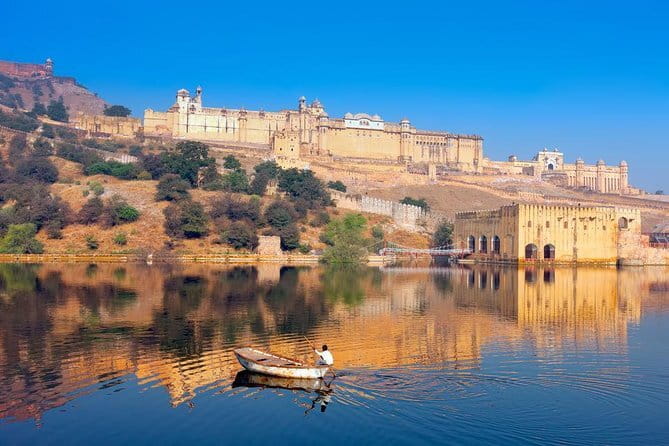
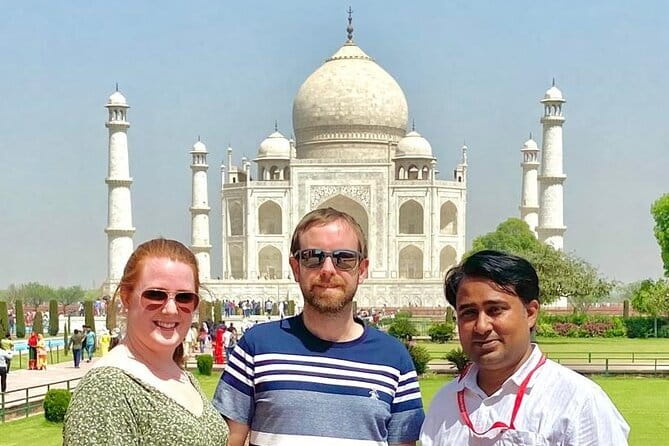
The next morning starts early—around 6:30 a.m.—with your guide and chauffeur taking you to the Taj Mahal for sunrise. That’s not just for aesthetic romance. Morning timing usually means better light for photos and an experience that feels calmer than midday.
Taj Mahal: ivory-white marble and a worked-out design
You’ll spend around 3 hours at the Taj Mahal. It’s described as an ivory-white marble mausoleum on the south bank of the Yamuna River, commissioned in 1632 by Shah Jahan. The story is well known, but the experience gets real when you watch the way the light changes the marble’s color across the surface.
Admission is listed as included in the data for this stop. Still, don’t assume you’ll breeze in without any waiting. India-famous sites do draw attention.
Fatehpur Sikri: one of the most interesting “off-Taj” stops
After the Taj, you head to Fatehpur Sikri, a small city west of Agra founded by a 16th-century Mughal emperor. The description focuses on red sandstone buildings clustering at its center and the Buland Darwaza gate leading into Jama Masjid. This is the stop that helps you see Mughal power beyond the most famous monument.
The time you get here is about 2 hours, so you’ll want to prioritize what you most care about: architecture scale, gate details, or just absorbing the atmosphere.
Admission is shown as free in the data.
Jaipur day: wind-palace views, an observatory, and the City Palace mix

By the time you reach Jaipur, you’ll feel the rhythm shift. Delhi and Agra are heavy on Mughal funerary and imperial architecture. Jaipur brings in Rajput artistry and a different kind of clever science.
The day’s first half is packed: Hawa Mahal, Jal Mahal, Jantar Mantar, and City Palace, plus Patrika Gate as a stop. That’s a lot, but it’s the kind of “see the highlights” schedule that works best with a guide who keeps you moving with purpose.
Hawa Mahal: the Palace of Wind is built for looking sideways
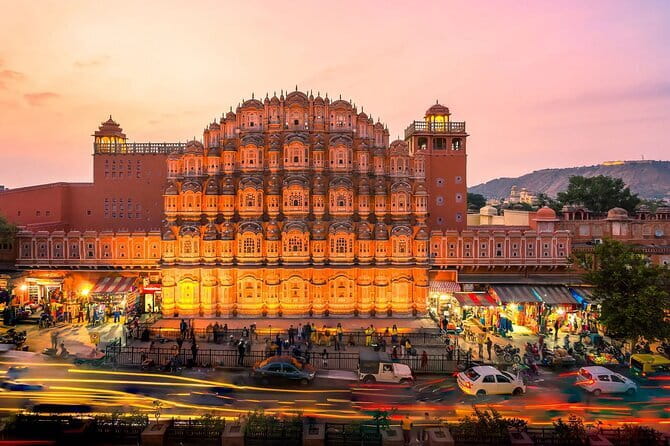
Hawa Mahal is a five-storey building and is described as the tallest building built without a foundation. It has a curved architecture and a pyramidal shape that leans at an 87-degree angle. Even if you don’t know the engineering terms, you can feel the unusual design the second you view the façade.
Admission is listed as free for this stop, which helps your budget.
Jal Mahal: a palace sitting in water
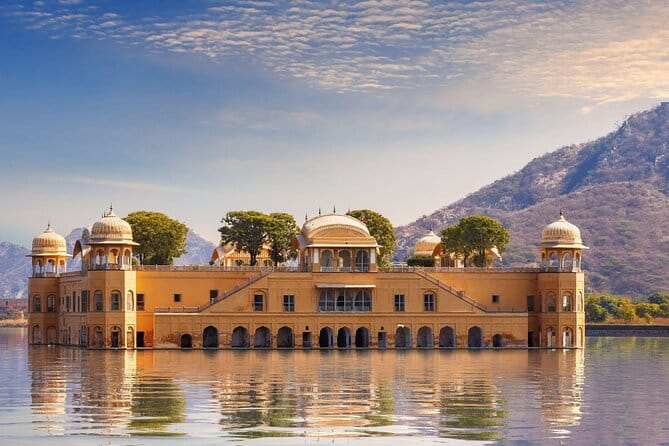
Jal Mahal is a palace in the middle of the Man Sagar Lake, originally constructed around 1699. This stop reads like a postcard, but it’s also a great break from wall-to-wall monuments. If the weather is clear, you’ll get strong reflections and easy photo composition.
Admission is listed as free.
Jantar Mantar: when architecture acts like a science tool
Jantar Mantar is an astronomical observation site built in the early 18th century with a set of fixed instruments. The description calls out around 20 main instruments, which is exactly why a guide helps: otherwise it’s easy to walk past and miss what you’re looking at.
Admission is listed as included. Plan on a full 2 hours so you can understand what makes the instruments useful.
City Palace of Jaipur: Mughal-meets-Rajput design you can still see in use
City Palace Complex was conceived and built by Maharaja Sawai Jai Singh II, founder of Jaipur. It’s described as a fusion of Mughal and Rajput architecture, and it’s still occupied in parts. This stop is where the tour shifts from “historical monuments” to “heritage that continues to live.”
Admission is listed as included.
Patrika Gate and lunch break: energy management matters
Patrika Gate is listed as part of the afternoon plan, and then you have lunch at a restaurant. This is a good setup for a late-day reset, because Jaipur walking can wear you out quickly.
Also, the data says complimentary drinks with lunch aren’t included, so if you like bottled water or soda, budget for it.
The real value question: does this $150 price make sense?
At $150 per person for a private 4-day Golden Triangle, the value hinges on what’s included for your booking option. This tour offers an AC private vehicle, a live guide, and 3 nights of hotel stay with breakfast if that hotel option is chosen.
The tour also includes a set of practical costs: parking fees, tolls, fuel, and taxes. On top of that, you get complimentary water bottles and umbrellas, which is a small thing until you need it.
Where you should be careful: monument tickets can depend on the option you choose. Some stops show admission included, some show free, and some show not included. If you want maximum predictability, select the option that covers monument entrances and confirm before you finalize.
Still, even with a ticket-upcharge scenario, the biggest cost saver is time and stress. You’re paying for smooth logistics: chauffeur pickup, transfers between cities, and a guide to turn “interesting buildings” into a story you actually remember.
Guide quality: why the names Malik and Zeeshan matter
This kind of tour lives or dies by the guide. In the feedback you shared, Malik stood out for explaining history and even the mechanisms inside Agra Fort—details that can make stonework feel practical and not just decorative. Zeeshan also came up as friendly and helpful, and importantly, he handled accommodations smoothly so the trip stayed on track.
That’s the best-case scenario. You don’t just want facts; you want the how and why, especially when you’re moving fast between Delhi, Agra, and Jaipur. A strong guide can also help you prioritize what to see first when you’re short on time.
Practical tips so you don’t waste your energy
A few things I’d do to make this tour feel easier:
- Start with comfy shoes. Delhi and Jaipur involve a lot of walking, and sunrise mornings don’t forgive sore feet.
- Carry a light layer for early mornings. Around sunrise, the air can feel cooler than your afternoon expectations.
- Use the umbrellas and water. They’re included, so don’t buy everything twice.
- Plan for a photo-heavy day in Agra. Taj Mahal gets the spotlight, so be ready to shoot in changing light.
- Ask your guide what not to miss in each site. With time limited, you want the “top 2-3” points each place offers.
If you like structured travel, you’ll appreciate how each day is built around major landmarks. If you hate crowds, you’ll still be around busy places, but sunrise timing at the Taj helps.
Should you book this private Golden Triangle tour?
I’d book it if you want a private, guided Golden Triangle with AC comfort, hotel nights in place, and a sunrise Taj Mahal that doesn’t require you to plan like a logistics manager. This is a great fit for first-timers to Delhi, Agra, and Jaipur who want the big monuments plus enough context to feel like you understood what you saw.
I wouldn’t book it if you’re hoping for lots of free time, slow pacing, or a highly flexible schedule. This route is designed to cover major sites in four days, so you’ll move from one highlight to the next.
If you want a fast, meaningful sampler of India’s most iconic architecture with less friction, this one makes sense.
FAQ
What cities are included in this Golden Triangle tour?
It covers New Delhi, Agra, and Jaipur.
Where do you get picked up in Delhi and what time?
You’re picked up from your hotel in Delhi at 9:00 a.m.
How long is the tour?
It’s listed as approximately 4 days.
Is the Taj Mahal visit done at sunrise?
Yes. The Taj Mahal is scheduled for sunrise, around 6:30 a.m.
Are monument entrance tickets included?
Some entrance fees are listed as included or free for specific sites, but monument tickets depend on the option you select. If you choose the tour with entrance fees, monument tickets are included.
Are hotels included?
Hotel stay for 3 nights with breakfast is included if you select the option with hotels.
Do I get a live tour guide and private vehicle?
Yes. You get a private air-conditioned vehicle and a private live tour guide as per the itinerary.
What’s included besides transport and guiding?
The tour includes complimentary water bottles and umbrellas, and also covers parking fees, tolls, fuel, and taxes.
What is not included in the tour price?
Tips/gratuities and complimentary drinks with lunch are not included.
Is there free cancellation?
Yes, you can cancel for a full refund up to 24 hours in advance of the experience start time.
If you want, tell me your travel month and whether you’re picking the hotel + entrance-fee option, and I’ll suggest the best way to pace your days around heat and early mornings.