REVIEW · NEW DELHI
The Chef @ 11:30 am (4 Main Dishes + 3 Breads)
Book on Viator →Operated by Saffron Palate · Bookable on Viator
Cooking in a Delhi kitchen turns plans into lunch you can make later. This Chef @ 11:30 class at Saffron Palate is a hands-on session where you learn how Indian dishes actually come together, from the spice foundation to bread technique.
I love that the class focuses on doing, not just watching. You also end up eating what you cook, together, with coffee or tea and bottled water, which makes the whole experience feel like a real meal—not a demo.
One thing to keep in mind: you’ll want to communicate dietary needs up front so the menu can be tailored. Also, spices/spice boxes aren’t included, so if you want a take-home kit, plan for extra cost.
In This Review
- Key highlights worth your attention
- A 3-hour plan that feels like real Delhi food
- Finding Saffron Palate near Hauz Khas (and why the location matters)
- What you’ll actually cook: 4 mains and 3 breads
- The cooking flow: spice foundation, then bread technique
- Lunch is included, and the sit-down part matters
- Dietary needs: how the class can be tailored (and how to make it smooth)
- Group size, pace, and who this suits best
- Price and value: is $60 a fair deal?
- What to bring (and what to plan for)
- Should you book Chef @ 11:30 am at Saffron Palate?
- FAQ
- What time does Chef @ 11:30 am start?
- How long is the cooking class?
- What dishes are included in the class?
- Is lunch included?
- Can the menu be customized for dietary restrictions?
- Where do I meet, and how big is the group?
- Is free cancellation available?
Key highlights worth your attention
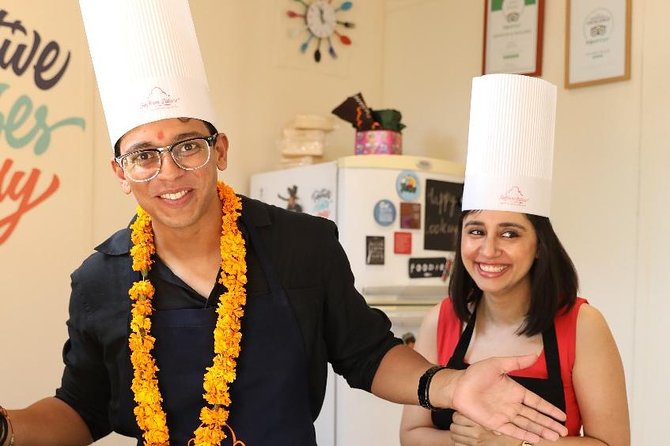
- Small group (max 8), which makes it easier to get hands-on help while you cook
- 4 main dishes + 3 breads taught over about 3 hours
- Neha and the home-kitchen setup create a relaxed pace with real cooking guidance
- Menu customization is offered for vegan, vegetarian, and gluten-free needs
- Lunch and refreshments included, plus recipes so you can cook again at home
- Spice boxes can be purchased, which many people use to replicate results later
A 3-hour plan that feels like real Delhi food
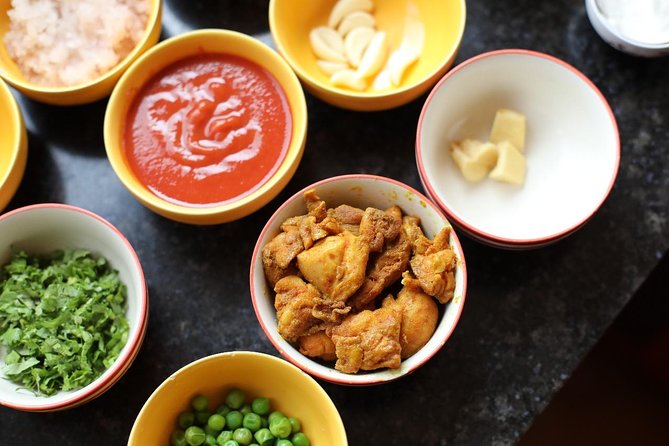
New Delhi can be intense. This class gives you something more human and slower: a kitchen session inside a home studio where cooking is the main event.
The timing helps, too. Starting at 11:30 am means you get your hands dirty early and still finish with a proper sit-down meal. It’s a nice break from sightseeing days where you’re constantly in motion and eating whatever is nearest.
You’ll come away knowing more than a recipe list. You should leave with a working feel for spices, technique, and how small choices change the final dish. The goal is practical: you learn to make Indian food in your own kitchen, not just collect photos.
You can also read our reviews of more cooking classes in New Delhi


Finding Saffron Palate near Hauz Khas (and why the location matters)
Your meeting point is simple once you have the address in hand: Saffron Palate, R 21, FIRST FLOOR, near Chor Minar, Block R, Padmini Enclave, Hauz Khas, Delhi 110016.
Why I like this kind of location for a cooking class: it puts you in the rhythm of the city. You’re not bouncing between polished tourist stops. You’re showing up in a residential area and getting cooking instruction in an everyday setting.
One review described the studio as a rooftop-style home cooking space, which matches the vibe you’re aiming for with this kind of activity. Even if you don’t have that exact expectation, you can still expect a comfortable environment that’s set up for group cooking, not a cramped classroom.
Quick tip: if you’re using maps, zoom in to Chor Minar first. That anchor helps a lot in Delhi.
What you’ll actually cook: 4 mains and 3 breads
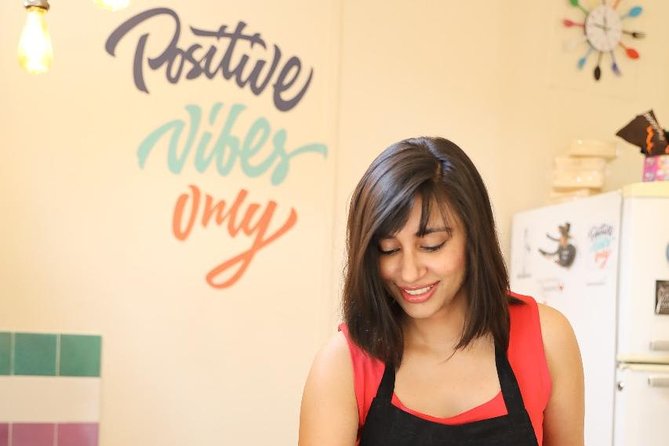
This is not a snack class. The menu is structured as 4 main dishes + 3 breads. You learn each component and then eat the results together at the end.
The class description mentions classic dishes and bread styles you’ll commonly see in North Indian home cooking. You’ll hear and practice around curries such as butter chicken, rice dishes like biryani rice, and the wide world of naan breads.
Important note: the exact menu can be tailored to your needs. If you’re vegan, vegetarian, or gluten-free, the menu can be customized. That’s a big deal because it means you’re not stuck watching your food being made while you eat something different.
Also, recipes are provided. So even if you don’t memorize every spice ratio (real life happens), you’ll have a path back to your own kitchen.
The cooking flow: spice foundation, then bread technique
The heart of the experience is the sequence. You start with the spice basics and cooking logic, then you build dishes step-by-step. This is where the class earns its money.
You’ll spend time learning time-honored techniques and the small decisions that matter, like how spices behave when heated, how sauces develop, and how texture changes as cooking continues. It’s the kind of instruction that helps you understand why a dish tastes the way it does, not just what to add.
Bread is a major part of the lesson too. Naan is a craft: dough handling, shaping, and getting the right result. In one account, the bread portion included tips and tricks to get them right, and kids in the group were genuinely engaged. That tells you something: this isn’t just adults tinkering with dough. It’s organized for people to succeed.
If you’re worried about skill level, don’t be. The class is designed for learners. The whole point is that you’re there to learn technique, not to prove you already know how to cook Indian food.
Lunch is included, and the sit-down part matters
At the end, you sit together and eat what you made. That’s not a throwaway detail. It changes the experience from a cooking demo into a full meal.
Included in your experience:
- Lunch Meal (or dinner, depending on the time booked)
- Coffee and/or Tea
- Bottled water
- Beverages
The meal component also reinforces what you just did. You can taste, compare, and ask questions while the cooks’ decisions are still fresh in your mind.
Several accounts praised the group meal as a genuinely enjoyable ending, with hosts sharing context about Indian food and culture as you eat. It’s one of those “you understand more because you tasted it” moments.






Dietary needs: how the class can be tailored (and how to make it smooth)
This class explicitly offers customization for vegan/vegetarian/gluten free diets. You’re asked to let them know about dietary constraints during booking.
That’s the right approach. In an Indian cooking class, the difference between a safe, satisfying result and an awkward one often comes down to early planning: what you can eat, what ingredients to swap, and how the bread/dish is adjusted to match your needs.
One account highlighted gluten-free support, with the person able to make a gluten-free pancake style item. That’s a useful clue about flexibility—if you communicate your needs clearly, you’re more likely to get a menu that feels like the real experience, not a compromise.
My practical advice: list your needs plainly when you book, and include anything beyond diet if relevant (like ingredient sensitivities). The class is designed to accommodate, but communication still makes everything smoother.
Group size, pace, and who this suits best
This experience caps at 8 travelers. That small number is a real advantage in a cooking class. It keeps the instruction personal enough that you’re not standing around waiting for someone to notice you need help.
The pace is built for doing. You’re in a 3-hour session, so it moves, but it isn’t rushed like a factory line. With a small group, the rhythm should feel controlled.
Who it suits well:
- First-time Indian food cooks who want the basics plus technique
- People who love spices and want to understand how they build flavor
- Families with kids (at least some groups bring children, and the hands-on bread work can hold attention)
- Anyone who likes learning in a real home kitchen setting rather than a public venue
Who might not love it:
- If you mainly want a quick bite with minimal cooking, this may feel like work (the class is hands-on by design)
- If your schedule is tight and 3 hours is hard to protect, you may prefer a shorter food tour or street-food format
Price and value: is $60 a fair deal?

At $60 per person, you’re paying for more than ingredients. Here’s what you’re getting based on the experience details:
- 4 main dishes + 3 breads taught and made
- Lunch meal (or dinner depending on booked time)
- Beverages, including coffee and/or tea and bottled water
- Recipes provided
- Customization for vegan/vegetarian/gluten-free needs
- Instruction from the host in a home-kitchen environment
If you’ve ever tried to replicate Indian bread and curry at home, you know the learning curve is real. With a class like this, you’re not just buying food—you’re buying the shortcuts: technique guidance, spice understanding, and a roadmap you can follow later.
There’s also an optional extra: spices/spice boxes are available to purchase, but they’re not included. If you want the “cook at home exactly again” effect, you may budget for a take-home kit.
My take: for the mix of cooking time, meal, and recipes, $60 feels reasonable if you’re genuinely interested in learning to cook, not just sampling.
What to bring (and what to plan for)
You don’t need fancy gear for a class like this. The main thing is to show up ready to cook and taste.
I’d plan for:
- Comfortable clothing and shoes you can move in
- An appetite (you end with a real meal)
- Clear dietary details if you have restrictions
What not to assume:
- Spices kits/spice boxes aren’t included
- The menu can vary because it can be tailored, so it’s not one fixed list for every person
If you like the class, expect that you might want to buy spices afterward. Some people end up doing exactly that to replicate the dishes at home.
Should you book Chef @ 11:30 am at Saffron Palate?
Book it if you want a Delhi experience that tastes like the real thing and teaches you how to reproduce it later. The biggest wins are hands-on cooking, small group size, and a finish that includes eating what you made.
I’d skip it only if you’re not into cooking work, you can’t spare about 3 hours, or you’re the type who needs everything to be perfectly predetermined in advance. Even though the class can tailor menus for dietary needs, you should still expect some flexibility in what you cook.
If your goal is to leave with spice knowledge, bread technique, and a full belly, this is a strong choice.
FAQ
What time does Chef @ 11:30 am start?
It starts at 11:30 am.
How long is the cooking class?
The duration is about 3 hours.
What dishes are included in the class?
You’ll learn to prepare 4 main dishes and 3 breads. The menu can be customized for dietary needs.
Is lunch included?
Yes. You’ll have lunch meal included, and depending on the time booked it may be lunch or dinner. Coffee and/or tea and bottled water are also included.
Can the menu be customized for dietary restrictions?
Yes. The menu can be tailored for vegetarian, vegan, and gluten-free needs. You should advise dietary requirements at booking.
Where do I meet, and how big is the group?
Meet at Saffron Palate, R 21, FIRST FLOOR, near Chor Minar, Block R, Padmini Enclave, Hauz Khas, Delhi 110016. The group size has a maximum of 8 people.
Is free cancellation available?
Yes. You can cancel for a full refund if you cancel at least 24 hours before the experience start time.