REVIEW · NEW DELHI
10-Day Private Golden Triangle Tour With Jodhpur Udaipur Pushkar
Book on Viator →Operated by Golden Triangle Tours India · Bookable on Viator
A 10-day loop across North India hits different. This private tour is built for first-timers who want major UNESCO sights and real cultural stops, without feeling like you’re hopping buses all day.
What I like most is how private transport keeps the trip calm and organized. I also like the way the itinerary gives you multiple “ways to see the same icons,” including Taj Mahal visits at different times of day and a mix of forts, palaces, temples, and stepwells that most Golden Triangle tours rush through.
One thing to plan around: monument entrance fees aren’t included (budget the listed USD 150 per person), and several days include long driving blocks—great for scenery, but not for people who hate being in the car.
In This Review
- Key highlights before you commit
- 10 Cities, One Private Vehicle: Why This Tour’s Layout Works
- Price and Logistics: What You Pay, and What You’ll Need to Budget
- Day 1 Delhi: Bangla Sahib and Agrasen Stepwell Set the Tone
- Day 2 Delhi’s UNESCO Hits: Qutub Minar, Lotus Temple, Jama Masjid, and Old Delhi
- Day 3 Agra Drive and Your First Taj Moment: Fort, Baby Taj, and Mehtab Bagh
- Day 4 Sunrise Taj and Fatehpur Sikri: From Marble to Mughal City of Victory
- Day 5 Jaipur’s Heritage Loop: Amer Fort, Jal Mahal Photos, City Palace, Jantar Mantar, Hawa Mahal
- Day 6 Travel to Udaipur: A Day That’s Mostly About Arrival
- Day 7 Udaipur by Boat and Palace: Lake Pichola, City Palace, Jagdish Temple, Bagore Ki Haveli
- Day 8 Jodhpur Blue City: Clock Tower Market and a Smooth Arrival Day
- Day 9 Mehrangarh Fort and Royal Memorials: Umaid Bhawan Museum, Jaswant Thada, Then Pushkar
- Day 10 Pushkar and the Trip’s Closing Drive Back to Delhi
- Who Should Book This Tour, and Who Might Skip It
- Should You Book This 10-Day Private Golden Triangle Tour With Rajasthan Extension?
- FAQ
- Is this a private tour?
- Which cities are included in the 10 days?
- Are monument entrance fees included?
- What’s included with hotels and breakfasts?
- What kind of vehicle will you use?
- Is free cancellation available?
Key highlights before you commit
- A dedicated private vehicle: air-conditioned transport with a driver, plus bottled water during journeys
- Delhi’s big-hitters in one sweep: Qutub Minar, Lotus Temple, Jama Masjid, Humayun’s Tomb, and Chandni Chowk
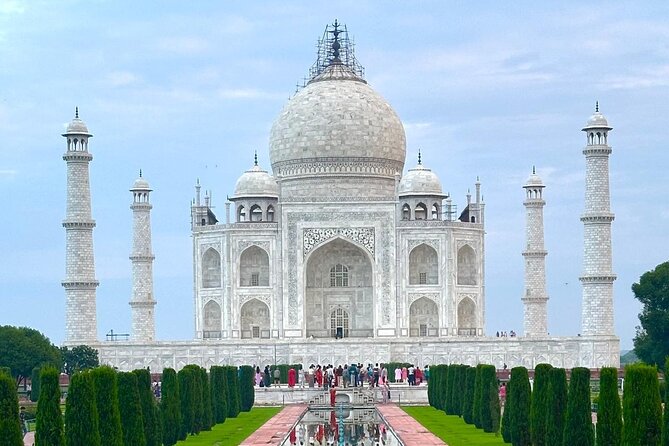
- Taj Mahal twice in style: sunset viewing point one evening, then sunrise the next morning
- Rajasthan landmarks beyond the usual photos: stepwells like Agrasen ki Baoli and Chand Baori, plus Mehrangarh Fort
- Udaipur with time on the water: a private boat ride around Lake Pichola with a stop by Jagmandir Palace
- You can choose to skip Bagore Ki Haveli Museum: the option to say no is built into the day
10 Cities, One Private Vehicle: Why This Tour’s Layout Works
This is a Golden Triangle tour that doesn’t stop at the usual three cities. You get Delhi, Agra, and Jaipur, then you add Jodhpur, Udaipur, and Pushkar—so the trip feels like a “greatest hits” tour of North India with a clear story thread: empires, architecture, and royal Rajasthan.
Because it’s private, you’re not sharing a packed bus with strangers who want different things. You travel in one group with a driver, and the schedule is designed to keep stops logical instead of bouncing randomly across neighborhoods.
Also, you’re not forced into only one type of sightseeing. One day might be a massive Mughal monument, and the next might be a stepwell or a lakeside viewpoint. That mix helps if you’re seeing India for the first time and want variety without spending your evenings figuring out transport.
You can also read our reviews of more private tours in New Delhi

Price and Logistics: What You Pay, and What You’ll Need to Budget
The listed price is $437.14 per person for a 10-day private tour. On top of that, the package notes entrance fees are not included—budget USD 150 per person for monument tickets.
Here’s how I think about value: you’re paying for private driving across multiple cities plus guidance support at each stop. That’s why the total cost can look “reasonable” for what you’re covering—then you add entrance fees and tips.
A few other practical pieces matter:
- Transport size depends on your group size (4-seater sedan for 1–2 people, 6-seater wagon for 3–4, and a 10-seater minivan for 5–10).
- Your room setup is generally twin-sharing, unless you’re in a group of 3 (then triple-sharing is default unless you pay for 2 rooms).
- Breakfast is included for 9 mornings if you book with the hotel option.
- Tips for the driver and guide aren’t included, and you’ll want some cash ready.
If you like structure and door-to-door comfort, the logistics here are one of the main reasons people rate it highly.
Day 1 Delhi: Bangla Sahib and Agrasen Stepwell Set the Tone
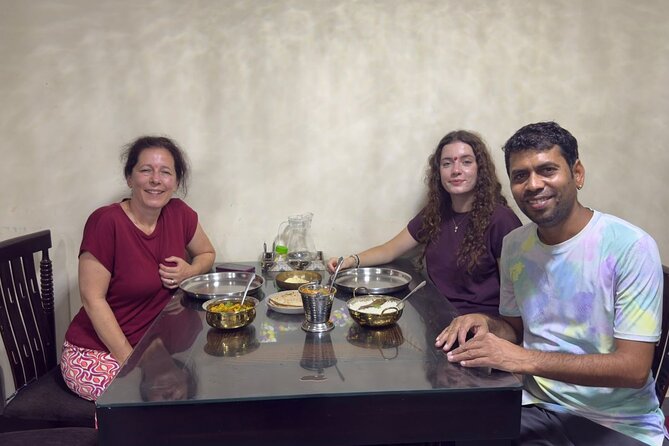
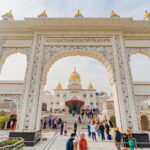
Day 1 starts with Gurudwara Bangla Sahib and then heads to Agrasen Ki Baoli (a stepwell). Both are free-entry stops, and both give you a quick sense of how layered Delhi feels.
At Gurudwara Bangla Sahib, you’re stepping into a Sikh place of worship that’s tied to local stories of relief during epidemics through the sharing of water from the tank. Even if you only spend about 30 minutes, it’s the kind of stop that helps you understand “why people come here,” not just what to photograph.
Then comes Agrasen Ki Baoli, a protected monument and one of those Delhi structures you’ll remember even after the famous skyline fades. It’s long (about 60 meters) and narrow, with an atmosphere that feels different from the street-level chaos nearby.
Practical consideration: day 1 is short and focused. If you want lots of time in markets on your first day, you may need to add that on your own.
Day 2 Delhi’s UNESCO Hits: Qutub Minar, Lotus Temple, Jama Masjid, and Old Delhi
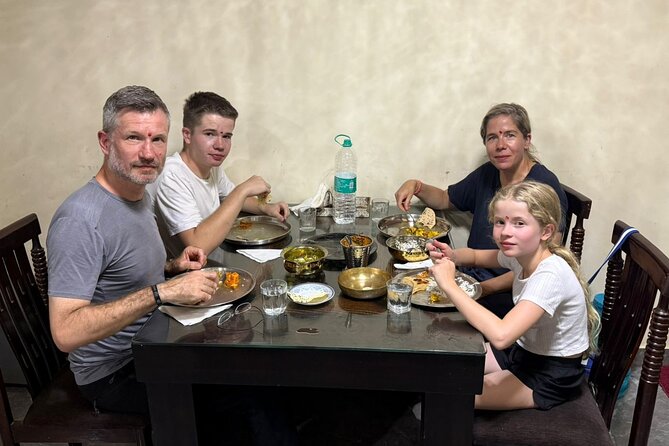
Day 2 is packed, in a good way, if you’re the kind of traveler who wants orientation fast.
You begin at Qutub Minar, a UNESCO World Heritage site, a 73-meter, five-storey minaret built in 1193 by Qutub-ud-din Aibak. The ticket is free in this tour plan, which is a nice bonus because UNESCO sites often come with extra costs.
Next is Lotus Temple, a modern architectural landmark completed in 1986 and open to everyone regardless of religion. It’s only 30 minutes here, so think of it as a “first impression” stop rather than an all-day visit.
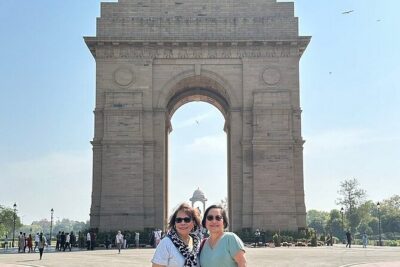
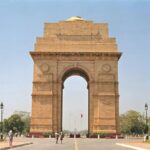
Then you sweep through central landmarks: India Gate (a war memorial and a popular picnic spot), a quick look near Sansad Bhavan (Parliament House), and Jama Masjid, built by Shah Jahan between 1650 and 1656.
The final major stop is Humayun’s Tomb, plus time in Chandni Chowk, where the markets run on spices, dried fruit, jewelry, and the kind of narrow lanes that turn walking into an experience.
Potential drawback: because there are many stops, you’ll only get short windows at each. The payoff is you’ll leave Delhi with a clear map in your head for where to return later.
Day 3 Agra Drive and Your First Taj Moment: Fort, Baby Taj, and Mehtab Bagh
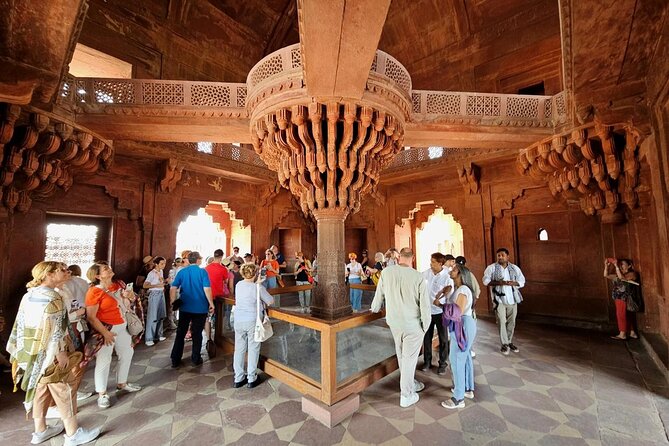
After breakfast you check out and take a roughly 4-hour drive toward Agra via the Yamuna Expressway. This is one of those days where the road time is part of the deal—use it to recover so you can enjoy the afternoon.
In Agra, you hit:
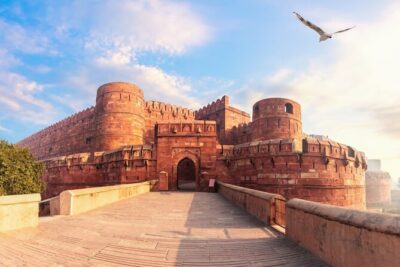
- Agra Fort (about 1 hour), a massive Akbar-era fortress area built in red sandstone and filled with palaces like Diwan-i-Aam and Diwan-i-Khas
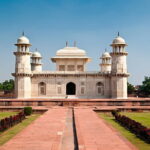
- Itmad-ud-Daula (about 1 hour), often called the Baby Taj for its Mughal mausoleum style
- Mehtab Bagh (about 30 minutes), a garden positioned across the river area connected to Taj views
- Taj Mahal Sunset View Point (about 2 hours), placed for a calmer Taj view during sunset, away from peak crowd pressure
Why this layout is smart: you’re not only chasing Taj photos. You get the fort-and-mausoleum combo first, then you watch Taj in a time window that tends to feel more atmospheric.
Tip for your planning mindset: if you’re someone who gets tired walking fast, pace yourself. The monuments are impressive even at a slower tempo.

Day 4 Sunrise Taj and Fatehpur Sikri: From Marble to Mughal City of Victory
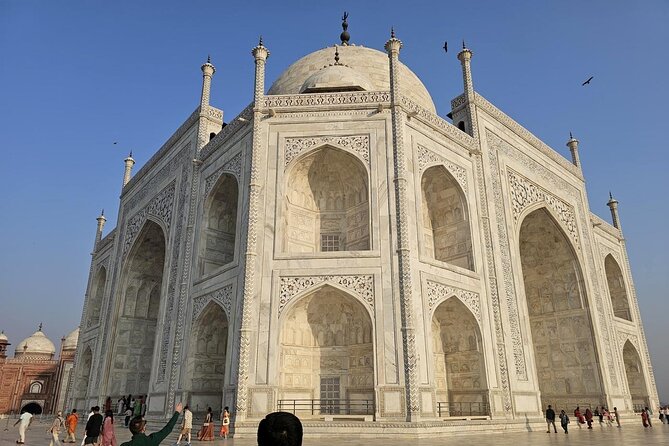
Day 4 is another Taj day—but the schedule changes the experience. You start with Taj Mahal for about 2 hours in a sunrise plan. The Taj is described as an ivory-white marble mausoleum commissioned in 1632 by Shah Jahan.
Next up is Fatehpur Sikri, the City of Victory. It served as the Mughal Empire’s capital for about a decade. Even with a 1-hour stop, it’s a strong way to see why Akbar’s era gets remembered for large-scale building projects.
You then add Chand Baori in Abhaneri, a stepwell that extends roughly 30 meters underground and is described as one of the largest and deepest stepwells in India. It’s the kind of site that makes you look twice because it’s both functional and theatrical.
Finally, you move to Jaipur and check in to your hotel for the night. This day feels like a shift from Agra’s river marble to Rajasthan’s stepwell-and-city geometry.
Day 5 Jaipur’s Heritage Loop: Amer Fort, Jal Mahal Photos, City Palace, Jantar Mantar, Hawa Mahal
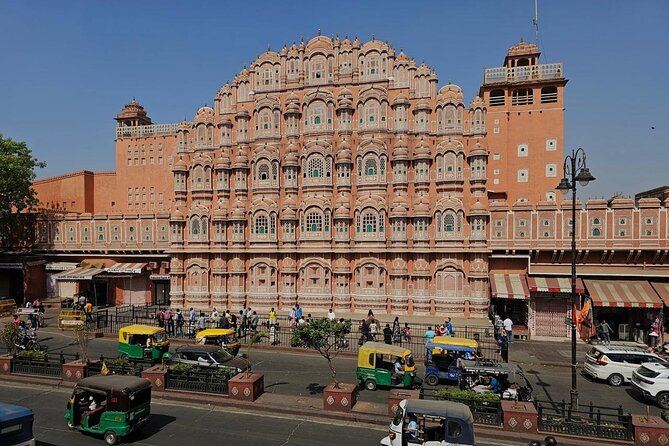
Jaipur day is one of the most sightseeing-dense parts of the trip, and it’s still manageable because the stops are arranged as a logical loop.
You start with Panna Meena ka Kund, a stepwell near the palace area, then head to Jaipur’s main fort stop (described as the most famous fort in Jaipur). Your guided time here is about 2 hours, including palaces, squares, and monuments.
After that, you do Jal Mahal for a quick photo opportunity. It’s a palace sitting in the Man Sagar Lake area—short stop, but it’s a classic “postcard” moment that adds variety to all the fort walls.
Then comes Maharaja’s City Palace (about 1 hour), plus the Jantar Mantar astronomical observatory (UNESCO World Heritage, about 1 hour). Jantar Mantar is built in 1734 with architectural instruments associated with Rajput king Sawai Jai Singh II.
You close with Hawa Mahal, the Palace of Breeze. It’s a five-storey pyramidal monument in red and pink sandstone, and it’s listed as a 30-minute stop.
Small consideration: since the “big hitters” are multiple, bring water and wear shoes you trust. This is a day where your feet will do most of the work.
Day 6 Travel to Udaipur: A Day That’s Mostly About Arrival
Day 6 is simpler. You travel to Udaipur and check in at your hotel, with a listed time of around 30 minutes for the arrival segment.
Why this matters: after two intense sighting days (Agra + Jaipur), a travel-and-arrival day gives you space to reset. Udaipur tends to reward slower pacing, and this day keeps you from arriving exhausted.
If you want to stretch your legs, ask your driver or local team what’s close to your hotel for an evening walk. The itinerary doesn’t list extra stops here, so you’ll have flexibility.
Day 7 Udaipur by Boat and Palace: Lake Pichola, City Palace, Jagdish Temple, Bagore Ki Haveli
Udaipur is where the trip starts to feel more “special” than just impressive buildings.
You begin with Lake Pichola and a private boat ride around the lake, including a stop by Jagmandir Palace island. The stop is about 1 hour, and it’s the kind of activity that breaks up temple-and-fort fatigue.
Next is City Palace, placed at about 2 hours, and the ticket is listed as included. From here you get views over the lake, and the palace collection includes weapons, guns, sedan chairs, tiger cages, and pictures. That detail matters because it’s a different angle on royal display than you’ll see in some other Indian palaces.
You then visit Jagdish Temple (about 30 minutes), a temple in the Indo-Aryan style within the City Palace complex.
Finally, you have Bagore Ki Haveli Museum for about 1 hour. The tour plan explicitly notes you can say no and skip it if you’d rather move on.
That “choice” is a real quality-of-life feature. If you don’t love museums, you won’t be trapped.
Day 8 Jodhpur Blue City: Clock Tower Market and a Smooth Arrival Day
Early on Day 8, you drive to Jodhpur and then check in at your hotel. The plan mentions seeing the blue city and then heading to Clock Tower Market.
Clock Tower Market is about 1 hour and is described as built during Maharaja Sardar Singh’s reign (late 19th to early 20th century). It’s the kind of stop that gives you street-level Rajasthan: colors, shops, and the feeling of a place with its own pace.
One thing to watch: this day has fewer listed attractions than others. That’s not bad—it can be a good sign if you want time to wander on your own after you check in.
Day 9 Mehrangarh Fort and Royal Memorials: Umaid Bhawan Museum, Jaswant Thada, Then Pushkar
Day 9 is a classic Jodhpur day: fortress first, then museums and memorials.
You start at Mehrangarh Fort (about 1 hour). It’s a former palace now operating as a museum, showing weapons, paintings, and royal palanquins. The fort sits on a rocky outcrop and overlooks the walled city.
Next is Umaid Bhawan Museum (about 1 hour). The tour description highlights it as a large private-residence related palace, and it notes the museum’s dun-colored sandstone look.
Then you visit Jaswant Thada (about 1 hour), described as the Taj Mahal of Jodhpur. It’s a marble cenotaph memorial for Marwar kings.
After these stops, you drive to Pushkar and check in for the night.
Practical reality: three major sights in one day is a lot, even if each one is around an hour. Your best strategy is to enjoy each one instead of trying to “beat your memory” with endless photos.
Day 10 Pushkar and the Trip’s Closing Drive Back to Delhi
Your last day keeps the tone spiritual and then finishes with travel.
You visit Brahma Temple for about 15 minutes. The tour description says it’s famous for architecture and mythology, and that Brahma has only one temple in the world—presented as a key reason to stop.
Then you head to Pushkar Lake and Brahma Ghat for about 30 minutes. The plan describes family prayer offerings at the ghat for happiness and tribute for the dead souls. It also notes Brahma Ghat is known for photography and blessings rituals.
After that, you begin the drive back to New Delhi, with a roughly 5-hour journey listed enroute.
If you like meaningful cultural stops, Pushkar is a strong closer. If you’re travel-weary, at least the lake and ghat areas make the ending feel grounded.
Who Should Book This Tour, and Who Might Skip It
This tour is a good match if you:
- Want a first-time India plan with major sites across Delhi, Agra, Jaipur, and Rajasthan additions
- Prefer private transportation over crowded group buses
- Like variety: mausoleums, temples, forts, palace museums, stepwells, and lakes
- Appreciate that Taj Mahal gets more than one viewing moment (sunset viewpoint and sunrise visit)
You might rethink it if you:
- Don’t want long driving days (Day 3’s ~4 hours and the final ~5-hour return are real)
- Get annoyed when extra costs pop up (entrance tickets are listed at USD 150 per person, plus tips aren’t included)
- Prefer deeply unhurried museum time for every stop (many sights are only 30–60 minutes)
One practical note: the tour plan says it’s a private group, so you’ll have a clearer experience than a shared sightseeing day. Still, you’re visiting many locations—so treat it as a highlights program, not a slow study.
Should You Book This 10-Day Private Golden Triangle Tour With Rajasthan Extension?
If you want a smooth, structured trip that covers the big icons and then adds Rajasthan’s personality, I’d say this is worth considering. The biggest value signals are the private vehicle, guided time across UNESCO-heavy days, and the Udaipur boat ride that breaks up the usual “walk, then walk some more” pattern.
Before you book, do a quick budget check:
- Confirm whether your booking includes the hotel option with 9 nights and breakfast
- Add USD 150 per person for monument entrance tickets
- Plan for driver and guide tips on top of that
If those math pieces feel comfortable, this tour can be a very efficient way to see a lot of India without feeling lost. The route also works well if you want a travel companion in the form of a driver who keeps things organized; multiple named drivers in the feedback you provided came up as professional and dependable, which is exactly what you want on a tight multi-city schedule.
FAQ
Is this a private tour?
Yes. This is a private tour/activity, meaning only your group participates.
Which cities are included in the 10 days?
The tour covers New Delhi, Agra, Jaipur, Jodhpur, Udaipur, and Pushkar.
Are monument entrance fees included?
No. The tour lists entrance fee/admission ticket costs as not included, with an amount of USD 150.00 per person noted.
What’s included with hotels and breakfasts?
If you book the option including hotels, you get 9 nights accommodation with breakfast (breakfast is listed for 9 days).
What kind of vehicle will you use?
The vehicle depends on group size: a 4-seater sedan for groups of 1–2, a 6-seater wagon for groups of 3–4, and a 10-seater minivan for groups of 5–10.
Is free cancellation available?
Yes. Free cancellation is available, and you can cancel up to 24 hours in advance for a full refund.