REVIEW · NEW DELHI
2 Days Private Delhi Tour with Best Cooking Class
Book on Viator →Operated by Tour Guide Delhi · Bookable on Viator
Chandni Chowk by tuk-tuk makes the city click fast. I like the private, door-to-door format (so Delhi’s chaos doesn’t eat your time), and I like the hands-on Indian cooking class that turns sightseeing energy into something you can take home. The one catch: monument entry fees are not included, and a couple of the big-name stops are photo-only from outside.
You get a full day in Old Delhi and a full day in New Delhi, moving in an air-conditioned vehicle with a professional chauffeur and a government-approved guide. If you choose the hotel option, you’ll sleep in a comfortable 3-, 4-, or 5-star setup while your tour keeps running on schedule. Just know this is a packed route, so if you prefer slow and quiet, you might want to plan extra downtime around it.
In This Review
- Key highlights that matter in real life
- A two-day private sweep of Old and New Delhi
- Price and logistics: what $229 covers (and what to budget)
- Day 1 in Old Delhi: Jama Masjid and the lanes of Chandni Chowk
- Jama Masjid: scale, history, and a moment to orient yourself
- Chandni Chowk by cycle rickshaw/tuk-tuk: the smart way to do the market maze
- Red Fort outside: iconic views without the full ticket experience
- Day 1 photo power: Raj Ghat, India Gate, Rashtrapati Bhawan, Birla Mandir
- Raj Ghat: a calm, reflective pause
- India Gate and the war memorial framing
- Rashtrapati Bhawan and Parliament House: big-picture views
- Birla Mandir Temple: a softer finish to the day
- Day 2 spiritual and heritage hits in New Delhi
- Gurudwara Bangla Sahib: a peaceful center in the capital
- Humayun’s Tomb: first garden-tomb in the subcontinent
- Lotus Temple: modern design with universal messaging
- Qutub Minar: ticketed, tall, and undeniably impressive
- The cooking class and dinner: where the trip becomes useful
- Your guides and the difference a good driver makes
- What to expect day to day: timing, pacing, and comfort
- Who this private Delhi tour suits best
- Should you book this 2-day Delhi tour with a cooking class?
- FAQ
- Is pickup included?
- What meals are included?
- Does the tour include hotel accommodation?
- Are monument entrance fees included?
- What is included in the cooking class?
- What is the cancellation policy?
Key highlights that matter in real life
- Private guide, real context for what you’re looking at, not just a list of monuments
- Chandni Chowk by cycle rickshaw/tuk-tuk, which is the most practical way to do that maze of lanes
- Comfort-first transport with an air-conditioned vehicle and cold bottled water included
- Old + New Delhi in one clean loop, so you don’t waste days on transit
- Cooking class + dinner, a skill and a meal at the end of the busy days
A two-day private sweep of Old and New Delhi
Delhi is one of those cities where the details matter. If you show up with a loose plan, you can spend hours figuring out routes, lanes, and timing. This tour fixes that by stitching together the key sights into a guided, door-to-door flow.
What stands out is how it blends eras and moods. You start with Old Delhi’s Mughal-era landmarks and market-life energy, then you shift to New Delhi’s grand memorials, temples, and heritage sites. By the time you reach the cooking class, the day stops feeling like a checklist and starts feeling like a cultural handoff.
I also like that you’re not stuck waiting on other groups. It’s a private tour, so your guide can adjust the rhythm for your pace and interests. Plus, the tour is described as customizable, which matters in Delhi where even small route changes can save time.
You can also read our reviews of more private tours in New Delhi


Price and logistics: what $229 covers (and what to budget)
At $229 per person for a private two-day tour, you’re paying for three big things: guided time, transportation, and meals. The included package is more than just “someone drives you around.”
Here’s the value math as you plan:
- AC vehicle + chauffeur for the driving time you would otherwise dread in Delhi traffic
- Govt.-approved tour guide for the context at each stop
- Breakfast and dinner included (and dinner specifically tied to the cooking class)
- Packaged drinking water (cold and unlimited) during the tour
- Airport/hotel transfers and sightseeing each day
- Hotel accommodation only if you select that option (3/4/5-star)
Then there’s the budget item that you should not ignore: monument entrance fees are not included and are listed as $29 per person. That means the total cost in practice may be a bit higher once you add those fees, especially for major heritage sites where tickets usually apply.
If you’re trying to decide whether this is worth it, ask yourself one question: would you personally be comfortable creating and coordinating a route like this across Old Delhi plus New Delhi? If the answer is no, the guided, driver-led structure is exactly where the money goes.
Day 1 in Old Delhi: Jama Masjid and the lanes of Chandni Chowk

Day 1 starts with pickup at about 9:00 AM from your airport or hotel area (Delhi, Gurugram, or Noida). That first step is underrated. Delhi mornings can be busy fast, and having someone waiting with a plan keeps the day from starting late or stressful.
Jama Masjid: scale, history, and a moment to orient yourself
You begin at Jama Masjid, the Friday Mosque and a major Mughal-era landmark. The visit is about 40 minutes. Even if you don’t consider yourself a history person, this stop helps you get your bearings for Old Delhi’s layout. You’ll notice how the surrounding streets funnel foot traffic toward the mosque area, which explains why Chandni Chowk feels like it does.
Practical note: plan for a bit of time for respectful viewing and photo-friendly angles. Religious sites can mean slower movement at the edges, especially when crowds build.
Chandni Chowk by cycle rickshaw/tuk-tuk: the smart way to do the market maze
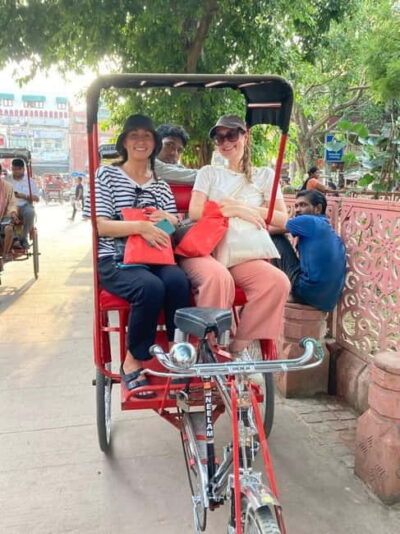
After Jama Masjid, you head to Chandni Chowk and ride by cycle rickshaw/tuk-tuk, about 45 minutes. This is the move that makes or breaks Old Delhi. Walking would be fine for the most energetic travelers, but you’ll quickly learn why a vehicle is useful in tight lanes.
What I like about this approach is that it turns the market into a guided experience. Your guide can point out what matters while you focus on seeing rather than negotiating streets.
If you’re taking photos, keep your phone ready but keep your pace polite. Old Delhi lanes reward patience more than rushing.
You can also read our reviews of more cooking classes in New Delhi






Red Fort outside: iconic views without the full ticket experience
Next is Red Fort, but it’s described as mostly a photo stop from outside. You’ll drive around and stop for pictures for about 15 minutes. The reason given is that most of the fort is acquired by the Indian Army, so you’re seeing it at a distance rather than doing an inside visit.
This is where you should calibrate expectations. If you want maximum access at Red Fort, you’ll likely feel the difference. But as part of a bigger 2-day plan, the outside view can still work well—especially when you pair it with the market energy earlier in the day.
Day 1 photo power: Raj Ghat, India Gate, Rashtrapati Bhawan, Birla Mandir
Old Delhi is loud and intense, but Day 1 doesn’t stay there. After Red Fort, you shift into memorial and government-area landmarks, mostly with short stops designed for good views without eating the whole day.
Raj Ghat: a calm, reflective pause
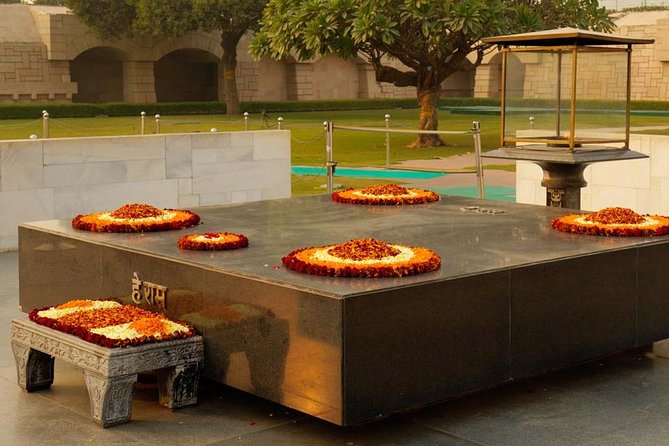
Raj Ghat is about 40 minutes. It’s a memorial to Mahatma Gandhi, marked by a black marble platform that symbolizes the cremation spot. This stop is useful because it gives your brain a breather after the sensory overload of Chandni Chowk.
Even if you’ve read about Gandhi, seeing the memorial setting makes it feel more real and less abstract.
India Gate and the war memorial framing
Then you hit India Gate for about 30 minutes. It’s described as a gateway-like war memorial built in memory of the soldiers of the British Indian Army who lost their lives. This is another stop where the value is in the guide context: you’re not just taking a photo of a famous structure. You’re learning how memorials are designed to carry meaning.
Rashtrapati Bhawan and Parliament House: big-picture views
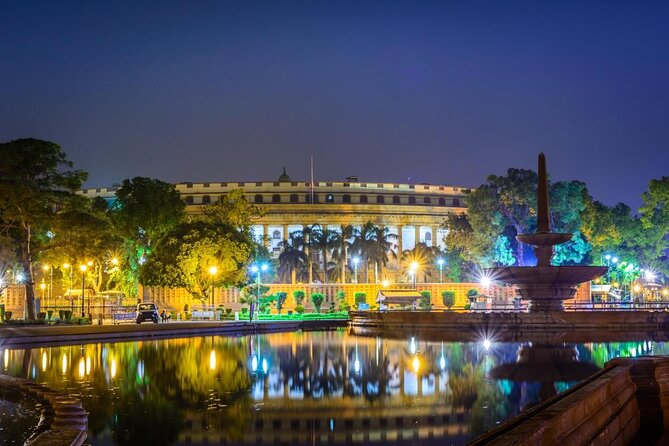
You’ll drive around and stop for photos at Rashtrapati Bhawan (the former Viceroy’s House) and then at the Parliament House area, which is designed by British architects Edwin Lutyens and Herbert Baker. These are photo and drive-by moments (about 20 minutes for Rashtrapati Bhawan, and a separate photo stop for Parliament).
If you hate sitting in traffic, you’ll appreciate that these stops are short and efficient. If you love architecture and want deeper access, you may feel you’re seeing the outside only. But for a two-day format, it’s a practical trade.
Birla Mandir Temple: a softer finish to the day
Day 1 ends with Birla Mandir (Lakshmi Narayan / Birla Temple) for about 40 minutes. This Hindu temple is dedicated to Laxmi Narayan, with Vishnu referenced through Narayan. It’s a good final stop because it’s visually distinctive and gives you a different flavor than the earlier memorial stops.
If you’re visiting during a busy time, expect some crowd flow. Dress respectfully for temples, and plan for small delays at entry.
Day 2 spiritual and heritage hits in New Delhi
Day 2 also runs about 8 hours, starting around 9:00 AM after breakfast, with pickup from your hotel. This day is more focused on a sequence of sacred spaces and world heritage landmarks, with a balance of included and ticketed sights.
Gurudwara Bangla Sahib: a peaceful center in the capital
You start at Gurudwara Bangla Sahib, about 1 hour. This Sikh temple in central Delhi has a golden dome, and it’s described as one of the important and sacred Sikh shrines. It’s a strong first stop for Day 2 because it changes the atmosphere immediately.
This is also a good place to slow down. If you’ve spent Day 1 bouncing between photo stops and market lanes, you’ll feel the difference here.
Humayun’s Tomb: first garden-tomb in the subcontinent
Next is Humayun’s Tomb for about 1 hour. It’s identified as a world heritage site and as the final resting place of the second Mughal Emperor Humayun. The detail that it was the first garden-tomb in the Indian subcontinent is the kind of context that turns a visit into understanding.
Important budgeting note: admission is not included for this stop.
Even with tickets, this site tends to be worth the effort. Garden-tomb layouts are designed to guide your movement and sightlines. Take your time walking the edges and looking for symmetry.
Lotus Temple: modern design with universal messaging
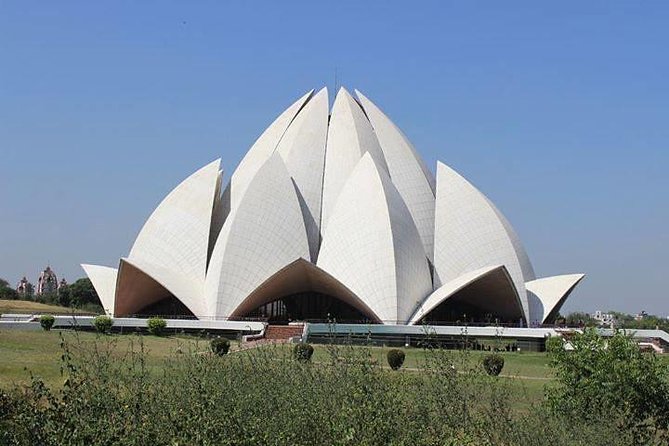
After that comes the Lotus Temple, about 45 minutes. It’s a Bahá’í House of Worship dedicated to the oneness of humanity and religion, and people of all backgrounds are welcomed.
What I like about Lotus Temple as a mid-day stop is that it resets your expectations. You’re not just seeing Mughal or colonial-era structures. You’re seeing modern religious architecture built for calm and contemplation.
Qutub Minar: ticketed, tall, and undeniably impressive
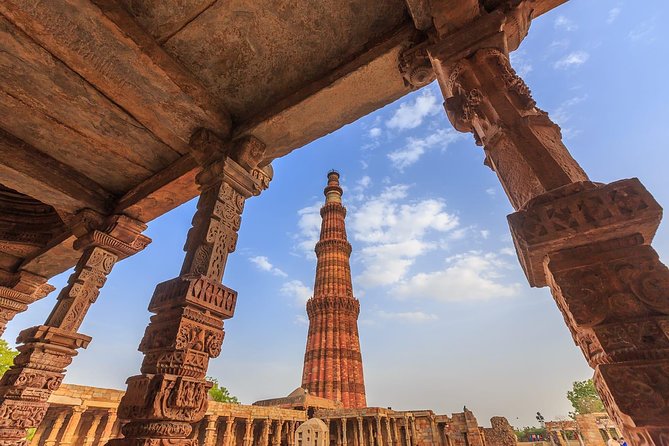
Finally, you visit Qutub Minar for about 1 hour. It’s a world heritage site, with the minaret described as constructed in 1192 by Qutab-ud-din Aibak. Admission is again not included, so this is one more place to expect a separate ticket cost.
This is the stop where you’ll probably understand why Delhi tours often prioritize Qutub Minar. The scale is hard to capture in a photo, and you really feel it when you’re there.
The cooking class and dinner: where the trip becomes useful
This tour doesn’t just end with more monuments. It ends with a 2-hour cooking class and then dinner connected to the class experience.
The class is described as teaching how to use spices properly and what effects you can get from different ingredients. That’s practical knowledge, not just a cultural performance. If you’ve ever tried to replicate Indian food at home and ended up with something that tasted wrong, that’s usually a spice technique issue. A class like this helps you understand why flavors work, not only what’s in the dish.
I also like that it’s an active wrap-up. After two days of walking, driving, and staring at structures, cooking turns your brain on in a different way. You go from photo mode to hands-on learning.
One more smart detail: dinner is included. In Delhi, meal planning can turn into decision fatigue. Here, your food is handled as part of the program.
Your guides and the difference a good driver makes
Delhi rewards planning, and it punishes sloppy logistics. That’s why I’m big on who you travel with, not just where you go.
One review highlight you’ll want to remember: the tour pair of Sanjay (driver) and Vivek Handa (guide) was praised for being on time, warm, friendly, and easy to talk to, with a polite casual style. When your guide communicates well, you stop treating sights like stops and start seeing them as stories.
And a good driver matters more than you think. With a route this spread out across Old and New Delhi, you want someone who keeps you moving on schedule while you focus on the experience.
What to expect day to day: timing, pacing, and comfort
The tour runs with about 8 hours each day, with pickups at around 9:00 AM and scheduled visits that range from 15 minutes to 1 hour per stop. That means you’ll spend a real portion of the day in the vehicle.
The good news: you’re in an air-conditioned vehicle with cold bottled water included, so the travel time is tolerable rather than exhausting. The less good news: you won’t get a slow, lingering pace at every monument.
So if you like photography, you’ll enjoy the outside photo stops and quick viewpoints. If you prefer in-depth museum-style time, you may wish you had more hours at the ticketed heritage sites like Humayun’s Tomb and Qutub Minar.
Who this private Delhi tour suits best
This tour makes the most sense if you want:
- A private guided plan across Old and New Delhi without map stress
- Comfortable transport in AC with a chauffeur
- A real skill activity at the end via the cooking class
- A route that mixes major monuments with sacred spaces and memorials
You may want to look elsewhere if:
- You want only big-ticket inside access (Red Fort here is mainly outside for photos)
- You hate ticket add-ons, since monument fees are listed separately
- You prefer a quieter pace with fewer moving parts
Should you book this 2-day Delhi tour with a cooking class?
I’d book it if you’re the kind of traveler who wants Delhi to feel structured and meaningful, not chaotic. The combination is strong: market-side Old Delhi energy, major New Delhi landmarks, and a cooking class that turns the trip into something you can use later.
Before you say yes, do two quick checks:
- Budget for monument entrance fees (listed as $29 per person).
- Decide whether you want the hotel accommodation upgrade, since it’s optional and affects your comfort level between days.
If those fit your style, this is a practical way to cover a lot of ground while still getting context and a memorable ending.
FAQ
Is pickup included?
Yes. Pickup is included around 09:00 AM from the airport or your hotel, or from your preferred location in Delhi, Gurugram, or Noida.
What meals are included?
Breakfast and dinner are included, and the dinner is tied to the cooking class experience.
Does the tour include hotel accommodation?
Hotel accommodation is included only if you select that option, with 3-, 4-, or 5-star stays listed.
Are monument entrance fees included?
No. Monument entrance fees are not included and are listed as $29.00 per person.
What is included in the cooking class?
The cooking class experience includes learning about spices and how ingredients affect flavor, and it is followed by dinner.
What is the cancellation policy?
You can cancel for a full refund if you cancel up to 24 hours in advance. If you cancel less than 24 hours before the start time, the amount paid is not refunded.