REVIEW · NEW DELHI
10 Day Private Luxury Golden Triangle with Khajuraho and Varanasi
Book on Viator →Operated by Golden Triangle Tours India · Bookable on Viator
Golden Triangle in 10 days is a packed story. This private luxury route is interesting because you get to linger in big-name cities while still keeping things organized, with UNESCO sites and local guidance built into the days.
I especially like two things. First, the way the trip mixes major monuments with lived-in places—like Old Delhi’s Chandni Chowk—so your photos come with context, not just crowds. Second, logistics that quietly matter: private air-conditioned transport, daily hotel breakfast, bottled water, and the battery bus transfer up to the Taj Mahal area.
One possible drawback to plan for: most monument entrance tickets and all meals (other than breakfast) are not included, so you’ll want extra cash ready for entry fees and lunch/dinner breaks—especially on days with several paid sites.
In This Review
- Key points worth knowing
- The real charm: UNESCO icons plus the places that feel lived-in
- Private luxury in practical terms: car, guide setup, and daily basics
- What you should still expect to pay for
- Day 1 in Delhi: Gurudwara Bangla Sahib and a calmer start
- A full Delhi day that jumps time periods: Qutub Minar to Chandni Chowk
- Qutub Minar: the 73-meter UNESCO headline
- Lotus Temple: built for everyone
- India Gate and Parliament House: war memorial and national symbols
- Jama Masjid and Old Delhi’s pulse
- Humayun’s Tomb and Agrasen Ki Baoli: two softer stops that repay attention
- Jaipur: palaces and instruments, plus a slow day for acclimation
- Monkey Temple (Galtaji) and Birla Mandir: two temple styles in one city
- Amer and Jal Mahal: the big postcard, plus lake scenery
- Jantar Mantar: the mind-game of ancient astronomy
- City Palace and Hawa Mahal: power and pageantry
- Practical takeaway for Jaipur
- Abhaneri’s stepwell and Fatehpur Sikri: the in-between day that prevents burnout
- Agra: sunrise at the Taj Mahal, then Fort and Baby Taj
- Taj Mahal: the big moment, handled with inside time
- Agra Fort and Itmad-ud-Daula: different Mughal moods
- Khajuraho: Lakshmana and Kandariya Mahadev, then the road to Varanasi
- Lakshmana Temple
- Kandariya Mahadev Temple and Khajuraho Temples time
- Then comes Varanasi—by a long transfer
- Varanasi: Kashi Vishwanath, Sarnath, and the Ganga Aarti view
- Kashi Vishwanath Temple
- Sarnath: a midday counterpoint
- Ganges River walk and Ganga Aarti
- Price and what you’re really buying for $623.07 per person
- Who should book this private luxury circuit—and who should reconsider
- Should you book this 10-day private luxury Golden Triangle with Khajuraho and Varanasi?
- FAQ
- Is this a private tour?
- What’s the tour duration?
- What’s the price per person?
- What’s included in the package?
- Are monument entrance tickets included?
- Are meals included?
- What vehicle will you use?
- What’s the accommodation setup?
- Is free cancellation available?
Key points worth knowing
- Private local guides in each city mean you’re not just reading plaques; you’re getting the why behind what you see.
- Taj Mahal sunrise-style timing with an inside visit window, plus the included battery-bus ride, saves hassle.
- One long transfer day: Khajuraho to Varanasi is about 400 km and takes around 7 hours, so bring patience and comfort essentials.
- Delhi’s day is built for contrasts: Qutub Minar and Humayun’s Tomb on one side, then Jama Masjid and Chandni Chowk on the other.
- Khajuraho is temple-focused with major stops like Lakshmana and Kandariya Mahadev.
- Meals aren’t included (only breakfast), so your budget for lunch/dinner is on you.
The real charm: UNESCO icons plus the places that feel lived-in
This is a classic North India circuit—Delhi, Agra, Jaipur, Khajuraho, then Varanasi—but the “private luxury” angle changes the experience from rush-and-repeat sightseeing into a more human pace. You’re still ticking off top sights, yet the day structure gives you time to walk, look, and ask questions without feeling like you’re being hustled.
The trip also does a smart job balancing spiritual, imperial, and street-level India. One day you’re in Sikh and Mughal landmarks. Another day you’re standing in an astronomical-leaning wonder like Jantar Mantar. Then you swing to temple sculptures in Khajuraho, and finish with the Ganges evening rituals in Varanasi.
You can also read our reviews of more private tours in New Delhi
Private luxury in practical terms: car, guide setup, and daily basics
“Private” here is not just a buzzword. You’re traveling by a private, air-conditioned vehicle with your own driver, and you won’t be shuffled into a big group schedule.
Vehicle size depends on your group size: a 4-seater sedan for 1–2 people, a 6-seater wagon for 3–4, and a 10-seater minivan for 5–10. That matters because North India driving can be slow at times, and being in the right vehicle size helps keep the ride comfortable.
On top of the driving, you’ll get all sightseeing with private local guides in each city. That’s a big quality lever. When you have someone explaining what you’re seeing—why a building looks the way it does, what a monument represents—you get more out of a short stop.
And yes, small comfort wins are included: daily hotel breakfast (if your package includes hotels), bottled mineral water during journeys, and pickup/drop-off at the hotel or airport.
What you should still expect to pay for
The tour does not include monument entrance tickets, driver and guide tips, or any meals beyond breakfast. In practical terms: you’ll likely spend extra for major paid entries like the Taj Mahal and several Jaipur/Delhi monuments listed as not included. Budget for that early rather than absorbing it at the door.
Day 1 in Delhi: Gurudwara Bangla Sahib and a calmer start

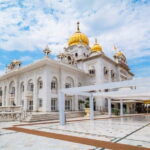
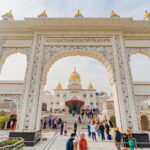
Delhi day one starts with Gurudwara Bangla Sahib. The site connects to a story tied to 1664, when the eighth Sikh Guru visited and people were helped during smallpox and cholera epidemics through water from the tank. You don’t just see a landmark—you’re stepping into a place with living religious meaning.
The visit is short—about 30 minutes—so this works well as a gentle on-ramp to the trip. It’s also a smart first stop if you’re feeling jet-lagged or overwhelmed, because the atmosphere is more grounded than the city chaos outside.
What I like about placing this early: it sets a tone for the rest of the itinerary, where spiritual sites keep showing up—Khajuraho in stone and Varanasi in ceremony.
A full Delhi day that jumps time periods: Qutub Minar to Chandni Chowk
Delhi day two is where you feel the Golden Triangle speed—but with guidance to keep it meaningful.
You can also read our reviews of more tours and experiences in New Delhi






Qutub Minar: the 73-meter UNESCO headline
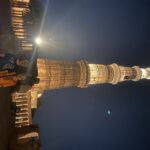
You’ll hit Qutub Minar next, a UNESCO World Heritage site known for its tall minaret (73 meters, with a five-storey design). The tower’s construction is associated with Qutub-ud-din Aibak, founder of the Delhi Sultanate, dating to the late 12th century. The stop is about an hour, and entry is marked as not included.
Even if you’ve seen pictures, seeing the minaret in person changes the scale fast. If you’re sensitive to crowds, arrive ready to stand and look in small bursts rather than expecting a slow stroll.
Lotus Temple: built for everyone
Then you move to the Lotus Temple, known for its flower-like architecture and open-door approach regardless of religion. It’s free to enter and the stop is about 30 minutes. This is the kind of place where you get a breather from the more historic stone feel, while still keeping the day spiritually grounded.
India Gate and Parliament House: war memorial and national symbols
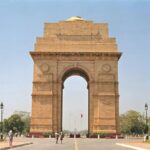
India Gate is a war memorial dedicated to soldiers of British India who died in wars. It’s also used like a picnic space, and the stop is about 30 minutes.
Parliament House follows. It’s described as the Sansad Bhavan, with two houses—Lok Sabha and Rajya Sabha. The building shape is noted as being based on the Ashoka Chakra (a circular form). The tour doesn’t frame this as a long sit-down, so think of it as a quick “get your bearings” stop in modern Delhi.
Jama Masjid and Old Delhi’s pulse
Then you’re in Jama Masjid (Masjid-i-Jehan-Numa), a major Mughal-era mosque built between 1650 and 1656 by Emperor Shah Jahan. The visit is about 30 minutes and entry is free on the itinerary.
After that comes Chandni Chowk, Old Delhi’s iconic shopping spine. This is the part of the day that feels the most current: markets for spices, dried fruit, silver jewelry, vivid saris, and lots of tiny shops selling essential oils. The stop is about an hour and entry is free.
If you’ve never walked a dense bazaar before, go slow. Use the crowd like a weather system: move with it, pause to look, and let your guide handle the “where to stand” moments so you don’t feel lost.
Humayun’s Tomb and Agrasen Ki Baoli: two softer stops that repay attention
Two other Delhi stops are great if you like architecture details.
Humayun’s Tomb is about an hour. It’s a Mughal tomb commissioned in 1558 by Empress Bega Begum. Entry is marked as not included, so factor that into your day budget.
Agrasen Ki Baoli is a protected stepwell monument described as 60 meters long and noted as a UNESCO/ASI protected site through the Ancient Monuments and Archaeological Sites and Remains framework (as described). This stop is about 15 minutes. It’s short, but it’s the kind of place that makes you look differently at “everyday” structures.
Jaipur: palaces and instruments, plus a slow day for acclimation
Jaipur starts with a more relaxed Day 3, then builds into big sightseeing on Day 4.
Monkey Temple (Galtaji) and Birla Mandir: two temple styles in one city
Monkey Temple (Galtaji Temple) is known for its pools and temple structure, with a stop time of about 30 minutes and free entry. It’s popular because it’s lively and unusual—less like a quiet museum, more like an active religious site.
Birla Mandir follows. It’s noted for intricate latticework in white marble and dedication to Lord Vishnu. The stop is about 30 minutes and free entry on the itinerary.
You then get “Jaipur” time for about 3 hours, mainly to settle in with the hotel and get your bearings.
Amer and Jal Mahal: the big postcard, plus lake scenery
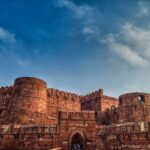
Amber Palace is the first major Jaipur Day 4 stop. It’s a two-hour guided tour described as covering palaces, squares, and monuments in Amer (the capital until 1728). Entry is not included.
The Jal Mahal stop gives you the water-palace view on Man Sagar Lake, with palace and lake as a Rajput cultural structure. Entry is also marked as not included. If you’re traveling in hotter parts of the year, this is a good place to pause and cool down, because you’re not in a fully shaded interior the whole time.
Jantar Mantar: the mind-game of ancient astronomy
Jantar Mantar is a UNESCO World Heritage site built in 1734 by Sawai Jai Singh II. It’s described as a collection of 19 architectural astronomical instruments. Your stop is about an hour, and entry is not included.
This is one of my favorite “value for time” stops on this whole route. It’s not just pretty. It makes you realize how seriously math and observation were built into everyday life.
City Palace and Hawa Mahal: power and pageantry
City Palace takes about an hour. It’s described as the administrative and ceremonial seat of Maharaja of Jaipur, constructed in 1721. Entry is not included.
Hawa Mahal (Palace of Breeze) follows. It’s described as a five-storey pyramidal monument made from red and pink sandstone. The stop time is about 30 minutes.
Albert Hall Museum is last on this list, about 15 minutes and entry not included. Even with limited time, it’s a good “final brushstroke” for understanding Jaipur beyond the palaces.
Practical takeaway for Jaipur
Jaipur days are timed so you see a lot, but they’re also structured around variety: forts, lake views, instruments, and iconic facades. If you like architecture and symbols, you’ll enjoy it. If you prefer fewer stops, you’ll still be okay with a private guide because they can manage your walking pace.
Abhaneri’s stepwell and Fatehpur Sikri: the in-between day that prevents burnout
Day 5 is one of those smart travel days that keeps you from getting stuck in only the “big three” cities.
Chand Baori in Abhaneri is a stepwell described as extending about 30 meters into the ground, and noted as one of the largest and deepest stepwells in India. The stop is about an hour, entry not included.
Fatehpur Sikri follows. It’s described as Akbar’s late 16th-century city and served as the Mughal capital for about a decade. The stop is about an hour and entry is free on the itinerary.
Then you arrive in Agra, check in, and enjoy the rest of the day at leisure. That free time is valuable. It gives you space to recover and plan how you’ll spend the evening—without being locked into a rushed schedule.
Agra: sunrise at the Taj Mahal, then Fort and Baby Taj
Agra is where this trip earns its name.
Taj Mahal: the big moment, handled with inside time
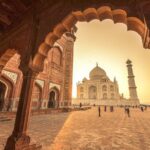
You’ll be set up for sunrise viewing and a guided tour inside the Taj Mahal for about two hours. Entry is not included, but the itinerary includes battery bus transport up to the Taj Mahal monument area.
This is a good setup if you want the iconic experience without spending hours figuring out logistics. Just remember: the “free transfer” does not mean “free entry.” You’ll still need tickets.
If you’re the type who likes structure to appreciate art, you’ll like having a guide to explain the tomb’s story and why it was built by Shah Jahan in the 1630s to enshrine a loved one.
Agra Fort and Itmad-ud-Daula: different Mughal moods
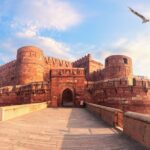
Agra Fort is next, about one hour. It’s another UNESCO site and described as the Mughal main residence. Entry is not included.
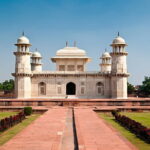
Then comes Itmad-ud-Daula, often called Baby Taj. It’s a Mughal mausoleum, with buildings and gardens beyond the main structure. The stop is about 30 minutes.
I like the pacing here: Fort first, then a smaller mausoleum. It prevents the day from turning into one huge overwhelm. You get variety in scale and details.
Khajuraho: Lakshmana and Kandariya Mahadev, then the road to Varanasi
After Agra, you head to Khajuraho and check in for the night. Travel time is noted as about 8 hours to Khajuraho, so expect a long sitting day.
Khajuraho is the cultural pivot on this route. Delhi and Agra are heavy with imperial stone. Jaipur leans into palaces and city symbols. Khajuraho brings you to temple sculpture work, with the itinerary focusing on major sites.
Lakshmana Temple
Lakshmana Temple is described as built by Chandela ruler Yashovarman in the 10th century. The main idol is described with a form including three heads and four arms. The stop is about 1 hour and entry is free on the itinerary.
This is one of the reasons Khajuraho is worth the effort: the details are carved to be seen up close, not just photographed from a distance.
Kandariya Mahadev Temple and Khajuraho Temples time
Kandariya Mahadev Temple is described as designed and built by Chandela King Vidyadhara in the early 11th century. The stop is about 1 hour and entry is free.
Then you have “Khajuraho Temples” time later in the day for about 5 hours. Entry is again free on the itinerary.
Then comes Varanasi—by a long transfer
Day 8 includes a drive from Khajuraho to Varanasi of about 400 km, taking around 7 hours. Entry for sightseeing isn’t listed for that transfer day, so it’s essentially travel + arrival + check-in.
This is the one day where your comfort choices matter most: bring water, plan for breaks, and avoid scheduling anything intense right after arrival.
Varanasi: Kashi Vishwanath, Sarnath, and the Ganga Aarti view
Varanasi is where the trip becomes spiritual in a different way. It’s not just monuments; it’s ritual time.
Kashi Vishwanath Temple
Kashi Vishwanath Temple is a major riverside Shiva temple, described as known for an 18th-century gold-plated spire and a sacred well. The stop time is about 2 hours and entry is free.
This is one of those experiences where you’ll feel the energy in the space even if you don’t speak the language. Having a guide helps you focus on what you should look for and how to move without getting stuck.
Sarnath: a midday counterpoint
Around noon you visit Sarnath, described as a significant Buddhist pilgrimage site where Lord Buddha first preached the Dharma after enlightenment. The stop is about 1 hour and entry is free.
Sarnath gives you a mental reset. After the Shiva temple intensity, the Buddhist site adds a different historical and spiritual layer.
Ganges River walk and Ganga Aarti
You then go to the Ganges river bank and enjoy a walk along the river for about 1 hour. After that, the evening Ganga Aarti ceremony takes about 1 hour, with the best view from your seat.
If you’re someone who wants to witness the ceremony without trying to guess where to stand at the last minute, this kind of seat/view setup is a real advantage.
Varanasi can be intense in terms of senses and movement, so a guided plan keeps you from spending your energy on logistics when you’d rather spend it on the experience.
Price and what you’re really buying for $623.07 per person
At $623.07 per person, you’re not just paying for a sightseeing list. You’re paying for private movement, private guiding, and core daily structure.
From the included items:
- 9 nights accommodation (only if you book the option that includes hotels)
- Private air-conditioned vehicle with driver
- Hotel/airport pickup and drop-off
- All sightseeing with private local guides
- Daily hotel breakfast (9 breakfasts)
- Battery bus ride to and from the Taj Mahal parking lot up to the monument area
- Bottled mineral water during journeys
The main things not included are also very clear:
- Monument entrance tickets
- Any meals (beyond breakfast)
- Tips for driver and guide
- Laundry and personal expenses
So the value question becomes: do you want private guiding and transport handled for you? If yes, this price often feels reasonable for the amount of ground you cover and the number of guided stops you have each day. If you’re the type who hates paying for guided entry logistics and would rather self-plan, you might find better value by mixing a couple of days on your own.
Who should book this private luxury circuit—and who should reconsider
This tour is a strong fit if you:
- want a first-time-friendly North India route that still includes the headliners
- like having local guides explain the “why” behind monuments
- want private transport instead of train-and-taxi juggling
- prefer that at least breakfast and transfers are handled each morning
It may be less ideal if you:
- strongly dislike paying entry fees on top of the tour price
- want a slower pace with long free afternoons every day (some days are tightly packed)
- hate long road days, since Khajuraho to Varanasi is about 7 hours (and other city-to-city travel time can add up)
Should you book this 10-day private luxury Golden Triangle with Khajuraho and Varanasi?
If your dream trip is big-name monuments plus real local texture, I’d book it. The private guide approach keeps you from turning into a checklist tourist, and the itinerary intentionally mixes architectural and spiritual experiences rather than repeating the same kind of sight all day.
To make it work smoothly, do two things before you go: set aside money for monument tickets and plan to eat lunch/dinner on your own. Then you can focus on what this route does best—seeing Delhi, Agra, Jaipur, Khajuraho, and Varanasi in a single arc, with the right amount of structure to keep your trip feeling calm rather than chaotic.
FAQ
Is this a private tour?
Yes. It’s described as a private tour/activity, meaning only your group participates.
What’s the tour duration?
It’s listed as 10 days (approx.).
What’s the price per person?
The price is shown as $623.07 per person.
What’s included in the package?
Included items list 9 nights accommodation (if you book the hotel-included option), private air-conditioned transport with a driver, hotel/airport pickup and drop-off, sightseeing with private local guides, daily hotel breakfast (9), battery bus rides to and from the Taj Mahal parking area up to the monument, bottled mineral water during journeys, and personal care/attention.
Are monument entrance tickets included?
No. Monument entrance tickets are listed as not included.
Are meals included?
Meals are listed as not included. Breakfast is included daily (if your package includes hotels).
What vehicle will you use?
Transport uses a 4-seater sedan for groups of 1–2 people, a 6-seater wagon for groups of 3–4 people, and a 10-seater minivan for groups of 5–10 people.
What’s the accommodation setup?
Rooms are generally provided on a twin-sharing basis. If you book 3 people, rooms are provided on triple-sharing basis by default, unless you pay an additional charge to get 2 rooms.
Is free cancellation available?
Yes. Free cancellation is available if you cancel up to 24 hours in advance for a full refund.
If you want, tell me your travel month and group size, and I’ll suggest which day you should prioritize for early starts and where you might want extra time around the free days.