REVIEW · NEW DELHI
2 Days Overnight Taj Mahal & Agra Tour from Delhi
Book on Viator →Operated by Aiza tours · Bookable on Viator
Agra hits different when you see it in two lights, not one. This 2-day overnight plan is built around Taj Mahal moments (sunrise and sunset from Mehtab Bagh), plus the big historic stops that make Agra feel real, not staged. I love how smoothly the day is organized with hotel pick-up and drop-off, and I also love the chance to slow down at Agra Fort and Itmad-ud-Daulah, not just rush through photos. One thing to plan for: monument entrance tickets cost extra ($35 per person), so the price in your head may shift once you confirm what is already covered.
The drive itself helps you relax into the trip. You leave Delhi in an AC private vehicle via the Yamuna Expressway, then the schedule keeps you moving at a human pace with a live guide in Agra and Fatehpur Sikri. The only drawback I’d flag is timing: sunrise means an early start, and it’s worth being ready for the morning cold if you’re going in cooler months.
In This Review
- Key Points at a Glance
- Two Days That Actually Feel Like a Trip
- From Delhi Doorstep to Agra in an AC Car
- Agra Fort: The Big Red Fortress Stop
- Itmad-ud-Daulah (Baby Taj): Close-Up Elegance
- Mehtab Bagh Sunset: The Taj View From Across the Way
- Taj Mahal Sunrise: Worth the Early Wake-Up
- Fatehpur Sikri: Red Sandstone City With Meaning
- Bazaars and Leather Markets: A Little Time to Be Curious
- Price and Tickets: What the $130 Gets You
- Guides and Drivers: The Real Difference Maker
- Practical Tips That Make This Tour Easier
- Who This Tour Fits Best
- Should You Book This 2-Day Taj Mahal and Agra Tour?
- FAQ
- How long is the tour?
- What is the starting point and how do pickups work?
- Do I need to book monument entrance tickets separately?
- What’s included in the price?
- Is a guide provided during the key sightseeing stops?
- Where do I sleep overnight?
- What time is the Taj Mahal sunrise visit?
- Are meals included besides breakfast?
- Can the tour drop me off somewhere else in Delhi after the trip?
- Is this a private tour?
Key Points at a Glance
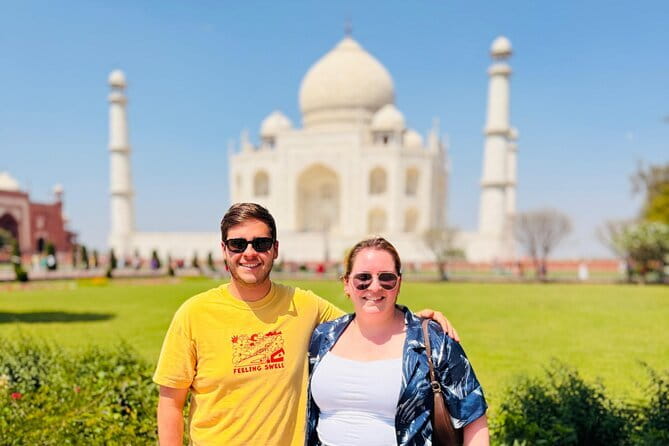
- Sunrise Taj Mahal plus a sunset Taj view from Mehtab Bagh, so you get two moods of the same masterpiece
- Hotel 1-night stay in Agra with breakfast and taxes included
- Agra Fort and Itmad-ud-Daulah (Baby Taj) give you context before you reach the main event
- Fatehpur Sikri gets real time—enough for Akbar-era landmarks and time to wander
- Live tour guiding in Agra and Fatehpur Sikri, with water bottles and an umbrella in the vehicle
- A private setup for your group, plus flexible drop-off options in Delhi
Two Days That Actually Feel Like a Trip
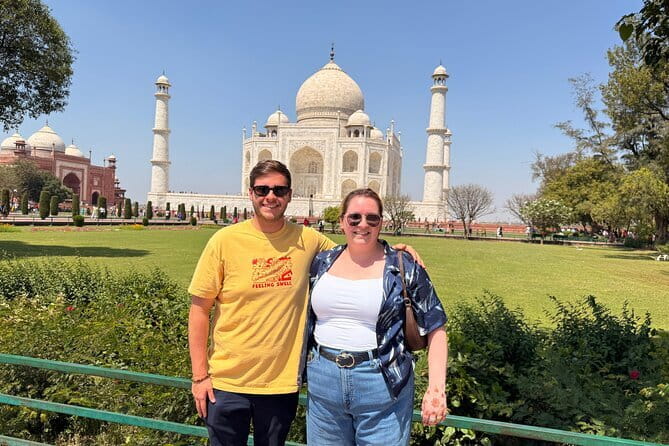
I like tours that help you see more than postcards. This one is designed around that idea: you’re not only visiting the Taj Mahal, you’re seeing where it sits in the Mughal landscape and why people have been drawn to this city for centuries.
Day 1 is about building momentum. You start with Agra Fort, then move to Itmad-ud-Daulah, nicknamed the Baby Taj. It’s a smart choice because it teaches you how Mughal tomb architecture works at a smaller, more intimate scale. Then you end with Mehtab Bagh for the Taj at sunset—close enough to feel the sightline magic, different enough that it doesn’t feel repetitive.
Day 2 is the emotional payoff. Sunrise at the Taj Mahal is the big draw, and it also helps you beat the day’s crowds and heat. After breakfast, you head to Fatehpur Sikri, a red sandstone city built in the 1500s when Akbar was consolidating power and culture.
You can also read our reviews of more tours and experiences in New Delhi



From Delhi Doorstep to Agra in an AC Car
Your day starts with pickup from your hotel, airport, or another requested location in Delhi, Noida, Gurugram, or Faridabad. You ride in a private, air-conditioned vehicle and drive toward Agra via the Yamuna Expressway.
Why this matters: traffic can eat hours in and out of big Indian cities. A private car with scheduled pickup cuts down on the chaos and gets you into Agra with less stress. You’re also given water bottles and an umbrella in the vehicle, which is one of those small perks that saves you from sudden weather swings or dehydration.
Time wise, the transfer is listed at about four hours, and that’s a helpful baseline when you’re thinking about what time your day begins. If you’re coming from Delhi with an early flight or hotel check-out, plan your pickup request so you’re not waiting around.
Agra Fort: The Big Red Fortress Stop
Agra Fort is your first monument stop. It’s a huge red sandstone fort complex and you get up to two hours there.
This is a good start because it gives you a sense of Agra as a power center, not just a sightseeing checkpoint. From the fort, you can understand how rulers controlled movement and defended the city. It also sets up your second stop—Itmad-ud-Daulah—because forts and tombs are both part of the Mughal visual system: authority expressed through stone.
A practical note: two hours is enough to cover the main areas without turning the visit into a sprint. Still, it’s wise to wear comfortable shoes. The grounds and pathways can involve walking on uneven surfaces.
Itmad-ud-Daulah (Baby Taj): Close-Up Elegance
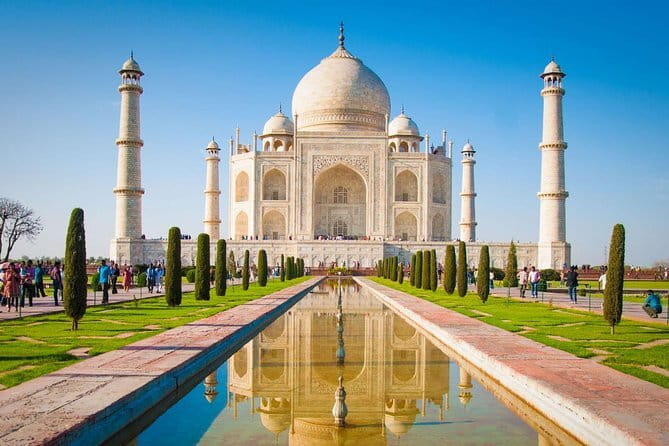
After Agra Fort, you visit Itmad-ud-Daulah, also known as the Baby Taj. You’ll have up to one hour here.
I like this stop for two reasons. First, it’s often less overwhelming than the Taj Mahal itself. Second, it lets you see details that people miss when they go straight to the headline sites.
It’s a Mughal mausoleum, and the name “Baby Taj” isn’t just a nickname for marketing. The design logic is similar, which makes it a great primer. You’ll likely start noticing symmetry, stonework, and the way the architecture frames light—skills that make the Taj Mahal sunrise later in the trip hit harder.
Mehtab Bagh Sunset: The Taj View From Across the Way
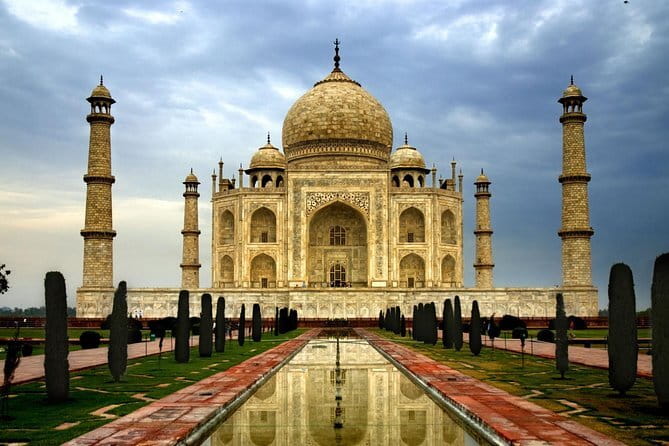
Then you head to Mehtab Bagh, with a focus on sunset viewing of the Taj Mahal. You get about an hour here.
This is one of the best “why this tour works” choices. Standing at the Taj Mahal is one experience; seeing it from a different viewpoint helps you understand the monument’s surroundings and scale. Mehtab Bagh is also a calmer setting than the immediate Taj complex, so you can actually watch the sky shift and let the atmosphere do its job.
If you’re the kind of traveler who likes photo timing, sunset here is more useful than you might expect. Even if your photos aren’t perfect, you’ll remember the light transition. Bring patience: sunset is a slow event, and good viewing often means standing still for a bit.






Taj Mahal Sunrise: Worth the Early Wake-Up

Day 2 begins with a sunrise visit to the Taj Mahal. The pickup is described at around 6:00 AM, and the Taj stop itself is scheduled for about three hours (including the guided experience).
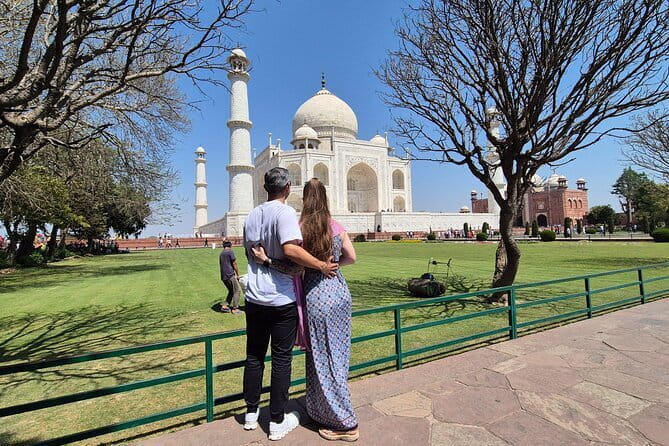
Sunrise is the whole point. The Taj Mahal in early morning light looks softer and more sculpted, and the crowds tend to be more manageable than later in the day. You also get time: three hours is enough to see the main areas without feeling like you’re constantly rushing to the next photo spot.
What I’d tell you to do: slow down. At sunrise, it’s tempting to sprint for the most famous angle, but you’ll enjoy it more if you give your eyes a few minutes to adjust and then move around calmly. The monument is all about proportions and reflections, and those details show up best when you aren’t rushing.
Fatehpur Sikri: Red Sandstone City With Meaning

After checking out, you move to Fatehpur Sikri, a perfectly preserved red sandstone city built in 1569 A.D. The schedule gives you about three hours, and you also have guided time during this stop.
This place works because it’s more than “another big ruin.” Fatehpur Sikri was built as a capital for Mughal emperor Akbar, so the layout and the stonework feel intentional. You’re walking through a planned world, not scattered leftovers.
Also, it’s a strong pairing after the Taj. The Taj Mahal is a masterpiece of devotional architecture. Fatehpur Sikri shows a different side of Mughal ambition—how power, religion, and administration were expressed through urban design. Together, they turn your trip from sightseeing into a story.
Bazaars and Leather Markets: A Little Time to Be Curious
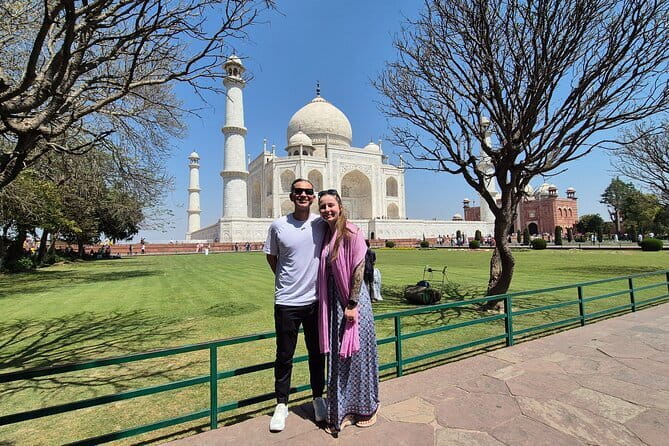
The itinerary includes time later to visit local bazaars and leather markets, plus time to return to Delhi after the Agra portion finishes.
I’m a fan of adding shopping time only when it’s not forced. Here, it’s included as part of the day’s flow, so you get a chance to pick up small items, compare prices, and just watch daily commerce in Agra. Leather goods can be a big deal in this region, so if that’s on your list, this is the moment to browse rather than leaving it for the last minute.
Price and Tickets: What the $130 Gets You
The advertised price is $130 per person, and it’s clearly structured for value: one night in Agra with breakfast and taxes, private air-conditioned transportation, hotel pick-up and drop-off, parking/tolls, and live guides in Agra and Fatehpur Sikri.
Here’s the part you should double-check: monument entrance tickets show up as not included in the package details, listed as $35 per person. At the same time, some stops are marked as included for admission. That mismatch happens sometimes when different parts of a trip are listed separately. Before you go, confirm exactly what your ticket includes for each monument.
So how do you judge value? If you were to book a hotel in Agra, hire private transport, and arrange a guide for both Agra Fort/Itmad-ud-Daulah and Fatehpur Sikri, the cost adds up quickly. This tour bundles the driving, lodging, and guiding into one clean plan. The extra $35 for monuments is the main swing factor—so your best move is to confirm it early and budget calmly.
Also note: there can be mandatory X-Mas/New Year Eve supplement charges paid directly at the hotel if your dates fall near that period.
Guides and Drivers: The Real Difference Maker
This is where the experience gets personal. The tour is supported by a live guide in Agra and Fatehpur Sikri, and the driving experience matters just as much on a two-day schedule.
One highlight from the guide side: Hyder Ali is described as fantastic—clear, informative, and enjoyable to be with. He also accommodated special needs, which tells me the guide isn’t just reciting facts. He’s working with your group.
On the driving side, Rahul is praised as professional and prompt, with a strong ability to navigate Indian traffic. That kind of driver skill is underrated. On a trip that relies on sunrise timing, arriving calmly matters.
If you want this tour to feel smooth, these two roles are the reason it likely does.
Practical Tips That Make This Tour Easier
I’d treat this like a schedule that rewards preparation:
- For sunrise Taj Mahal, pack something for comfort and keep your day bag small.
- Wear shoes that handle walking and stairs without complaint.
- If you’re sensitive to early mornings, plan your hotel check-in and rest the night before so you don’t feel wrecked at 6 AM.
- When you confirm monument tickets, ask what’s included per stop so you don’t get surprised on arrival.
And small mindset shift: sunrise is not only about the Taj. It’s about starting your day with a win. Even if you’ve seen the Taj on a screen before, being there before the city wakes up can change the way the monument feels.
Who This Tour Fits Best
This is a great match if you want:
- A structured two-day overview of Agra with Taj Mahal sunrise plus a sunset viewpoint
- Guided time at Agra Fort, Itmad-ud-Daulah, and Fatehpur Sikri
- Private AC transport and hotel-to-hotel convenience
It may be less ideal if you hate early mornings or you want a lot of free-form exploration without a set schedule. The tour is guided and timed; it’s not a slow wander where you decide the pace every hour.
Still, for most people balancing limited time, this is a smart way to see the key sites without turning your trip into a logistics problem.
Should You Book This 2-Day Taj Mahal and Agra Tour?
If you want maximum impact in minimal time, I’d say yes—especially because the plan includes both sunrise Taj Mahal and sunset viewing from Mehtab Bagh. That alone gives you variety, not just repetition. Add Agra Fort and Itmad-ud-Daulah for context, and Fatehpur Sikri for “the other Mughal Agra,” and you get a trip that feels like a coherent story.
Before you book, do two quick checks: confirm whether the $35 monument tickets per person covers exactly what you’ll enter, and verify what (if anything) changes around your travel dates for holiday supplements. If those are clear, you’ll likely enjoy a smooth, guided two days that feels organized without feeling robotic.
FAQ
How long is the tour?
The tour is listed as 2 days, with time estimates for each stop across the itinerary.
What is the starting point and how do pickups work?
Pickup is available from your hotel, airport, or any location in Delhi, Noida, Gurugram, or Faridabad, based on your request.
Do I need to book monument entrance tickets separately?
Monument entrance tickets are listed as not included, at $35.00 per person. Some stop details also show admission as included, so it’s best to confirm what your booking covers for each monument.
What’s included in the price?
Included items are 1 night accommodation in Agra with breakfast and taxes, private AC transportation, hotel pick-up and drop-off, parking/fuel/tolls/driver allowances, live tour guide service in Agra and Fatehpur Sikri, and water bottles and an umbrella in the vehicle.
Is a guide provided during the key sightseeing stops?
Yes. There is a live tour guide service in Agra and in Fatehpur Sikri.
Where do I sleep overnight?
You stay for 1 night in a hotel in Agra, with breakfast included the next morning.
What time is the Taj Mahal sunrise visit?
The sunrise portion starts at around 6:00 AM, with the Taj Mahal visit scheduled for about 3 hours total.
Are meals included besides breakfast?
Breakfast is included. The schedule notes you can return to the hotel or dine at an Indian multi-cuisine restaurant, depending on your choice.
Can the tour drop me off somewhere else in Delhi after the trip?
Yes. Drop-off or departure arrangements can be made at Delhi airport, hotel, or any desired location.
Is this a private tour?
Yes, it is described as private, with only your group participating. Service animals are allowed.