REVIEW · NEW DELHI
4-Day Golden Triangle by Private Car – Delhi, Agra, Jaipur
Book on Viator →Operated by Aiza tours · Bookable on Viator
Three cities, one smooth road trip. This private Golden Triangle tour strings together Delhi, Agra, and Jaipur with an air-conditioned car comfort and pickup, so you waste less time on logistics and more time on sights.
I love the built-in private local guides and the fact that they help you buy entrance tickets so you do less line-waiting. I also like the sunrise Taj Mahal timing, plus the battery bus ride between the Taj parking area and the monument area.
The main thing to budget for is that monument entry fees are not included, so your final trip cost depends on which gates you choose to pay for and what you add at each stop.
In This Review
- Key highlights worth your attention
- Why this Delhi–Agra–Jaipur route feels easier than DIY
- Price and value: what the $20 per person really means
- Door-to-door transport and guide help that cuts the stress
- Delhi day: Old City texture plus Mughal-era monuments
- Chandni Chowk Market: a 17th-century layout that still works
- Jama Masjid: big scale and still an active place of worship
- India Gate and the ceremonial axis
- Lotus Temple: Baháʼí architecture with a calm vibe
- Humayun’s Tomb: UNESCO Mughal form, about an hour
- Qutub Minar: Delhi’s older city layers
- The Agra drive and the Taj Mahal sunrise plan
- Sunrise Taj Mahal: the timing is the whole point
- Agra Fort and Itmad-ud-Daula: the “after” sites that stay in your head
- Itmad-ud-Daula: the smaller tomb with big attention to detail
- Jaipur arrival: stepwell shapes, fort viewpoints, and the no-elephant rule
- Panna Meena ka Kund: Jaipur’s stepwell that people miss
- Amber Fort: iconic views, and a choice that respects animals
- Jal Mahal: you can see it, but you can’t enter
- Jaipur’s royal big three: City Palace, Jantar Mantar, Hawa Mahal
- City Palace: Rajput and Mughal mix, plus courtyards and museums
- Jantar Mantar: the stone sundial and 19 instruments
- Hawa Mahal: the pink facade with 953 windows
- The return drive to Delhi and how to finish without burnout
- Should you book this Golden Triangle private car tour?
- FAQ
- FAQ
- How long is the 4-Day Golden Triangle tour?
- Which cities are included in the itinerary?
- Is pickup included from the airport or train station?
- What transport will you use during the tour?
- Are hotels included?
- What about hotel room setup for small groups?
- Are monument entry tickets included?
- Is the Taj Mahal sunrise included?
- Does the tour include elephant rides?
- What is the cancellation policy?
Key highlights worth your attention
- Private guides at each stop: you get explanations, not just directions
- Sunrise Taj Mahal plan: includes the battery bus ride up to the Taj monument area
- Ticket help to reduce hassle: your guide assists with entrance fees so you do less queuing
- Private transport matched to group size: sedan, six-seater wagon, or a larger van
- Animal-welfare stance around Amber Fort: no elephant activity arranged
- Punctual, friendly service mentioned by name: guides like Ali, Adin, Kapil, Sujal, Faiz, Arbab; driver names like Kapil and Hermant show up in real feedback
Why this Delhi–Agra–Jaipur route feels easier than DIY
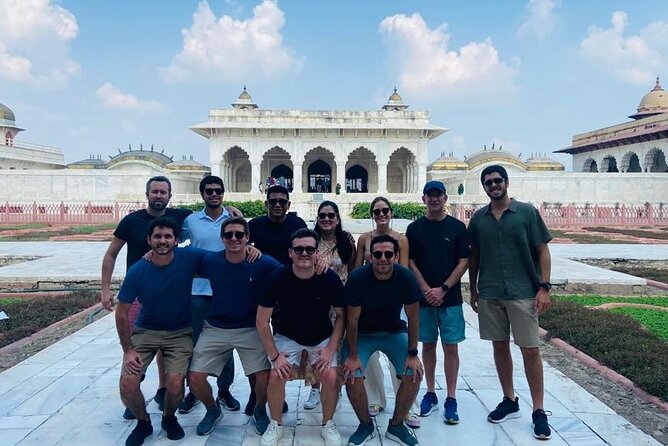
The Golden Triangle is a classic for a reason. You’re seeing the big “wow” sites of North India in just four days, and the private-car setup helps you keep your pace without constantly re-planning.
This tour also keeps the trip human-sized: it’s a private experience for your group, with pickup offered from your Delhi-area airport, railway station, hotel, or other pickup location in Delhi, Noida, and Gurugram. That matters because the real headache in India is often not the attractions, but the getting-there part.
You can also read our reviews of more private tours in New Delhi



Price and value: what the $20 per person really means
The headline price listed here is $20 per person, but the real value depends on whether you choose an option that includes hotels. The tour includes private transport, private local guides for sightseeing, battery bus rides to/from the Taj area, daily breakfast (when hotels are included), and fuel/taxes/service charges.
What’s not included is just as important: monument entry or admission fees are excluded, and tips/gratuities are optional. In practice, that means you should plan for extra spending at the gates, especially for major sites like those in Agra and Jaipur.
If you do book the hotel-included option, you’re looking at three nights of accommodation on a twin-sharing basis by default (triple-sharing if you book as 3 people). If you prefer 2 rooms for 3 guests, there’s an added charge, so decide early how you want to split rooms.
Door-to-door transport and guide help that cuts the stress
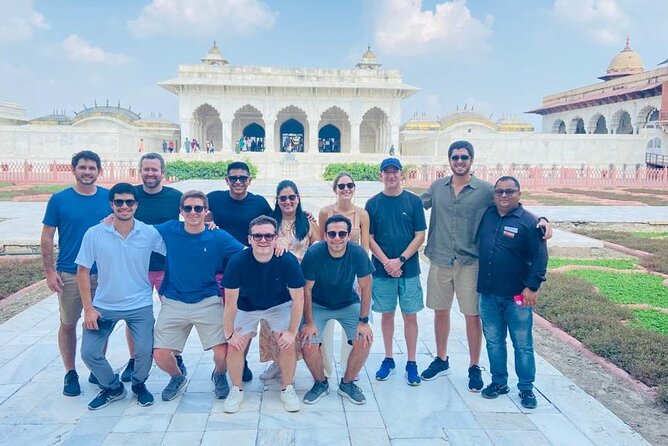
You’re not relying on trains or trying to time multiple rides across three cities. You’re in a private air-conditioned vehicle, sized for your group: a four-seater sedan for 1–2 people, a six-seater wagon for 3–4 people, and a larger van for bigger groups (up to 10).
The “pickup offered” detail is a big deal. It means you’re not wandering around Delhi streets after arrival, and it also helps if your arrival time is early or late. If you prefer, your guide can also help you handle entrance fees so you don’t get stuck in a buying line while everyone else waits.
Delhi day: Old City texture plus Mughal-era monuments
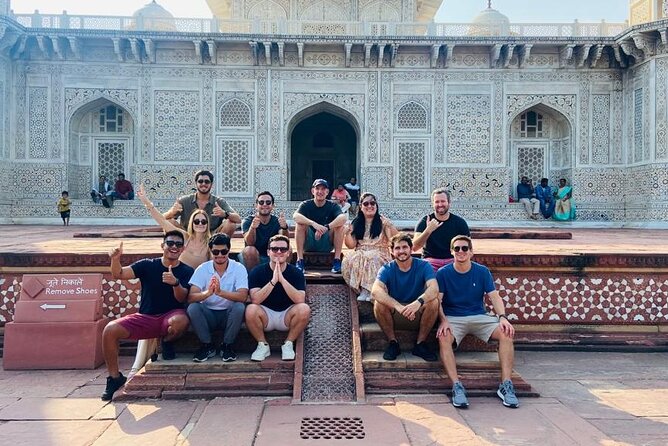
Your Delhi portion is a mix of markets, religious architecture, and major city landmarks. Some stops are free (Chandni Chowk, India Gate, and the Lotus Temple), while others require admission payment on-site (Jama Masjid, Humayun’s Tomb, Qutub Minar).
Chandni Chowk Market: a 17th-century layout that still works
Chandni Chowk is one of Delhi’s oldest and most active markets, originally laid out in the 1600s under Shah Jahan’s family. You get about one hour here, which is just enough time to walk the main lanes, grab a sense of the place, and not feel like you’re sprinting.
I like this stop early in the trip because it gives you instant context. Before you see the monuments, you learn what everyday Delhi energy feels like.
You can also read our reviews of more tours and experiences in New Delhi





Jama Masjid: big scale and still an active place of worship
Next is Jama Masjid, a major mosque with continuing religious activity. The site is described as having symbolic power through multiple historical eras, including significance during British rule, so it’s not just pretty stone—it has political and cultural weight.
You’ll have about 45 minutes here, with admission not included. Dress respectfully, and plan your timing so you’re not rushing while people are praying.
India Gate and the ceremonial axis
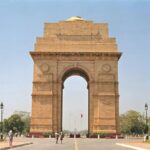
India Gate is quick—about 30 minutes—and it’s free. It also helps you pivot from the older city rhythm to New Delhi’s layout, because it sits near Kartavya Path on the eastern edge of the ceremonial axis.
It’s a good pause stop. You get photos, a breather, and a sense of how Delhi organizes grand public space.
Lotus Temple: Baháʼí architecture with a calm vibe
The Lotus Temple is another fast, free stop (around 30 minutes). The defining feature is its lotus-like shape, and it was dedicated in December 1986.
Even if you don’t care about architecture, it’s a useful mental reset after markets and mosques. You’re also likely to get clearer photos here because it’s designed for visitors to move through easily.
Humayun’s Tomb: UNESCO Mughal form, about an hour
Humayun’s Tomb is UNESCO-listed and takes about an hour, but admission isn’t included. Built in 1570 by Empress Bega Begum for Humayun, it’s a huge step into Mughal funerary architecture—grand, symmetrical, and very photo-friendly.
Qutub Minar: Delhi’s older city layers
Qutub Minar is the “victory tower” minaret within the Qutb complex, and it’s part of the story of Delhi’s oldest fortified city site. You get about an hour here, with admission not included.
If you only do one “great monument complex” in Delhi, Qutub Minar is a strong candidate because the scale is immediate. It’s also easier to appreciate with a guide, since the site connects multiple time periods into one walk.
The Agra drive and the Taj Mahal sunrise plan
After Delhi sightseeing, there’s time for lunch at a local restaurant, then you’ll drive about three hours through the Yamuna Expressway to your Agra hotel. Lunch timing is described, but meals aren’t listed as included beyond breakfast when hotels are part of your package, so plan on paying for lunch yourself.
Sunrise Taj Mahal: the timing is the whole point
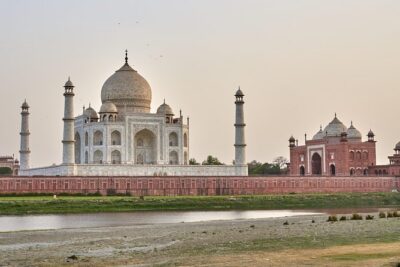
The standout here is sunrise at the Taj Mahal. The tour highlights a 3-hour window for this, but admission isn’t included—so you’ll want to budget for entry fees.
You also get the battery bus ride between the Taj parking lot up to the Taj monument area. That’s one less physical and logistical headache, especially early in the morning when everything feels crowded and time-sensitive.
Here’s how to make the sunrise moment work for you: go ready to move fast, keep your camera plan simple, and don’t expect comfort to be the main feature at dawn. The reward is the white marble glow as the day starts.
Agra Fort and Itmad-ud-Daula: the “after” sites that stay in your head
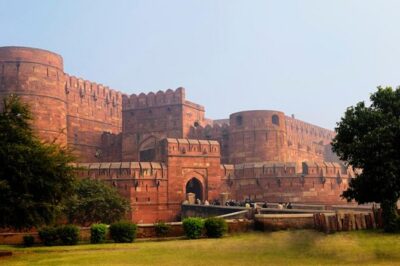
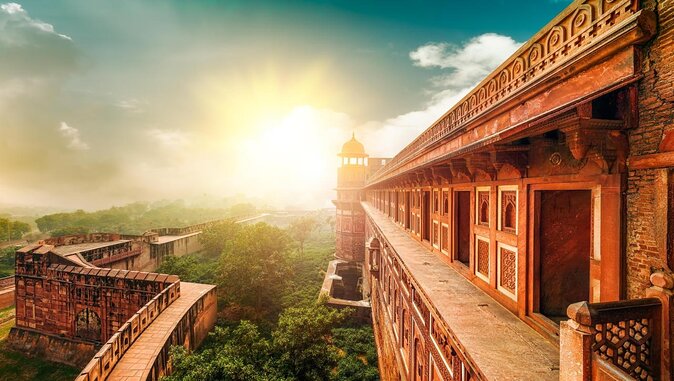
After the Taj sunrise experience, the plan is to return for breakfast and check out, then head to Agra Fort. You get about one hour at Agra Fort, and it’s also UNESCO-listed; admission isn’t included.
Agra Fort is a good follow-up because it changes the mood from a single masterpiece to a whole fortified world. You start seeing how rulers defended, displayed power, and built in layers.
Itmad-ud-Daula: the smaller tomb with big attention to detail
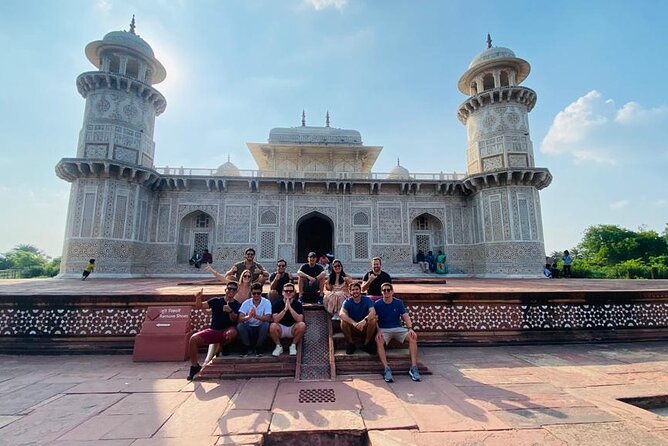
Then comes Itmad-ud-Daula, sometimes described as a “jewel box” and nicknamed the Bachcha Taj. You’ll have around 45 minutes here, and admission isn’t included.
This is the kind of stop that feels easy to skip if you’re rushing. Don’t. It’s the sort of monument where a guide’s framing can make the carvings and design choices feel more intentional and less random.
Jaipur arrival: stepwell shapes, fort viewpoints, and the no-elephant rule
After Agra, you drive to Jaipur, check in, and get time to relax before sightseeing continues. The hotel details shown include options like Fern Residency or similar for 4-star choices, and Hilton or Holiday Inn Jaipur for higher-tier options (or similar).
Panna Meena ka Kund: Jaipur’s stepwell that people miss
Panna Meena ka Kund is described as Jaipur’s hidden stepwell, built in the 16th century near Amber Fort. You get about 30 minutes, and it’s free.
I like this stop because it’s different from the big-ticket palaces. It also gives you a quieter, more architectural story that you can later connect back to Jaipur’s water management and royal planning.
Amber Fort: iconic views, and a choice that respects animals
Amber Fort is allocated about two hours, and admission isn’t included. It’s perched overlooking Maota Lake, and the fort is one of Jaipur’s key landmarks.
A practical note: the tour does not organize elephant activity. And in real feedback, the team has arranged a jeep ride up to Amber Fort instead of elephants, which lines up with the operator’s stance against animal cruelty.
If you care about responsible tourism (and you probably do), this matters. It means your visit can focus on history and views, not animal rides.
Jal Mahal: you can see it, but you can’t enter
Jal Mahal is the water palace in Man Sagar Lake. Entry is prohibited, and it’s listed as about a 20-minute stop, with admission free.
So yes, you’ll spend time looking from outside. That’s normal here. Just calibrate your expectations: treat it as a photo and viewpoint stop, not an interior experience.
Jaipur’s royal big three: City Palace, Jantar Mantar, Hawa Mahal
After Amber Fort and the nearby stops, you move through Jaipur’s most famous royal and scientific sights. City Palace, Jantar Mantar, and Hawa Mahal are listed, each with its own personality.
City Palace: Rajput and Mughal mix, plus courtyards and museums
City Palace Jaipur takes about an hour, and admission isn’t included. It’s a grand royal residence showing Rajput and Mughal architecture, with museums and courtyards, plus the iconic Peacock Gate.
This stop works well when your guide is strong. Even without diving into every gallery, you’ll come away with a clearer picture of how Jaipur’s rulers used architecture to show status.
Jantar Mantar: the stone sundial and 19 instruments
Jantar Mantar is UNESCO-listed and takes about one hour. It features the world’s largest stone sundial and 19 astronomical instruments, built in 1734.
This is one of those places where a guide can turn a list of instruments into a story about how time and the sky mattered to planning. You don’t need to be a science fan to enjoy it—you just need someone to explain what you’re seeing.
Hawa Mahal: the pink facade with 953 windows
Hawa Mahal is a quick 20-minute visit, and admission isn’t included. The Palace of Wind is famous for its pink sandstone look and the 953 jharokhas (windows) that let royal women observe city life.
It’s also a great photo stop because the facade gives you instant angles. If you have limited time, prioritize photos from the approaches where the symmetry looks best.
The return drive to Delhi and how to finish without burnout
On your last leg, you check out after breakfast and drive back to Delhi. The distance is about 280 km, with a travel time estimated at 4 to 5 hours.
This timing is long enough that you’ll want a calm morning. It’s also a good reason to avoid scheduling anything stressful in Delhi on the same day you return, if you can help it.
Should you book this Golden Triangle private car tour?
Book it if you want a smooth, guided whirlwind through Delhi, Agra, and Jaipur with private local experts doing the explaining, and a true sunrise Taj Mahal focus. The battery bus support to the Taj area, the help with entrance tickets, and the private-car comfort are the kinds of details that protect your time.
Skip it (or switch to a more custom plan) if you’re very cost-sensitive and don’t want to pay extra for monument admissions, since those fees are not included. Also, if you dislike early starts, be aware that sunrise at the Taj Mahal is central to the experience.
FAQ
FAQ
How long is the 4-Day Golden Triangle tour?
It’s listed as approximately 4 days, covering Delhi, Agra, and Jaipur.
Which cities are included in the itinerary?
The tour includes New Delhi, Agra, and Jaipur.
Is pickup included from the airport or train station?
Yes. Pickup is offered from the airport, railway station, hotel, or any pickup location in Delhi, Noida, and Gurugram.
What transport will you use during the tour?
You travel in a private air-conditioned vehicle. The car size depends on your group size: sedan for 1–2 people, a six-seater wagon for 3–4, and a ten-seater van for 5–10.
Are hotels included?
Three nights of accommodation are included if you book the option that includes hotels. Daily breakfast is included when hotels are part of your package.
What about hotel room setup for small groups?
Rooms are generally twin-sharing. If you book for 3 people, rooms are provided on triple-sharing by default. If 3 guests prefer 2 rooms, an additional charge may apply.
Are monument entry tickets included?
No. Entry and admission fees for monuments are not included, though your guide helps you buy entrance fees so you avoid queueing.
Is the Taj Mahal sunrise included?
Yes. The itinerary highlights sunrise at the Taj Mahal, and it also includes a battery bus ride up to the Taj monument area.
Does the tour include elephant rides?
No. The operator states they don’t organize elephant activity.
What is the cancellation policy?
Free cancellation is available up to 24 hours in advance for a full refund. If you cancel less than 24 hours before the start time, the amount paid is not refunded.