REVIEW · NEW DELHI
3 Day Luxury Golden Triangle Tour to Agra & Jaipur from New Delhi
Book on Viator →Operated by LUNES TRAVEL SERVICES · Bookable on Viator
Golden Triangle, three days, zero guesswork. You’ll get door-to-door pickup across Delhi NCR and ride in a private vehicle, then start Agra with a sunrise Taj Mahal morning that sets the tone for everything after.
I love that you’re not stuck figuring out logistics city by city. This tour includes licensed, government-approved guides in all three cities, so the big sights make sense fast. I also like the mix of famous landmarks and hands-on Old Delhi time, including a rickshaw ride through the lanes.
One watch-out: the days are full, so expect early starts and real time in the car. You’re looking at about 3 hours driving to Agra on Day 1 and roughly 5 hours back to Delhi on Day 3.
In This Review
- Key highlights worth planning around
- The big picture: a private Golden Triangle in three packed days
- Delhi in one day: Qutub Minar, Mughal mausoleums, and Old Delhi lanes
- Qutub Minar: the tall brick minaret moment
- Lotus Temple and the calmer side of Delhi
- India Gate, Parliament, and Rashtrapati Bhavan: quick looks, good photos
- Agrasen ki Baoli and Humayun’s Tomb: historic texture
- Chandni Chowk, Jama Masjid, and the Red Fort edge
- The payoff of Day 1
- Day 2 in Agra: sunrise Taj Mahal, then fort and the Baby Taj
- Taj Mahal at sunrise: the timing that changes everything
- Agra Fort: history inside walls
- Itmad-ud-Daula (Baby Taj): small, precise, memorable
- Overnight in Jaipur
- Jaipur loop: City Palace, Hawa Mahal, Jantar Mantar, and Jal Mahal
- City Palace: where the royal story still lives
- Hawa Mahal: the famous facade, understood with context
- Jantar Mantar: astronomy you can walk through
- Jal Mahal: the lakeside pause
- Panna Meena ka Kund: the stepwell near Amber Fort
- Ending in Delhi (or Jaipur airport)
- What you’re really paying for: value, inclusions, and realistic expectations
- Included that matters on the ground
- Not included (so plan your budget)
- Comfort and group size: you’ll ride how you should
- A note on pacing
- Who this tour suits best (and who might want something else)
- Should you book the 3-day luxury Golden Triangle from Delhi?
- FAQ
- Do I get pickup from anywhere in Delhi NCR?
- Is this tour private or shared?
- How long is the drive from Delhi to Agra?
- How long does it take to get back to Delhi from Jaipur?
- What’s included for meals?
- Are hotel nights included?
- Is sunrise Taj Mahal included?
- Are entrance tickets included for the sites?
- What vehicle will I ride in?
- Do I need cash extra for getting into the Taj Mahal area?
- Is free cancellation available?
Key highlights worth planning around
- Sunrise Taj Mahal visit with an included guided tour and a free battery-bus ride from Taj Mahal parking to the main entry gate
- Government-approved guides in Delhi, Agra, and Jaipur so you get context, not just photos
- Old Delhi route with rickshaw ride plus major Mughal-era stops like Jama Masjid and Red Fort
- UNESCO sites across all three cities: Qutub Minar, Humayun’s Tomb, Taj Mahal area, and Jantar Mantar
- Two nights and daily breakfast included when you book the hotel package
- Private transportation that matches your group size (sedan, SUV, or tempo traveler/mini bus)
The big picture: a private Golden Triangle in three packed days
This is a classic route for a reason: Delhi, Agra, and Jaipur are close enough to connect by car, but each feels like a different world once you arrive. The value here is not just that you’ll see famous monuments. It’s that you’ll see them with a plan that reduces the usual India-stress points: finding the right entrance, timing the day, and understanding what you’re looking at.
Your private vehicle is the main comfort lever. You’re picked up from any address in Delhi, Gurugram, or Noida—airport, hotel, or Airbnb—and dropped where you want at the end. That matters if you’re tired, traveling solo, or just trying to keep your first days smooth.
The “luxury” part of the pitch is basically practical: private transport, licensed guides, and a tour rhythm that tries to get you to the big moments (like Taj Mahal at sunrise) without making you scramble.
You can also read our reviews of more tours and experiences in New Delhi



Delhi in one day: Qutub Minar, Mughal mausoleums, and Old Delhi lanes
Day 1 is a wide sweep of Delhi. It’s not random sightseeing; it’s designed so you see Delhi’s layers. You start with the Delhi skyline icons, then shift into the Mughal era, then end in Old Delhi with markets and big religious landmarks.
Qutub Minar: the tall brick minaret moment
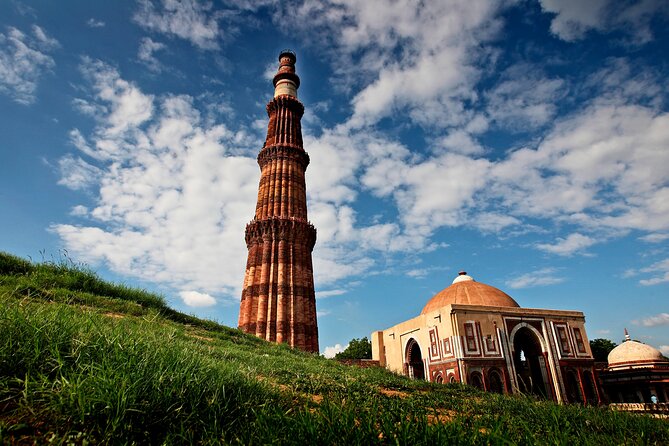
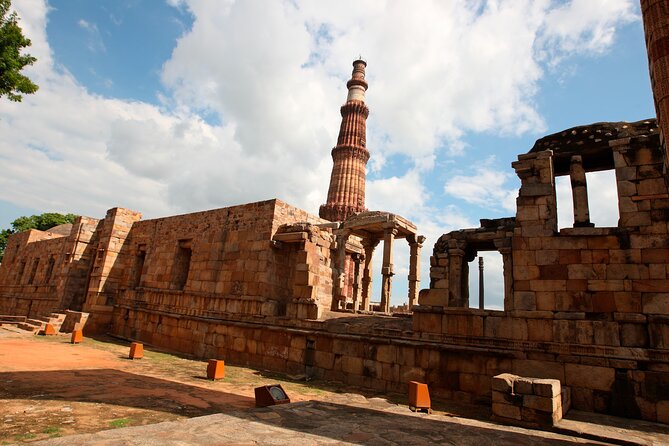
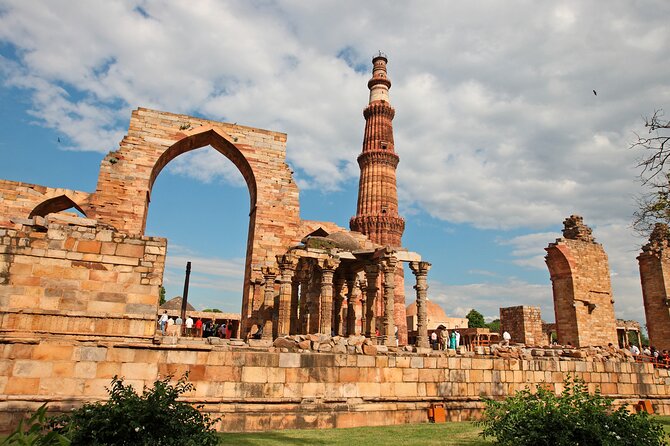
Qutub Minar is the early anchor: a towering 73-meter minaret and a UNESCO World Heritage Site. It’s one of those sights where your brain finally understands what you’re looking at—the height, the age, and the style. Admission is included here, and the time allocation gives you enough room to walk around and take it in rather than just pass by.
Practical tip: wear comfortable shoes. The area has uneven ground, and you’ll want to move for the best angles.
Lotus Temple and the calmer side of Delhi
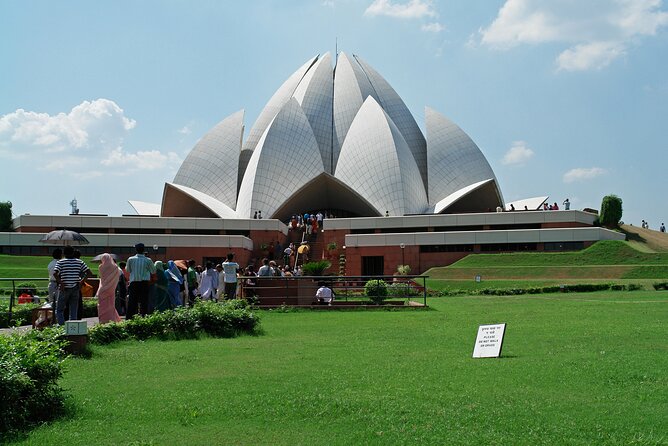
Next comes Lotus Temple. It’s famous for its lotus-like architecture and quiet atmosphere, and entry is free on this route. If Delhi feels loud, this is a good reset. It also gives you a break from the heavier monument schedule.
India Gate, Parliament, and Rashtrapati Bhavan: quick looks, good photos
You’ll also stop at India Gate, plus short photo stops at Parliament House and Rashtrapati Bhavan. These are brief, which is smart. You get the main visual hits without losing the day.
If you like architecture, you’ll enjoy noticing how these buildings sit in their large civic spaces. If not, you can treat this portion like orientation and keep your energy for Old Delhi.
You can also read our reviews of more tours and experiences in New Delhi




Agrasen ki Baoli and Humayun’s Tomb: historic texture
Agrasen Ki Baoli is a stepwell, and it has that legend + structure combo that makes it more than a quick photo stop. It’s free here, with a short guided visit.
Then you move to Humayun’s Tomb, another UNESCO World Heritage Site, built in the 16th century. Admission is included, and you get about an hour. This is where the tour’s pacing feels worth it: you can slow down and actually appreciate the Mughal design language.
Chandni Chowk, Jama Masjid, and the Red Fort edge
Old Delhi becomes the final act of Day 1. You’ll head into Chandni Chowk for about an hour—spice, dried fruits, silver jewelry, saris. Jama Masjid follows for about an hour with admission included. After that, you get the chance to ride a rickshaw through Old Delhi streets for about 30 minutes, which is one of the best ways to understand how the city moves.
Then comes Red Fort (UNESCO), with admission included and about 30 minutes. It’s another monument where a guide helps. Without context, it’s easy to see it as only a big wall and gates. With context, you notice the story in the design choices.
The payoff of Day 1
By the time you leave Delhi behind, you’ll have seen:
- the iconic skyline monument style,
- Mughal-era architecture in calmer settings,
- and the street-energy of Old Delhi.
It’s a lot in one day, but it flows from “big landmark” to “human-scale streets,” which keeps it interesting.
Day 2 in Agra: sunrise Taj Mahal, then fort and the Baby Taj
Agra is really a two-part day: the world’s most famous love story (in the marble, at sunrise), then Mughal craftsmanship in tighter, less-famous spaces.
Taj Mahal at sunrise: the timing that changes everything
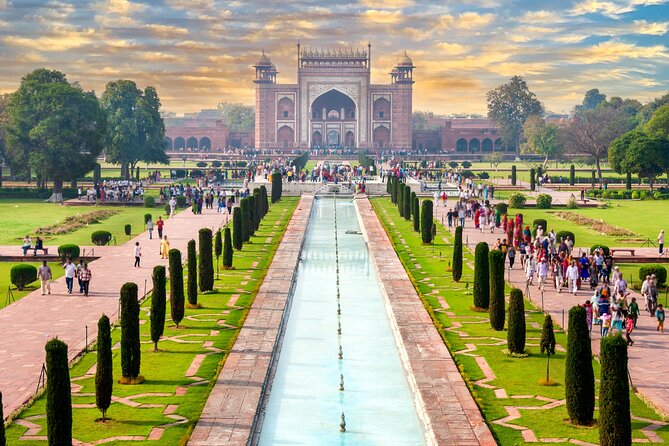
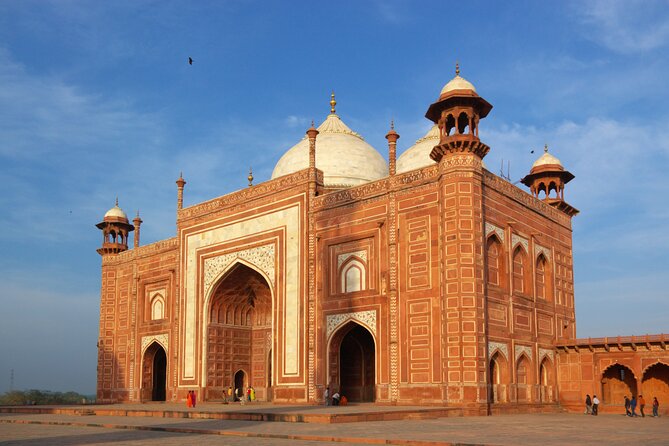
The main event is the Taj Mahal at sunrise. The tour includes a guided visit with about 3 hours allocated, and it also includes the free battery bus ride from Taj Mahal parking to the main entry gate.
You should plan to be ready early. Sunrise visits depend on timing, and the marble looks different before the sun climbs. Even if you’ve seen photos, sunrise is the moment that makes it feel real: light, scale, and the quiet around the monument.
Practical note: expect crowds even at sunrise. You’ll still enjoy it, but go in with the mindset that you’re there for the atmosphere as much as the view.
Agra Fort: history inside walls
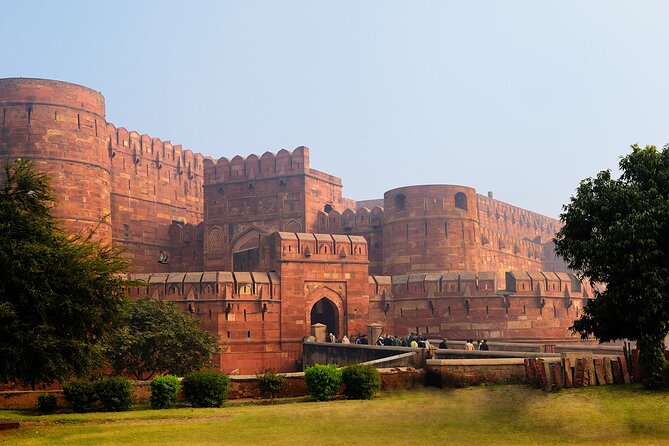
After Taj Mahal, you shift to Agra Fort. This UNESCO site gets about an hour with a guided tour. Forts are often harder to understand than palaces because you see walls more than rooms. Here, a guide helps you connect what you’re looking at to how the place worked.
Itmad-ud-Daula (Baby Taj): small, precise, memorable
Then you visit Itmad-ud-Daula, often called the Baby Taj. You get about 30 minutes with admission included. This is the kind of stop that rewards people who like details—especially marble work and design patterns. It’s also a nice contrast after the massive drama of the Taj Mahal.
Overnight in Jaipur
At the end of the day, you arrive in Jaipur and check in for your overnight. That’s a smart design choice because Jaipur deserves daylight, and you’ll need it the next day.
Jaipur loop: City Palace, Hawa Mahal, Jantar Mantar, and Jal Mahal
Day 3 is a classic Jaipur circuit: royal architecture, a wind-catching facade, an astronomy stop UNESCO already understands, and a lakeside palace scene. This day also avoids the extreme “drive-and-stare” feel by mixing styles and settings.
City Palace: where the royal story still lives
City Palace is first, with about an hour and admission included. It’s a sprawling complex that mixes Rajput and Mughal architecture. This stop is a good anchor because it helps you connect Jaipur’s identity to what you’ll see later—especially the palace design language and court culture.
Hawa Mahal: the famous facade, understood with context
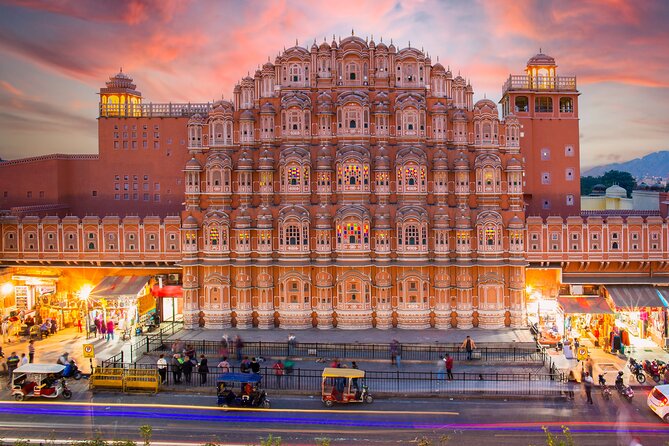
Hawa Mahal (Palace of Wind) follows for about an hour with admission included. It was built in 1799 by Maharaja Sawai Pratap Singh and is known for its lattice-work facade.
Here’s a practical reason to have a guide: once you understand how the structure was meant to function, it’s more than a photogenic wall. You notice patterns and design purpose.
Jantar Mantar: astronomy you can walk through
Jantar Mantar is next. It’s a UNESCO World Heritage Site and built in the 18th century by Maharaja Sawai Jai Singh II. You get about an hour and admission is included.
This is the stop many people underestimate. It’s not “just old rocks.” The instruments reflect how people measured time and sky movement back then. If you like science, you’ll enjoy it. If you don’t, a guide’s explanation still makes it feel worthwhile.
Jal Mahal: the lakeside pause
Jal Mahal is the breather. It’s on Man Sagar Lake, and you get about 30 minutes with admission included. You’ll see the structure from a perspective that’s different from the city-palace vibe.
This is a good place to slow down, catch photos, and let the day stop feeling like a checklist.
Panna Meena ka Kund: the stepwell near Amber Fort
Then you visit Panna Meena ka Kund, a 16th-century stepwell near Amber Fort. You get about 20 minutes, and admission is free. It’s known for symmetrical staircases and an octagonal design, and it works as a water reservoir and community gathering spot.
This stop is brief, but it adds a different texture to Jaipur. It’s not a palace. It’s a functional piece of the city.
Ending in Delhi (or Jaipur airport)
After Jaipur, you have flexibility: you can travel back to Delhi (about 5 hours) or choose direct drop-off at Jaipur airport. That’s useful if you’re building your own flight timing.
What you’re really paying for: value, inclusions, and realistic expectations
At $186.54 per person, the main question is what you’d otherwise pay to replicate this on your own: transport, guides, admissions, and hotel nights. This package leans hard on the “remove friction” side.
Included that matters on the ground
You get:
- Fully private tour and transportation
- Licensed, government-approved guides in Delhi, Agra, and Jaipur
- Pickup and drop-off across Delhi NCR, including airport coverage
- 2 nights accommodation and daily breakfast when you book with hotel inclusion
- Free mineral water bottles during journeys
- All tolls, parking, fuel surcharge, and hotel taxes included
- Battery bus from Taj Mahal parking to the main entry gate
Also, many of the key sites show admissions as included on the day-by-day flow: Qutub Minar, Humayun’s Tomb, Jama Masjid, Red Fort, Taj Mahal, Agra Fort, Itmad-ud-Daula, City Palace, Hawa Mahal, Jantar Mantar, and Jal Mahal.
Not included (so plan your budget)
Lunch and dinner aren’t included. Tips and gratuities are also not included.
That means the package can feel “complete” for the big sights, but you should still plan daily meal spending. If you’re watching costs, consider budgeting ahead so you’re not negotiating hunger while you’re trying to enjoy the day.
Comfort and group size: you’ll ride how you should
The vehicle type changes with group size:
- 1–2 people: 4-seater AC sedan
- 3–4 people: 6-seater AC SUV
- 5–10 people: 12-seater AC tempo traveler
- 11–15 people: 17-seater AC tempo traveler/mini bus
For most couples and small groups, the sedan or SUV tends to feel easier. Bigger groups will do better with the larger vehicle just to avoid tight seating.
A note on pacing
This is not a slow “linger in cafes all day” trip. It’s a guided, monument-heavy route with short stops and guided time blocks. If you love structure, you’ll enjoy it. If you prefer lots of free time, you might wish some segments were longer—especially in Old Delhi.
Who this tour suits best (and who might want something else)
This tour is a strong fit if you want:
- a private Golden Triangle without splitting your day between multiple independent bookings,
- licensed guidance so each monument has meaning,
- and hotel nights with breakfast so you can focus on sightseeing.
It also works well for first-timers because you’re not guessing entrances, timing, or travel logistics between cities.
If you hate early mornings, the sunrise Taj Mahal visit may feel like a tough sell. If you want a slower travel style with lots of unplanned downtime, you may find the schedule tight. But if you enjoy a clear plan, this one delivers.
Should you book the 3-day luxury Golden Triangle from Delhi?
I’d book it if you want the efficient Golden Triangle combo: private transport, government-approved guides, and a sunrise Taj Mahal experience handled for you. At this price point, the biggest win is that you buy back time and brainpower—especially on Day 1’s Old Delhi stretch and Day 2’s Agra day.
I wouldn’t book it if your ideal trip is low-structure, long breaks, and no early starts. The car time is real, and the monuments pack in quickly.
If your goal is to see the key sights properly in three days and leave with photos plus understanding, this is a solid choice.
FAQ
Do I get pickup from anywhere in Delhi NCR?
Yes. Pickup is available from any address in Delhi, Gurugram, or Noida, including the airport, hotels, and Airbnbs.
Is this tour private or shared?
It’s a private tour/activity. Only your group will participate.
How long is the drive from Delhi to Agra?
The journey to Agra takes about 3 hours.
How long does it take to get back to Delhi from Jaipur?
After Jaipur, the drive back to Delhi is around 5 hours.
What’s included for meals?
Breakfast is included for 2 days when you book with hotels included. Lunch and dinner are not included.
Are hotel nights included?
Yes—2 nights’ accommodation and daily breakfast are provided when you book the package with hotels included.
Is sunrise Taj Mahal included?
Yes. The Taj Mahal visit is scheduled at sunrise and includes a guided tour.
Are entrance tickets included for the sites?
Many admissions are shown as included for major stops, while others are free. What you pay can vary by site, based on the day’s included admissions.
What vehicle will I ride in?
Vehicle type depends on group size: an AC sedan for 1–2 people, an AC SUV for 3–4, an AC tempo traveler for 5–10, and an AC tempo traveler/mini bus for 11–15.
Do I need cash extra for getting into the Taj Mahal area?
The tour includes a free battery bus ride from Taj Mahal Parking to the main entry gate. Mineral water bottles are also provided during journeys.
Is free cancellation available?
Yes. You can cancel up to 24 hours in advance for a full refund.