REVIEW · NEW DELHI
From Delhi: Private 3-Day Golden Triangle Tour with Hotel Options
Book on Viator →Operated by Travel Creators Of India · Bookable on Viator
Three days, three icons, and almost no planning. This private Golden Triangle tour groups the best of Delhi, Agra, and Jaipur into one smooth run with door-to-door pickup and a guide who gives context at every stop. You’ll also like the practical add-ons such as the rickshaw ride in Old Delhi and the golf cart at the Taj Mahal area.
One thing to think about: the tour rate does not include your meals or monument entry tickets, so your real budget will be higher once you add those.
In This Review
- Key Things I’d Pay Attention To
- Why This 3-Day Golden Triangle Tour Works When Time Is Tight
- Delhi Day: Gurudwara Bangla Sahib, Jama Masjid, Old Delhi Markets, Humayun’s Tomb
- Agra Day: Taj Mahal Early Light (Plus Agra Fort)
- Jaipur Day: Amber Fort, Hawa Mahal, Jal Mahal, City Palace, Jantar Mantar
- Hotel Options, Guides, and Transportation That Actually Matter
- What’s Included vs. What You’ll Pay Extra (Realistic Budget)
- Scheduling Gotchas: Taj Mahal Friday Closures and Monday Site Swaps
- Who This Tour Suits Best (And Who Might Prefer Something Else)
- Should You Book This 3-Day Golden Triangle Tour?
- FAQ
- FAQ
- Is this a private tour or shared with other groups?
- Does the tour include hotel accommodation?
- Are meals and entry tickets included in the price?
- What transportation is provided during the sightseeing days?
- Do you get a tour guide at the monuments?
- What happens if my tour date includes a Friday?
- What if my tour date is a Monday?
- Do I need cash for ticket purchases?
Key Things I’d Pay Attention To
- Door-to-door pickup and drop-off each day, so you lose less time to transit wrangling
- Private guides at the sites so you spend less time guessing what you’re looking at
- Old Delhi on wheels with a rickshaw ride plus a spice market stop at Khari Baoli
- Taj Mahal logistics handled with shoe covers and a golf cart ride to the entrance area
- A full Jaipur day with Amber Fort, City Palace, and Jantar Mantar in one stretch
Why This 3-Day Golden Triangle Tour Works When Time Is Tight
If you only have a few days in North India, the Golden Triangle can feel like a math problem: Delhi, Agra, Jaipur… plus travel time, ticket lines, and figuring out where to go first. This tour is built to solve that. You get a private air-conditioned vehicle, a uniformed driver, and a guide who stays with you through the key sights.
I like that it’s structured but not stubborn. The schedule covers major hits like Humayun’s Tomb, the Taj Mahal, and Amber Fort. At the same time, you can request changes to monuments or attractions even after booking. That matters because the Golden Triangle is easy to over-plan. A little direction helps.
The best fit is someone who wants a packed itinerary without the constant decision-making. If you’re the type who likes wandering alone for hours, this might feel a bit organized. But for most visitors, it’s a smart way to see a lot without burning your vacation on logistics.
You can also read our reviews of more private tours in New Delhi


Delhi Day: Gurudwara Bangla Sahib, Jama Masjid, Old Delhi Markets, Humayun’s Tomb
Day 1 is all about getting your bearings fast. You start with Gurudwara Bangla Sahib, a Sikh place of worship associated with the eighth Sikh Guru. The famous feature here is the healing Sarovar, the sacred water tank that’s central to the site’s meaning.
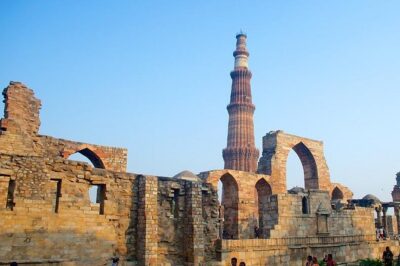
Next comes Jama Masjid, India’s largest mosque, completed in 1656. It’s a real Mughal-style landmark, and your guide can help you connect what you see with the larger story of Delhi’s rulers and urban design. From there you’ll move into Chandni Chowk, one of the most iconic Old Delhi market areas—this is where the city feels like a living marketplace.
The rickshaw ride through Chandni Chowk is one of the tour’s practical pleasures. You’re not just viewing from a distance. You glide through the lanes and pass bazaars with your guide offering context. Then you get a stop at Khari Baoli, the spice market area. The point isn’t shopping; it’s understanding why spices and trade shaped how neighborhoods grew and how people cooked and lived.
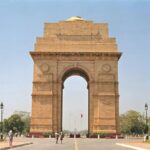
After the market section, the pace shifts to a major open-air memorial at India Gate. It honors soldiers who died in World War I, with names engraved on the memorial walls. Even if you’re not a history buff, it gives you a pause point that isn’t tied to ticketed monument time.
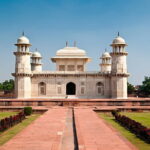
Then you return to world-class architecture with Humayun’s Tomb, a UNESCO World Heritage site and often noted as India’s first garden tomb. If the Taj Mahal is the headliner of the trip, Humayun’s Tomb is the lead-in. It helps you see the Mughal influence that later gets refined in Agra.
The day ends with Lotus Temple, a Bahá’í House of Worship opened in December 1986, designed in a lotus-inspired shape. It’s a calm contrast to the mosque-and-market intensity earlier in the day. If you like variety in one day, this lineup does it well.
Finally, you head to Agra and check into your hotel, with time to relax. There’s no need to turn your evening into another sightseeing mission.
Agra Day: Taj Mahal Early Light (Plus Agra Fort)
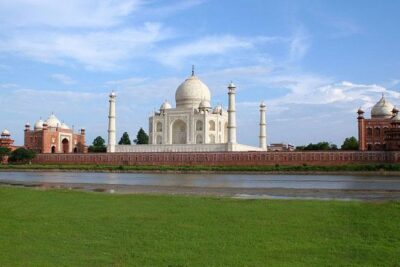
Day 2 centers on the Taj Mahal, and the timing is deliberate. You head there with a personal guide in the early light, when the monument looks especially dramatic and the crowds often feel more manageable than mid-day. This is one of those sights where a guide helps a lot. You’re not just staring at white marble—you’re learning what you’re seeing and why it matters.
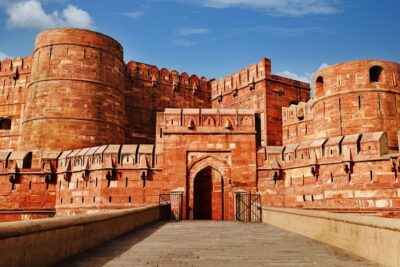
After that, you’ll visit Agra Fort, another UNESCO World Heritage site built by Emperor Akbar in 1565 along the Yamuna River. Your guide can point out how later rulers expanded it, including Shah Jahan’s additions with prominent white marble structures. If Delhi gave you the city-culture feel, Agra Fort gives you the power-and-planning feel.
A few small practical items make a difference here. The included golf cart ride to and from the parking lot to the Taj Mahal entrance helps cut down walking time and awkward logistics. You also get shoe covers, which is one of those details you’ll be glad is handled for you.
One consideration: Agra can feel busy around the Taj Mahal area, even when timing helps. This is normal for a world-famous site. The tour’s value is that the hard parts—entry area flow and the guided interpretation—are managed so you don’t waste your limited time.
Jaipur Day: Amber Fort, Hawa Mahal, Jal Mahal, City Palace, Jantar Mantar
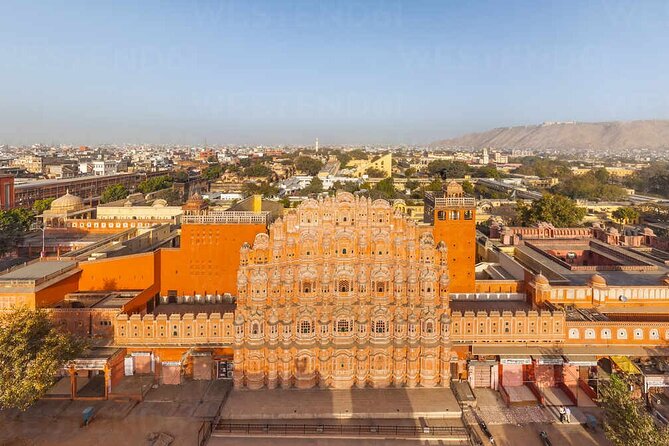
By Day 3, you’re in Jaipur, the Pink City. The first stop is Hawa Mahal (Palace of Wind), famous for its intricate latticework. You’ll have time to learn the story behind the façade and enjoy panoramic views from the top area.
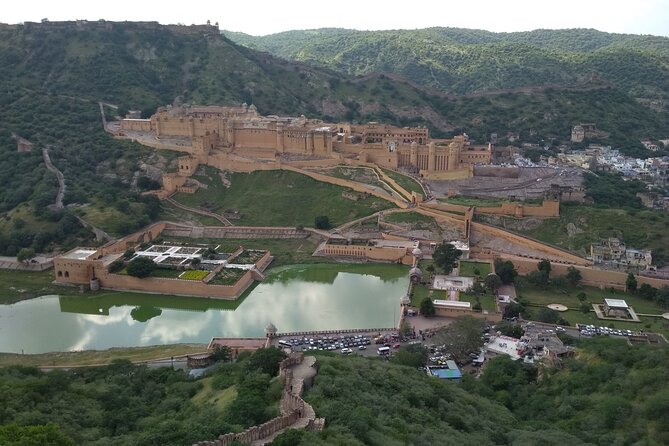
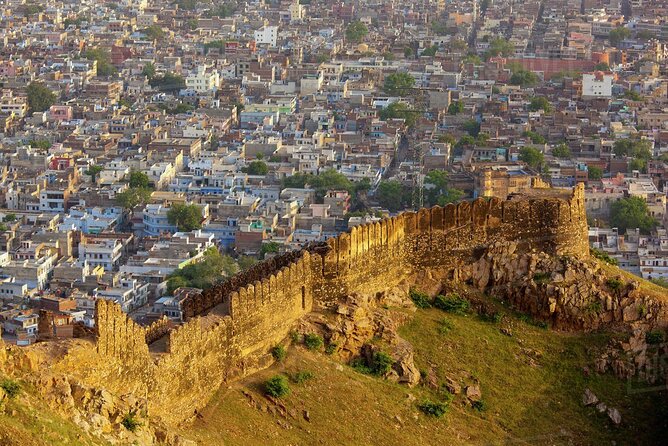
Next is the headline for many people: Amber Fort. You explore grand courtyards, temples, and lavish rooms on a guided tour. The views over the hills and Maota Lake are part of why this fort holds people’s attention. Forts in India are usually dramatic, but Amber Fort has a very “designed” feel—your guide helps connect the architecture with the landscape.
Then you get a quieter detour to Panna Meena ka Kund, a stepwell that’s known for symmetry and its historic water system. This is the kind of stop that works well if you like architecture beyond the biggest names. It’s also a nice change from the crowds at the main forts.
After that, you drive to Jal Mahal, the palace in the middle of Man Sagar Lake. Your experience is mainly from the shore, focusing on the structure and how it sits in the water. It’s a great photo stop without being a full-length commitment.
From there, you visit Gaitore Ki Chhatriyan, a peaceful cenotaph site dedicated to Jaipur’s royal family. The included time is short, but it gives you a calmer atmosphere and a different side of royal Jaipur than the palace interiors.
Then you shift back to grandeur with City Palace of Jaipur, which blends Mughal and Rajasthani architecture. You’ll explore museums, courtyards, and palaces with guided context. This is a good capstone because it ties different styles into one place.
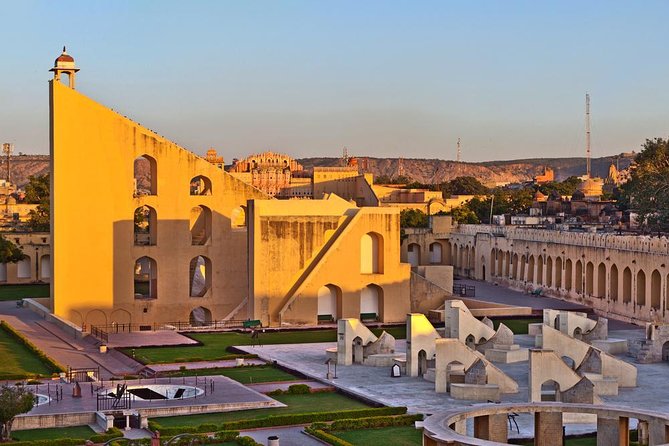
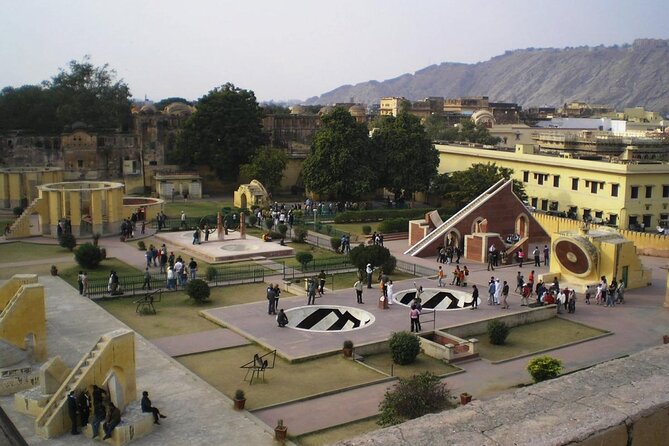
The day ends at Jantar Mantar, a UNESCO World Heritage astronomical observatory built by Maharaja Jai Singh II. This is the stop that many people underestimate. It isn’t just “old instruments.” With a guide, you can connect the scale of the instruments to how people measured time and predicted motion back then.
At the end of a long day, you return to Delhi for drop-off at Delhi Airport or hotels across several areas.
Hotel Options, Guides, and Transportation That Actually Matter
This is a private tour—meaning only your group participates—and it’s run with a personal, uniformed driver in an air-conditioned vehicle. Your vehicle type depends on group size: a Toyota Etios (or similar) for 1–2 people, Toyota Innova (or similar) for 3–5 people, and a Tempo Traveler for 6–10 people. That detail matters if you hate cramped seating or if you’re traveling with kids.
Your guide is included at the sites. One review specifically praised Kamal as the Jaipur guide for being highly knowledgeable and kind, and another highlighted Akil as a responsive operator who handled the trip well. There’s also a nod to Naval the driver for safe, careful driving. I take those names seriously because they point to what you want from a private tour: fast replies, clear explanations, and calm driving.
Hotel-wise, the tour offers 2-night accommodation if you choose that option, with breakfast included if you select the breakfast option. There’s also an upgrade path to 4- or 5-star accommodation and breakfast. If comfort matters, this is one place where paying extra can change your whole energy level for sightseeing.
One more point: transfer times are approximate and can vary with traffic. Delhi roads can surprise you, so build in patience. The benefit is that pickup and drop-off are handled, which reduces the chance of you losing time to navigation stress.
You can also read our reviews of more tours and experiences in New Delhi





What’s Included vs. What You’ll Pay Extra (Realistic Budget)
The headline value of this tour is that it bundles the hardest parts: pickup/drop-off, a private vehicle, a driver, site guides, and key transport conveniences at the Taj Mahal area. The included “extras” are meaningful:
- Rickshaw ride in Old Delhi
- Golf cart access to/from Taj Mahal parking area
- Shoe covers for the Taj Mahal
- Guide at the sites
- Hotel accommodation for 2 nights if you pick the hotel option
- Breakfast at the hotel each morning if you choose it
What’s not included is where your spending can rise fast:
- Meals: $70.00 per person
- Entry tickets: $70.00 per person
You’ll want to treat those as standard planning costs. If the base price is $80.00 per person, then meals + entry typically add another $140.00 per person on top of that. That puts your trip in the “pay for convenience” category, not the “budget backpacking” category.
So is it good value? For many people, yes—because you’re paying for time savings, guided context, and private transport through long-distance legs. If you’re the type who can organize everything yourself and prefers to go slow and independent, this may not feel necessary. But if you want the Golden Triangle done efficiently, this pricing often makes sense.
One more practical budgeting tip: some monuments don’t accept credit cards, so you should carry cash in INR for entrance tickets. The guide can assist in locating an ATM if needed.
Scheduling Gotchas: Taj Mahal Friday Closures and Monday Site Swaps
Your itinerary is flexible in a couple of important ways:
- Taj Mahal is closed on Fridays. If your schedule includes a Friday, the tour adjusts to Delhi – Jaipur – Agra – Delhi.
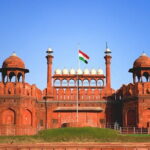
- Red Fort and Lotus Temple are closed on Mondays. If your day falls on Monday, the plan swaps those for Gurudwara Bangla Sahib.
This matters because the Golden Triangle is famous for fixed opening hours. The tour’s ability to reshuffle gives you less risk of losing a key sight due to a calendar mismatch.
Also note: a mandatory Gala dinner fee applies on New Year’s Eve and Christmas. If your dates land on those holidays, factor it in early.
Finally, the tour is customizable. If there’s one site you’d rather replace, you can request changes even after booking. Just keep your expectations realistic: the itinerary is tight because it’s designed around a 3-day rhythm.
Who This Tour Suits Best (And Who Might Prefer Something Else)
This tour fits best if you:
- want a structured 3-day Golden Triangle without complicated planning
- prefer private guidance over self-guided guesswork
- care about comfort, especially air-conditioned transport and optional 4–5 star hotel upgrades
- want to see major monuments like Humayun’s Tomb, the Taj Mahal, Amber Fort, and Jantar Mantar in a single trip
It might feel less ideal if you:
- want lots of unscheduled time to wander independently
- hate a packed schedule where each day is filled with multiple stops
- want to treat meals as part of a personal exploration plan (since meals are handled as a separate paid item)
Still, if you want the highlights covered with minimal friction, this does the job.
Should You Book This 3-Day Golden Triangle Tour?
If your goal is a smooth, high-impact Golden Triangle run, I’d say yes—with one condition: you go in ready for extra costs for meals and entry tickets. Once you do that, the structure makes sense. The included guide time at the major sites helps turn sightseeing into understanding, and the transport details (like rickshaw time in Old Delhi and the golf cart at the Taj Mahal area) remove common irritations.
Book it if you value convenience, privacy, and clear interpretation. Skip it if you’re determined to travel fully on your own and you’d rather build your own route and pacing from scratch.
FAQ
FAQ
Is this a private tour or shared with other groups?
This is a private tour, so only your group participates.
Does the tour include hotel accommodation?
It includes 2-night hotel accommodation if you choose the hotel option. Breakfast is also included if you select the breakfast option.
Are meals and entry tickets included in the price?
No. Meals cost $70.00 per person and entry tickets cost $70.00 per person, and both are listed as not included.
What transportation is provided during the sightseeing days?
You get a private air-conditioned vehicle for sightseeing, plus a personal uniformed driver. There’s also a rickshaw ride through Old Delhi included, and a golf cart ride to/from the Taj Mahal entrance area.
Do you get a tour guide at the monuments?
Yes. You get a tour guide at all sites listed on the itinerary.
What happens if my tour date includes a Friday?
The Taj Mahal is closed on Fridays. If your itinerary includes a Friday, the schedule adjusts to Delhi – Jaipur – Agra – Delhi.
What if my tour date is a Monday?
On Mondays, the Red Fort and Lotus Temple are closed. The itinerary swaps them for a visit to Gurudwara Bangla Sahib.
Do I need cash for ticket purchases?
Some monuments do not accept credit card payments, so it’s advised to carry cash in INR for entrance tickets. The guide can help locate an ATM if needed.