REVIEW · NEW DELHI
5-Day Private Luxury Golden Triangle Tour: Delhi, Agra & Jaipur
Book on Viator →Operated by Aiza tours · Bookable on Viator
Three cities, one smooth luxury route. This 5-day private luxury Golden Triangle tour strings together Delhi, Agra, and Jaipur with licensed guides, a comfortable air-conditioned private car, and the big-ticket goal of seeing the Taj Mahal at sunrise. You also get a guided run through the classic UNESCO-and-landmark stops, plus Old Delhi market time that helps the trip feel like more than just photo stops.
What I love most is the simple flow: pickup, sightseeing with a guide, then travel with a driver who handles the traffic so you can focus on the sites. I also like the way the Taj Mahal morning is set up for the best light, including the battery bus ride between the parking area and the monument zone. One thing to plan for: entrance tickets are not included, and key sites close on specific weekdays, including Taj Mahal on Fridays and Lotus Temple (and Red Fort, if you add it) on Mondays.
In This Review
- Quick Hits Before You Go
- Why This Private Golden Triangle Feels Worth It
- Day 1 in Delhi: Jama Masjid, Chandni Chowk, and the City’s Big Landmarks
- The Agra Road Trip: Where the Trip Slows Down (In a Good Way)
- Sunrise Taj Mahal: Timing, Access, and How to Make It Count
- Agra Fort After the Taj: A Great Pairing for Anyone Who Likes Power Stories
- Jaipur in One Day: Amber Fort, Hawa Mahal, Jantar Mantar, and City Palace
- Hotels, Private Transport, and the Human Side of the Tour
- Day 5 Back to Delhi: A Controlled Finish, Not a Last-Minute Rush
- Should You Book This 5-Day Private Luxury Golden Triangle Tour?
- FAQ
- How much does the 5-day private luxury Golden Triangle tour cost?
- What’s included in the tour package?
- Are monument entrance tickets included?
- Which key attractions have weekday closures?
- What kind of accommodations are provided?
- Is this tour private or shared?
Quick Hits Before You Go
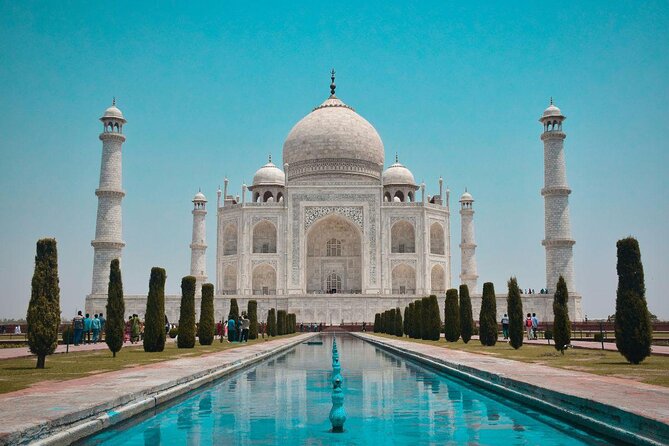
- Taj Mahal sunrise timing: early start, then you’re done with the crowds before the day ramps up
- Battery bus access: you’re not walking the whole way from parking to the Taj area
- Old Delhi with real texture: Jama Masjid, Chandni Chowk, and a rickshaw ride through tight lanes
- More than monuments: Gurudwara Bangla Sahib and its langar give you a quieter cultural break
- Jaipur in a packed day: Amber Fort plus the City Palace, Jantar Mantar, and iconic facades like Hawa Mahal
- Guides who bring the story: names like Kanran, Hyder Ali, Farzan, and Bilal show up in guide write-ups for preparedness and clear explanations
Why This Private Golden Triangle Feels Worth It
This tour is priced at $205 per person and aims to do something most DIY Golden Triangle trips struggle with: keep the logistics smooth while you still see the highlights. In a region where traffic can be chaotic, having a private, air-conditioned vehicle and a professional driver is a practical upgrade, not a luxury accessory.
The best value here is not the “luxury” label. It’s the time you save. You’re given a guided plan across three cities, with transportation between Delhi–Agra–Jaipur handled end-to-end, plus daily breakfast (when you choose the hotel option). When you’re paying for a guided route, you want fewer bottlenecks and less guesswork, and that’s exactly what the setup is trying to provide.
The other value driver is the Taj Mahal morning. It’s the hardest part to nail by yourself because timing and access matter. Here, you also get that battery bus ride included as part of the Taj Mahal visit flow, which helps you conserve energy before you start sightseeing in earnest.
You can also read our reviews of more private tours in New Delhi



Day 1 in Delhi: Jama Masjid, Chandni Chowk, and the City’s Big Landmarks
Day one works well if you like “contrast.” You start in New Delhi with major monuments, then shift into Old Delhi’s market streets, then back out again to calmer, reflective stops.
You begin with pickup from your hotel or airport, and then the tour focuses on Delhi’s main storytelling locations. Jama Masjid is first, a huge Mughal-era mosque built in the 17th century. It’s not just about the architecture. Standing in front of it, you feel why this part of Delhi shaped so much of the city’s religious and civic life.
Next comes Chandni Chowk, one of the most famous market areas in India. The highlight isn’t shopping for the sake of shopping. It’s the experience of moving through the narrow lanes and seeing the city’s rhythm up close. You’ll even do a rickshaw ride, which is a smart way to absorb the layout without getting stuck walking in every direction.
From there, head to Khari Baoli, known as Asia’s largest spice market. This stop is worth it because it’s sensory and immediate. Spices, dried goods, and small-batch trading feel like a living museum of everyday commerce. Since admission isn’t a thing here, it also functions as a low-stress break from monument-ticket logistics.
Then you pivot from commerce to meaning. Raj Ghat is a simple memorial space for Mahatma Gandhi, set in gardens. It’s calm in a way that balances all the earlier movement. India Gate adds a very different mood: a 42-meter war memorial with an eternal flame setting a tone of remembrance.
If you like Delhi’s lesser-known heritage, Agrasen Ki Baoli is a great inclusion. This stepwell, dating to the 14th century, is one of those places that makes you slow down and look at details. The stone steps and arched niches feel like a secret urban relic, even though it’s right there in the city.
The tour also includes spiritual and contemporary reflections. Gurudwara Bangla Sahib is a major Sikh shrine with a golden dome and a holy pond. You’ll also see how langar (the communal kitchen) works. Even if you don’t eat, it’s a powerful window into community service as a daily practice.
In the mix are also national landmark stops: Parliament House and Rashtrapati Bhawan. They’re architectural and symbolic, and they help you connect Delhi’s colonial-era planning to modern-day governance. You’ll then move through Gandhi Smriti, a museum at the site of Gandhi’s last days, and the Lotus Temple, a Bahá’í House of Worship open to all faiths. Just note the weekday closures: Lotus Temple is closed on Mondays, so your exact routing depends on your tour date.
The final Delhi heritage stop is Qutub Minar, a UNESCO site and the tallest brick minaret in the world at 73 meters. It’s a strong finish because you end the day with a structure you can read like a history book: different rulers and expansions, visible in the tower itself. Admission for Qutub Minar is not included, so budget for that when planning your total spend.
The Agra Road Trip: Where the Trip Slows Down (In a Good Way)

After breakfast in Delhi, you check out and head to Agra by a 3 to 4-hour drive with a professional driver. This is one of the biggest “value” moments on the tour: you’re not wrangling trains, booking taxis, or timing multiple transfers. You just ride, and the guide handles the sightseeing plan on the other end.
Once in Agra, the tour takes you to viewpoints and Mughal mausoleums that set up the Taj experience. Mehtab Bagh (the Moonlight Garden) is the key here. It’s across the Yamuna River, and the pitch is simple: it gives you a Taj view that feels more spacious than the main monument zone. The time is short, and admission isn’t included, so treat this as a scenic warm-up rather than a full attraction.
Then comes Itmad-ud-Daula, often called the Baby Taj. This one is a smart choice because it lets you appreciate Mughal marble work before you reach the main event. The detailed marble inlay and the garden layout are the point. If you’re the type who enjoys seeing craftsmanship earlier in the day, this is where you’ll feel the payoff.
A practical note: you’ll likely do this sightseeing with some fatigue from travel. That’s where the private vehicle helps. You’re not hiking between far-flung sites or timing multiple buses. You’re being driven from door to door, which makes the day feel lighter.
Sunrise Taj Mahal: Timing, Access, and How to Make It Count
The Taj Mahal at sunrise is the reason people choose this route, and the tour aims to make it smooth. You’re scheduled for a 6 AM sunrise visit, and the time window here is generous enough to actually enjoy the light change and not just sprint for photos.
The big advantage is the early hour. It’s when the Taj’s white marble shifts tone as the sun rises. You also get a calmer start to the day before crowds fully settle in. Even if you’ve seen pictures a hundred times, the scale hits differently when you’re standing at ground level.
Access matters too. This tour includes the battery bus ride from the Taj Mahal parking area up to the monument zone. That means you spend less time walking in the lead-up areas and more time focused on the experience itself. It’s also helpful if you’re traveling with anyone who gets tired easily.
One thing to watch: Taj Mahal remains closed every Friday. If your dates fall in a Friday rhythm, your schedule can shift. The tour info notes an alternative plan if you start on Wednesday: you may visit Taj Mahal at sunset on Thursday instead, since Friday closure would block a sunrise visit. That’s not a deal-breaker, but it is a timing detail that can affect how you plan your day.
Also, remember entrance tickets are not included for Taj Mahal. Your guide can help you purchase tickets and skip ticket queues for a hassle-free experience. That’s a small thing until you’re standing in the wrong line on a tight schedule.
If you’re a detail person, spend a little time with the garden and the white marble surface before you rush to the main viewpoint. The Taj is famous, but it rewards slower looking, especially in the morning light.
Agra Fort After the Taj: A Great Pairing for Anyone Who Likes Power Stories

After your Taj visit, the day continues with Agra Fort. You’ll return for breakfast at the hotel and then head out later for the fort visit. This sequencing works because the Taj is romance; the fort is politics and defense.
Agra Fort is one of the most significant Mughal forts, and seeing it right after the Taj gives context. The Taj shows the empire’s “ideal,” while the fort shows how rulers defended and controlled the region. That contrast makes the day feel more complete than a straight-to-the-next-photo-stop plan.
The fort stop is about 1 hour, and entrance tickets are not included. If you like history in “place,” this hour is usually enough to get the highlights without turning the day into a marathon. The biggest drawback is timing: Agra days often move fast, especially if you’re driving to Jaipur afterward. But since you’re traveling privately, you can usually handle it better than if you’re trying to connect public transport between sites.
You can also read our reviews of more tours and experiences in New Delhi






Jaipur in One Day: Amber Fort, Hawa Mahal, Jantar Mantar, and City Palace
Jaipur is where the tour really earns its Golden Triangle name. You get classic royal architecture in a compact schedule, plus a mix of viewpoints and heritage sites that explain why the Pink City became famous.
After Agra, you have time for lunch if you want it, and then you drive onward to Jaipur, typically 4 to 5 hours. Again, that private transfer is the difference-maker. Long-distance movement across India is easier when your driver handles the route and you don’t have to manage taxi-hopping.
Once in Jaipur, the tour hits Amber Fort first. This is a top stop for a reason: it’s a huge fortress complex, and you feel the history in the stone and the scale. The visit is about 2 hours, and admission is not included. If you want the “best photo angle,” early pacing helps, and this timing usually supports that.
Near Amber Fort, you also visit Panna Meena ka Kund, a stepwell built in the 16th century. It’s a short stop and not the headline, but it adds variety and gives you a different kind of architecture to look at: water design as heritage. If you like quiet details more than crowds, you’ll probably enjoy this part.
Then you head to Hawa Mahal, the Palace of Breeze. It’s famous for its five-story facade and its many small windows. The visit window is short (about 20 minutes), so treat it as a quick look and photo moment rather than a full interior experience. It’s still worth it because the facade is the whole point.
The tour also includes Jal Mahal, the Water Palace in Man Sagar Lake. This one is more about the exterior view. The upside is that it breaks the day up and gives you a scenic moment. The downside is that time is limited, so don’t expect it to replace a full fort visit.
For another royal look, the tour includes Gaitor Ki Chhatriyan, royal cenotaphs and memorials that sit in a peaceful setting. It’s a softer stop compared to the busy palace structures, and it helps you end the day with a bit more calm.
The centerpiece heritage block is City Palace, where you get about 2 hours inside the complex. It’s the symbol of Jaipur’s royal legacy, and it’s the type of stop where a guide makes a difference because the buildings and courtyards can feel like a lot if you don’t have context.
You finish with Jantar Mantar, a UNESCO site and open-air observatory built in the 18th century. The visit is about 1 hour, and it’s one of the most unique sights on the whole tour because it turns astronomy into architecture you can walk around and see.
The Big Practical Note: many Jaipur sites here have entrances not included, and the tour doesn’t list every ticket price up front. Your best move is to budget extra for admissions so you don’t end up surprised mid-trip.
Hotels, Private Transport, and the Human Side of the Tour
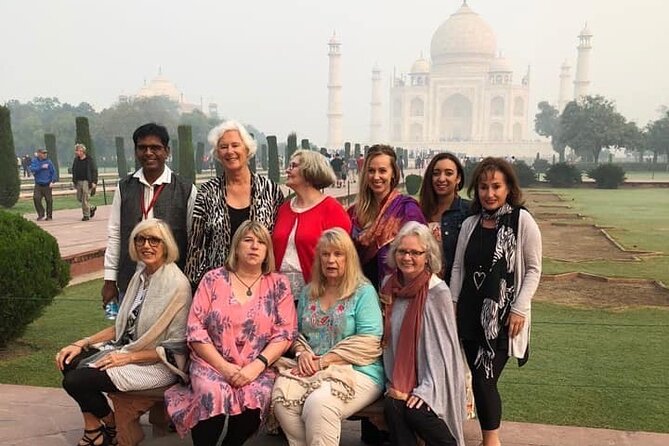
This tour is built around comfort that you feel immediately. You’re not just traveling in a car. You’re traveling in an air-conditioned private vehicle, with pickup and drop-off coordinated to your hotel or preferred location.
Car type is adjusted by group size: a four-seater sedan for one to two people, a six-seater SUV for three to four, and a ten-seater van for five to ten. That matters because a cramped car can turn a long road day into a headache. Here, the vehicle is selected based on your party size.
Daily basics are included: complimentary bottled mineral water during car journeys and daily breakfast for four days if you book the hotel option. Lunch and dinner aren’t included, so you’ll want to plan for meals as part of your daily budget.
The guides are a big part of why this can feel like a private luxury trip instead of a checklist drive. In the write-ups tied to this operator, names like Kanran and Hyder Ali show up for being well prepared, taking groups to good spots, and keeping things safe even with Delhi and Agra traffic. Other names like Farzan and Bilal appear with praise for professional planning and smart coordination. In a tour like this, guide skill is what turns a “see the monument” day into an “understand the city” day.
One detail I like: guides help with ticket purchasing and can help you avoid ticket queues for a smoother experience. Since entrance tickets are not included in the package price, that guide support is a practical way to keep you moving.
Rooms are generally twin-sharing, and triple-sharing is used by default when three people book. If three guests want two rooms instead, there’s an added charge. That’s not a surprise issue, but it’s worth checking early so your room setup matches what you expect.
Day 5 Back to Delhi: A Controlled Finish, Not a Last-Minute Rush
Day five focuses on getting you back to Delhi by around 2 PM. The drive is described as about five hours, so plan your airport or onward plans with some buffer if you can.
Since most of the major sightseeing has already happened by day four, this final day feels more like a clean exit than another packed schedule. That’s a nice way to end a fast-paced Golden Triangle itinerary without turning the last hours into a sprint.
Should You Book This 5-Day Private Luxury Golden Triangle Tour?
If you want a Golden Triangle trip that’s private, guided, and logistically calm, I think this one is a strong match. The value makes sense when you factor in the private AC transport, hotel stays (with the hotel option), daily breakfast, and the Taj Mahal morning setup including the battery bus access.
I’d hesitate only if you’re trying to build a super low budget or you hate paying separate entrance tickets, since they’re not included for the main sights. Also, check your dates for closures. Taj Mahal shuts on Fridays, and Lotus Temple shuts on Mondays, which can shift the order or timing of your Delhi and Agra highlights.
Overall, if you’re aiming for the classics—Delhi markets and monuments, Agra’s sunrise Taj Mahal, and Jaipur forts and observatories—this is the kind of tour that makes it easier to enjoy the places instead of managing the trip.
FAQ
How much does the 5-day private luxury Golden Triangle tour cost?
The price is listed as $205.00 per person.
What’s included in the tour package?
The tour includes hotel nights (when the hotel option is booked), daily breakfast (with the hotel option), private air-conditioned transportation, private guided sightseeing with approved guides, pickup and drop-off, battery bus ride to and from Taj Mahal parking up to the monument, bottled mineral water during car journeys, and applicable taxes and service charges.
Are monument entrance tickets included?
No. Entrance tickets for monuments are not included. The guides assist with purchasing tickets and can help you skip ticket queues.
Which key attractions have weekday closures?
Taj Mahal is closed every Friday. Lotus Temple and Red Fort in Delhi are closed every Monday.
What kind of accommodations are provided?
With the hotel option, it includes four nights of accommodation. Rooms are generally twin-sharing by default, and triple-sharing is used when booking for three people unless you request two rooms for an additional charge.
Is this tour private or shared?
This is a private tour/activity, and only your group participates. Service animals are allowed.