REVIEW · NEW DELHI
5 Day Private Luxury Golden Triangle Tour to Delhi Agra Jaipur
Book on Viator →Operated by A-1 Tours India - Private Day Tours · Bookable on Viator
Golden Triangle, but with elbow room. This 5-day private luxury route strings together Delhi, Agra, and Jaipur with a private A/C vehicle and guided context at the main monuments. It’s the classic first-timer itinerary, but the pacing and support make it feel less like a checklist.
I especially like the way mornings are handled with breakfast included at your hotel. It keeps Day 1 and Day 2 from starting with the usual scramble, and it gives you a calmer rhythm for big-ticket sights.
One watch-out: the schedule is monument-heavy, and you’ll still hit crowds at the popular stops. You’ll want comfortable shoes and a mindset for photo lines.
In This Review
- Key highlights worth betting on
- Delhi, Agra, Jaipur: the Golden Triangle with a real-world plan
- Day 1 in Delhi: Old Delhi icons plus New Delhi landmarks
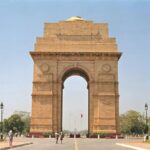
- India Gate and the memorial vibe
- Humayun’s Tomb: the Mughal garden layout you’ll actually remember
- Lotus Temple and the calm contrast
- Old Delhi power stops: Red Fort and Jama Masjid
- Qutub Minar: UNESCO scale in one focused visit
- Photo-and-memorial stops that still matter
- The Agra setup: hotel check-in, Taj Mahal timing, and less hassle
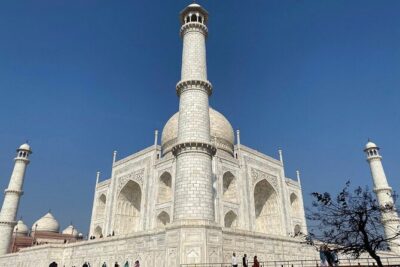
- Taj Mahal with included transport support
- Agra Fort: the other side of the story
- Fatehpur Sikri en route: a stop that makes Jaipur feel earned
- Why this stop is a good “energy trade”
- Jaipur Day 4: Amber Fort plus the city’s signature sights
- Amber Fort: why it’s the one everyone talks about
- Jal Mahal: quick, scenic, and mostly a photo stop
- City Palace and Jantar Mantar: royalty meets science
- Hawa Mahal: the iconic façade stop
- Albert Hall Museum and Birla Mandir: lighter closing stops
- Hotels, drivers, guides, and the small extras that add up
- Private vehicle, correct size for your group
- Bottled water every day
- Professional guides at each location
- Price and value: what $194 covers and what you still plan for
- Who this tour suits best (and who might want a different pace)
- Should you book this Golden Triangle luxury tour?
- FAQ
- What is the duration of the Golden Triangle tour?
- Where does the tour start and what is the meeting point?
- Is pickup and drop-off included?
- What vehicle do I get on this private tour?
- Are monument entrance fees included?
- Is breakfast included?
- Are lunch and dinner included?
- Is there any included transport help for the Taj Mahal visit?
- What is the cancellation policy?
Key highlights worth betting on
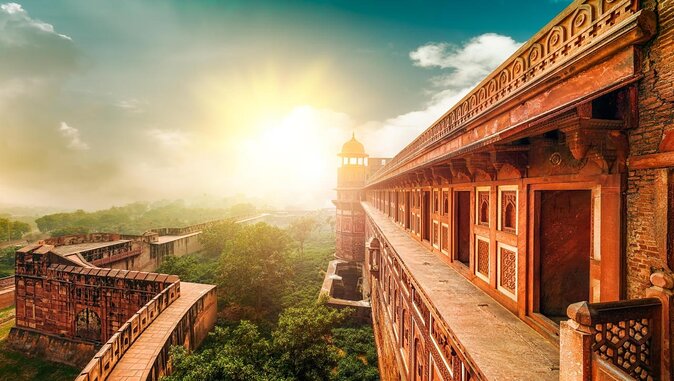
- Private A/C transport sized to your group, plus an English-speaking professional driver
- Hotel breakfast included (4) so you can focus on sights, not morning logistics
- Guides at the locations to explain what you’re seeing, not just point at it
- Taj Mahal access help, including the battery bus ride from the parking area up to the Taj zone
- Major entrances covered where marked included, with only some stops being view-only/free
Delhi, Agra, Jaipur: the Golden Triangle with a real-world plan
The Golden Triangle works because you get three different “faces” of India in one tight circuit. You start with Delhi’s mix of Mughal-era landmarks and modern icons, then shift to Agra’s sheer monument weight, and finish in Jaipur’s palace-and-fort geometry.
What makes this tour feel more luxurious than standard bus routes is the private setup. You’re not negotiating meeting points with strangers, and you can usually adapt the day if your flight timing or energy level needs a tweak.
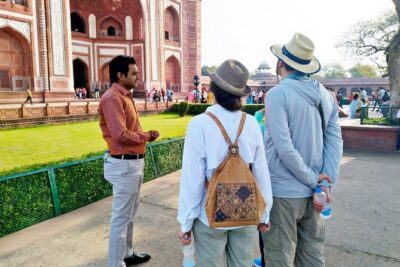
You also get a steady hand on the ground. An English-speaking driver handles the driving and routes, while English-speaking guides provide history and context at the key sights. That’s the difference between seeing monuments and actually understanding what you’re looking at.
You can also read our reviews of more private tours in New Delhi



Day 1 in Delhi: Old Delhi icons plus New Delhi landmarks

Your day begins with a meet-and-greet at the airport or your hotel, with a representative holding your name placard. That tiny detail matters on arrival day—less stress, faster transfer, and fewer chances to get stuck asking strangers the same questions.
After check-in, the tour swings through New Delhi and Old Delhi in a way that helps you get your bearings fast. You’ll see sites like Birla Temple and India Gate, plus the kind of skyline landmarks that help you orient the city beyond the photos.
India Gate and the memorial vibe
India Gate is a war memorial, and it’s also one of those places where the setting does half the explaining. You’ll get short, straightforward time here, so treat it like a “reset stop” before you move into the Mughal monuments.
Humayun’s Tomb: the Mughal garden layout you’ll actually remember
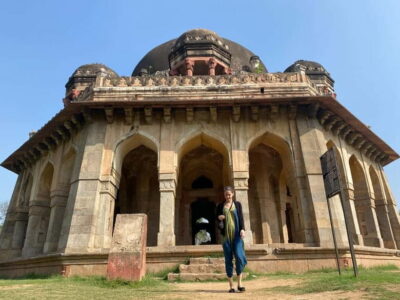
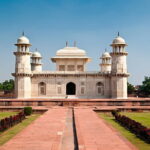
Humayun’s Tomb is included, and it’s the kind of place where a guide helps a lot. Even if you’ve seen Mughal tomb photos before, standing in the compound makes the symmetry and garden logic click.
The ticket timing here is set for a proper walk—expect around an hour—so you’re not rushing through just to say you were there.
Lotus Temple and the calm contrast
Lotus Temple is free to enter and offers a noticeable change in mood. It’s a Bahá’í House of Worship with that lotus-like shape people recognize instantly. In a city full of hard edges, this is where you can slow down for 30 minutes and breathe.
You can also read our reviews of more tours and experiences in New Delhi






Old Delhi power stops: Red Fort and Jama Masjid
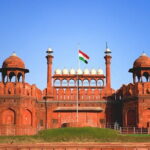
Red Fort is included and runs as one of the most recognizable Mughal sites. You’ll have time to explore without it turning into a sprint.
Jama Masjid is also included and is one of Delhi’s largest mosques. You’ll get the chance to take it in as a working religious space, not just a backdrop—again, the guide’s context is what turns architecture into understanding.
Qutub Minar: UNESCO scale in one focused visit
Qutub Minar is included and is built between 1199 and 1220. That date range sounds like trivia until you see the tower rise and realize how long this site has mattered. Plan for about an hour here.
Photo-and-memorial stops that still matter
Raj Ghat (Gandhi’s memorial) is free and is worth treating with respect, not just as another stop. And you’ll also pass key government/landmark areas such as the President of India’s residence area (Rashtrapati Bhavan). Some of these are best enjoyed from outside, so don’t expect long lingering time unless your schedule allows.
The Agra setup: hotel check-in, Taj Mahal timing, and less hassle
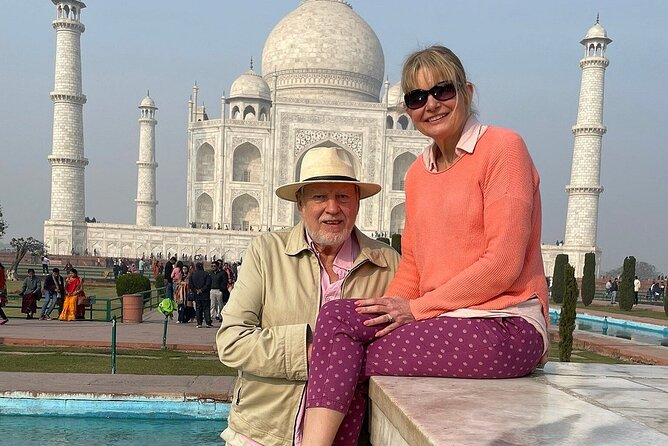
Day 2 shifts gears with a drive from Delhi to Agra, then hotel check-in before the monuments. That hotel-first approach means you don’t burn your energy on logistics before the big sights.
The tour is designed around two heavy hitters: the Taj Mahal and Agra Fort.
Taj Mahal with included transport support
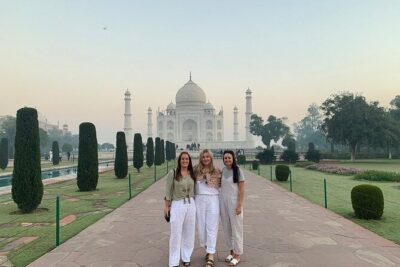
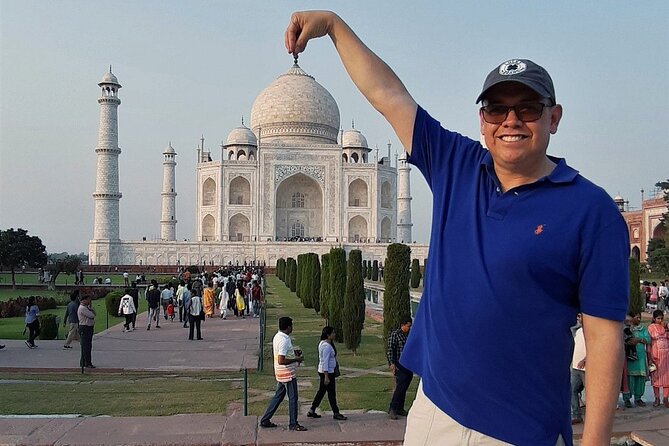
You’ll visit the Taj Mahal, and this is where the included battery bus ride is genuinely useful. It takes the edge off the walking trek from the parking area and helps you save energy for actually standing in front of the monument.
Practical tip: Taj crowds spike fast. Even when time is set, you can still make your visit feel smoother by arriving in the mindset of short bursts—look, pause, photos, then move on rather than trying to “do everything” in one long stare.
Agra Fort: the other side of the story
Agra Fort is included, with time set for about 1.5 hours. It gives you a different perspective from the Taj’s romantic silhouette. Here, you’re seeing the fortress logic—power, defense, and rule—laid out through Mughal-era layers.
If Taj is the emotional peak, Agra Fort helps you make sense of the world that produced it.
Fatehpur Sikri en route: a stop that makes Jaipur feel earned
Day 3 is built around a smart idea: don’t make Jaipur your only cultural highlight. You stop at Fatehpur Sikri, which was Akbar’s old capital, and that gives the trip depth beyond three cities of famous monuments.
You’ll visit things like Buland Darwaza (described here as the world’s largest entrance gate) and the shrine of Sheik Salim Chishti. You also get time at Panch Mahal, included in the plan.
This is one of those places where a guide matters. With an hour or two of context, you start noticing patterns—how a palace-city expresses status, devotion, and engineering choices.
Why this stop is a good “energy trade”
Fatehpur Sikri can be a long day if you treat it like a quick photo stop. But the tour’s time blocks give you a real chance to walk, look up, and understand what you’re seeing before you head into Jaipur’s fort-and-palace atmosphere.
By the time you arrive in Jaipur and check into your hotel, the city doesn’t feel random. It feels like the next chapter.
Jaipur Day 4: Amber Fort plus the city’s signature sights
Jaipur is where the Golden Triangle turns into a color-and-geometry story. You start with Amber Fort (Amer Fort) outside the city, then work through central Jaipur’s major attractions.
The tour gives you a long window for this day (about 8 hours for the excursion block), so you’re not just hopping between places like a passenger. It’s structured for real time at the big monuments, especially Amber.
Amber Fort: why it’s the one everyone talks about
Amber Fort is included and is described as a classic romantic Rajasthan fort palace. Construction started by Man Singh I in 1592, and the site’s layout rewards slow wandering.
Expect about two hours here. That’s usually enough time to see key viewpoints and take photos without feeling trapped in a queue loop.
Jal Mahal: quick, scenic, and mostly a photo stop
Jal Mahal, the Water Palace, sits in the middle of Man Sagar Lake. In this plan, it’s a short stop, not a deep dive, which makes sense because its best value is the visual framing from the shore.
If you’re sensitive to tight schedules, this is the kind of stop you’ll either love for its brevity or find too short. The good news: you still get the longer stays where it counts.
City Palace and Jantar Mantar: royalty meets science
City Palace is included and is described as the royal residence and former administrative headquarters. You also get time at Jantar Mantar, an observatory with 19 astronomical instruments, completed in 1734. It features the world’s largest stone sundial (as stated in the tour description).
Jantar Mantar often surprises people. It looks like sculpture until you realize it’s an instrument set—built to measure and track.
Hawa Mahal: the iconic façade stop
Hawa Mahal is part of the plan (the edge-of-City-Palace location is clear), built from red and pink sandstone and constructed in 1799. This is typically a façade-and-photos moment in a day like this, and that fits the tour’s overall style: long time where you can walk, shorter time where the key value is visual.
Albert Hall Museum and Birla Mandir: lighter closing stops
Albert Hall Museum is included as a short stop and is described as the oldest museum of Rajasthan. It’s quick, but it offers a break from forts and palaces.
Birla Mandir Temple is also free and is built solely of white marble. It’s dedicated to Lakshmi and Vishnu (Narayan), and the short stop gives you a calmer, less crowded feeling than the bigger landmark zones.
Hotels, drivers, guides, and the small extras that add up
This is marketed as luxury, but the best part is how it shows up in real logistics.
Private vehicle, correct size for your group
You’ll travel in an air-conditioned vehicle with a professional English-speaking driver. The car type depends on group size: sedan for 1–2 people, MUV for 3–4, and a larger van for bigger groups. That matters because comfort in India is not just about air conditioning—it’s also about not being crammed.
Bottled water every day
You get bottled water (two 500 ml bottles per person per day). On hot days, this is one of those boring benefits you appreciate more than you expect.
Professional guides at each location
Guides are described as professional and friendly, with history and monument explanations at each stop. In practice, that means you’re less reliant on signage and more able to understand why a fort sits where it does or why a tomb looks the way it does.
From the tour’s existing driver-and-guide style, names like Sultan Singh and Shankar Singh show up as examples of drivers who keep things organized and supportive. Another contact name that’s been associated with smooth communication is Javed, which is useful if you need schedule adjustments.
Price and value: what $194 covers and what you still plan for
At $194 for five days, the value can be strong—if the price you see is for your group size and per person basis. The plan includes 5-star hotels as per mention or similar, airport/hotel/rail pickup and drop off, private A/C transport, English-speaking driver and guides, and entrance fees to monuments as listed in the plan.
It also includes breakfast (4 mornings), plus the battery bus ride to and from Taj Mahal parking up to the Taj area.
What’s not included is lunch and dinner, and gratuities are optional. So you’ll still need to budget day-to-day meals. If you like trying local food, that’s not a deal-break. It does mean you should plan where you’ll eat rather than assuming everything is pre-arranged.
One more practical consideration: the itinerary mixes included admission sites and free-entry/view stops. That’s normal, but it affects how much time you spend inside versus outside. If you hate museums/monuments and prefer walking neighborhoods, you might find the schedule heavy.
Who this tour suits best (and who might want a different pace)
This tour is ideal if you want the Golden Triangle highlights with less friction. It’s a great fit for couples, friends, and small groups who want privacy and comfort more than improvising transport and ticketing.
You’ll also appreciate it if you like explanations. The guides help you connect the dots, which makes sites like Humayun’s Tomb, Agra Fort, Fatehpur Sikri, Amber Fort, and Jantar Mantar feel more meaningful.
If you’re the type who hates structured days, long drives between cities, or tightly scheduled monument time, you may feel boxed in. In that case, you might want a more flexible itinerary with fewer stops per day.
Should you book this Golden Triangle luxury tour?
I’d book it if your priority is straightforward, high-impact sightseeing with private comfort. The included breakfast, entrance coverage for major sights, and the Taj Mahal battery bus support are the kind of “small helps” that make a big difference over five days.
I’d think twice if you’re hoping to add lots of spontaneous downtime or if you already know these sites well and would rather spend more time off-route. The plan is designed for the big names: Delhi’s Red Fort and Qutub Minar, Agra’s Taj Mahal and Agra Fort, and Jaipur’s Amber Fort and the city’s key monuments.
If you go in with sensible expectations—comfortable shoes, water, and a calm attitude about crowds—you’ll likely leave with a clear sense of how these cities connect.
FAQ
What is the duration of the Golden Triangle tour?
It’s listed as 5 days (approx.).
Where does the tour start and what is the meeting point?
The start point is Indira Gandhi Intl Airport, New Delhi, India.
Is pickup and drop-off included?
Yes. Free pickup and drop-off are included from the airport, hotel, or railway station. You can also share your drop point in Jaipur or the Delhi airport or your hotel.
What vehicle do I get on this private tour?
You get a private air-conditioned vehicle with an English-speaking professional driver. The exact vehicle type depends on group size: 4-seater sedan for 1–2 people, 6-seater MUV for 3–4, and 10-seater van for 5–10.
Are monument entrance fees included?
Entrance fees are included for the monuments listed as included in the plan. The tour also notes all fee and taxes are covered, with some stops marked as free-entry.
Is breakfast included?
Yes. Breakfast is included for 4 days.
Are lunch and dinner included?
No. Lunch and dinner are not included.
Is there any included transport help for the Taj Mahal visit?
Yes. A battery bus ride to and from the Taj Mahal parking lot up to the Taj Mahal is included.
What is the cancellation policy?
You can cancel up to 3 days in advance of the experience for a full refund. If you cancel less than 3 full days before the experience’s start time, the amount paid will not be refunded.